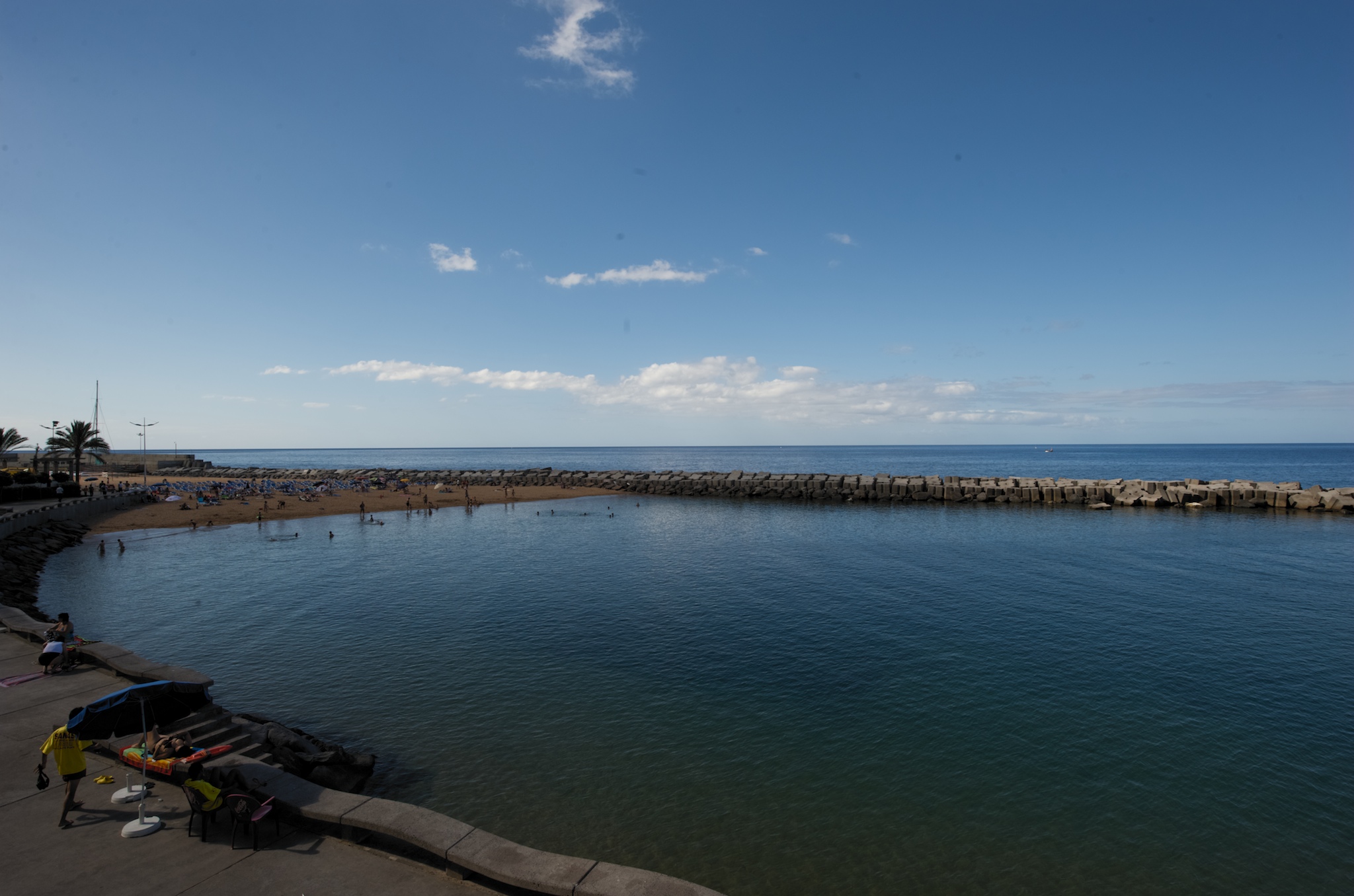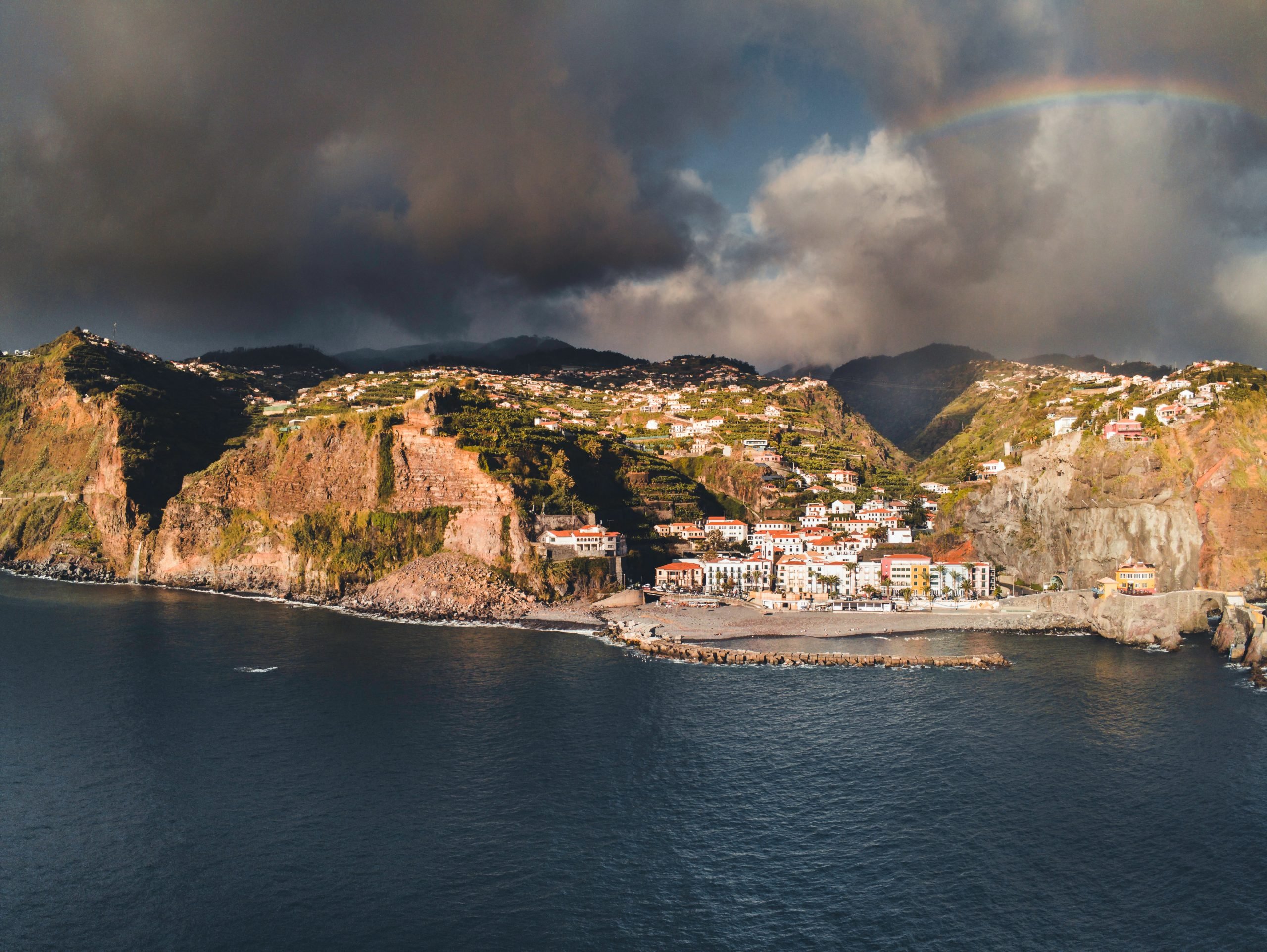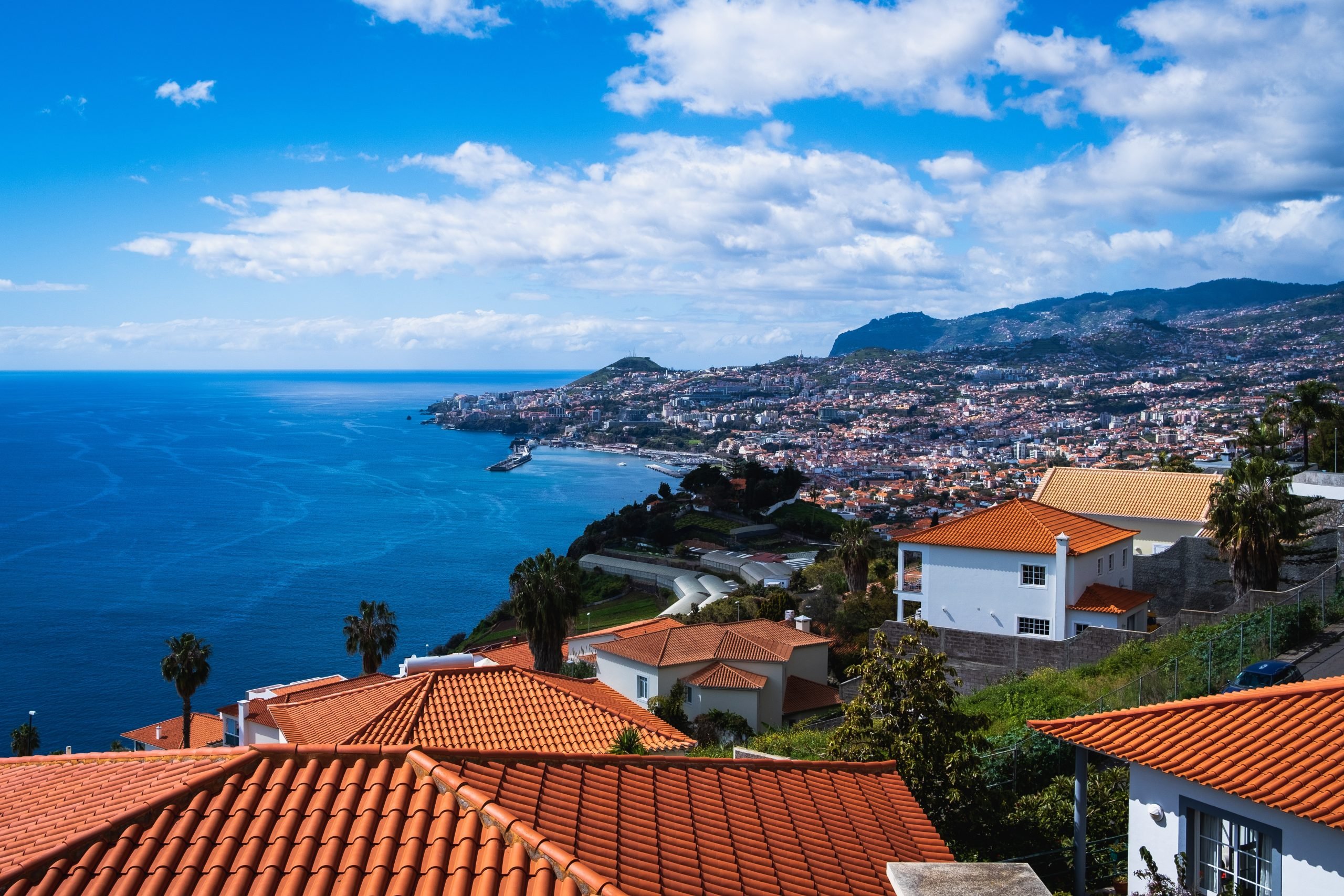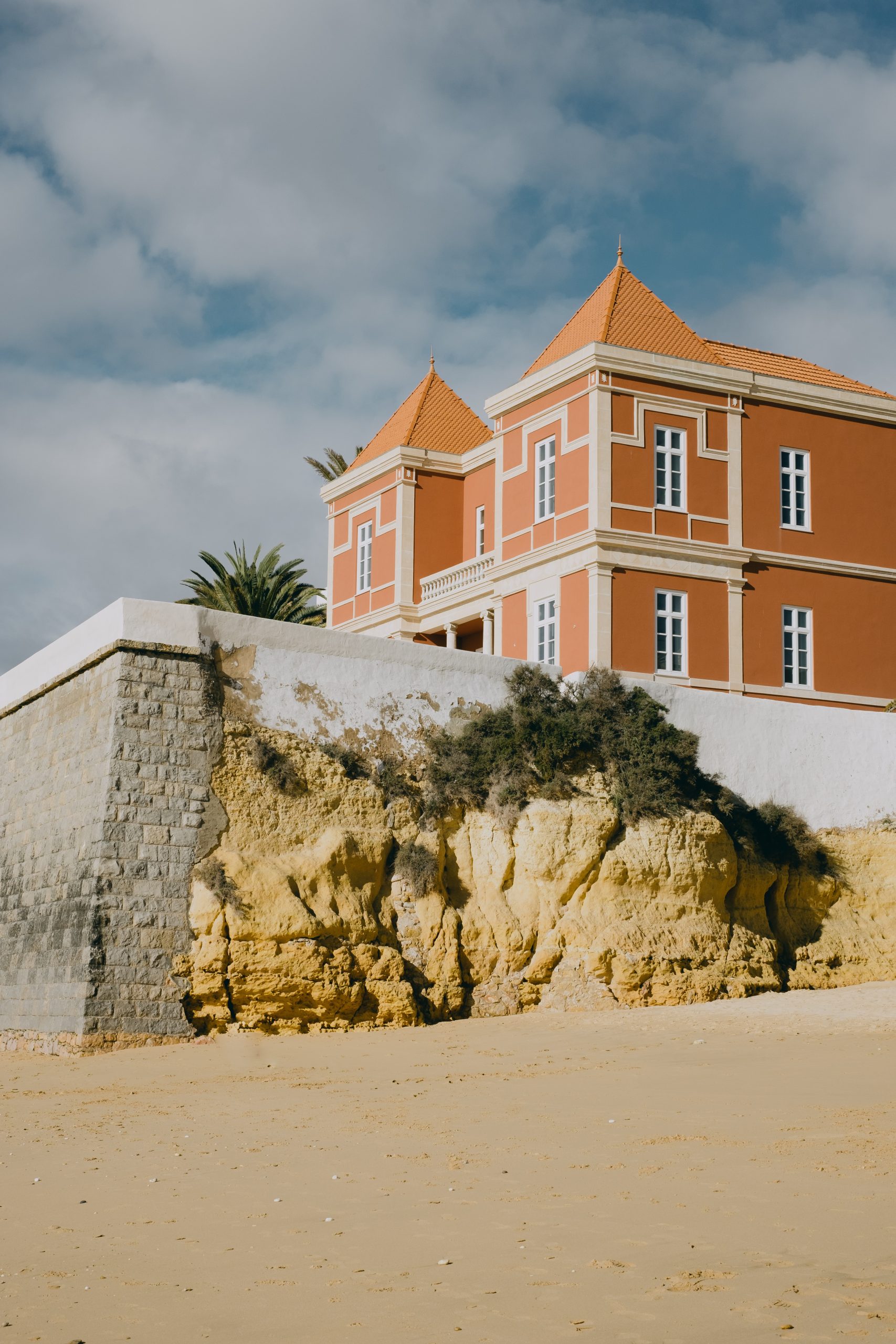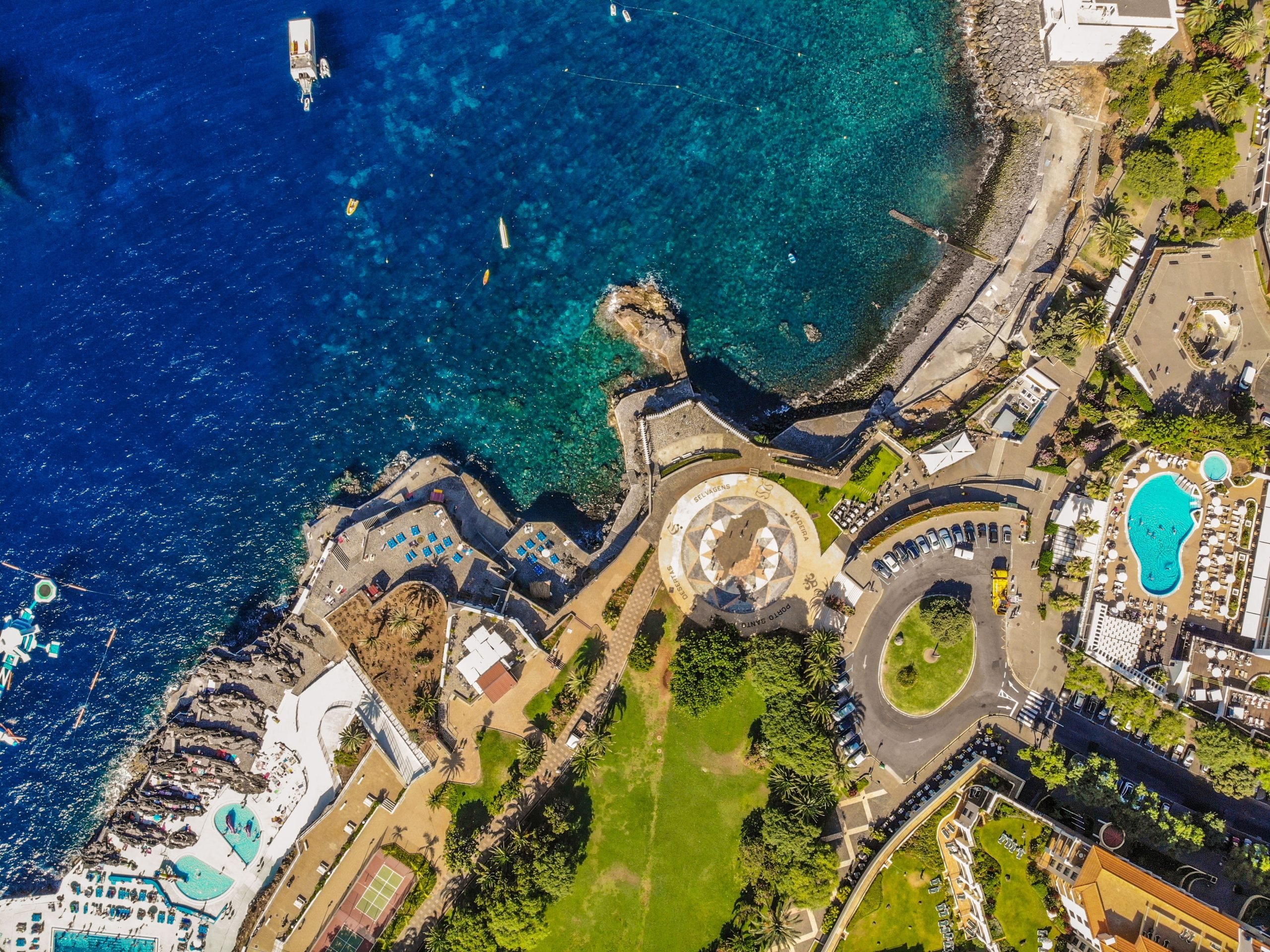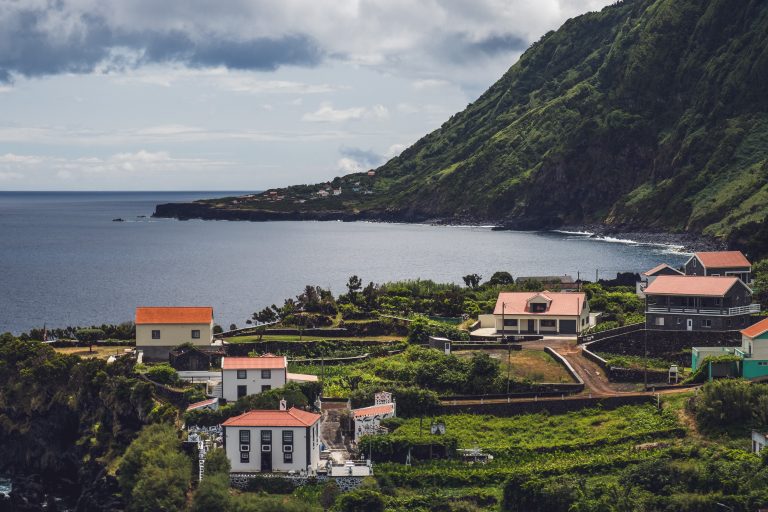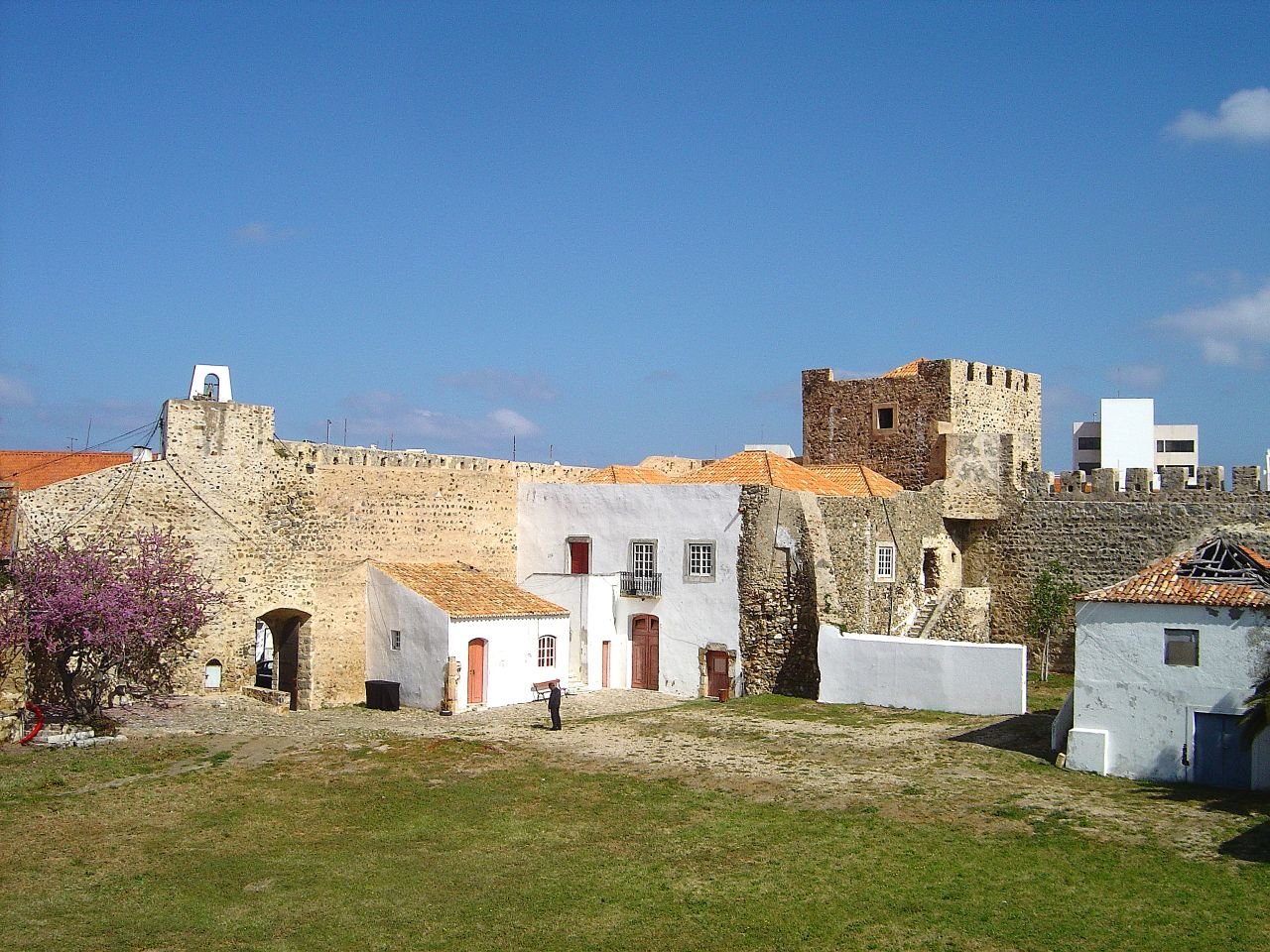

Madeira island was elected the “World’s Leading Island Destination” from 2015 to 2021 by the World Travel Awards. With over 1 million tourists visiting every year, Madeira is filled with activities and unforgettable experiences. Whether you’re looking for a romantic getaway, family vacation, or a trip with your friends, Madeira will welcome you with open arms. Visitors can enjoy the summer climate, tropical beaches, and gorgeous landscapes that span the island. If you are looking to avoid the tourist traps and experience Madeira to its fullest, here are the 10 best things to do in Madeira.
1. Ride a cable car
Riding a cable car in Funchal, Madeira is the best way to get a view of Madeira and the blue ocean surrounding it. Funchal has two cable carr services, the Madeira Cable Car and the Botanical Garden Cable Car. Located in the Old Town, the Madeira Cable Car takes you from Funchal to Monte for 15 minutes, providing views of the mountains in Monte and a 360-view of Funchal. The Botanical Garden Cable rides from the Botanical Garden to Monte for 9 minutes, where you will get to see green hills and the Laurissilva forest, a UNESCO World Natural Heritage Site.
2. Sunbathe on some of the best beaches in the world
Madeira’s beaches are some of the best in the world, providing beautiful rock and mountain views. September is the best month for swimming and sunbathing on a beach in Madeira, but the Spring and Summer months are always great. Water temperatures are warm all year round, rating between 19°(66°F) in the winter and 24°C (75°F) in the summer. Take a look at the 13 best beaches in Madeira here.
Porto Santo Beach. Photo by Teresa Lopes IG @teresinhamarise
Our top three favorites are Praia do Porto do Seixal, Prainha Beach, and Porto Santo Beach. Praia do Porto do Seixal is a recently formed beach with black sand, located on the north coast of the island. A local spot, Prainha Beach is another beach with black sand but located on the east of Madeira and a lot more isolated. Porto Santo Beach is located on an inhabited island called Porto Santo, 43 kilometers from Madeira, and features golden sand and turquoise waters, perfect for a day trip. To get to Porto Santo Beach, 43 kilometers from Madeira island, we recommend booking this day trip from Funchal.
You cannot visit Madeira without experiencing some dolphin and whale watching. The best time to see whales are between April and October, whereas you can see dolphins all year long. Sperm whales are usually around all year round, as well. To observe these magnificent sea creatures, you must book a dolphin and whale watching tour. Here are some affordable tours:
Madeirense food is known for its soups, seafood, and exotic fruit, as well as bread. You will find a variety of dishes all throughout the island so that you never have to eat the same thing twice. Our top 3 favorite restaurants on the island are O Celeiro, Il Gallo D’Oro, and Quinta do Furão. We recommend ordering the following:
Lapas (limpets, mollusks that are attached to rocks on the coast)
Prego no Bolo do Caco (grilled steak serve on local caco bread)
Bolo do caco (local wheat bread of Madeira that is flattened)
Photo by Marco Verch Professional Photographer (Flickr)
Picado (meat cut into cubes with pepper and fries)
Wheat soup (soup with pork, vegetables, potato)
Filete de espada with banana (black swordfish with banana)
Trutas (trout grilled with butter sauce)
Espetada Madeirense (beef in a laurel skewer grilled on charcoal)
Cozido Madeirense (pork, sausages, vegetables cooked on a wood fire)
Tomato soup with poached egg
Chicarros fritos (small fish that is fried, grilled, or baked)
You will never see this anywhere else, but a unique transportation method in Madeira are basket sledges. With more than one hundred years of history, traditional basket sledges are made of wood and wicker and can take up to three people. Large basket cars go down two-kilometer hills with no mechanical breaks. But don’t worry, you are in safe hands as two specialists control the baskets so that no one is injured.
Madeira wine is a fortified wine that is made from a variety of grapes, such as Tinta Negra Mole, Sercial, Verdelho, Bual, and Malvasia. Beware that Madeira wine has a higher alcohol level compared to the average wine, usually about 20%. You can find different types of Madeira wine, from dry to sweet wine. The best way to enjoy a range of Madeira wines is to book a wine tasting. We recommend booking this professional wine tasting a visit to vineyards in a 4×4. This half-day wine tour takes you to amazing wineries that date back to 1850 where you’ll get to learn about the wine-making process and try some local wine.
7. Hike to the island’s highest point at Pico Ruivo
Pico Ruivo is the highest peak on Madeira island, at 1,861 meters. You can reach the top by hiking from Pico do Arieiro, a harder hike, or from Achada do Teixeira, a more relaxed trail. You will get a panoramic view of Madeira, probably the best view on the island. The hike can be dangerous, predominantly if there’s bad weather so we recommend booking a private tour. The best time to hike is during the night to arrive at the top before sunrise. This private tour from Pico do Areeiro allows you to get to the top of Pico Ruivo before sunset with a guide.
Located on the North coast, Santa is a picturesque town known for its triangle-shaped houses that have served for centuries as homes and stables. Santana houses are built straw from local cereal plantations and are usually painted in blue, red, and white.
Although most locals no longer live in these houses, you can find the most authentic at the Centre for Traditional Santana houses. Walking through these will make you feel like you are living in a Disney movie!
There’s no better way to explore Madeira island than with a local. From the best restaurants to beaches, a day with a Madeirenese will entail an authentic island day out. This walking tour in Funchal with a local guide allows you to discover the food and culture of the island for a whole day for €70. This full-day Madeira northwest coast safari from Funchal takes a scenic route between Ribeira Brava and Porto Moniz in an open-top safari vehicle for €37. Another great tour is this private full-day tour to discover the wine culture in Madeira on an Open Top 4WD for €200 (price for 5 people).
If you have been to Lisbon or the Azores, you’ve heard of a miradouro (viewpoint). Madeira is filled with miradouros that feature panoramic views of the island, contrasting with the dark blue ocean. The most famous viewpoints in Madeira are Miradouro Pico dos Barcelos in Funchal and in Porto Santo, Miradouro da Portela. If you have time, also stop by these miradouros: Balcoes, Veu da Noiva and Eira da Achada. To visit the best miradouros, you should definitely rent a car.
Photo by Dimitry B (Unsplash)
Take a look at our full guide to Madeira, from restaurants, hotels, to activities, we have everything you need to know about the archipelago.
If you are an EU/EFTA citizen, you do not need a visa to enter Portugal. You can stay in Portugal for three whole months. You have 90 days in a 180 day period to spend in Portugal, for tourism, visiting family, work, etc. Family members of EU/EFTA nationals are also allowed to travel without a visa for 90 days. However, if you want to stay for longer, you must request a registration certificate. You can also obtain permanent residency after five years.
Non-EU/EFTA Nationals
If you are a non-EU/EFTA national, you will need a visa to visit Portugal for less than three months. However, Portugal is one of the easiest countries to travel to as the country has diplomatic agreements with 61 countries. If your country is on the list, as is the case for the United Kingdom, the United States, and Canada, you do not need a visa for short stays. If you wish to stay for longer than three months, you will need to apply for a long-term visa before coming to Portugal.
Types of Portuguese Visas
There are three main types of Portuguese Visas: Short Stay visas, Temporary Stay National visas, and Long Stay National Visas. Let’s go through each type of visa.
1. Short Stay Visas (Schengen Visas)
Also known as a Schengen visa, a Short Stay visa applies for stays up to 90 days. EU/EFTA nationals do not need this visa to travel to Portugal for less than 90 days, as well as those from the 61 countries with visa-free travel agreements. This visa is given for tourism, visiting family, airport transit, as well as other temporary travel reasons and allows visa holders to travel through the Schengen area. There are different types of Portuguese Schengen visas: General Short Stay visa, Seasonal Work visa, and Airport Transit visa.
A Schengen visa usually costs €80, while children between 6 and 12 years old pay €40. Those from Albania, Armenia, Azerbaijan, Belarus, Bosnia and Herzegovina, Cape Verde, Georgia, Macedonia, Moldova, Montenegro, Serbia, and Ukraine only pay €40. Children under six do not pay a fee.
2. Temporary Stay National Visas
If you are looking to stay in Portugal for more than 90 days, you will need to apply for a Temporary Stay visa that allows you to stay in Portugal for up to a year. You can enter the country whenever you want throughout that year. EU/EFTA nationals don’t need this visa, neither do their family members. However, even if you come from a country that has a visa-free travel agreement, you must still obtain a Temporary Stay visa to stay in Portugal for longer than 90 days. There are many types of Temporary Stay visas such as a temporary work visa, a study visa, professional training or internship visa, medical treatment visa, youth mobility visa, self-support visa, and a religious purposes visa. A Temporary Stay national visa costs €75, but children under six do not pay a fee.
3. Long Stay National Visas (Residency Visas)
A Long Stay National visa, also known as a Residency visa, allows stays of over a year long. Non-EU/EFTA nationals need to apply for this visa in order to stay in Portugal for over a year, even if their country has a visa-free travel agreement. To apply for this visa, you will have to apply for a residency permit with the Agency for Integration, Migration, and Asylum (AIMA). You’ll have to show proof that you can financially support yourself throughout your stay. There are multiple types of long-stay national visas including a work visa, study visa, professional training or internship visa, family reunion visa, Portugal Golden Visa, Portugal D7 Visa, and a D2 Entrepreneur Visa. We’ll go through these last three visas in more detail in the next section. A Long Stay national visa costs €90.
Long Stay Residency Visas: Which Portugal Visa Is Right for You?
The most famous Long Stay Residency visas in Portugal are the Golden Visa,D7 Visa, and D2 Visa. To be eligible for these, you need to be a non-EU/EEA/Swiss national. All of these visas share similar benefits. From being able to travel freely within the Schengen area, being able to study and work in Portugal, family reunification, and eventually being eligible for Portuguese citizenship, the perks are too positive to ignore. We will go through the tax incentives of these visas in the final section.
Considering Portugal's Golden Visa Program? Everything you need to know + how to qualify with 325,000 EUR
If you're interested in finding out the latest details about the Golden Visa program and want to take advantage of the new opportunities. Signup for a live Q&A webinar with an expert from Holborn Assets that will answer all your questions. The event is scheduled for December 4 at 5 PM Lisbon Time (1 PM EST). The live webinar will cover the following:
Golden Visa basics, how to qualify, who can be included
New Investment Criteria for 2024
Golden Visa timeline and process
How to qualify with just 325,000 EUR - this exclusive offer includes investment loan financing to bridge the gap to reach the 500k minimum investment
*If you cannot attend the seminar or would prefer one-on-one, book a call here.
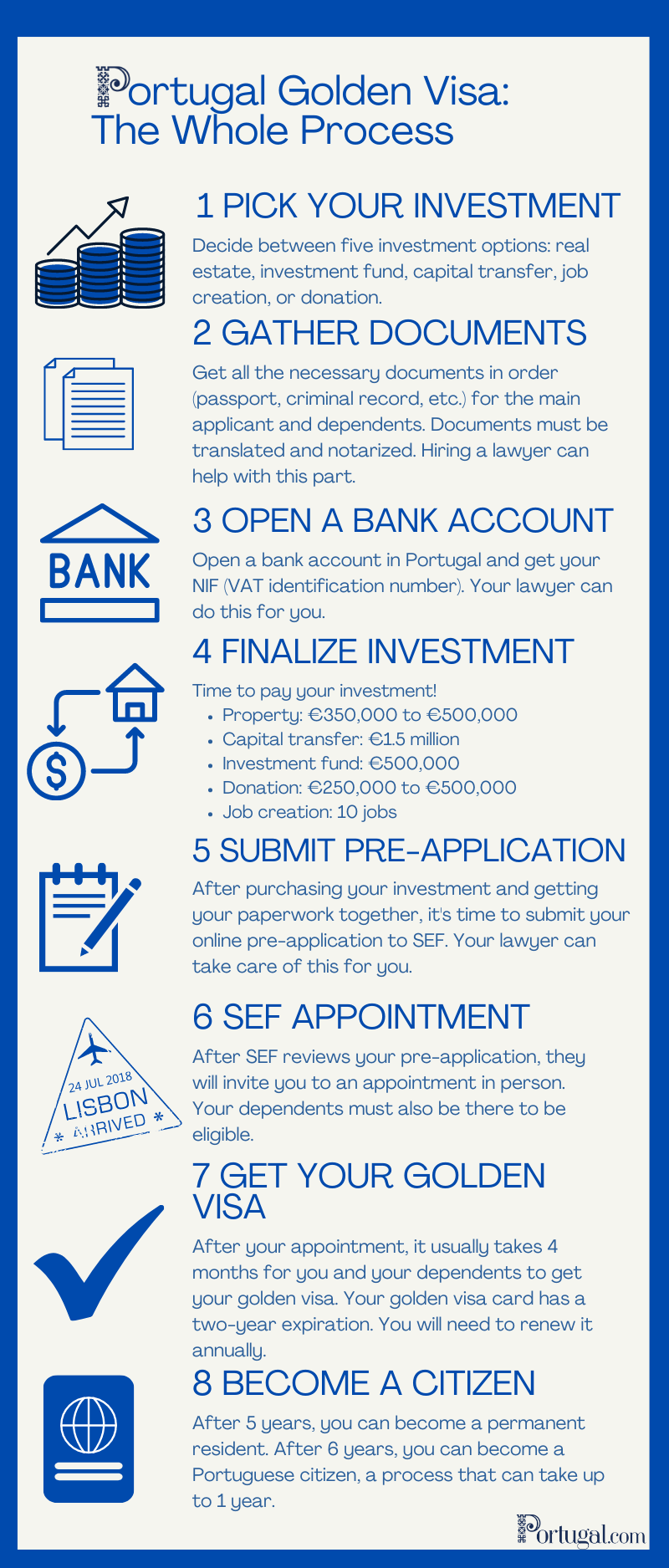
Portugal shocked the world in February 2023 when the government announced an end to Portugal’s Golden Visa scheme through real estate investment. While the purchase of real estate in Portugal is no longer an option to obtain a Portugal Golden Visa, this visa might be suitable for you if you have the funds to make an investment in the country. One of the most attractive Golden visas in the world, it allows non-EU citizens to get a long-term residency permit, and eventually citizenship. However, you do not need to live in Portugal to be eligible for this visa. All you need to do is to stay in the country for at least 7 days in the first year and 14 days in the subsequent years. This visa allows for family reunification where your family members are granted the same residency rights as you.
So, what type of investments can you make to still be eligible for a Portugal Golden Visa? There are 4 types of investments!
1. Investment Fund
You can spend a minimum of a €500,000 subscription in a qualifying Portuguese investment fund.
These are known as “fundos de capital de risco” and are investment funds that support Portuguese businesses.
The minimum amount used to be €350,000, but it has changed to €500,000 at the beginning of 2022.
2. Capital Transfer
This is the most expensive option, a €1.5 million capital transfer.
You must show proof of bank transfer deposits to Portugal from a foreign account that adds up to this amount.
The minimum amount used to be €1 million, but it has been increased to €1.5 million at the beginning of 2022.
3. Job Creation
Another investment option is creating jobs in Portugal. There are two options in this category:
Create a minimum of ten new full-time jobs in a Portuguese business that you own.
Or invest a minimum of €500,000 in an already existing Portuguese business and create a minimum of five new full-time jobs in that business within three years.
4. Donation
You can also make a donation in Portugal. There are two options in this category:
Invest a minimum of €250,000 in preserving art or national heritage in Portugal.
Or invest a minimum of €500,000 in a research and development activity in Portugal.
Portugal Golden Visa Steps & Application Process: How to Get a Golden Visa
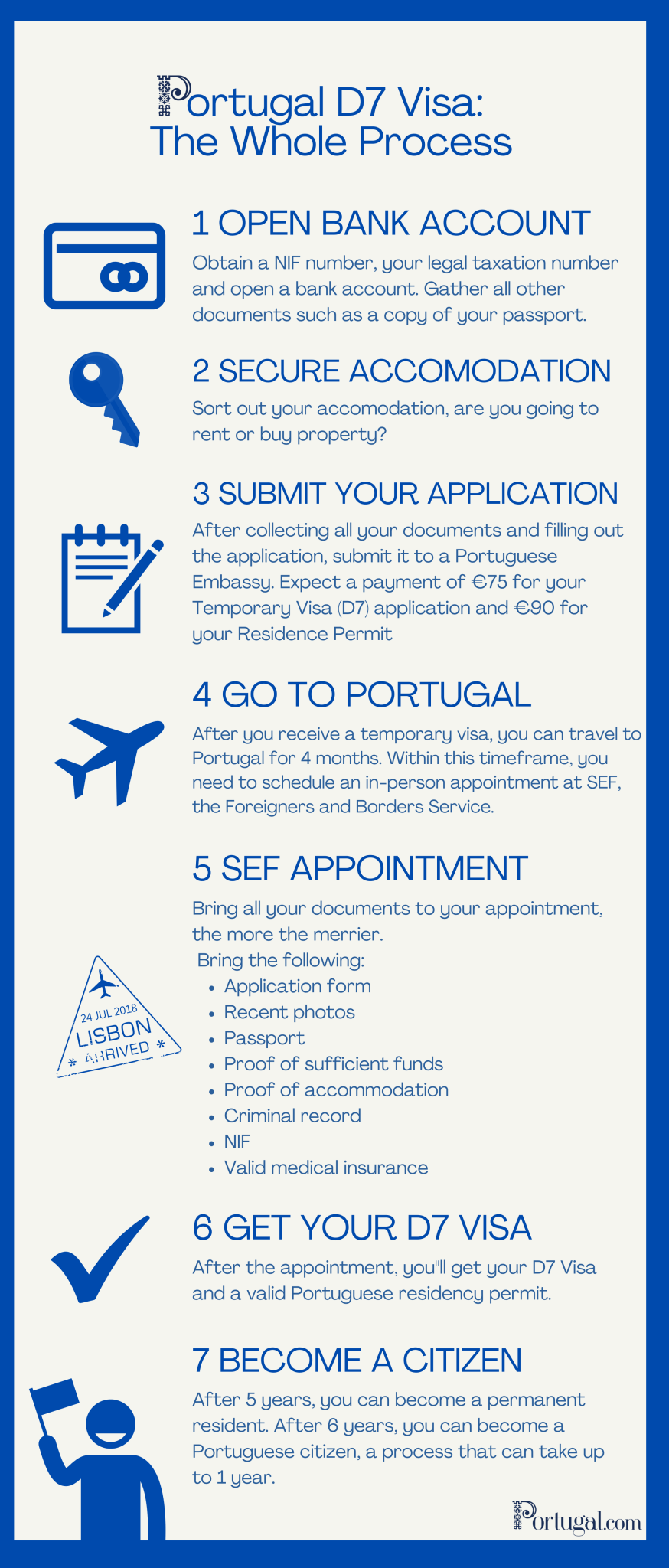
The D7 Visa is also known as the Retirement or Passive Income Visa but is also suitable for remote workers and digital nomads. The Portugal D7 Visa was introduced in 2007 and requires no investment. This visa is for non-EU/EEA/Swiss citizens who want residence in Portugal and have a reasonable passive income. This income can come from real estate, a retirement pension, a salary, etc.
The minimum passive income required is €9,840 per year for the main applicant. For a spouse, you must add 50% to this (€4,920) and for a dependent child, you must add 30% to this (€2,952). Therefore, for a couple with one child, you would need around €17,712 a year to be eligible for the D7 Visa.
For this visa, you must spend at least 16 months in Portugal during the first 2 years. Along with a clean criminal record, when applying you need to show that you have proof of address in Portugal (rental or purchase). This visa allows for family reunification where your family members are granted the same residency rights as you.
Portugal D7 Visa Steps & Application Process: How to Get a D7 Visa
Portugal D7 Visa vs Portugal Golden Visa
Wondering what the main differences are between the Portugal D7 Visa and the Golden Visa? The main difference is that the Golden Visa requires an investment of at least €350,000, while a D7 Visa requires zero investment. The application process for a D7 Visa is also much shorter as it only takes 3 to 4 months to obtain a visa, while with the Golden Visa this can take up to a year. However, with the Golden Visa, you only need to stay in Portugal for around one week, while with the D7 Visa you need to stay at least 6 months of a whole year. The D7 Visa does require proof of passive income, while the Portugal Golden Visa does not. The Golden Visa is more expensive not only in investment but because the professional service fees such as paying lawyers can cost more than €30,000, while the cost for a D7 Visa is less than €5,000.
These two visas also share some essential similarities. They both contain family reunification where your family members are granted the same residency rights as you. Both visas also pave the way for permanent residency after 5 years and citizenship after 6 years. Moreover, they both make you eligible for the non-habitual tax regime, an attractive fiscal regime.
The Portugal D2 Visa is not as well known as the Portugal D7 Visa and the Portugal Golden Visa, but it could be the right path to take if you are an entrepreneur, freelancer, or independent service provider from outside the EU/EEA/Switzerland looking to reside in Portugal. You might be eligible for a D2 Visa if you want to start a business or startup in Portugal, transfer your existing one to Portugal, as well as invest in a business in Portugal. This visa is catered to small and medium-sized businesses to raise foreign investment to develop the Portuguese economy. To apply, you must put together a viable business plan that will be evaluated in terms of its economic, technological, and cultural impact. You can set up any business, from a restaurant to a tech startup.
In terms of cost, the D2 Visa would sit right in the middle between the D7 Visa and the Golden Visa. While with the Golden Visa you need at least a €350,000 investment and with the D7 Visa all you need is proof of passive income, the D2 Visa requires you to prove that your business is viable. You must invest in the company’s share capital, which immigration firms advise should be at least €50,000. In truth, the more you invest, the more likely you might be to get your visa. You must also show that you have the financial ability to sustain yourself while living in Portugal.
This visa allows for family reunification where your family members are granted the same residency rights as you. Like the D7 Visa and Golden Visa, you can apply for a permanent resident after 5 years and citizenship after 6 years. To be eligible for permanent residence, you must spend at least 6 consecutive months in Portugal within those 5 years.
Portugal is a crypto tax haven of sorts but not as much as it was before 2023. Portugal introduced a new crypto tax law in 2023 that applies a 28% capital gains tax on short-term crypto holdings (less than 365 days). Almost all crypto assets that you hold for over a year, except for certain tokens like securities and those from specific jurisdictions, are tax-free, except for certain tokens like securities and those from specific jurisdictions. However, businesses that provide services related to cryptocurrency are taxed on their gains. There are many factors that determine whether this is the case like your profit and the frequency of your trade. To be sure, contact a tax advisor in Portugal.
What makes Portugal a crypto-friendly country goes beyond tax incentives alone. You can actually purchase real estate with bitcoin and other cryptocurrencies through intermediaries. You can also qualify for any of the investment options with crypto visa cards.
The Portuguese Foreigners and Borders Service (SEF) has announced that Russian citizens can longer apply for the Portugal Golden Visa, according to CNN Portugal. Russian citizens who have already applied for the Golden Visa will have their applications suspended. This measure has come into place along with other economic sanctions decided by the European Union (EU) as a response to the Russian invasion of Ukraine. Portugal will also sanction any Russian citizen, even if they have Portuguese nationality, that is part of an international sanction list by freezing their assets in Portugal.
In the last decade, Portugal has given over 400 Golden Visas to Russian citizens, resulting in an investment of over 250 million euros. SEF will not be releasing the names of the Russian citizens who have been granted a Golden Visa due to data privacy. Therefore, it is impossible to know whether any of these Russian citizens are on the EU sanction list.
While Russian citizens will not be given Golden Visas in Portugal, only those on the international sanction list will be economically sanctioned by having their assets frozen. Russian citizens that have already had their Golden Visa approved will not be affected if they are not on the sanction list.
Portugal is not the only country doing this. The EU, US, UK, and Canada have committed to limiting the sale of citizenship through Golden Visa programs to wealthy Russians connected to the Russian government.
EU Economic Sanctions Against Russia
Portugal voted in favor of the sanctions approved by the EU which is supposed to make sure Russia cannot finance the war. These sanctions will also damage the ability of Russian banks to conduct financial transactions worldwide in an efficient matter, as well as impose economic costs on Russia’s political elite.
Let’s go through some of the economic sanctions that Portugal will employ, along with other EU member states.
Prohibiting lending to and buying of securities issued by certain Russian banks and government
Full asset freeze and a ban on three Russian banks
Financing ban of certain state-owned companies
Banning large deposits by the Russian elite in EU banks
Excluding key Russian banks from SWIFT
No investing in projects co-financed by the Russian Direct Investment Fund
Not all EU countries have done so, but the Portuguese government has announced that all “Ukrainians are welcome in Portugal”. The government is set to create a task force that will focus on helping Ukrainian refugees with employment and housing, according to CNN Portugal. Ukrainian refugees will be automatically given a national health service number, a social security number, and a VAT identification number (NIF).
⬇️Please share your thoughts in the comments below ⬇️
As expected, house prices grew exponentially post-COVID. In the past year, house prices have increased by 13,8% in Portugal. This is a large contrast to the growth seen last year of 5%. In January of 2022, the average selling price for a house reached over €2000/m2. Areas that had previously not seen much growth and were considered affordable have also seen a sharp increase.
Experts argue this price increase is due to an increase in people looking to purchase a house and a lack of houses available, as well as the COVID-19 pandemic. The increase in house purchases has contributed to the rise in prices, as around 60,000 purchases were made between November and January, a 9% increase from the three months prior.
The councils that grew the most in their house valuations were Palmela, Mafra, and Sintra, reaching over 20% price increases. The areas of Aveiro, Braga, and Vila do Conde also saw a large increase, areas that were considered affordable.
It seems that purchasing real estate in Portugal remains a safe investment as homeowners face large returns on their investments in a growing market. Still, make sure to seek financial advice from a professional if you are looking to purchase property in Portugal. Buying a home could potentially even land you permanent residence or even citizenship if you are eligible to apply for a Portugal Golden Visa.
Rental prices have also increased, making it more expensive than ever to rent a house in Portugal. In the past month alone, rental prices increased by 0.7%, and by 1,8% in the last 3 months, according to Idealista. The largest monthly increase in rental prices occurred in Coimbra (6,4%), Braga (4,5%), Viseu (3,1%), Lisboa (1,7%), São Miguel island (1,1%), and Porto (0,5%).
For more information on how to buy a house in Portugal, take a look at our International Guide to Real Estate in Portugal. From an overview of the property market, to where to buy a house, property taxes, and obtaining Portuguese residency, our guide goes into every single detail.
⬇️Please share your thoughts in the comments below ⬇️
There have been reports on social media of young Black Portuguese refugees being held at the border with Poland by Ukrainian officers and not being allowed to evacuate the war zone. Ana Maria Costa, the mother of a Portuguese student in Ukraine revealed to RTP on Monday morning that her son has been held at the border for the last three days. Ukrainian officers are not letting her son and other Black and Asian individuals cross the border.
The hashtag #AfricansInUkraine has been trending on social media in the past few days, as many share their racist experiences at the border. Along with being held at the border, many describe having faced racial violence at the hands of Ukrainian officers. Refugees are facing dangerous conditions at the border, without access to food, water, and shelter under extremely cold temperatures. Shocking images have been shared on social media such as a video of Ukrainian officers pushing a young Black girl off the train, as seen below.
Trigger warning racial violence
So they let the little white girl on but not the little black girl?
The colour of your skin really dictates wether you live or die.
I’m absolutely disgusted! But sadly I am not surprised 😔
A Black young man on Twitter still at the Polish border has said that Africans are not being allowed on trains to evacuate Lviv, Ukraine. He says that the priority to board trains is given in the following order: children first, women second, white men third, and only after Africans.
In the train stations here in Kyiv, children first, women second, white men third, then the remaining is occupied by Africans. This means that we have waited for many hours for trains here & couldn’t enter because of this.
Majority of Africans are still waiting to get to Lviv.
The PM of Portugal has yet to comment on the racist treatment of Black Portuguese citizens at the border. Costa announced on Thursday that any Ukrainians who have family, friends, and acquaintances in Portugal are welcome in the country.
The Directorate-General of Health of Portugal (DGS) has said that if Portugal reaches 20 deaths per one million inhabitants on April 3, all covid restrictions are likely to be lifted. This number is said to be a safe projection to lift restrictions, under the criteria of the European Centre for Disease Prevention and Control (ECDC). However, Graça Freitas the director of the DGS has said that the lifting of restrictions is not set in stone and the plan could be altered at any time.
The DGS is currently monitoring COVID variants to figure out if the plan to lift all restrictions in April will take place. Graça Freitas has also said that there might be a reduction of the isolation period for those infected with COVID, possibly to 5 days. However, this will depend on the infection rates and deaths in the next few weeks, as a subvariant of Omicron (BA.2) is becoming more dominant.
What are the COVID restrictions in Portugal?
For the time being, some covid restrictions have been lifted. High-risk contacts no longer need to quarantine, meaning you don’t have to quarantine after being in close contact with someone with COVID. The recommendation to work from home has been lifted. You also no longer need to provide an EU Covid Digital Certificate when entering a restaurant, club, or bar, meaning you no longer need a vaccine or test to enter these locations. However, you still need to show a certificate for traveling at border control, as well as when visiting a nursing home and ICU. You are still required to wear a face mask when traveling by public transport in Portugal as well as in indoor spaces such as concert halls and large shopping facilities.
We will be updating up-to-date COVID restrictions in Portugal as they are announced here. The Portuguese government also updates travel restrictions concerning covid here.
How many COVID cases are in Portugal?
There are 452,758 active covid infections as of Sunday, February 27. DGS registered 6,457 new infections and 38 deaths, as well as 102 people in the ICU.
Betting culture has always had a strong presence in Portugal and is a part of the daily lives of the Portuguese, as well as the lottery and gambling. From a young age, Portuguese kids are taken by the hand to “Casas da Apostas” (betting houses) and cafes to watch their parents and grandparents place a bet during their espresso break. Oftentimes, kids even pick the numbers and stars for their parents to play the Euromilhoes as a lucky charm. Since 2015, online betting has also become legal. However, you will find that many continue to prefer betting in person due to its cultural and traditional significance. From sports betting to playing roulette in the casino, the Portuguese are not afraid to play with their money. Despite its notoriety, the Portuguese are used to paying one of the highest tax rates for betting in the world at 44%.
Types of Betting & Gambling in Portugal
The Lottery in Portugal
Playing the lottery has always been a traditional thing for Portuguese people of all classes to do. The most famous lotteries in Portugal are Euromilhoes and Totoloto. You can play the Euromilhoes and Totoloto in cafes, gas stations, and stores, as well as online. See the physical locations where you can play here.
The Euromilhoes prize money can go up to €30,000,000. To play, you must pick 5 numbers and then 2 numbers to be your “stars”. This counts as one bet. It’s common practice in Portugal for people to pick numbers and letters that are meaningful for them. You can play the Euromilhoes online here.
Totoloto’s prize money is much lower than Euromilhoes, usually under €2,000,000. To play, you must pick 5 numbers of the available options. Again, this counts as a single bet. You can play the Totoloto online here.
Sports Betting in Portugal
In a country that prides itself on football, sports betting is one of the most common types of betting. You can bet on thousands of different sports events. Whatever sport you are into, you can probably bet on it in Portugal, regardless of how famous it might be. However, the most sports to bet on in Portugal are football (obviously), basketball, futsal, and rink hockey. There are several sports betting companies, where you can bet both online or in physical locations like “tabacarias” (cigarette shops). The most famous sports betting websites in Portugal are Placard, Betclic, and Betano. Placard is the most famous betting company in Portugal and besides betting online, you can bet in stores such as gas stations and “tabacarias”.
Horse Race Betting in Portugal
Apart from traditional sports betting, the only other authorized form of betting is horse race betting. You can do this online or at a physical place like a “Casa de Apostas” (betting house), gas stations, and “tabacarias”. For online horse race betting, similarly to other sports betting, see Placard, Betclic, and Betano. However, make sure that you are betting legally. You can check out the legal list of horse race betting certified by the Portuguese National Authority for Animal Health.
Photo by Amol Tyagi (Unsplash)
Casinos in Portugal: The 4 Best Casinos in Portugal
A casino in the Portuguese Riviera, Casino Estoril is one of the biggest casinos in Europe. One of the inspirations for Ian Fleming’s James Bond novel Casino Royale, Casino Estoril has modernist architecture. The first stone of the build was placed in 1916, making it a cultural building with a rich history. During the Second World War, the casino was a gathering spot for spies and dispossessed royals.
The casino can take up to 1,000 people at a time. The casino features a gambling room with roulette, blackjack, and more, as well as the most advanced slot machines on the market. Casino Estoril also has an auditorium that regularly has music and theater shows and two restaurants.
Casino Lisboa, located in Parque das Nações, Lisbon, gets over 2 million visitors a year and over 5,000 a day. This casino opened in 2006 and is recognized globally as one of the best casinos. The casino has over 700 slot machines. Casino Lisboa also offers 22 gambling tables with roulette, blackjack, Caribbean stud poker, and “banca francesa”. Apart from gambling, the casino has a large auditorium, a famous space that hosts art, cultural and business events.
300 KM from Lisbon, Casino Vilamoura in Algarve is located inside a famous marina that attracts millions of tourists every year. A nightlife hotspot, this casino opened in 1996 and was more recently remodeled in 2018. Owned by the large hotel and casino company Solverde, this casino features a VIP lounge, 520 slot machines, and 10 gambling tables.
Casino Tróia, located an hour away from Lisbon, is known for its innovative design and modern rooms. With over 200 slot machines and 15 gambling tables with diverse games, it caters to every type of client. The Casino features the Estrathosphera Bar which has a bar and stage that often DJs come to play at.
Photo by the blowup (Unsplash)
Who Takes the Prize: Online vs Offline Betting in Portugal
Although offline betting is the traditional way in Portugal where you socialize with the staff at the betting shop and discuss your bets with locals, we can’t ignore the convenience of online betting. You can place a bet remotely from anywhere, via a computer, tablet, or phone. Online betting can also be safer as it allows you to look for reviews and find out whether a website is trustworthy. You can also more easily compare betting systems and odds from different companies in a more convenient matter.
Despite the cultural significance of offline betting in Portugal, this method has some disadvantages. You obviously cannot place a bet outside of the place’s working hours which might cost you to miss out on an important bet. Offline betting is also more time-consuming and at times, comes with additional expenses. However, many small “tabacarias” and “Casas de Apostas” rely on offline betting financially so it is always good to go to these.
Portugal Betting Laws: Can You Bet Online in Portugal?
Although betting has been around for hundreds of years in Portugal and is part of the country’s cultural history, the legalization of online betting is recent. Since 2015, online betting is legal in Portugal when its gambling laws were altered to adapt to the digital space. Online casinos and sports betting sites are completely legal and regulated by Portuguese entities. In 2020, online betting platforms reached a new record and made over €69 million in only three months.
The new online betting regulations follow important principles that the Portuguese government wants to follow. For example, it has regulations to avoid fraud, protect minors and vulnerable people, as well as guarantee the integrity of sport by fighting the manipulation of sports results.
Portuguese laws on online betting are quite simple. The following types of online gambling and betting are legal:
Games of chance like blackjack, bingo, slot machines, poker, and more.
You can also play the lottery online.
Taxes on Betting in Portugal
The taxes on betting in Portugal are high compared to the rest of the world. Portugal has one of the highest tax rates at 44%. When online betting became legal, economists believed this would make companies unsuccessful. Instead, this sector is growing and there are many companies out there regularly applying for the Portuguese online gaming license.
The Prime Minister of Portugal Antonio Costa condemned the Russian invasion of Ukraine on Thursday, adding that any Ukrainians who have family, friends, and acquaintances in Portugal are welcome in Portugal. Instructions to facilitate visas to those feeling the Russian invasion have been given to embassies in Ukraine, as well as neighboring countries. The Portuguese Embassy in Ukraine is also urging Portuguese citizens in Ukraine to leave through European Union borders, particularly in route to Romania or Moldova.
Portugal is not alone in this decision. Poland is welcoming Ukranian refugees as well, as tens of thousands arrived at the border on Friday. Many are calling out Poland’s hypocrisy as it has a strict refugee policy for Afghan and Middle Eastern refugees. In contrast, the UK has stopped accepting visa applications from Ukrainians stuck in the country. Therefore, there is no legal route to seek asylum in the UK, unless Ukrainians have British relatives.
#Portugal stands ready to support Member States neighbouring Ukraine to ensure international protection to those in need and to welcome Ukrainians who wish to continue their lives here. pic.twitter.com/vc7nVXtXne
On Tuesday, March 1st, the government announced the creation of a task force that will focus on helping Ukrainian refugees with employment and housing, according to CNN Portugal. Ukrainian refugees will be automatically given a national health service number, a social security number, and a VAT identification number (NIF).
While refugees are usually allowed in Portugal through a case-by-case analysis of the danger each applicant faces, the government acknowledges that all refugees from Ukraine are facing dangerous conditions. The only reason someone might be denied asylum is if they have committed crimes against humanity or serious crimes, according to the Minister of Internal Administration and Justice, Francisca Van Dunem.
What is Portugal doing about the Russia-Ukraine war?
The Prime Minister announced on Thursday that 174 military soldiers are ready to be sent to Romania in the next few weeks. NATO mobilized over 40,000 soldiers on Friday, including Portuguese military that could be ready to move during the next 2 to 3 days. However, the Prime Minister has made it clear that NATO will not intervene in Ukraine, and that Portuguese forces with NATO will be deployed in deterrence missions, predominately in NATO countries bordering Ukraine.
Portugal has also enacted sanctions on Russia, to which the Foreign Affairs Minister has stated that he does not believe Portugal will suffer direct consequences. PSD President Rui Rio argues that although sanctions may lead to difficulties in Portugal, they are worth going through to ensure peace and security.
There have also been discussions on social media about the Portugal Golden Visa, as MEP Ana Gomes argues that Russian citizens under the Golden Visa in Portugal should face sanctions. In the tweet below, she criticizes the Prime Minister, arguing that Golden Visa holder Roman Abramovich, a Russian oligarch should have his citizenship revoked and his assets frozen.
It is unclear whether any changes will be made to the Portugal Golden Visa. However, the war in Ukraine is likely to affect Portugal’s state budget for 2022. The Prime Minister said it was too early to assess whether this is the case, however, some Portuguese economists have stated that it will, directly and indirectly, impact the state budget. Oil and natural gas prices will continue to skyrocket as Russia is one of the main energy suppliers to European countries which could impact the budget. GDP is also likely to decrease in Portugal and there could be increased military spending attributed to the budget, depending on the course of the conflict.
Ukrainians in Portugal Protest Russian Invasion
The second-largest foreign community in Portugal, Ukrainians in Portugal are living in fear for their family and friends back home. There have been protests in Lisbon, Porto, and Algarve with the largest having taken place in front of the Russian Embassy in Lisbon on Thursday. The protests call for military support from European countries in Ukraine, as well as urge the Portuguese to not purchase products from Russia.
Six political parties are also planning a protest on Sunday in front of the Russian Embassy, created by the youth organizations of the Socialist Party (PS), the Social Democratic Party (PSD), CDS- People’s Party, Livre, the Liberal Initiative (IL), and People Animals Nature (PAN). It is uncommon that parties across the political spectrum come together for a protest. However, it is unlikely that all parties will agree on the way to reinstate peace in Ukraine.
Over 90% of Portuguese territory is facing a severe or extreme drought. The last dry spell of this scale occurred in 2005 and it seems that the current drought is even more severe, threatening agricultural production and water supplies in mainland Portugal.
The lack of rainfall is affecting the whole of the Iberian Peninsula, leading to drought not only in Portugal but also in Spain. The month of January 2022 was the second-dryest month in Portugal since 2000.
In the past, droughts like these have caused massive fires throughout the country, particularly in the summer. Droughts are not completely uncommon in Portugal but have been increasing in the past 30 years, as the wider issue of climate change worsens globally.
The drought is predominantly impacting the northeast and southern regions of Portugal. Farmers in these regions are being hit the hardest financially and have requested aid from the government because of the damage done to grass which is necessary for the livestock industry. The government has done what it can to save water for the Portuguese, restricting the use of reservoirs for hydroelectric power production.
Portugal is one of the best places to live in the world. Internationals move to Portugal for the weather, culture, low cost of living, and all around high quality of life. Many seek to find a job and work in Portugal to enjoy all that the country has to offer. Recently, there has been a growth of foreigners working in Portugal, making up 3.2% of the working population in Portugal. This is still quite low in comparison to other European countries.
If you’re looking to work in Portugal, this is the guide for you. From how to find a job in Portugal, to labour rights, and taxes, we’ll equip you with all the information you need. Just keep in mind that the job market is highly competitive and salaries are quite low, particularly for young people. In 2020, youth unemployment reached over 25%.
How to find a job in Portugal?
If you would like to work in Portugal, the first step is to look for a job. Portugal is still recovering from the 2008 economic crisis so finding a job isn’t always easy breezy. However, if you have the right academic qualifications and past work experience, you can find a good job in Portugal.
Do keep in mind that most jobs in Portugal require you to speak Portuguese. Learning Portuguese will make it easier to find a job, as well as live in the country. However, there are many jobs out there, particularly in larger companies, that also tend to pay better salaries, that are English speaking. You can also live and work in Portugal remotely as many companies offer this opportunity.
To find a job in Portugal we suggest searching on the following websites:
Once you’ve found your dream job in Portugal, you need to make sure your application is solid. A lot of companies will prefer to choose a Portuguese candidate instead so that they do not have to go through the hassle of applying for a visa (if you are a non-EU citizen). Therefore, make sure you put all your effort into an application that makes you stand out.
The application process in Portugal is pretty straightforward. Usually, you will send your CV with a motivation letter. In your motivation letter, do not just repeat what is written in your CV. Speak about the skills that you developed throughout the years and your motivations for applying for the job. Along with letting your personality shine through, your future employer must understand why they should hire you and what you will contribute. Therefore, your motivation letter shouldn’t just reflect why you want the job, but why the company needs you in particular.
If you are selected for an interview, bring with you a copy of your CV and any educational certificates that could be beneficial. Before the interview, do your research on the job role and company. Nothing looks worse than you being caught not knowing enough about the company you are applying to. Since Portuguese people are warm and welcoming, be prepared to make small talk and engage in informal conversation. Your personal interaction with the interviewee means more than in other countries and could make or break a job offer. You might also need to take psychometric and psychological tests, particularly in a large company.
If the interview goes well, expect that HR will ask you for a few references such as previous employers or university professors. Speak with these beforehand to avoid an awkward phone call.
Photo by Cytonn Photography (Unsplash)
Portugal Work Visa: Do I need a visa to work in Portugal?
EU/EEA/Swiss Citizens
If you are an EU/EEA/Swiss citizen, you do not need a work visa to work or live in Portugal. But if you want to work in Portugal for longer than six months, you will need to get a Certificado de Registo (Residence Certificate). You can find out how to get a Residence Certificate here.
Non-EU/EEA/Swiss Citizens
If you are a non-EU national, you will need a work visa to work in Portugal. To get a work visa, you need to find a job in Portugal first. After you have found a job, your employer will apply for a Portuguese work permit by contacting the Portuguese Labor Authorities. If you are planning to work in Portugal for less than six months, you will get a short-term work visa. However, if you plan on working in Portugal long-term, for more than six months, you will then have to apply for a long-term work visa. Once the visa is secured, you must apply for a Portuguese residence permit.
Work Culture & Etiquette in Portugal
Like other Southern European countries, Portugal has a unique work culture, often times deemed to be too relaxed by internationals. Deadlines are often quite lenient and punctuality is often not at its best. The dress code will depend on the company and industry. In larger companies, the dress code will be formal, with men and women wearing suits and traditional workwear. However, in the last decade, many companies have adopted a more relaxed dress code. Even the ones with a formal dress code tend to have a casual day on Fridays.
Gift giving is common in a business environment in Portugal, particularly to customers and partners. This is not seen as a bribe in Portugal, but rather, a sign of respect. Do not reject gifts and do send a thank you note later on. Although much of the world no longer does this, Portuguese businesspeople commonly exchange business cards and are prone to networking in informal settings, such as long lunches with wine. However, in a professional setting, grabbing drinks socially with your coworkers is not common. As employees tend to work long hours, usually only getting home by 6:30 to 7:00 PM, they tend to prefer going home to their families. Still, you will occasionally be invited over to someone’s house for dinner. Make sure to bring a dessert or wine, this is common courtesy in Portugal.
Photo by Marten Bjork (Unsplash)
Labour Rights in Portugal
Even if you are not a Portuguese citizen, you have the same rights as a worker in regard to salary, working conditions, and social security.
New Labour Laws 2021
In November 2021, Portugal made global news by announcing a change to the labour law that makes it illegal for bosses to contact employees outside work hours. No texts, calls or emails. The new labour laws include other policies that were not as mediatized. For example, employers must now contribute to work from home expenses, such as internet bills. These new laws to tackle exploitation during the COVID pandemic only apply to companies with more than 10 employees. But these are relatively new. What are the other labor laws in Portugal?
Working Age, Working Hours & Holidays in Portugal
The minimum working age is 16 years old, but you can only get an employment contract without finishing school at 18.
The law states that the maximum working week in Portugal is 40 hours and the daily working period cannot exceed 8 hours. Workers also have the right to at least one day of rest per week. If a worker is working at night, they must be paid an increase of 25%. If a worker is working on a rest day or public holiday, they have the right to a 50% hourly wage increase.
Workers in Portugal are entitled to 22 working days of holidays, plus 12 mandatory public holidays and 2 optional ones. All of these days are paid. All workers also receive a Christmas allowance, essentially a 13th month salary that is equal to a month’s wage that must be paid by the 15th of December.
Parental Leave in Portugal
All workers have the right to parental leave, including paternal and maternity leave for men and women. In Portugal, you have initial and extended parental leave. With initial leave, a woman must take 90 days of her leave after childbirth and the remainder may be used before or after childbirth, totaling 120 days paid at 100%. Mothers MUST take at least six weeks off right after childbirth.
Fathers are entitled to 20 mandatory working days leave after birth where they get paid. The first five days can be taken right after birth and the other 15 must be taken within six weeks of the birth. The latter does not have to be taken consecutively.
After initial parental leave, parents can extend the leave to 180 days by adding three months, a period which is shared between the two parents at a rate of 83% of total pay. On the other hand, parents can also choose to extend the maternity leave alone to 150 days with no shared period at a rate of 80% total pay.
Do adoptive parents get parental leave in Portugal?
Yes. Adoptive parents can take adoptive leave if the child is under 15 years of age. The government states that each parent is entitled to 120 to 150 consecutive days of leave, which can be taken at the same time. If it’s a multiple adoption, the leave period is 30 days for each adoption.
Do same-sex parents get parental leave in Portugal?
Same-sex parents have the same rights as heterosexual ones concerning adoptive leave. It is unclear whether they are legally entitled to parental leave if they have a child through surrogacy, unfortunately.
Photo by Kelly Sikkema (Unsplash)
Salaries in Portugal
Portugal is one of the best countries to live in the world due to the warm weather, 300+ days of sun a year and overall high quality of life. However, Portuguese salaries are low. In 2020, the average grossmonthly salary in Portugal was €1,314, around €18,000 a year. And yes, this does include holiday bonuses. Considering the average salary in the US is at least €50,000 and in the UK, it’s around €40,000, Portugal falls behind. It’s important to note that the cost of living is a lot cheaper, around 40% cheaper than both to be exact.
Photo by Mathieu Stern (Unsplash)
What’s the minimum salary in Portugal?
In 2021, the national minimum wage in Portugal was €775.80 per month, and €9,310 per year (with 12 payments per year). Keeping in mind that Numbeo states that a single person’s estimated monthly costs in Portugal are €529.17 without rent and that a one-bedroom apartment costs around €460.15 to rent, the national minimum wage is low.
The minimum wage has risen in the last few years. The minimum wage was increased by €35 a month from 2020 to 2021, at a rate of 4.72%. In 2010, the minimum wage in Portugal was less than €550. Parties on the left have been fighting to raise it even further, while liberal and right-wing parties want it to remain the same and leave it up to the free market.
The Best Paying Jobs in Portugal
Although most of the population struggles financially, some find high paid jobs. The highest salaries are attributed to managerial positions in operations general management (Tourism), medical management, legal counsel, purchasing management, and industrial boardroom positions. Many in top management positions, particularly in Lisbon, are making over 6 figures. Here are some of the top salaries in the capital:
General Manager (industry): €110,000 – €170,000
Legal Manager: €148,000 – €160,000
Associate lawyer: €120,000
IT Director: €40,000 – €100,000
The Portuguese Tax System: Taxes in Portugal
The Portuguese tax system can get confusing. We will go through everything you need to know, income taxes, property and wealth taxes, company taxes, and goods and services taxes. But first, we discuss the NHR program, which provides tax relief for foreigners moving to Portugal for the first 10 years, if they are eligible.
Tax Incentives for Foreigners Moving to Portugal: Non-Habitual Residency (NHR) Program
The non-habitual residency (NHR) program was created in 2009 to attract foreigners with high value-added potential. We’ll go through the conditions to be eligible in a moment, but this fiscal regime grants a 20% flat tax rate for certain professions or even total exemption on income tax for expats living in Portugal for 10 years. At the end of the 10 years, you will be taxed under the general rules of the Portuguese Income Tax (IRS) regulation.
Conditions for NHR Status
You cannot have been taxed in Portugal during the five years before the application.
You must request a tax residence certificate which means you must live in Portugal for more than 183 days (doesn’t need to be consecutive) for 12 months, lived in Portugal for less than 183 days, but has bought property during those 12 months, or performs public functions in the name of the Portuguese state.
You must have the right to be in Portugal through a work visa, Portugal Golden Visa or by being an EU/EEA/Swiss citizen.
What professions are eligible for the 20% flat tax rate in Portugal?
Professions that are considered as a high added value to Portuguese society are granted the 20% flat tax rate. The high added-value activities are activities of a scientific, artistic or technical nature. The main professionals and activities are:
General directors and executive managers of companies
Directors of commercial and administrative services
Directors of production and of specialised services
Directors of hotels, catering, commerce and other services
Doctors, dentists and stomatologists
University and higher education teachers
Specialists in the physical sciences, mathematics, engineering, information and communication technologies (ICT), among others
Authors, journalists and linguists
Creative artists and performing artists
Science and engineering technicians and professionals (intermediate level)
Information and communication technologies technicians and professionals
Market-oriented farmers and qualified agriculture and animal production, forestry, fishing and hunting workers
Qualified industrial, construction and crafts workers
Plant and machine operators and assemblers
How can you pay zero tax for 10 years while living in Portugal?
To be completely exempt, your country of origin must have a Double Taxation Agreement (DTA) with Portugal. This way, you do not pay income in Portugal for 10 years, but instead, pay it in your country of origin.
The following countries have a DTA with Portugal: Algeria, Austria, Andorra, Bahrain, Barbados, Brazil, Bulgaria, Canada, Cape Verde, Chile, China, Colombia, Croatia, Cuba, Cyprus, Czech Republic, Denmark, East-Timor, Estonia, Ethiopia, Finland, France, Germany, Georgia, Greece, Guinea-Bissau, Hong Kong, Hungary, Iceland, India, Indonesia, Ireland, Israel, Italy, Ivory Coast, Japan, Kuwait, Latvia, Lithuania, Luxembourg, Macau, Malta, Mexico, Moldova, Montenegro, Morocco, Mozambique, Netherlands, Norway, Oman, Pakistan, Panama, Peru, Poland, Romania, Russia, San Marino, São Tomé and Principe, Saudia Arabia, Senegal, Singapore, Slovakia, Slovenia, South Africa, South Korea, Spain, Qatar, Sweden, Switzerland, Tunisia, Turkey, United Arab Emirates, United States of America,United Kingdom, Ukraine, Uruguay, Venezuela, and Vietnam.
Income Taxes in Portugal (IRS)
At the end of the 10-year period, you will be taxed under the general rules of the Portuguese Income Tax (IRS) regulation. If you work for a company you will be taxed by the IRS automatically, but you must still complete an annual tax return in the Portal das Finanças.
If you are self-employed (freelancer) you pay income tax, not company tax, unless you register as a company, which is not necessarily beneficial to all. If that’s the case, you need to do your taxes yourself, for which you can hire an accountant. Other incomes are taxed under income tax rates such as investment income, rental income from Portuguese properties, capital gains, and pensions. If you qualify for the NHR as a foreigner, this might not be the case for you, but we’ll get to this soon.
Tax on Wealth & Inheritance in Portugal
People are charged a tax on assets or sales of properties. The tax rate for individuals is 28% and for companies and non-residents, it’s 25%. Residents are only taxed on 50% of their gains.
The Portuguese inheritance tax was removed years ago. However, you will pay stamp duty at 10%. You must pay this within three months of the date of death or risk a fine.
Property Tax in Portugal
If you buy a house in Portugal, you must pay three types of property taxes, even if you apply for a Portugal Golden Visa. The three types of property taxes are Municipal Property Tax (IMI), Property Purchase Tax (IMT), and Stamp Tax (IS).
1. Municipal Property Tax (IMI)
The IMI translates to Imposto Municipal Sobre Imóveis and will be different in each municipality. This money is used to maintain public infrastructures in municipalities. The IMI rates usually range from 0.3% to 0.45%. To calculate the IMI, you multiply the value of the tax asset with the IMI rate. You must pay the IMI every year. For example, if your property is valued at €500,000 and you live in the municipality of Cascais with a rate of 0.34%, then your yearly IMI is €1,700. You can be exempted from the IMI if your annual taxable income of the whole household does not surpass €15,295.
2. Property Purchase Tax (IMT)
The IMT is also known as the Imposto Municipal sobre as Transmissões Onerosas de Imóveis. This tax is paid when a house is bought in Portugal, so it is a one-time payment for buying a house. The rate of the IMT will depend on the type and value of the property, as well as whether this property is a principal or secondary residence. You must pay this before you buy a house. This is how you calculate the IMT = value of the deed or net worth tax (the larger amount) x rate – tax reduction. You won’t have to pay IMT if you buy a house in mainland Portugal and the price doesn’t exceed €92,407. IMT usually will range between 2% to 8%, depending on the case. However, properties acquired by companies located in a “blacklisted jurisdiction” pay 10% for IMT.
3. Tax on Stamps (IS)
You’ll also need to pay an Imposto de Selo, a stamp tax, contracts, loans, documents, and more. The rate also changes depending on the property and task, but it is usually between 0.4% and 0.8%. For example, for a mortgage of five years, the stamp duty tax is 0.6%.
To find out more about how you can buy property in Portugal and property tax, read our full guide on buying a home in Portugal.
Company taxes in Portugal
Companies pay corporate tax, not income tax, at a flat rate of 21% on taxable profits. If you own a small and medium company, you pay a lower flat rate of 17% on your first €15,000 of taxable profit. If your company makes less than €200,000 a year, you can choose to pay corporate tax differently, where you pay tax on your turnover, rather than your profit.
Companies in Portugal with a turnover of more than €10,000 on goods and services must pay VAT, which we will talk about in the next section.
Portuguese VAT: Taxes on Goods and Services in Portugal
VAT, also known as IVA in Portugal began in 1986. Three different rates apply to goods and services. You will see the IVA in any receipt when you purchase a good or service. First, there’s a general rate of 23% for most goods and services. This is the IVA rate that most people know. Second, there’s an intermediate rate of 13% for food and drink. Third, there’s a reduced rate of 6% on essential items and services such as books, newspapers, medicine, and even specific foods like vegetables. These three VAT rates are much lower in Madeira and the Azores.
Cost of Living in Portugal
Is Portugal a good place to work and live in? Your decision might also depend on the cost of living. Portugal probably has the lowest cost of living in Western Europe, although rent prices are rising exponentially and the average annual salary is under €20,000. Let’s go through the average cost of living in the two most populated cities, Lisbon and Porto.
According to Numbeo, the estimated monthly costs for a family of four in Lisbon are €2,024.31 without rent. A single person’s estimated monthly costs are €579.70 without rent.
Three-course meal for 2 people at mid-range restaurant €35
McMeal at Mcdonalds €7
Domestic Beer (0.5 liter draught) €2
Water €1.12
Marlboro cigarettes (20) €5
Monthly transportation pass €40
Gym membership €35
International primary school €8,995.47 yearly (anywhere from €5,000 to €15,000)
Rent for 1 bedroom in city center €865.95
Rent for 3 bedrooms in city center €1,091.41
Buying a house, price per square meter in city center €4,728.21
According to Numbeo, the estimated monthly costs for a family of four are €1,938.31 without rent. A single person’s estimated monthly costs are €552.88 without rent.
Three-course meal for 2 people at mid-range restaurant €34
McMeal at Mcdonalds €6.50
Domestic Beer (0.5 liter draught) €2
Water €0.90
Marlboro cigarettes (20) €5
Monthly transportation pass €30
Gym membership €30
International primary school €6,277.57 yearly (anywhere from €4,200 to €7,500)
Rent for 1 bedroom in city center €670.59
Rent for 3 bedrooms in city center €1,184.06
Buying a house, price per square meter in city center €2,935.25
Subscribe to our newsletter below to get the latest news, reviews, info and more!
We use cookies to ensure that we give you the best experience on our website. If you continue to use this site we will assume that you are happy with it.