Ikea invested 65 million euros in Portugal this year and is planning on investing another 60 million.
The multinational Swedish company Ikea, which is part of group Ingka, invested 65 million euros in Portugal during the fiscal year that ended in August 2023 and is planning on investing another 60 million during this year’s homologous period.
According to an interview given by the group’s Retail Operation Manager, the 2023 fiscal year was amazing for both the company and the country. Ikea grew by 11% in Portugal alone, a number that is almost twice as big as the company’s global average.
For now, the focus has been on the storage sector. Ikea is planning on transforming the existing stores and investing in automation, in order to allow orders and deliveries throughout the entire country without having to rely on the Spanish warehouses.
Instead of buying more property and building new warehouses, the company’s plan is to develop the larger stores, like the one in Loures, so that it becomes possible to deliver such service without unnecessary costs.
The truth is that many of the company’s best examples, when it comes to operations, are being developed in Portugal, and then copied all over the world.
In the Manager’s words, “there are several reasons why Portugal stands out”. The home furnishing sector is growing. Not just because of Ikea, but a lot because of it. During the last fiscal year, Ikea Portugal, which has 2 thousand and 8 hundred workers, reached 611 million euros in sales.
Hopefully, with the new investment and the current strategy, it will be able to surpass that number.
Portuguese startups generate a turnover of 2.3 billion euros and create 25 thousand jobs.
According to the numbers released this week by Startup Portugal during the WebSummit, there are 4,073 startups in Portugal.
Note that Lisbon and Porto are the two districts that concentrate the most startups. There are 1,822 startups in Lisbon and 643 in Porto.
The term startup, according to the definition provided during the event, refers to companies that employ less than 250 workers and a turnover of less than, or equal to, 50 million euros. Note that there are other criteria, but these are the more relevant.
Of the 4,073 startups, 35% are exporting companies. This value (35%) is 11% above the number of Portuguese exporting companies that are not startups. Of the 2.3 billion euros in turnover, 1.3 billion come from those same exporting startups.
Between 2019 and 2022, the turnover produced by the national startups (not just the exporting companies) grew by 24.4%. This is way above the 9.1% of the total number of Portuguese companies (startups and not startups). Moreover, 26% of the 4073 startups grew non-stop during those 3 years.
When it comes to the impact on employment, Portuguese startups have already generated 25 thousand jobs. This corresponds to an employment growth of 17%, a value that is also way above the national average, which was 1.6%. 3.8% of the startups are High Growth Companies. The term refers to companies that have an average yearly organic employment growth of 20% for three consecutive years.
Wages are also above the national average. The average monthly wage paid by startups is 1,700 euros, a number that is 37% above the average monthly wage paid by all Portuguese companies.
70% of the 4,073 companies were created during the last five years, but the years 2021 and 2022 are the ones that hold the record. In 2021, 600 startups were created, and in 2022, 706.
In terms of ownership, the majority of the startups are owned by single partners. 83.2% are owned by single partners, 9.4% belong to foreign companies, and 7.5% by other national companies.
When it comes to their sector, the vast majority belongs to information and communication technologies. 3278 of the 4073 startups belong to this sector. 61% of the 2.3 billion turnover comes from these tech companies. Notwithstanding, even though the startups that belong to the industrial sector are significantly less, their combined turnover corresponds to an astonishing 26% of the total.
The coworking scene in Lisbon is constantly growing and taking new forms. New players are constantly coming onto the scene and providing new spaces for collaboration. One trend we’ve noticed recently is the acquisition of smaller, individual spaces by larger coworking companies who cater to big companies and have multiple locations throughout the city.
One of the reasons why Lisbon has become such a popular home for digital nomads is the large array of coworking choices. This is helped by the popular Croissant app which allows its members to buy a monthly number of hours and access over 500 coworking spaces around in the world, including around 25 spaces in the great Lisbon area. These monthly plans start at 29€ for 10 hours a month.
There are also daily, weekly, and monthly fees for floating and fixed desks at different coworking spaces, depending on the location. Whether you’re hosting an event, setting up a meeting with a client, or looking to network, here are the Top 9 coworking spaces in Lisbon right now.
1. Avila Spaces
Avila Spaces recently won “Best Cowork in the World” at the Global Startup Awards and we have to agree that it is certainly the best coworking space that we’ve found in Lisbon. Avila Spaces currently has two spaces in Saldanha, with its second location being the first to open in a mall next to a variety of services including a food court, salons, copy shop, etc. It stands out for its innovations in getting members to engage with each other including Avila Connect, a touchscreen that instantly allows you to see member profiles and connect you with other members based on their services and business backgrounds.
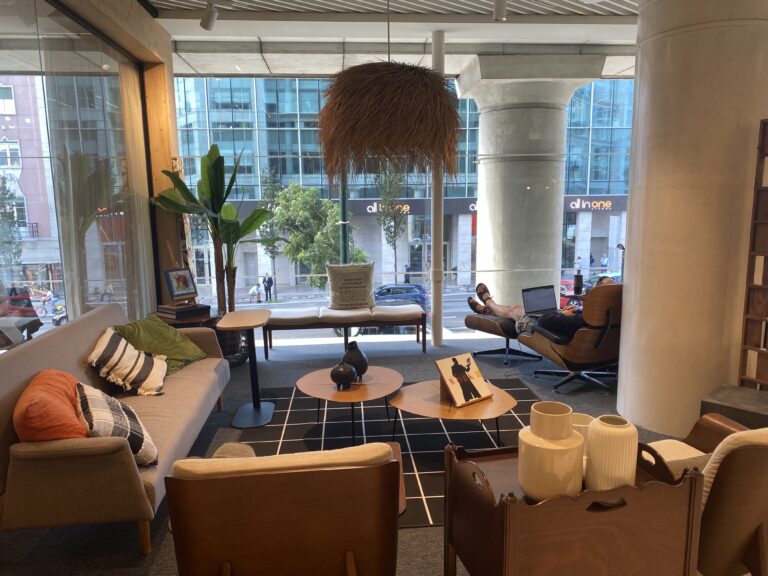
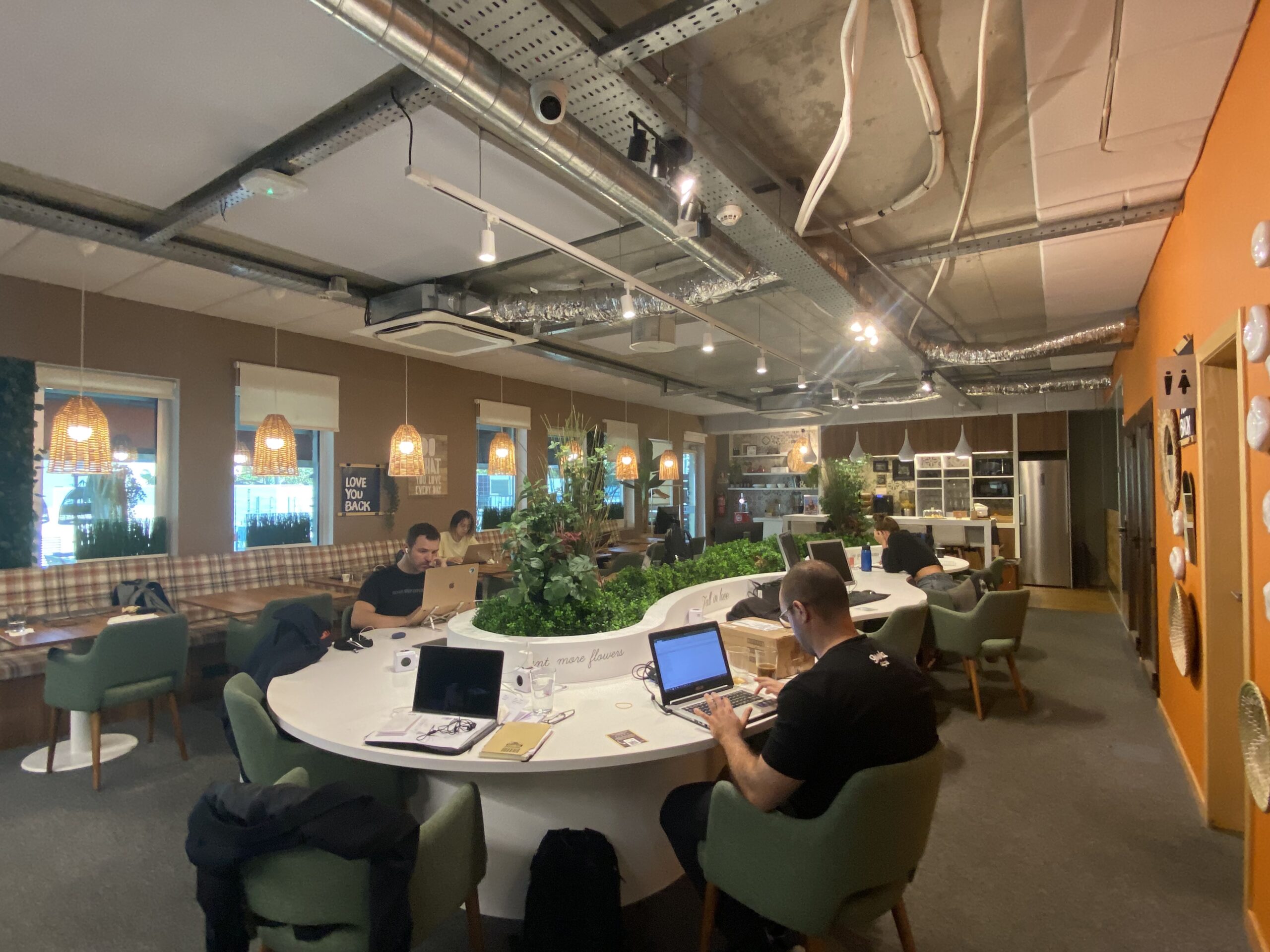
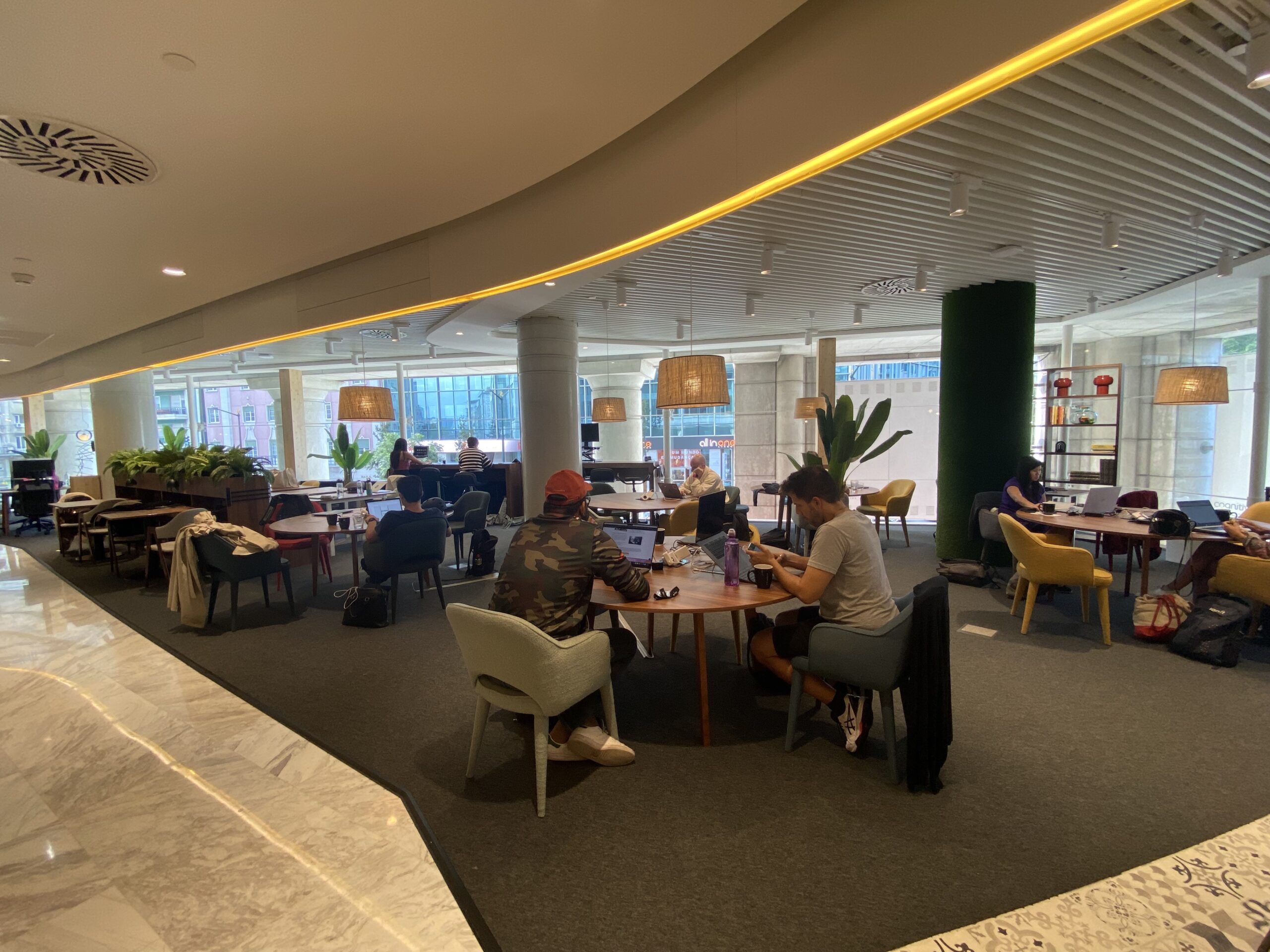
Avila Spaces Avenida da República Coworking, Photo by Becky GillespieAvila Spaces Atrium Saldanha, Photo by Becky Gillespie
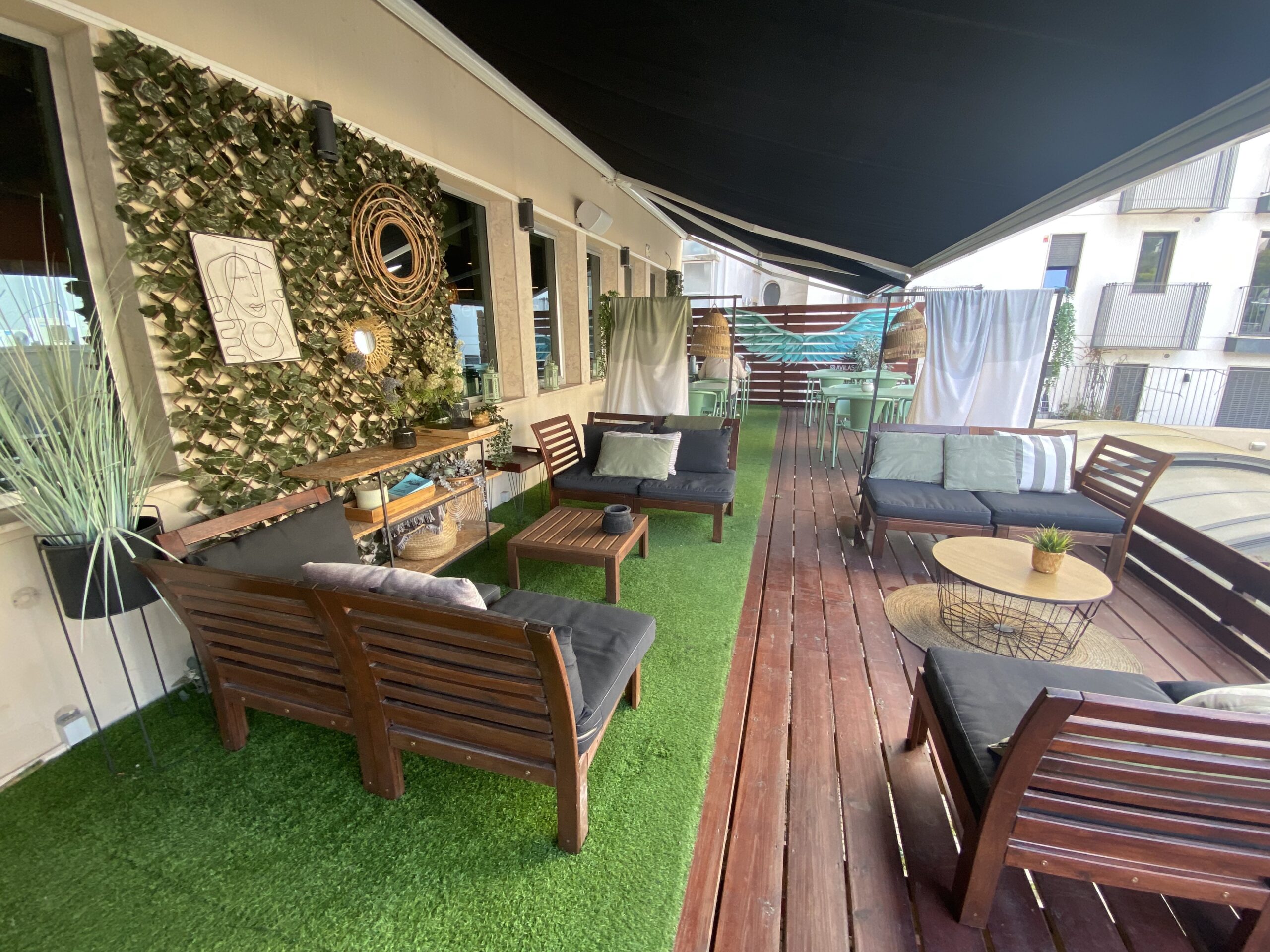
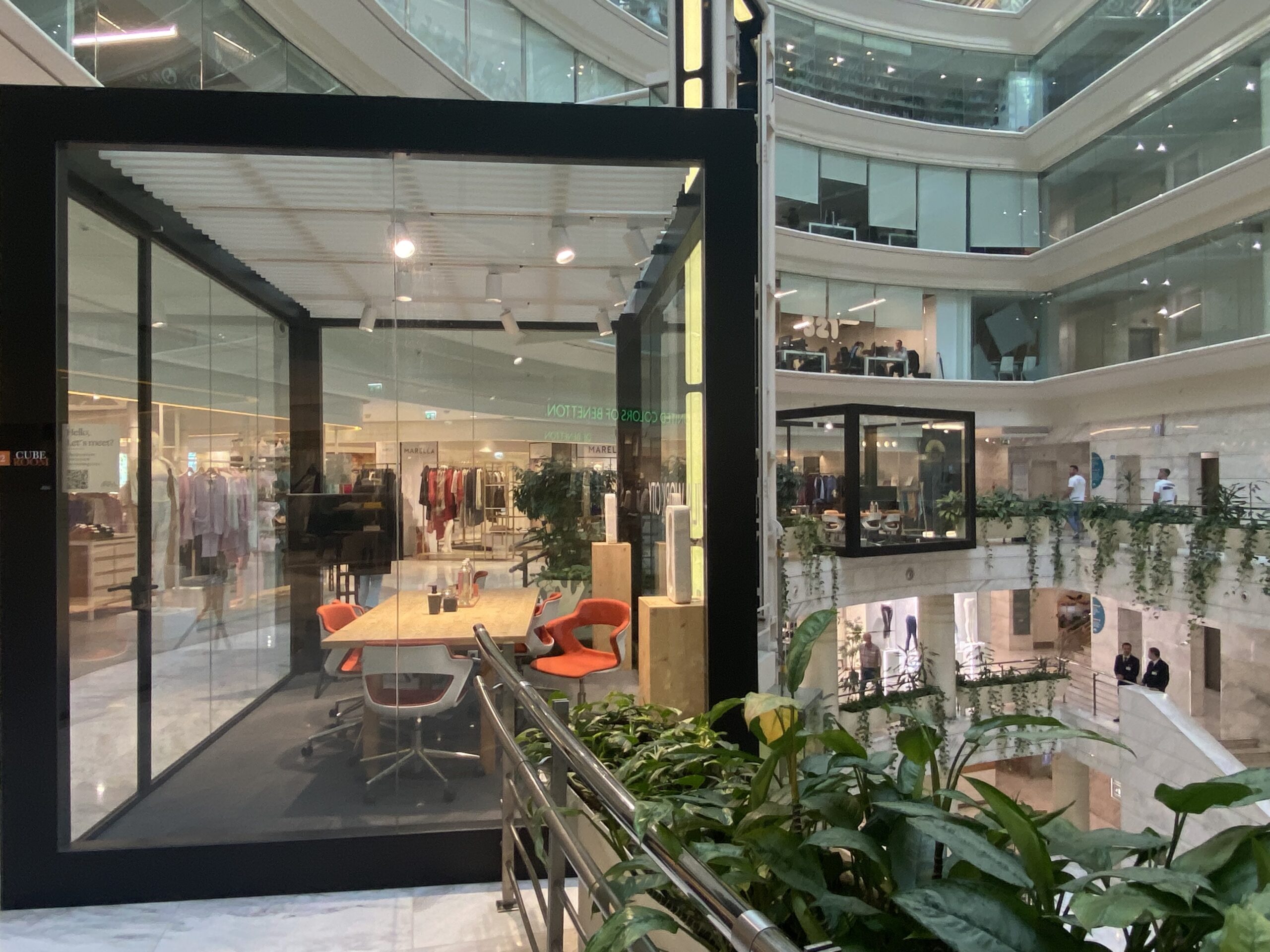
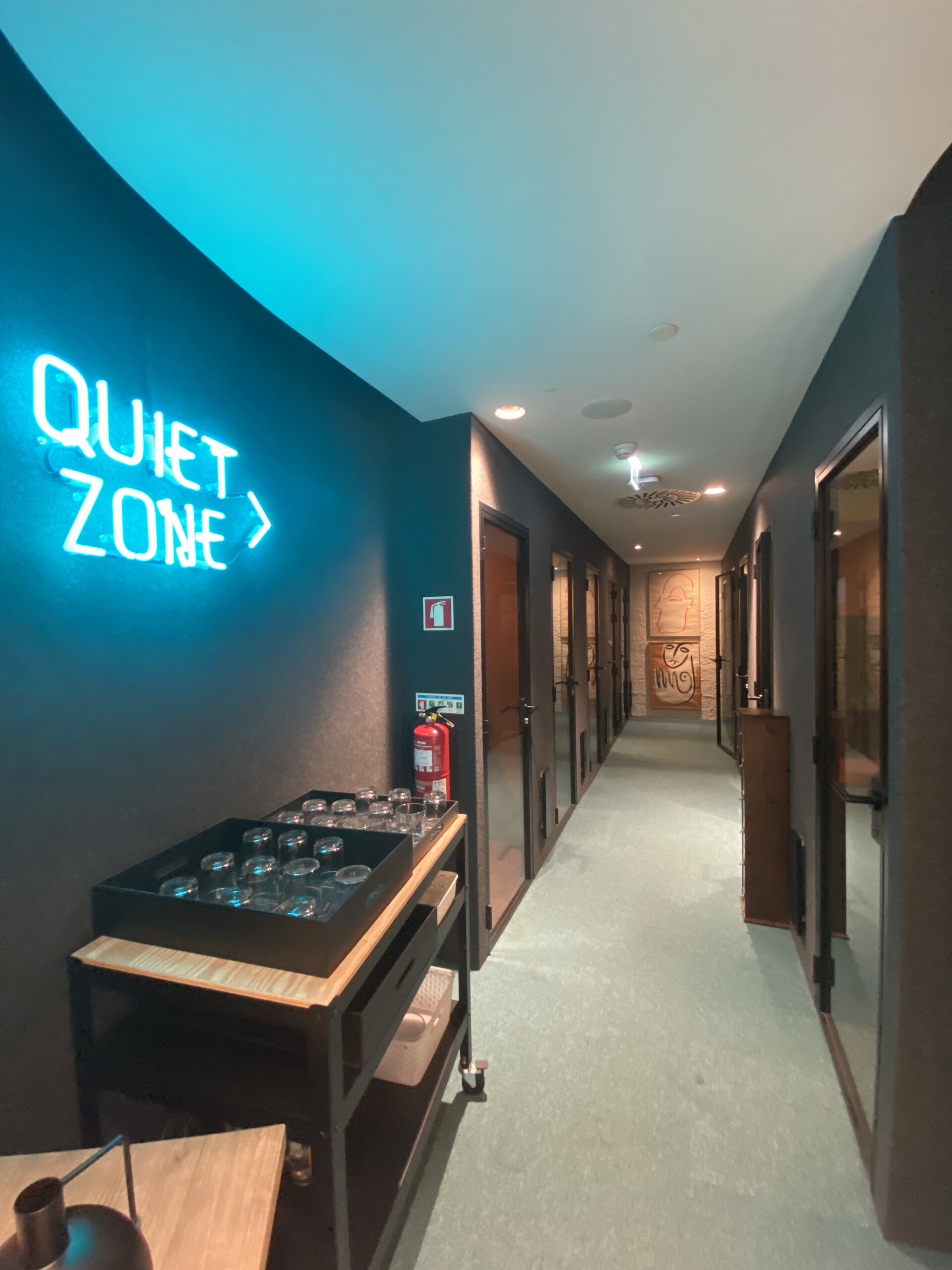
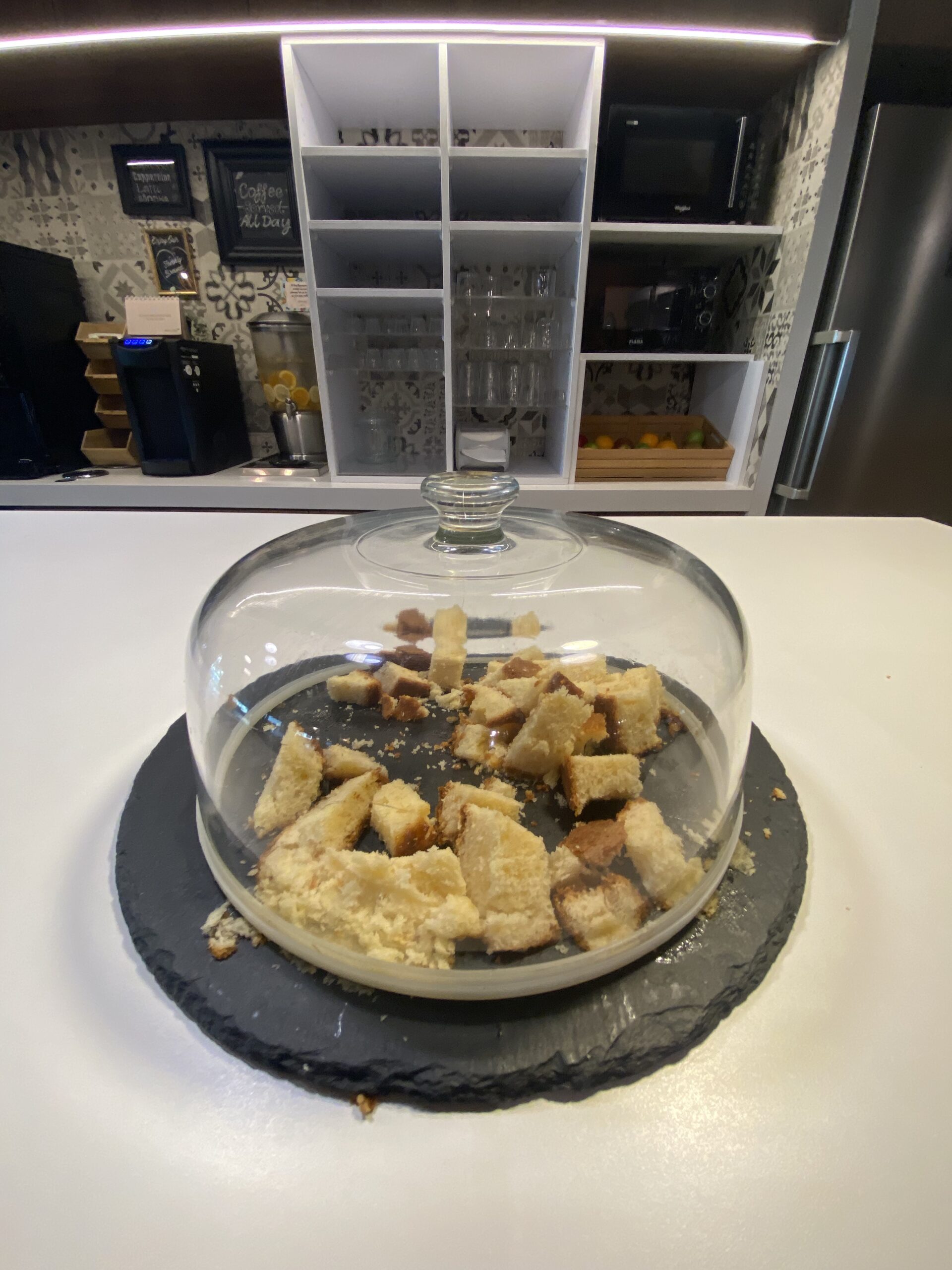
Avila also focuses on high-quality design and decor across its spaces, going above and beyond with its free amenities. Members get access to not only free coffee but also flavored water, fruits, cake, and candy every day. There are also multiple call booths with more privacy than most and high-quality conferencing equipment in every meeting room. Monthly fixed desk members get access to Avila 24/7. Day pass and hot desk members also get access to the space from 8 a.m. to 8 p.m. in addition to monthly events. For a unique Avila experience, try working from one of their cubes right in the middle of the mall in Atrium Saldanha.
Avila Spaces Avenida da República Terrace, Photo by Becky GillespieAvila Spaces Atrium Saldanha Cube Space in the mall, Photo by Becky GillespieAvila Spaces Atrium Saldanha Call Booths, Photo by Becky Gillespie
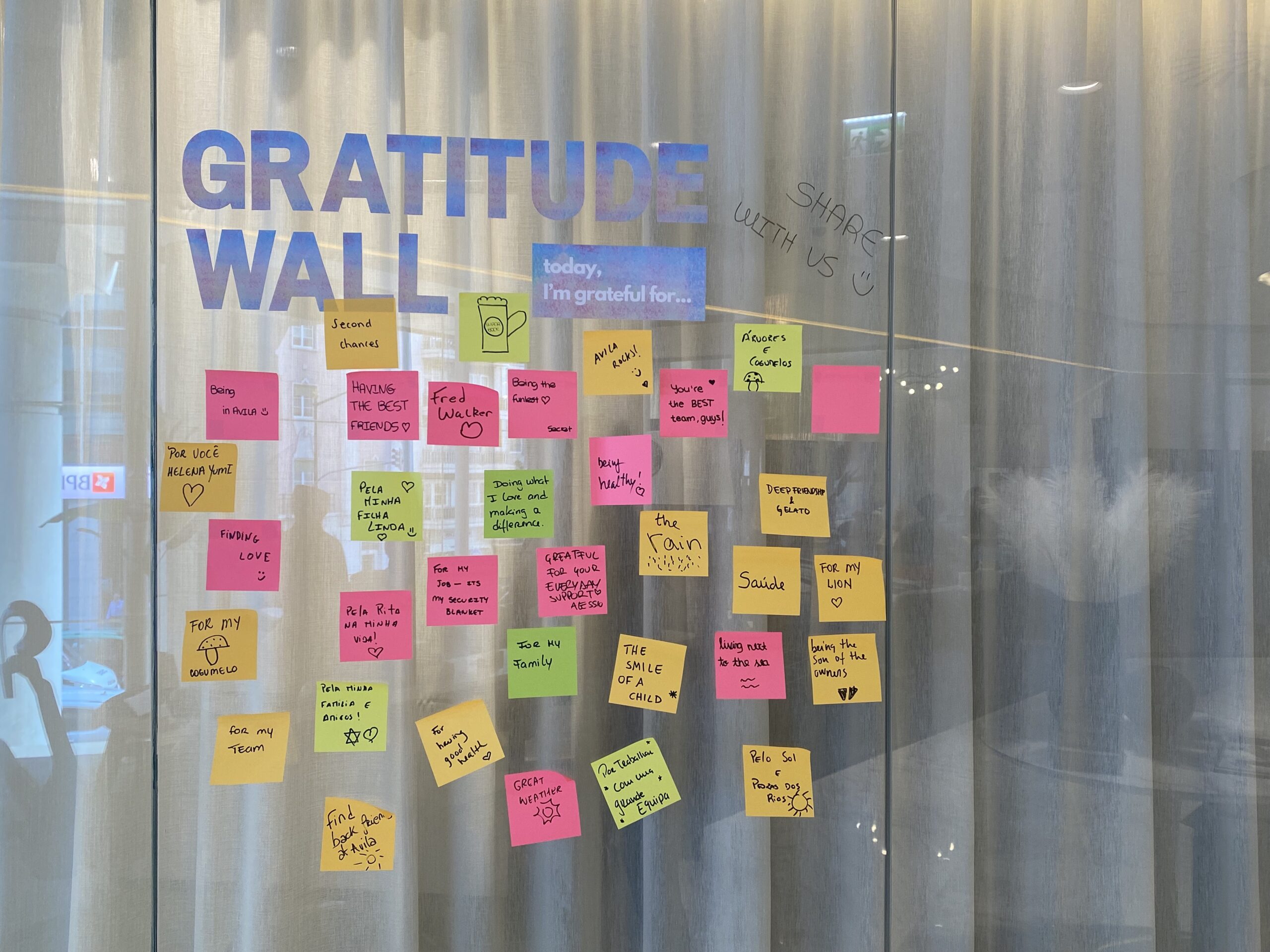
Where Avila really wins is its focus on community starting with its staff. Most coworking spaces that I visited only had one staff member on hand to welcome you (and one that I had to remove from this list had no one around or even a functioning Wi-Fi password), but Avila has 4 to 5 at its Atrium location and a minimum of two staff members at its original location at Avenida da República. They are all managed by Avila’s CEO & founder Carlos Gonçalves, always ready with a smile and a kind word when members enter the space. Carlos has been involved with the coworking industry for 13 years and his passion for the space shines through with his tireless commitment to improving Avila Spaces.
Avila Spaces Atrium Saldanha, Photo by Becky GillespieAvila Spaces Avenida da República Free Cake Every Day, Photo by Becky Gillespie
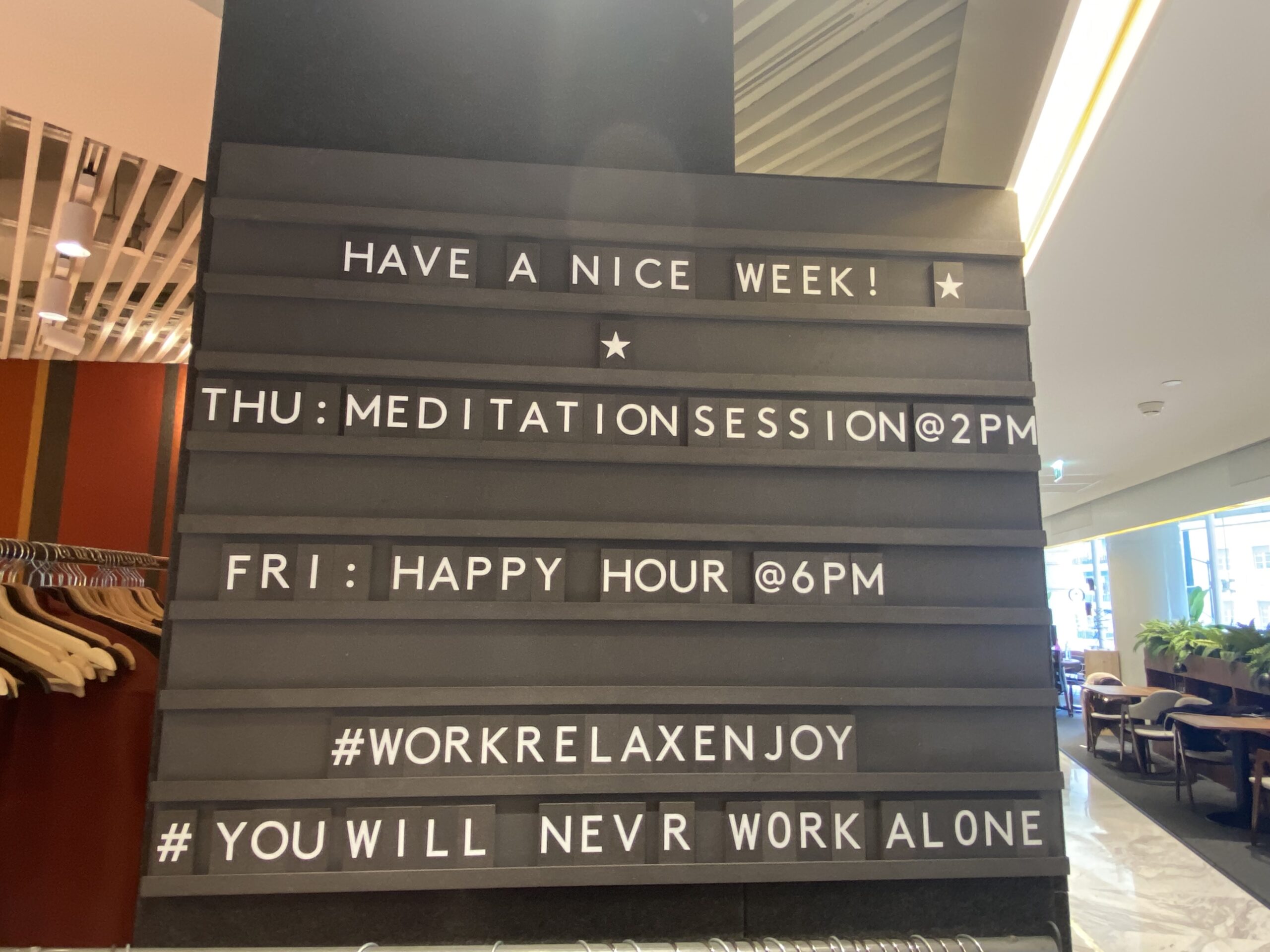
What sets Avila apart from the other coworking spaces in Lisbon is its community events. From yoga, meditation, different country-themed lunches, and Friday wine nights in its spaces to boat trips, golf outings, and rooftop parties, Avila is always planning its next event open to both members and non-members.
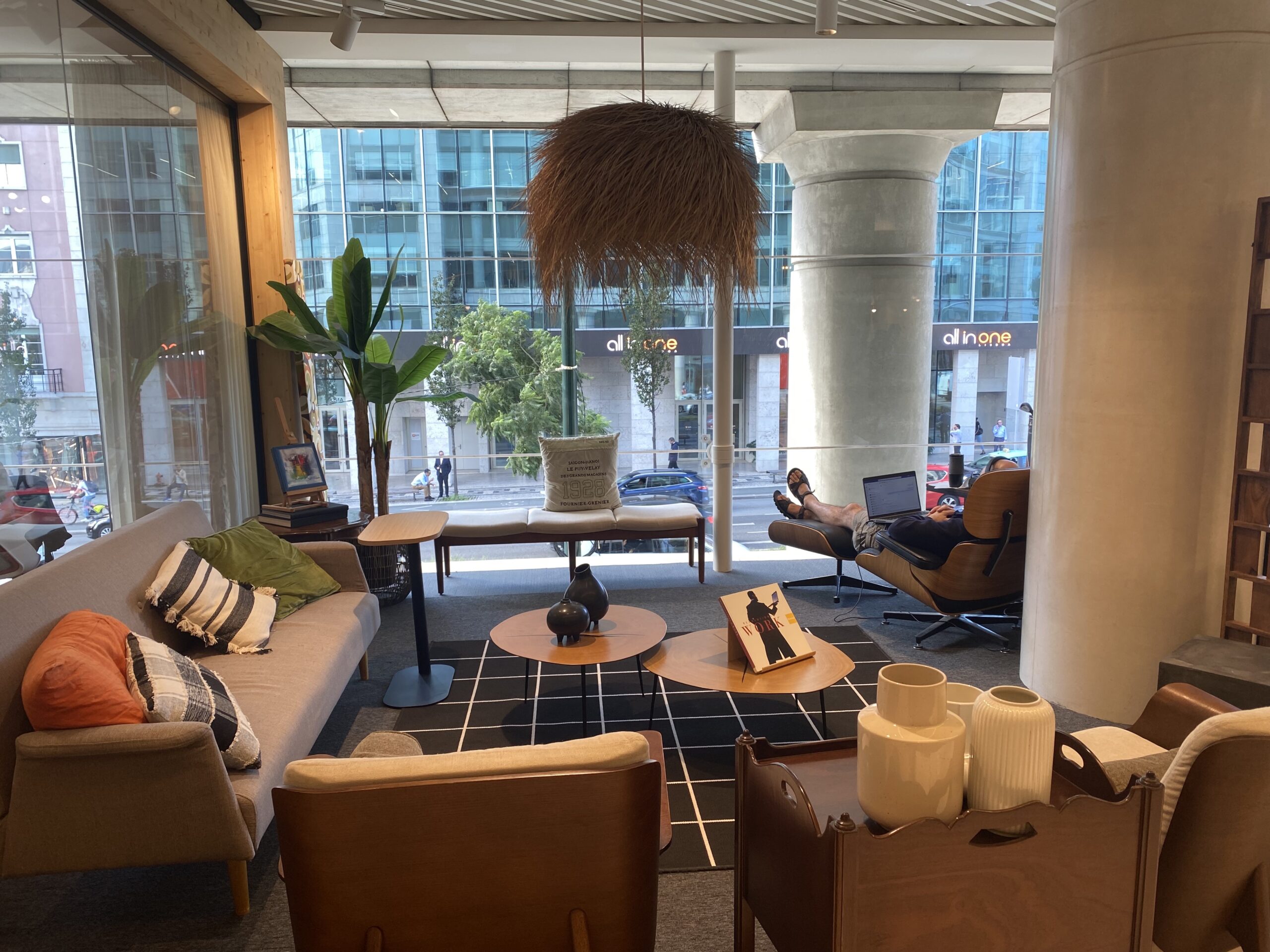
Avila Spaces Atrium Saldanha, Photo by Becky GillespieAvila Atrium Saldanha, Photo by Becky Gillespie
Avila’s popularity is evident when you walk in the door, and the mall location at Atrium Saldanha fills up quickly. Avila’s third space is opening in November 2023 in Parque das Naçōes. Stay tuned to its website for more details.
If you would like to get a free 1-day trial at Avila Spaces, please mention Portugal.com and this article.
Location: Avila Spaces – The Original: Avenida da República 6
Avila Spaces Atrium Saldanha (in the mall): Praça Duque de Saldanha 1 2o andar
Avila Spaces Parque das Nações (opening November 2023): Av. Dom João II 1.7.2.1., Piso 0
Hours of Operation: Hot desk and day rate members: 8 am – 8 pm (weekdays only), 24/7 access to fixed desk members
Prices: Day Pass – 50 €, 10 Day Pack – 220 €, Hot Desk – 220 €, Hot Desk Plus 4 h of meeting time per month – 275 €, Fixed Desk – On request. Please note that only the Fixed Desk option includes 24/7 access
Accepts a Croissant Membership? Yes, but log on to the app early because this place is popular
2. Second Home Lisbon
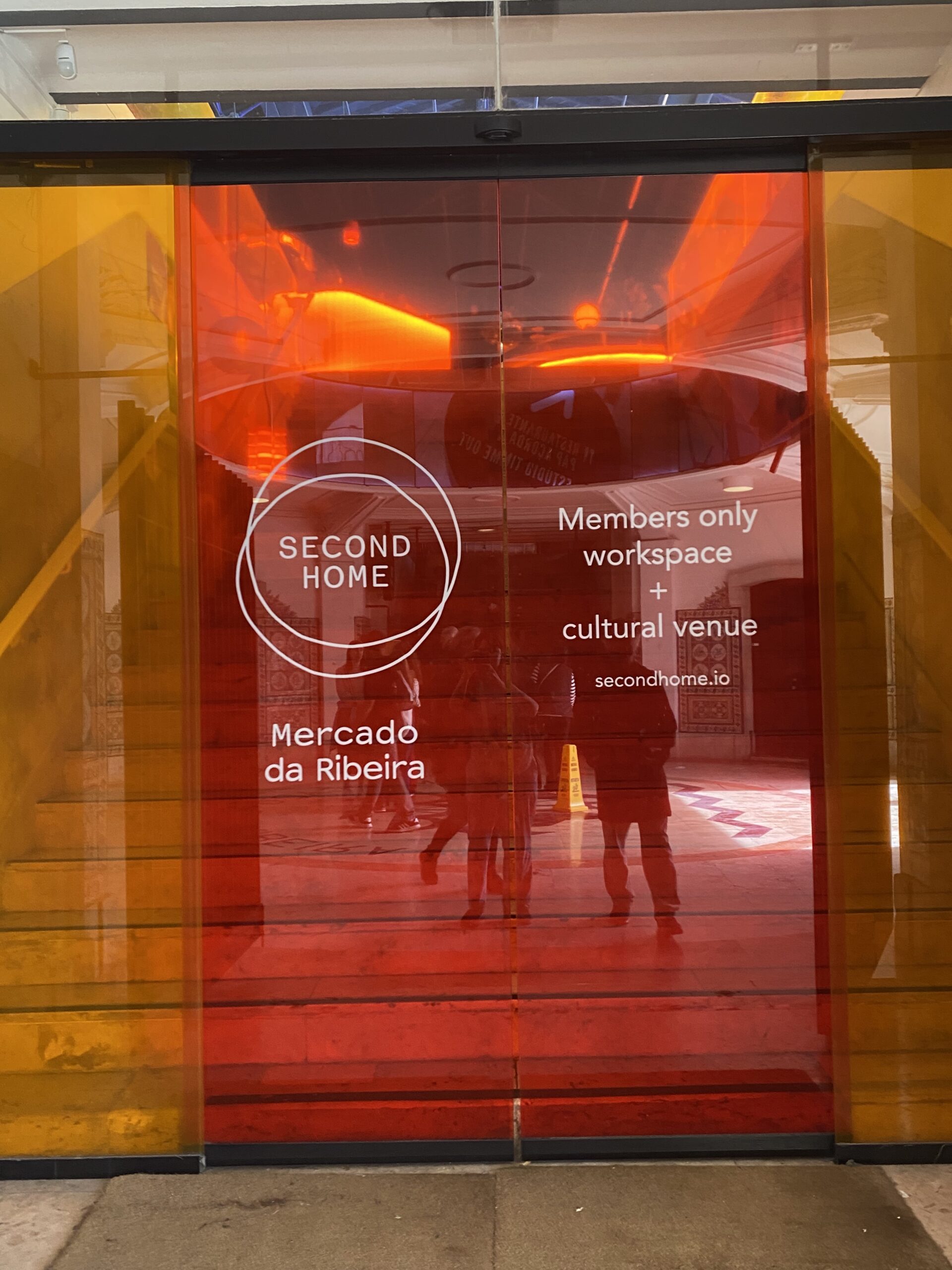
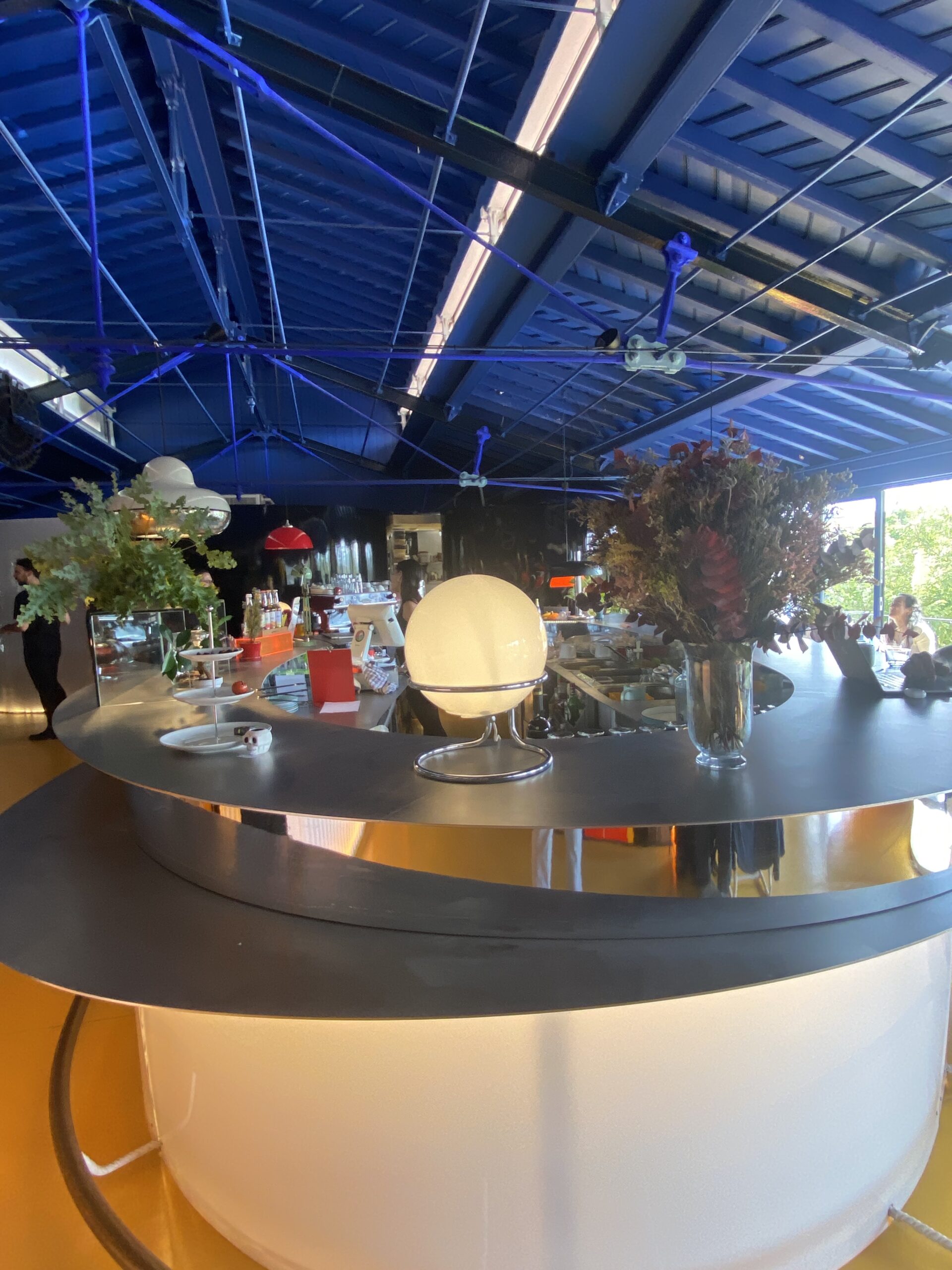
Second Home Lisbon is actually the third location for the company behind it, which started with two locations in London and has since expanded to Los Angeles. Second Home doesn’t view itself as a coworking space but as a creative accelerator, focusing on shaping creative and inspiring environments. Walking into the Lisbon location feels first like you’re entering a spaceship and then like you’re entering an urban jungle, with plants almost taking over the location. Desks need to make space for the plants here, not the other way around.
Second Home, Photo by Becky Gillespie
Members can enjoy free coffee in the working area along with a cafe in the main entrance area where they can high-quality coffee and baked goods. Other amenities include unlimited printing, phone booths, and fiber optic broadband.
Second Home, Photo by Becky Gillespie
One of the best things about Second Home is its location above the Mercado da Ribeira and Time Out Market, a huge gourmet food court. Right outside the market is the Dom Luis Garden where you can lay out on the grass or have coffee in the kiosk before returning to work.
Second Home Lisbon, while expensive, might be worth it for the location and inspired working space.
Location: Mercado da Ribeira, Time Out Market, 1o andar, Avenida 24 de Julho
Hours of Operation:
Hot desk and day rate members: 8 am – 10 pm (weekdays only), 24/7 access to fixed desk members
Prices: Day Pass – 30 GBP (yes, British pounds), Hot Desk – 307 €, Fixed Desk – 418 €
Accepts a Croissant Membership? No
3. Idea Spaces
Idea Spaces prides itself on being an entrepreneurial community offering premium spaces in four locations across the city. In many ways, it is similar to Avila Spaces in terms of location and focus on attracting a mix of workers from large companies and individual entrepreneurs. Compared to Avila, it doesn’t put as much effort into creating consistent events to engage its members or using the latest conferencing equipment. There are also a limited number of phone booths for the size of the spaces and dogs are allowed, which can sometimes cause noise issues for people on conference calls.
Idea Spaces Palácio Sottomayor, Photo by Becky Gillespie
If you are living near one of the Idea Spaces, it is a fair option. I would choose it as an alternative to Avila if their space was filled or they were not taking any more members.
Location: 4 locations across the city are included in the membership fee, including Av. Fontes Pereira de Melo 16 (Palácio Sottomayor) and Av. Defensores de Chaves 4 (Saldanha)
Hours of Operation: Hot desk and day rate members: 9 am – 6 pm (weekdays only), 24/7 access to fixed desk members
Prices: Day Pass – 15 €, Weekly Pass – 60 €, Hot Desk – 120 €, Fixed Desk – Inquire at the space
Accepts a Croissant Membership? Yes
4. Heden Coworking
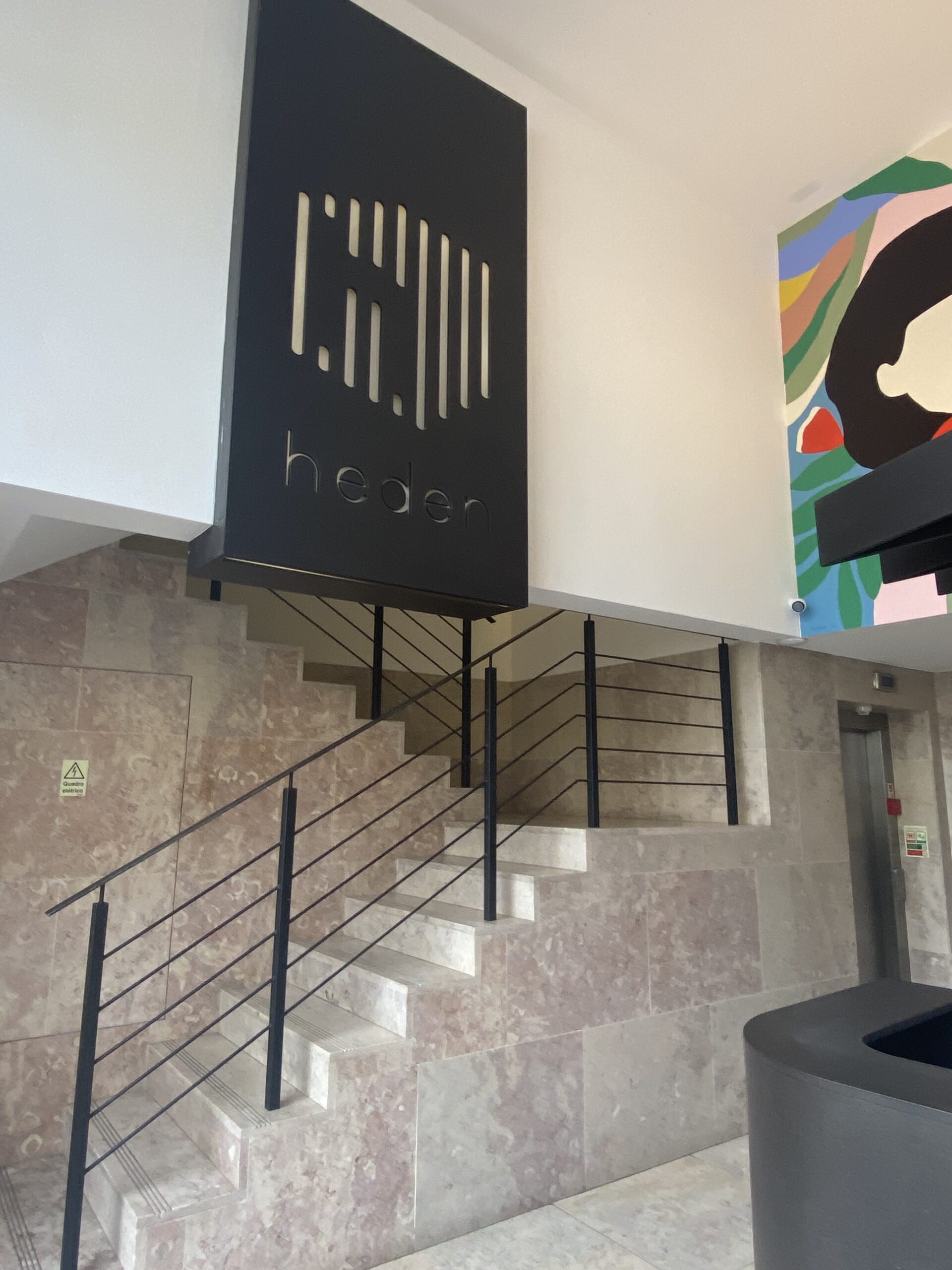
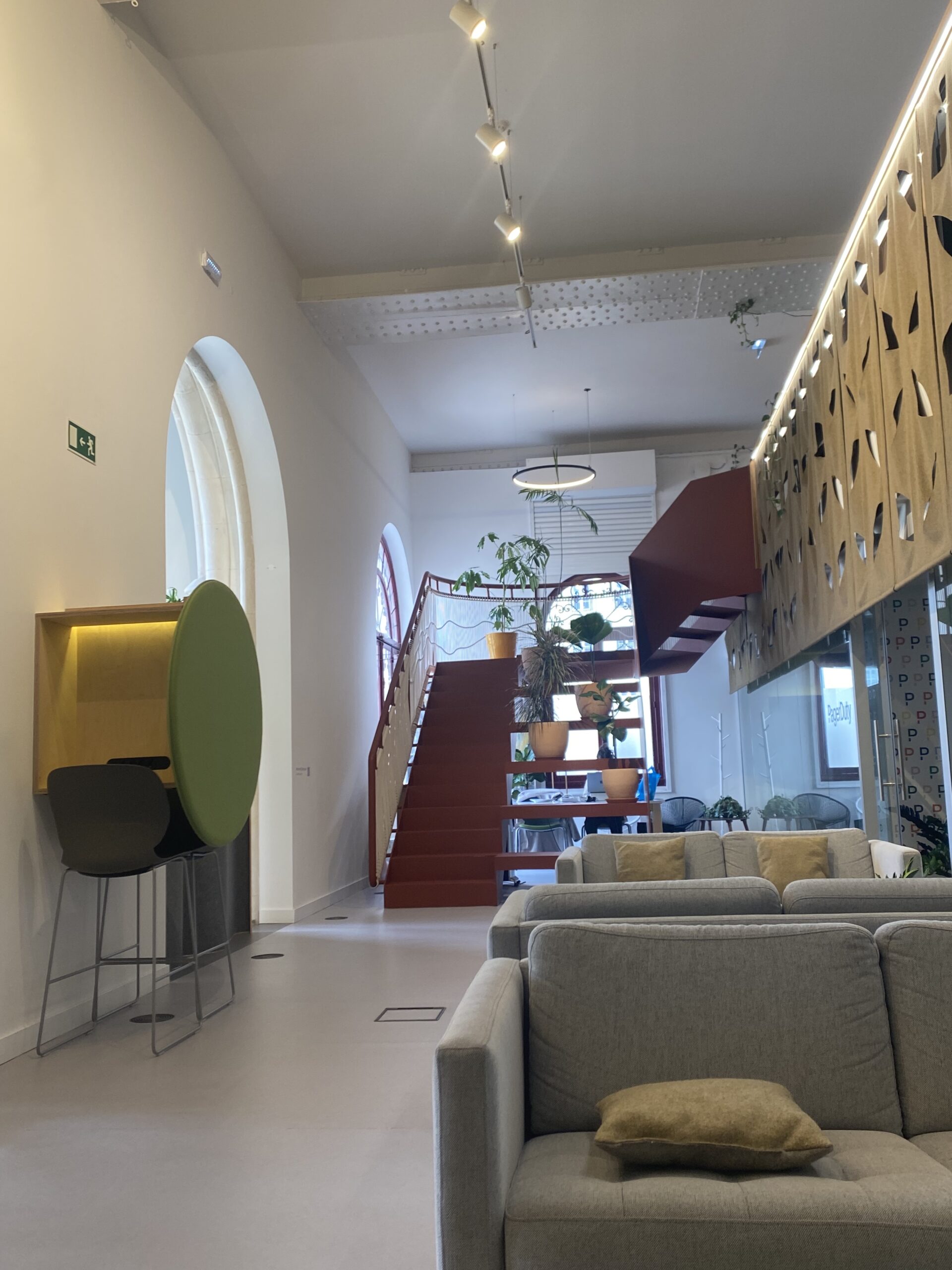
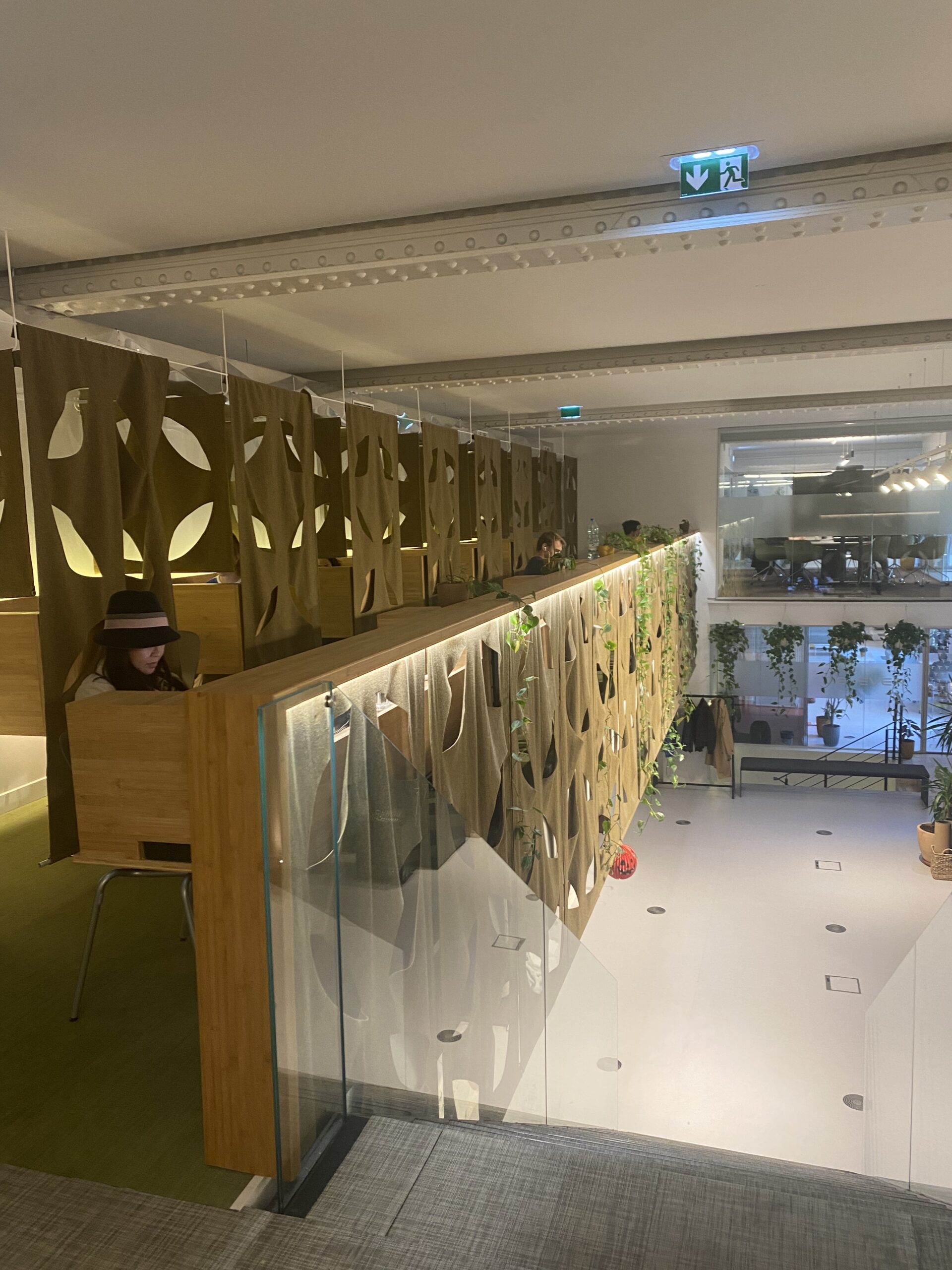
Heden Coworking is another coworking chain based in Lisbon that prides itself on cultivating inspiring spaces. Its newest location is attached to the Rossio Train Station and offers an interesting array of spaces to work from within the space, whether it’s a private booth, conference room, couch, or long table overlooking the entrance. Other locations include Santa Apolónia, Chiado, and Graça. Heden offers big spaces with free high-quality coffee and tea, microwaves, refrigerators, a copy machine, and even options to rent out spaces for art studios in some of their locations.
Dogs are also welcome in Heden’s spaces so please keep this in mind for those who may take a lot of calls. Many members take calls right at their computers without going to a private booth, so the environment can sometimes get noisy.
Overall, I appreciated Heden’s creative spaces and friendly staff. If you’re looking for a more relaxed space and a fun, buzzing environment, Heden might be your answer.
Heden Rossio entrance, Photo by Becky GillespieHeden Rossio, Photo by Becky GillespieHeden Rossio, Photo by Becky Gillespie
Location: 4 locations across the city included in the membership fee, including Largo do Duque de Cadaval 17 Fracção I (Rossio) and Largo Rafael Bordalo Pinheiro 29 2nd floor (Chiado)
Hours of Operation: Hot desk and day rate members: 9 am – 6 pm (weekdays only), 24/7 access to fixed desk members
Prices: Day Pass – 20 €, Hot Desk – 250 €, Fixed Desk – Inquire at the space
Accepts a Croissant Membership? Yes
5. Nimbler Spaces
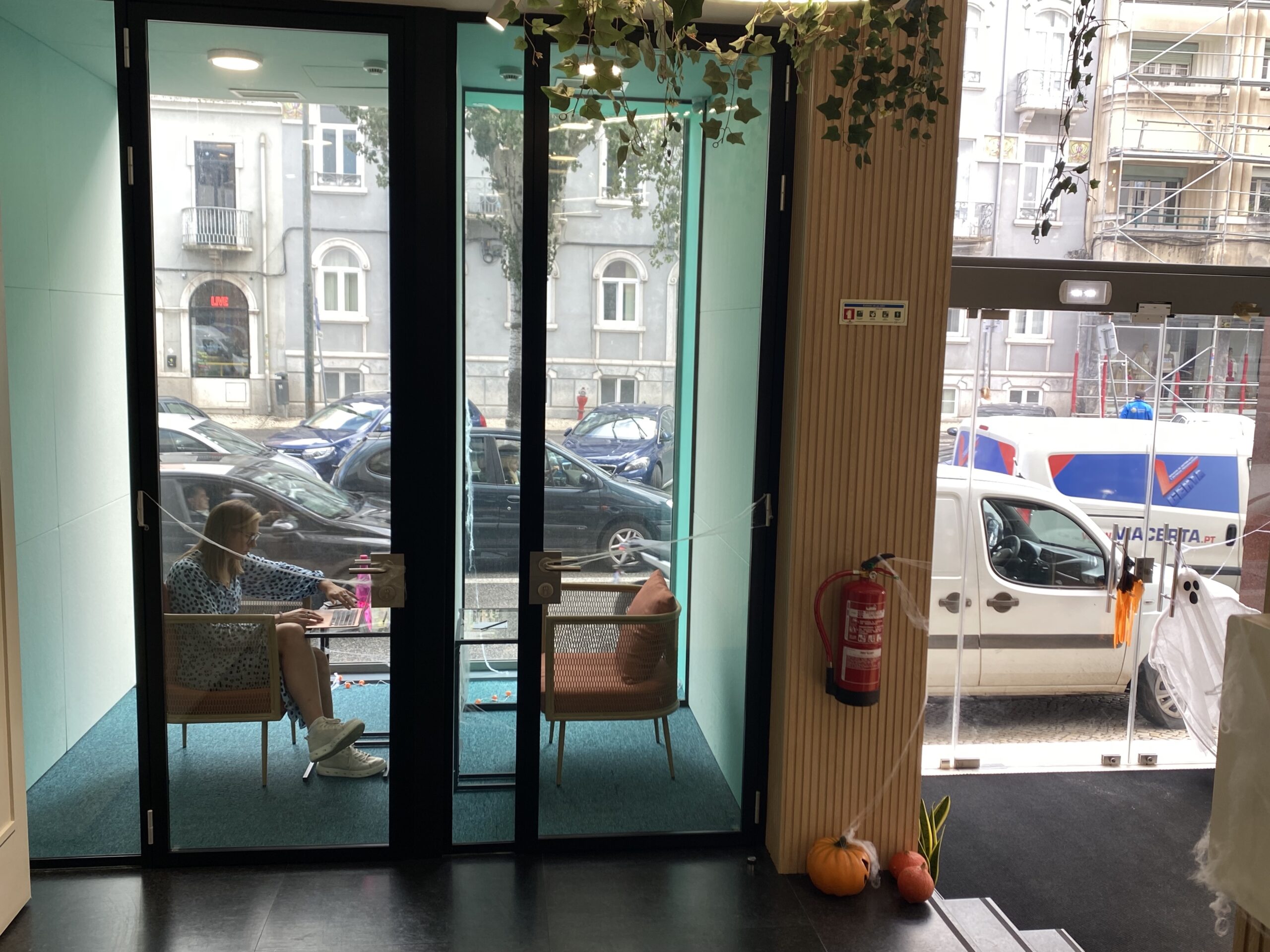
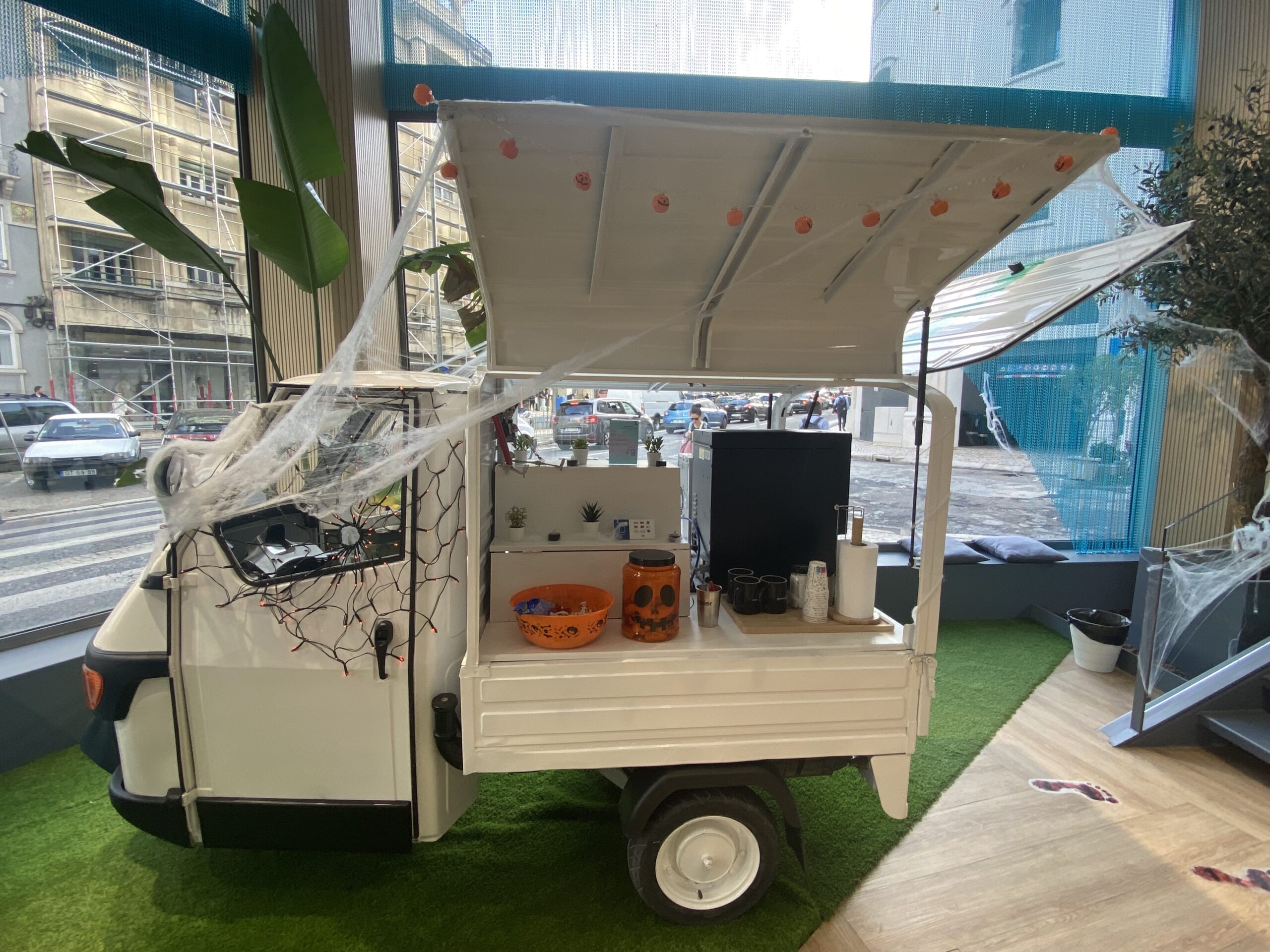
Nimbler Spaces started out in the USA with locations in Chicago and Miami before moving over to the Iberian peninsula with Barcelona and now Lisbon. Located in the easy-to-access Marquês do Pombal, Nimbler Spaces offers a small, cozy lounge area for day pass and Croissant members with access to free coffee, tea, and snacks. There is also a vending machine offering simple snacks and meals. The staff here are incredibly friendly and are on hand to help with anything you may need. Two phone booths are also located at the lobby level while conference rooms and private offices take up the higher floors in the building. There is a small rooftop on the 7th floor to enjoy those sunny Lisbon days.
Nimbler Spaces, Photo by Becky GillespieNimbler Spaces, Photo by Becky GillespieSnack Cart, Photo by Becky Gillespiev
Location: Av. Duque de Loulé 110
Hours of Operation: Hot desk and day rate members (weekdays only): 9 am – 6 pm, 24/7 access to fixed desk members
Prices: Day Pass – 25 €, Weekly Pass – 50 €, Hot Desk – 175 €, Private Office – Please contact the space
Accepts a Croissant Membership? Yes
6. Resvés Cowork Space
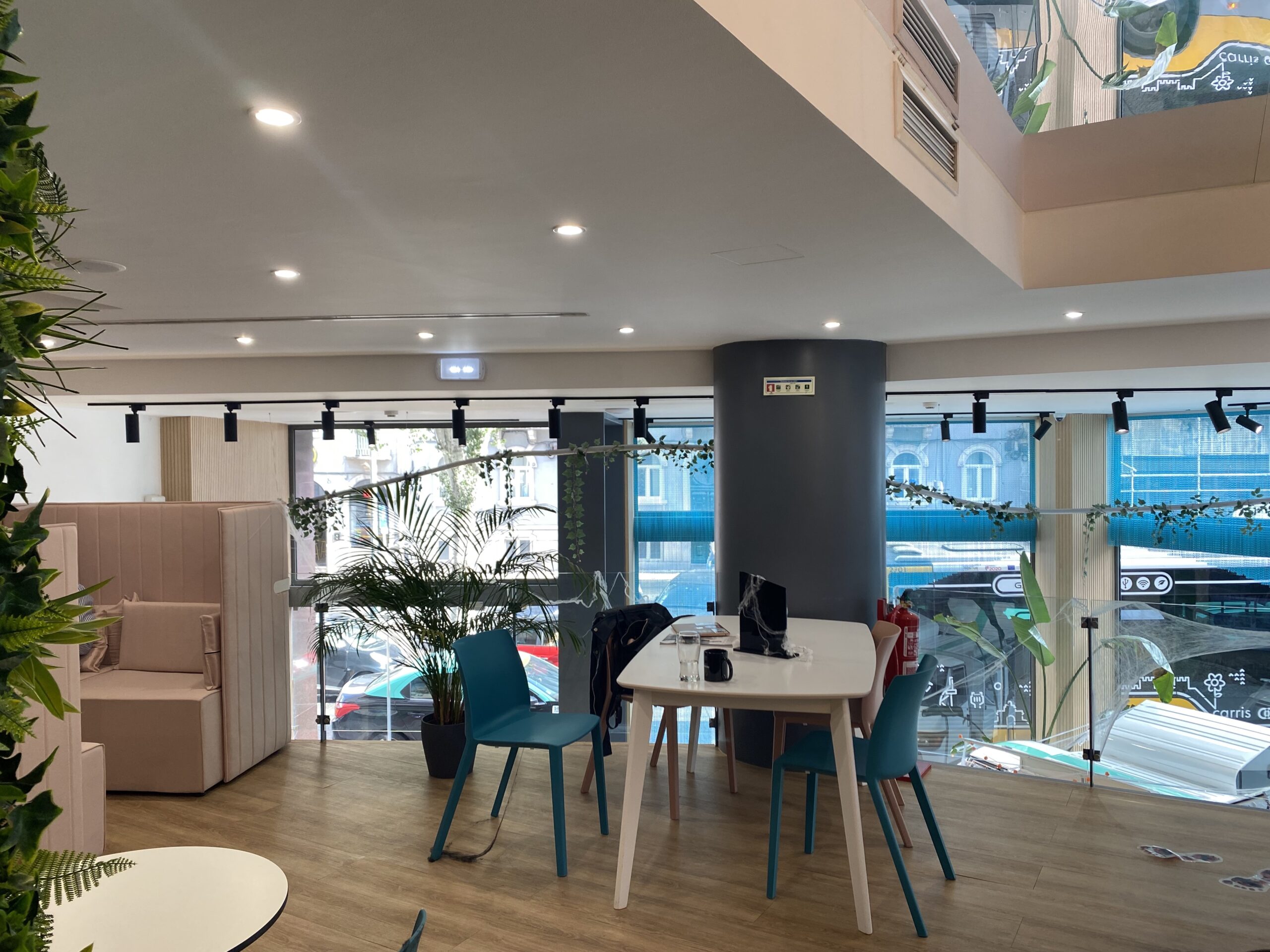
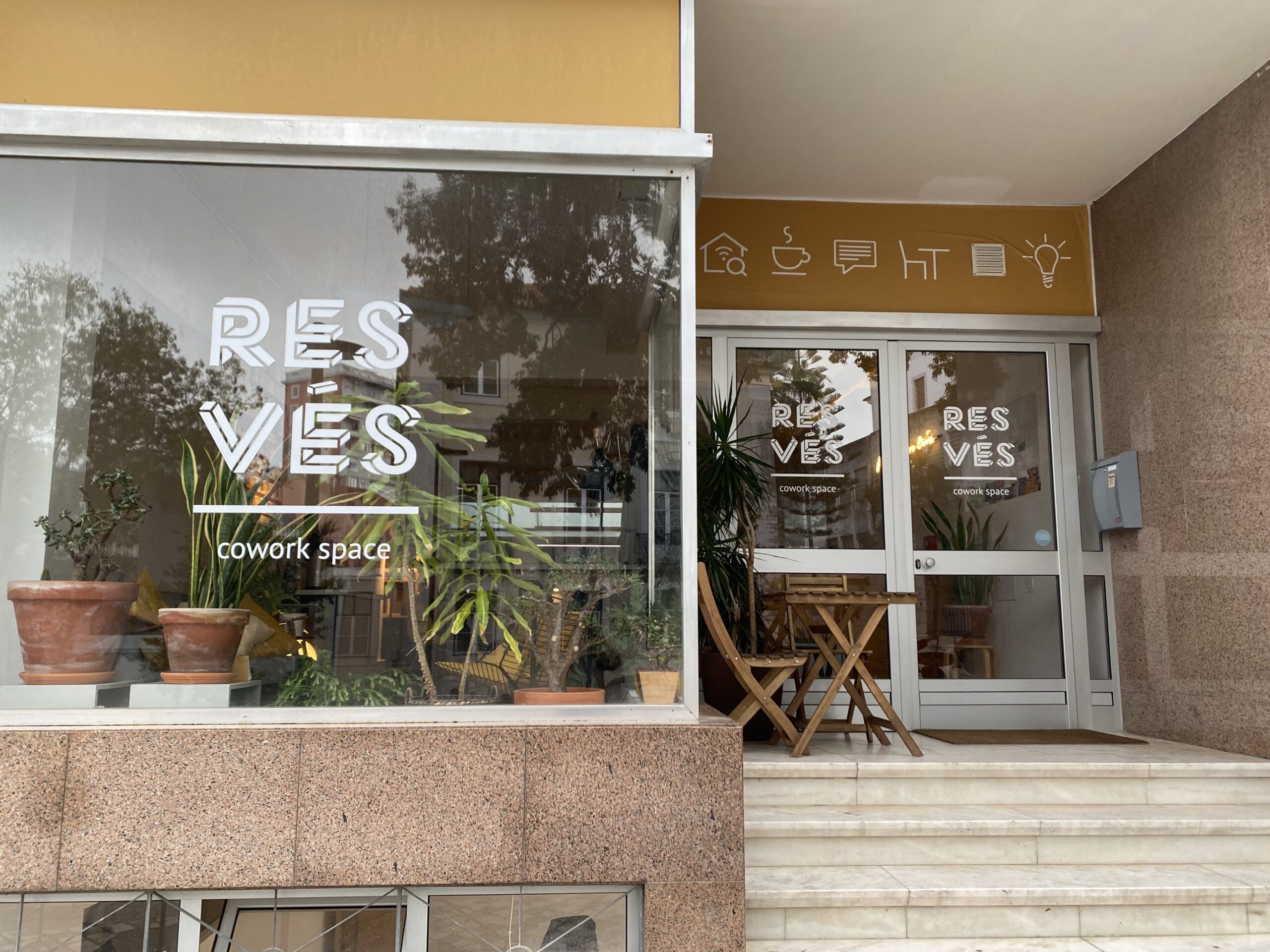
Resvés Cowork Space is a delightful space not far from Jardim da Estrela with two floors of coworking possibilities. Day passes are available, but sadly the wait to become a monthly member is five months long! This is perhaps due to Resvés Cowork’s lovely location in Campo de Ourique, an area with no other coworking spaces of its quality available. It is clearly popular with its members and pays great attention to building its community. It offers several weekly events including lunch with its members and Portuguese-English exchange. Enjoy the outdoor terrace or make new friends in the front lobby. Hopefully, Resvés can expand to a second space to be able to open up more monthly membership options.
Resvés Cowork Space, Photo by Becky Gillespie
Location: R. Saraiva de Carvalho 1C
Hours of Operation: Hot desk and day rate members (weekdays only): 9 am – 6 pm, 24/7 access to fixed desk members
Prices: Day Pass – 25 €, 4-Day Pass – 88 €, No Hot Desk available, Fixed Desk – 260 € (please join the wait list)
Accepts a Croissant Membership? No
7. LACS Communitivity of Creators
LACS (which stands for Lisbon Art Center & Studios) is another chain of coworking spaces across Lisbon including spaces in Anjos, Santos, and Cascais. This specific location is in Alcântara. Prices here are a bit lower for monthly memberships than some of the other coworking spaces in town, but this is traded off with a slightly less reliable internet connection. Enjoy the rooftop terrace with great views of the Tejo River along with regular community events. For those looking for a coworking space in the western part of the city, this is a good option.
Location: Rocha do Conde de Óbidos
Hours of Operation: Hot desk and Croissant members (weekdays only): 9 am – 7 pm, 24/7 access to fixed desk members
Prices: Day Pass 24€/3 Days (please check this at the front desk), Virtual Office – 45 € (includes using LACS as your address, mailbox, and access to LACS events), Hot Desk – 120 €, Fixed Desk – 190 €, Ateliers and Private Offices – 250 €
Accepts a Croissant Membership? Yes
8. Lisbon Workhub
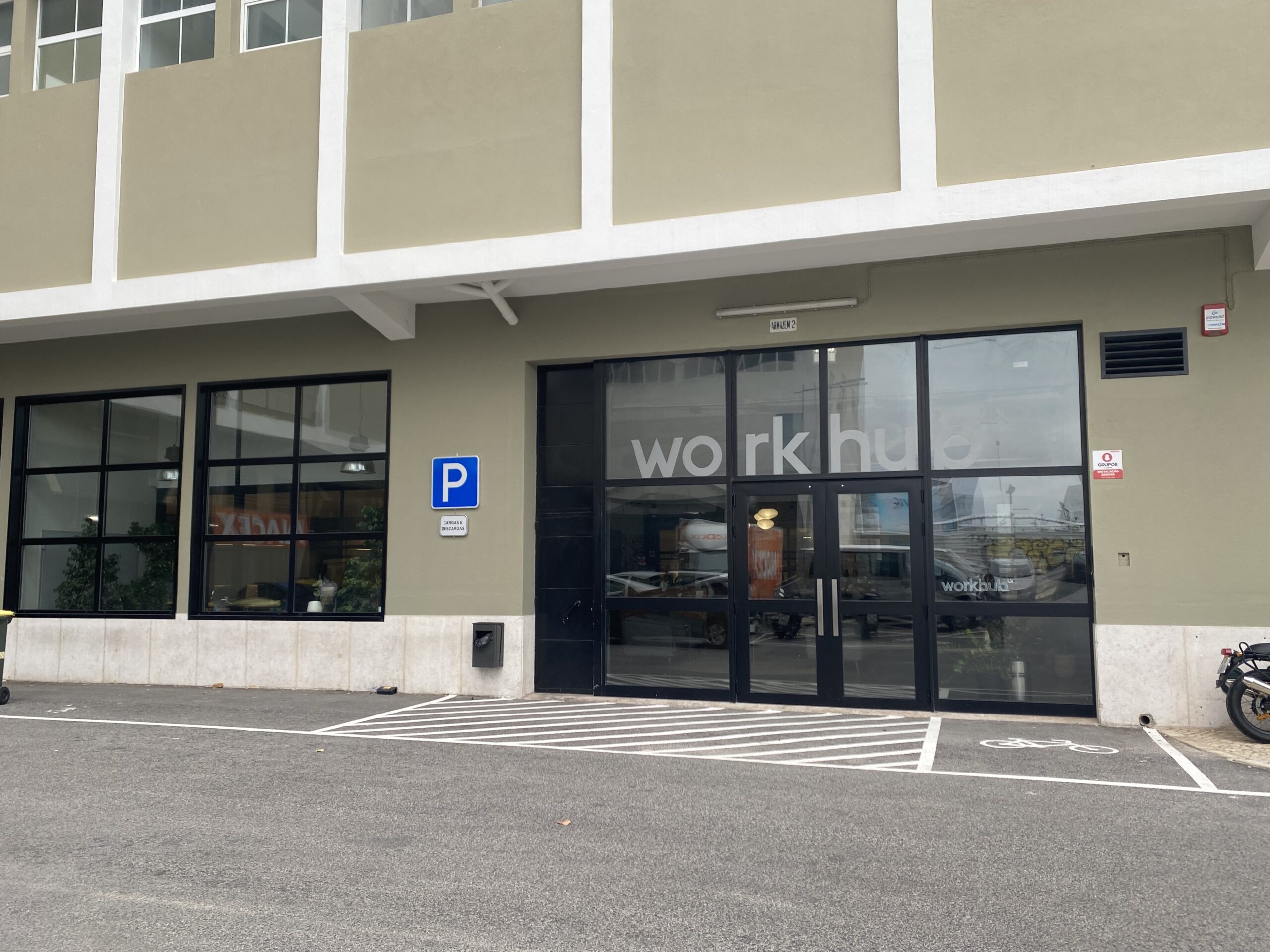
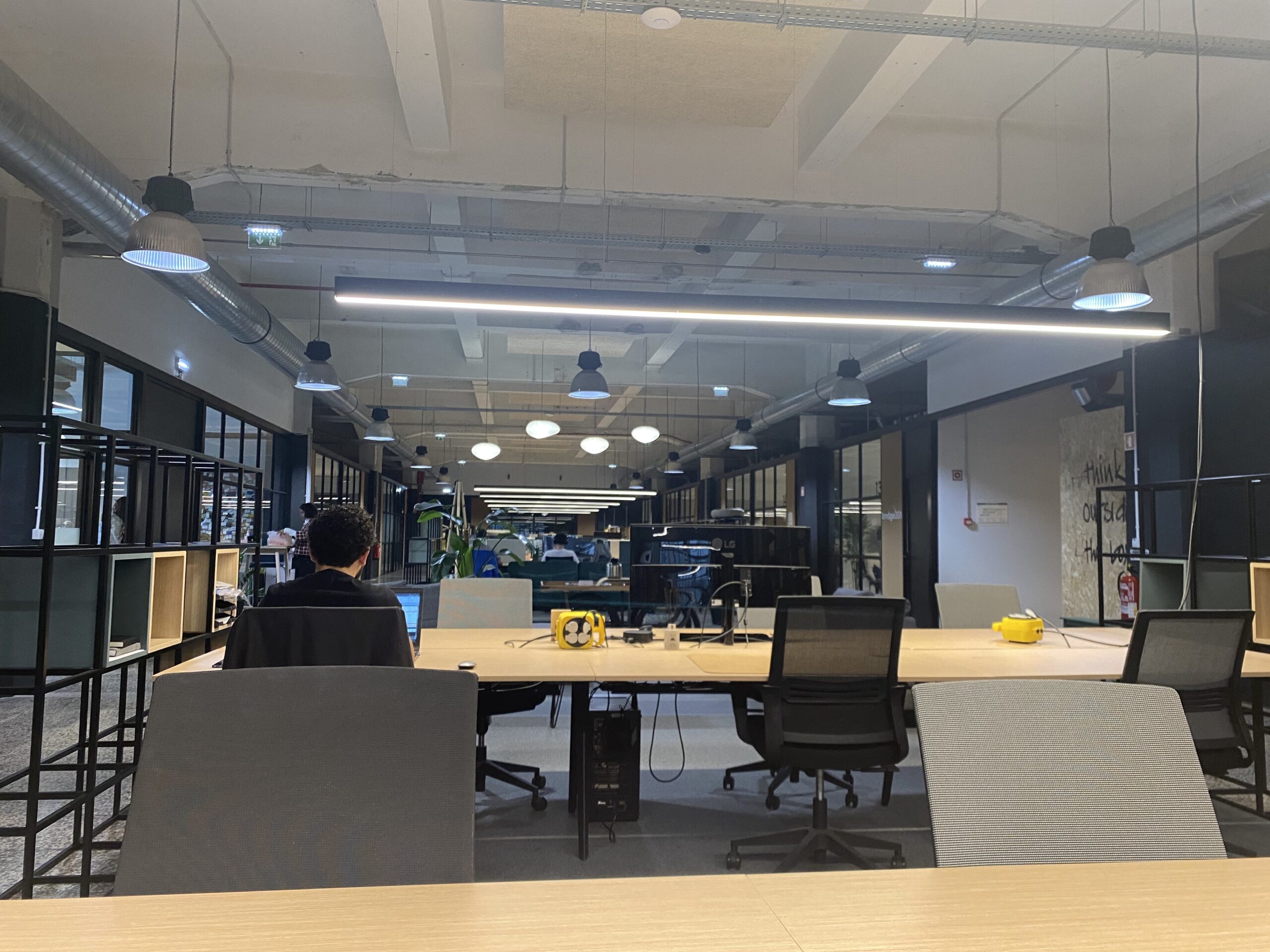
Lisbon Workhub is a large, well-organized space in a warehouse/art-deco wine factory near Braça da Prata on the northeastern side of town. It is popular with start-up founders and tech workers. Members can rent small offices or workspaces for presentations and meetings. The monthly membership is quite affordable here for the size and amenities of the coworking space. Three private phone booths are available, and members can also enjoy free tea and fresh fruits on Tuesdays. There are places to eat nearby and a few coffee shops.
Lisbon Workhub Entrance, Photo by Becky GillespieLisbon Workhub, Photo by Becky Gillespie
Location: R. Tabaqueira A2
Hours of Operation: Hot desk and day rate members (weekdays only): 9 am – 6 pm, 24/7 access to fixed desk members
Prices: Virtual Office – 45 € (includes using Workhub as your address, mail box, and 4 hours of time in meeting rooms), Day Pass – 19 €, pack of hours – 20 €/10 hours, Hot Desk – 120 €, Fixed Desk – 175 €
Accepts a Croissant Membership? Yes
9. Spaces Lisbon
Spaces is a brand of Regus, one of the largest shared spaces around the world. Centrally located in Marquês de Pombal, Spaces Lisbon is next to the sweeping Parque Eduardo VII, a great place to take a break in the middle of the day. Spaces has great staff ready to help you with whatever you need whether it’s lunch catering or preparing a delicious coffee at the in-house cafe. The central location and connection with Regus makes this a more expensive coworking membership compared to some others on the list. The well-maintained facilities and proximity to other services in the area may make it worth it.
Location: Praça Marquês de Pombal 14
Hours of Operation: Hot desk and day rate members (weekdays only): 9 am – 6 pm, 24/7 access to fixed desk members
Prices: Virtual Office – 69 € (includes Spaces Lisbon as your address and mailbox), Hot Desk – 5 days per month – 79 €, 10 days per month – 109 €, full month – 179 €, Fixed Desk – 239 €, Private Office – 269 €
Accepts a Croissant Membership? No
Whatever type of coworking setup you’re looking for, Lisbon can provide it. The large number of affordable coworking spaces in various parts of the city was one of the many reasons that I decided to move to Lisbon. I also recommend getting a Croissant membership when you first arrive in Lisbon, so you can try out a number of places without needing to sign up at each place. Once you have found your favorite spot, I recommend getting a monthly membership to tap into the local community, get 24/7 access, and stay connected. Happy coworking in Lisbon!
During the searches connected to the investigation that led to the resignation of the Portuguese Prime Minister, the authorities found 75,800 euros in cash inside the Prime Minister’s Chief of Staff’s office.
While the Prime Minister was speaking to the country on Tuesday, announcing his resignation, the police force, the relevant judge, and the public prosecutor were conducting searches within his official residence, Palácio de São Bento.
During the search, which lasted from 2 pm until nighttime, the authorities found 75,800 euros in cash hidden inside books and empty cases of wine within Vítor Escária’s office.
According to the official statement, the Chief of Staff wanted, and managed, to conceal the illicit provenance of the money, and reinsert it into the economy to make it legitimate, knowing that such an amount resulted from the commission of a crime.
Up until now, there was nothing directly connecting the Prime Minister to the crimes committed. However, the digital evidence is yet to be analyzed. The authorities collected the Chief of Staff’s electronic agenda, emails, texts, and WhatsApp messages, in order to discover if there is any link to the Prime Minister. This will be known during the upcoming weeks.
Moreover, the authorities also searched the house of the Minister of Infrastructures, João Galamba. During the search, the authorities seized phones and computers, in order to extract and analyze the digital evidence, similar to what will happen with the Chief of Staff. Nothing illegal was found, however, the Portuguese media are reporting an apprehension of a small dose of an illicit smokable substance called hashish.
Note that, like the Chief of Staff and unlike the Prime Minister, the Minister of Infrastructure is considered a defendant.
Marcelo Rebelo de Sousa, the Portuguese President of the Republic, has announced his decision on Thursday to dissolve Parliament and schedule anticipated elections for March.
After a four-hour meeting with the State Council, due to the resignation of the Prime Minister, the Portuguese President of the Republic chose to dissolve the Parliament and schedule anticipated elections.
As it is now known worldwide, for the first time in the history of Portuguese democracy, because of the actions of third parties, the Portuguese Prime Minister will be subject to an autonomous investigation performed by the Supreme Court of Justice.
As a consequence, due to the degree of seriousness of the investigation and the elevation of the office in question, the Prime Minister presented his resignation. Such action was praised by the President itself, and by the majority of the population. With it, Prime Minister António Costa was able to maintain, and maybe even increase his political capital.
According to the Portuguese Constitution, the resignation of the Prime Minister leads to the dissolution of the Government, and the decision on what to do next rests with the President of the Republic.
There were two options. Marcelo Rebelo de Sousa could either maintain the composition of the Parliament and invite the ruling party to form a new Government, or he could choose to dissolve the Parliament and schedule anticipated elections.
Despite the tie in the State Council’s voting during the meeting, with 8 votes in favor of each option, the President decided to go for the latter. Marcelo Rebelo de Sousa will dissolve the Parliament and schedule anticipated elections.
Notwithstanding, even though the President has already accepted the resignation of the Prime Minister, that decision will only be formalized at the beginning of December. So as the dissolution of the Parliament and the scheduling of the elections.
According to the President’s speech, such actions can only take place after the approval of the 2024 State Budget. This, according to his words, will help guarantee the necessary degree of social and economic stability.
Note that, if the actions were to come into effect immediately, the State Budget could not be approved, and most of the measures that were proposed would not move forward. This, according to the President, cannot happen.
In the meantime, António Costa will hold his position and perform all the duties required for what needs to happen now, and what will happen next.
It is important to consider that the current Government, the one that fell, resulted from a dissolution of the Parliament decreed by Marcelo Rebelo de Sousa at the beginning of his second Presidential term, after the failure of the 2022 State Budget Proposal. Given the scenario, in 2022, the President chose to give the power to the people.
Now, he chose to do that again. In his words “giving the floor back to the people is the strength of democracy”. Marcelo Rebelo de Sousa believes that the Portuguese, given the opportunity, will be able to choose a Government that will guarantee stability, and social, economic, and cultural progress, in liberty, pluralism, and democracy.
The anticipated legislative elections mandated by the President will be scheduled for the 10th of March 2024, well over two years ahead of schedule.
I first heard about the Café Chave d’Ouro (which translates in Portuguese as “Golden Key”) in Neill Lochery’s riveting book Lisbon: War in the Shadows of the City of Light,1939-1945. During WWII, well-to-do refugees from other parts of Europe filled the Lisbon cafes lining the squares, and Chave d’Ouro was one of the most popular. The photos of Chave d’Ouro in Lochery’s book intrigued me, and I decided learn more about this legendary cafe.
A Brief History of Europe’s Large Café Culture
In the second half of the 18th century, the thoughts of Voltaire and Rousseau spread rapidly. As these ideas circulated, Europe saw the rise of its first cafés. Some of these iconic establishments still stand today.
Antico Caffè Greco in Rome, for instance, was founded in 1760 on the chic Via Condotti. Café Florian in Venice began in 1720, established by Floriano Francesconi in St. Mark’s Square. Additionally, there’s Café Tomaselli in Salzburg, which dates back to 1703. This café was frequented by many musicians, most notably Wolfgang Amadeus Mozart.
Soon after, Lisbon embraced the café trend. However, local authorities were wary. They viewed these cafes as potential hubs for subversive activities. Cafés like Martinho da Arcada, established in 1782, and the first Nicola Café were monitored. Men under the Intendant-General, Pina Manique, kept a close watch.
Despite this scrutiny, the café trend was unstoppable. The 19th century saw these establishments flourish across Europe. They became symbols of cosmopolitanism and elegance.
Café Chave d’Ouro Opens Its Doors
Chave d’Ouro formally opened its doors in 1916 on a site previously occupied by a hardware and utility store of the same name. Spanning the entire area of a building, the café encompassed not only its mainstay—the coffee-serving section—but also included a restaurant, tea room, tobacconist, barber shop, and billiards.
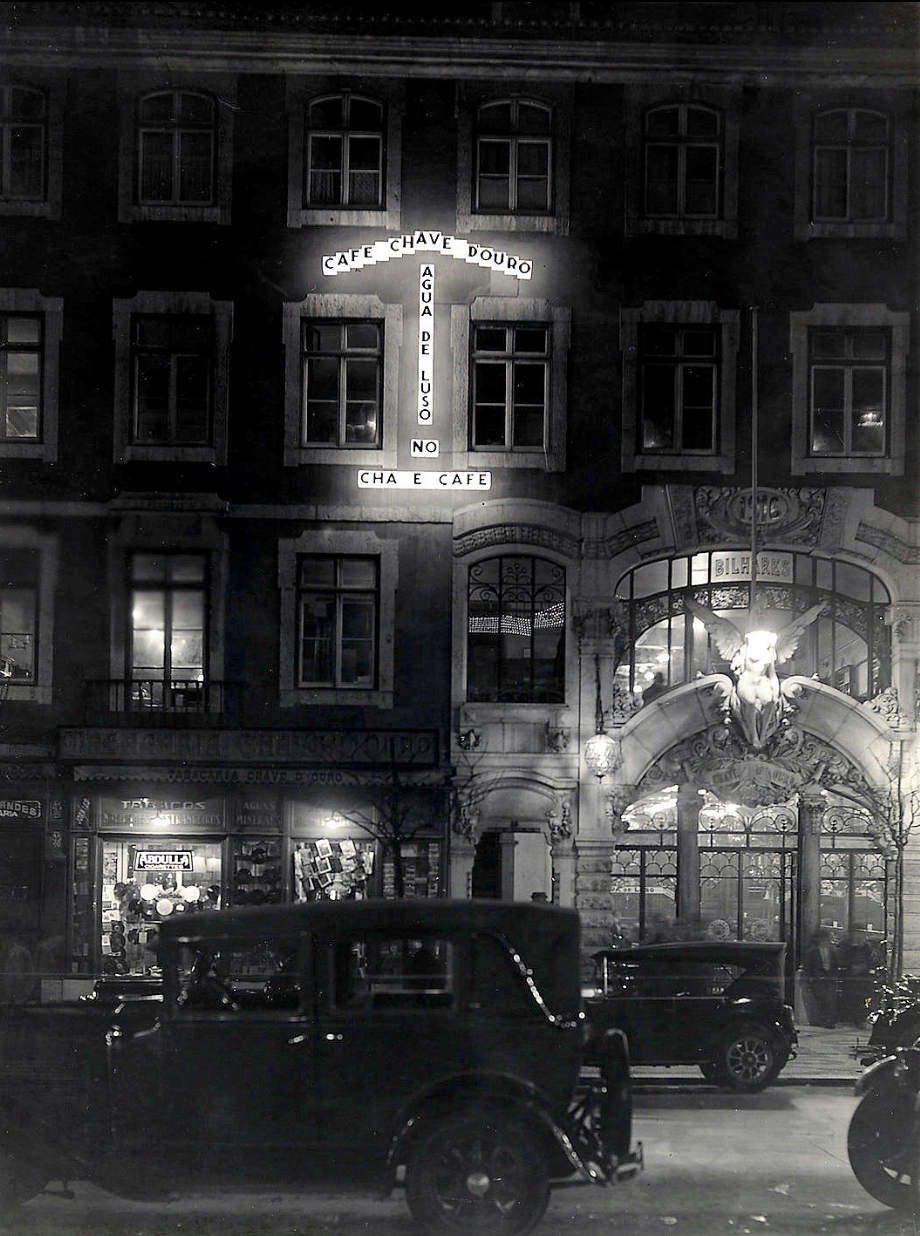
The café’s entrance was known for its captivating art nouveau limestone sculpture of an angel with outspread wings, a masterful creation by Fausto Fernandes. But it wasn’t just the striking facade that drew the locals, it was also the ambiance and the café’s role as a nerve center for cultural and political activities.
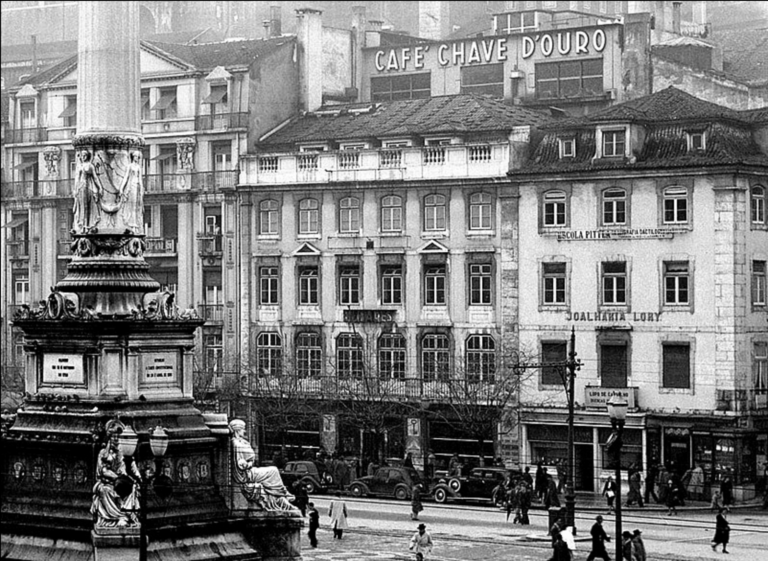
Café Chave d’Ouro, Praça Dom Pedro IV (circa 1930), Unknown photographer, in FCG. Fausto Fernandes’s limestone angel can clearly be seen above the entrance here.
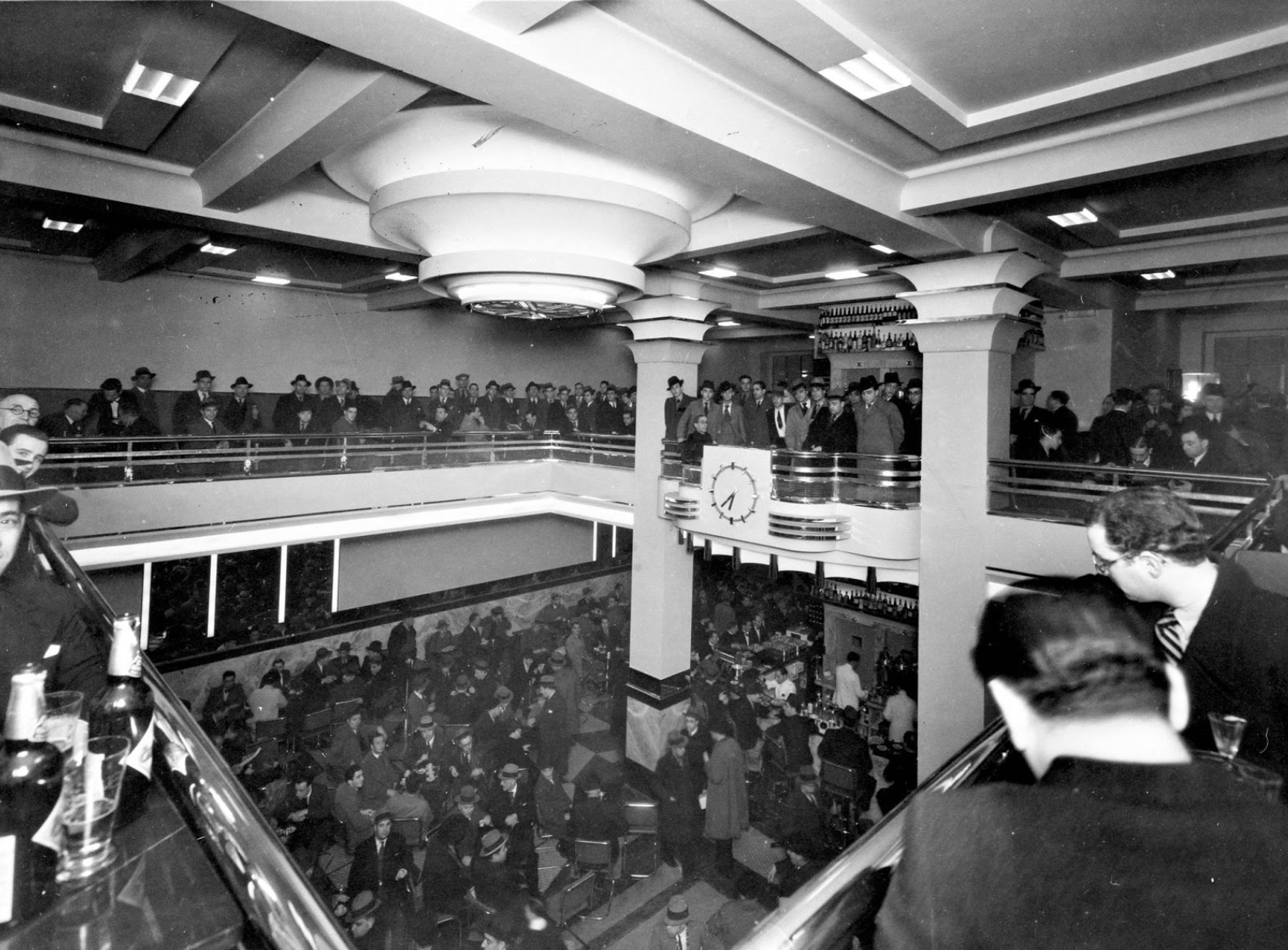
As the 1920s rolled around, Café Chave d’Ouro rapidly became a favorite meeting spot for downtown Lisbon traders. It was during this era that the café began hosting musical afternoons. The renowned Tea Room became the heartbeat of these musical soirees, with regular performances from the Orquestra Ligeira da Emissora Nacional, at times directed by the illustrious Tavares Belo. Such was the café’s prominence that the radio station even broadcasted live dance music from there. The cafe’s significance was further underscored by the “Hot Club’s” inaugural musician meeting in 1948. How wonderful it would be to still be able to experience such an atmosphere today!
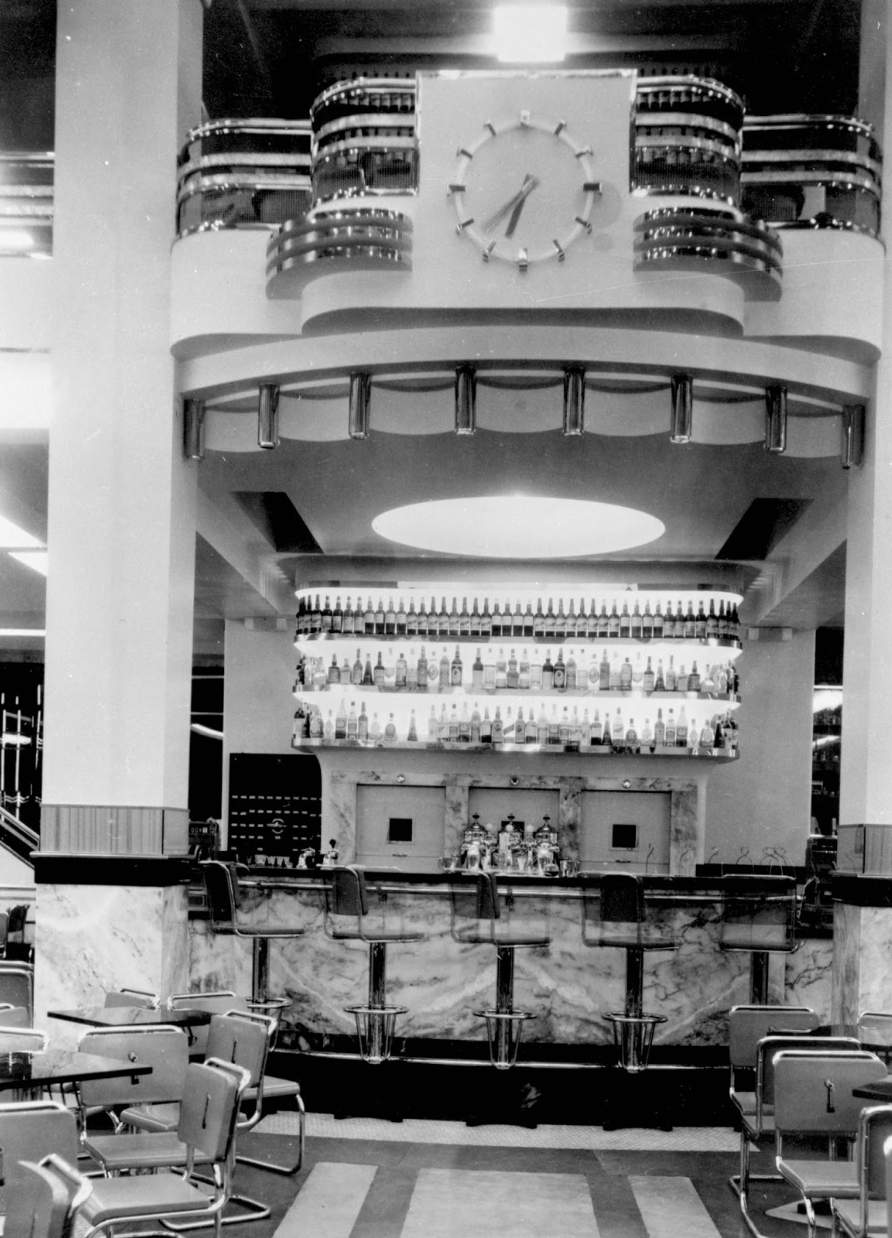
Café Chave d’Ouro, (1941), Praça Dom Pedro IV, Kurl Pinto, in AML
One of the founding visionaries behind Café Chave d’Ouro was Joaquim Fonseca Albuquerque. Later venturing out on his own, he established the equally celebrated Café Nicola in Rossio on October 2, 1929, which you can still visit today!
The café underwent a major facelift in 1936. Unfortunately, the angelic structure gracing the front entrance of the café was replaced by an Art Deco style, modernist facade and interiors, designed by the acclaimed architect Joaquim Norte Júnior.
Café Chave d’Ouro’s Turning Moment
Café Chave d’Ouro was not just about coffee and music. The 1940s and 50s saw it transform into a hot spot for opposition to the Estado Novo, also known as the Second Republic, the Portuguese authoritarian regime installed in 1933. This was also eventually what would lead to its downfall when the café witnessed a pivotal moment in May 1958.
Café Chave d’Ouro, Praça Dom Pedro IV (1941) Gallery; Wall clock Karl Pinto, in AMI
General Humberto Delgado, an opponent of the regime of António Salazar, who had been leading Portugal as Prime Minister and acting President since 1932, announced his candidacy for the Presidency. In a historic response to a question posed by a France Press journalist about what fate would befall Salazar won the elections, Delgado boldly proclaimed: “Obviously, I fire him!”
It is said that Salazar had the café closed the following year (1959), as he believed it was a center of “hate and dissolution.” The illustrious Café Chave d’Ouro then made way for a branch of Banco Nacional Ultramarino on May 22, 1961, which later became a branch of Caixa Geral de Depósitos.
The Coffee Legend Lives On
I had seen the name “Chave d’Ouro” a few times walking around Lisbon, so when I first came across the name in Lochery’s book, I thought for sure the café or some iteration of it might still be open. However, a curious twist in the café’s legacy is its connection to the coffee business, which is why I had seen the name around.
In the 1950s, a company named Vilarinho & Sobrinho emerged, reviving the Chave d’Ouro brand for marketing coffee. This brand was eventually acquired by Nutrinveste – SGPS SA in 1999, alongside the Nicola coffee brand. You will see both Chave d’Ouro and Nicola on many café awnings around Portugal to this day.
Today, modern storefronts exist where Chave d’Ouro once stood. Without knowing this story, it would be hard to believe that such a large café ever existed, but the legend of Café Chave d’Ouro lives on in photographs and the memories of those who worked there or frequented it. Its name lives on in the Chave d’Ouro brand and many cafés throughout the country that bear the same name.
To get a small taste of Chave d’Ouro’s former glory, you can visit Café Nicola, which still stands in the same square as when it opened its doors in 1929, 13 years after Cafe Chave d’Ouro first opened its doors.
Sipping a coffee on the terrace of Nicola, you can look across Praça Dom Carlos IV in Rossio, with the classic Teatro Nacional Dom Maria II at the north end and a marble column in the center with a bronze statue of King Pedro IV. Imagine the days of elegant cafés with chandeliers, Venetian mirrors, and men gathering to discuss the political issues of the day.
As George Steiner once wrote, “Draw the map of coffee shops and you will obtain one of the essential markers of the idea of Europe.” From its establishment in 1916 to its eventual closure in 1959, Café Chave d’Ouro’s made an indelible mark on Lisbon’s cultural, political, and social landscape. The café was more than just a place to sip coffee; it was an institution, a melting pot of ideas, and a witness to history.
So, the next time you see the phrase “Chave d’Ouro,” think about this legendary café and its 43 years of history.
The President of the Portuguese Supreme Court of Justice publicly denounced corruption within the country and criticized the political power.
According to Henrique Araújo, the current President of the Portuguese Supreme Court of Justice, corruption is widespread throughout the country, and the political power does not do anything about it.
Last Friday, in an interview with the newspaper Nascer do Sol, the President of the Supreme Court of Justice stated that justice does not seem like a priority for the Government.
Amongst the problems for which he proposes changes to the existing legislation, the most pressing is the degree of corruption that is spread throughout the country. One of the solutions he proposes is the creation of a new crime category – illicit enrichment.
According to the statement, the proposed category would be an effective mechanism to fight the corruption that is deeply installed within the public administration, and this affirmation is something the President of the Supreme Court of Justice is sure about.
Even though there has been more investigation into the phenomenon of corruption, the results of that investigation have not been satisfactory. The increase in the investigation efforts has not led to a decrease in the corruption that indeed exists.
Despite the continuous warnings of the judiciary power, nothing has really changed and corruption remains the same, if not worse. The current Minister of Justice has not been able to produce the required reforms effectively, and the President of the Supreme Court of Justice believes something is holding her back.
Moreover, Henrique Araújo also advocated for a true separation of powers. As he stated, there is an urgent need to provide financial autonomy to the judiciary branch. Currently, Portuguese courts function with funds provided by the Ministry of Justice, and that is not right.
In his opinion, for a true separation of powers to exist, the Superior Council of the Judiciary should supervise the budget of the judiciary branch, not the Government.
Last but not least, the President of the Supreme Court of Justice also noted some of the pardons granted because of the Pope Amnesty. Nine cases of serious and very serious infractions committed by judges were archived, and nothing actually happened to the wrongdoers.
This, according to him, gives a terrible example to society. Judges, being judges, should be one of the first to set an example. Pardoning their offenses sends a very bad signal to society, argues the judge.
Lisbon, the vibrant capital of Portugal, has long been a hotspot for tourists and locals alike. Whether you’re on vacation or call the city home, there’s no reason why your fitness routine should take a backseat. Here are the top 11 gyms in Lisbon to keep you in top shape.
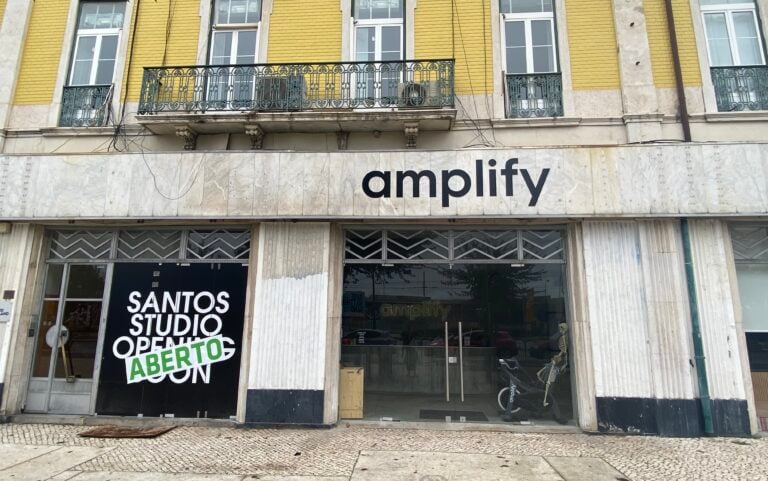
1. Amplify Cycling Studio
Amplify offers more than just a cycling experience; it brings an exhilarating energy that’s hard to find elsewhere. With mood lighting and a vibrant atmosphere, you’re not just working out, you’re enjoying a full-on immersive experience. Coupled with top-notch instructors and carefully curated playlists, each session is designed to be both a challenge and a celebration, ensuring you leave each class with a feeling of accomplishment. Amplify provides all of the equipment you need including cycling shoes and yoga mats. It’s also one of the easiest gyms to join without making a multi-month commitment. Buy by the lesson or by the month.
Classes Offered: Indoor cycling, high-intensity interval training (HIIT) on bikes, endurance sessions, strength sessions, and specialized sessions.
Location: Amplify Marques de Pombal, R. Mouzinho da Silveira 27C
Amplify Santos, Av. 24 de Julho 60
Hours of Operation:
Amplify Marques de Pombal – Monday to Friday, 7:30 am – 2:30 pm, 5 pm – 1 am, Saturday, 8:30 am – 1:30 pm, Sunday, 8:30 am – 1:30 pm, 5 pm – 7 pm
Amplify Santos – Monday to Thursday, 7 am – 9 pm, Friday, 7 am – 7 pm, Saturday, 8:30 am – 1 pm, Sunday, 9 am – 1 pm
2. StudioRise Cycling
StudioRise isn’t just about cycling; it’s about embracing a holistic approach to fitness. The emphasis here is on combining the intensity of cycling with the nuances of form and technique. With state-of-the-art equipment, each session becomes a lesson in precision and power. Furthermore, the studio’s trainers focus on individual progress, ensuring that whether you’re a beginner or a seasoned cyclist, you’re always pushing your boundaries.
Hours of Operation: Monday to Friday, 7:30 am – 8 pm, Saturday, 9 am – 12 pm, Sunday, 9 am – 12 pm
3. Holmes Place
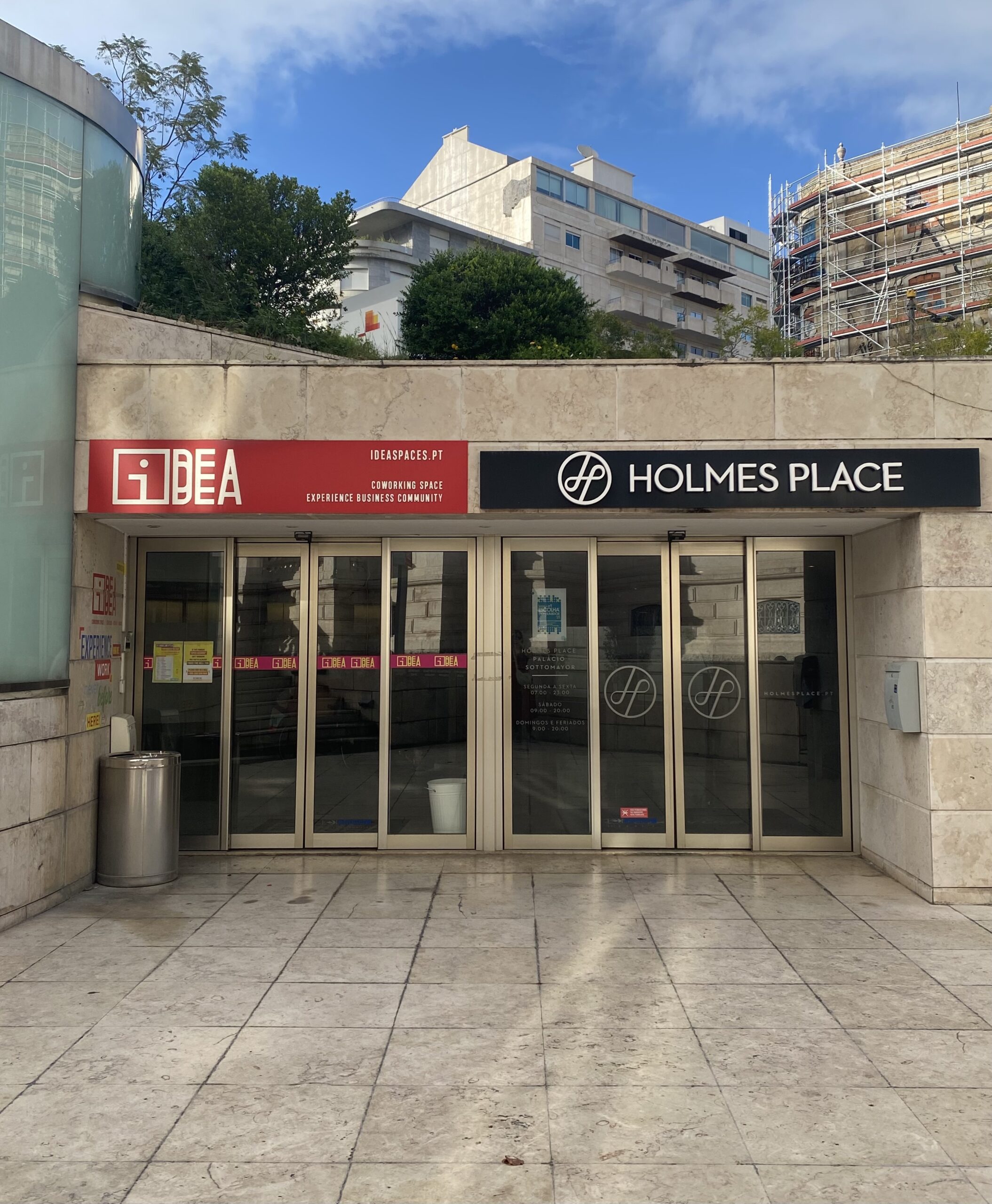
Photo by Becky Gillespie
Holmes Place is an international chain that is considered one of the most upscale gym experiences in the city. The ambiance exudes sophistication and comfort, ensuring every visit feels exclusive. Holmes Place includes dry and wet saunas, jacuzzis, and decent-sized pools, which are difficult to find all in one gym location in Lisbon. Be aware that you need to sign up for a one-year membership to join this gym and canceling requires at least three months advance notice for the first year (one month notice for every year thereafter).
Classes Offered: Yoga, Pilates, Zumba, Body Pump, HIIT, aqua classes, spinning, and many more.
Location: Multiple branches, including Av. Fontes Pereira de Melo 16 (Palácio Sottomayor) and Av. Dom João II (Parque das Nações)
Hours of Operation: Hours vary but the gyms open later and close earlier on the weekends
4. Fitness Hut
Fitness Hut bridges the gap between affordability and quality. In a city where fitness options are aplenty, it offers a space where value meets excellence. The gym boasts top-tier equipment, ensuring every workout session is efficient and effective. Moreover, the variety of classes on offer means there’s something for everyone, making it a go-to destination for fitness enthusiasts seeking diversity without the hefty price tag. This is another location where you need to check the registration rules to ensure that you can get out of the contract when you’re ready.
Classes Offered: Strength training, cardio fitness, Zumba, yoga, and spinning.
Location: Several branches throughout Lisbon.
Hours of Operation: Most branches are open from 7 am – 11 pm on weekdays and have slightly reduced hours on weekends (please check in advance for the weekends).
5. Academia Life Club
Photo by Becky Gillespie
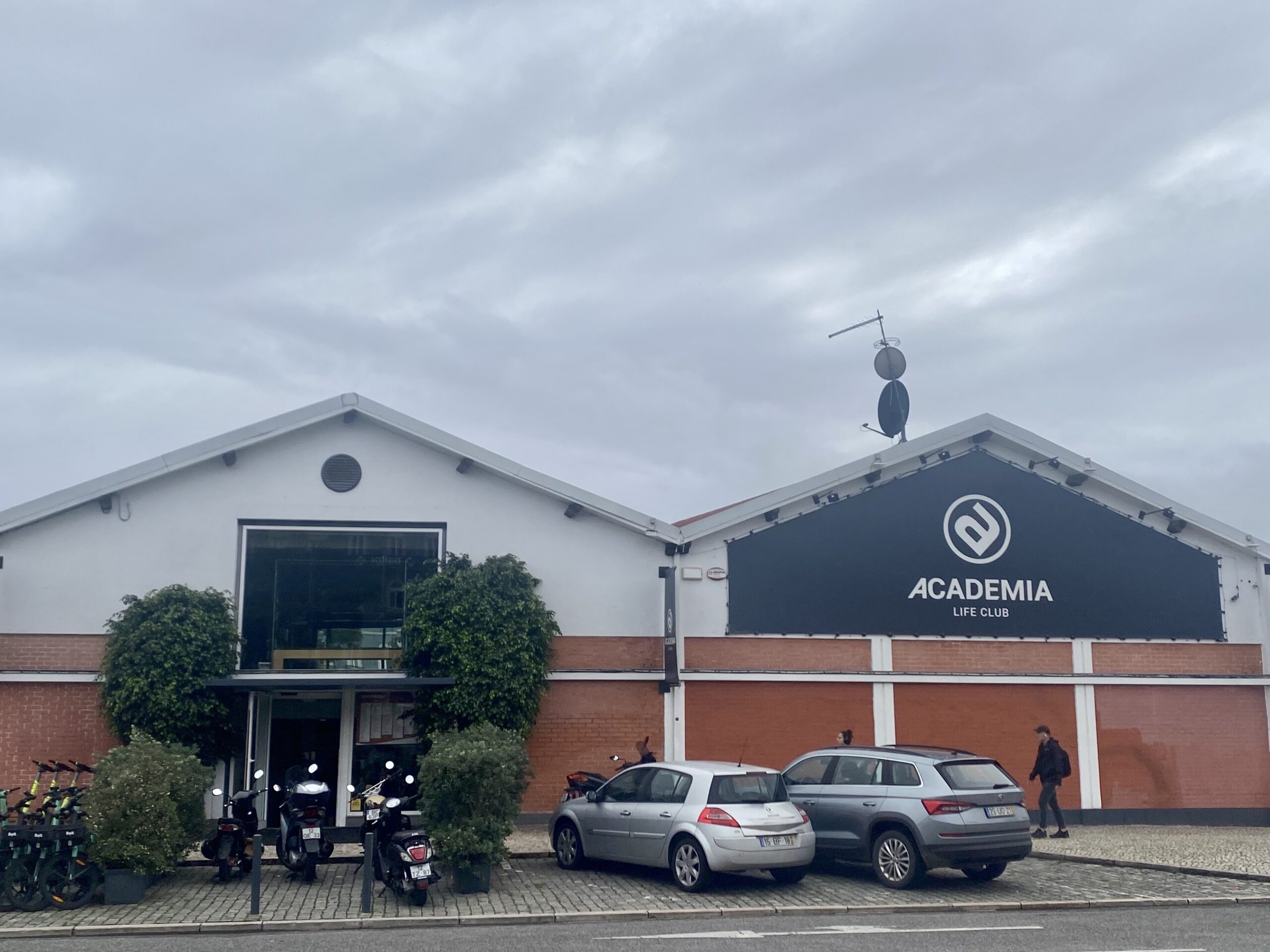
At Academia, fitness is more than just a routine; it’s a community-driven experience. The gym’s unique blend of traditional and contemporary classes ensures that there’s always something new to explore. It is one of the larger gyms in the area with a nice array of classes. It is also close to two large dance studios if you want to pair a traditional workout with a specific type of dance class. Academia has a small pool, dry sauna, and steam sauna. They also allow a wide range of memberships including morning and night only passes, and discounts on multiple month memberships. The minimum time commitment for a membership is three months.
Classes Offered: Martial arts, swimming, dance, yoga, and more specialized classes.
Location: Av. Brasília 254
Hours of Operation: Monday to Friday, 7 am – 10 pm; Weekends 9 am – 5 pm.
6. Solinca
Solinca champions a comprehensive fitness approach, merging the best of equipment, classes, and expert guidance. With a keen focus on both physical and mental well-being, it’s a space where every workout feels tailor-made. The trainers are not just instructors; they’re your fitness partners, guiding, motivating, and ensuring that every session is a step towards your goals. This is another gym that offers a large indoor swimming pool and an annual membership. Check terms and conditions when signing up.
Classes Offered: Pilates, body combat, spinning, aqua fitness, TRX, and functional training among others.
Location: Several locations including Alvalade and Alfragide.
Hours of Operation: Typically 7 am – 10 pm on weekdays and 9 am – 6 pm , but hours may vary slightly between branches.
7. Jazzy Dance Studios
Photo by Becky Gillespie
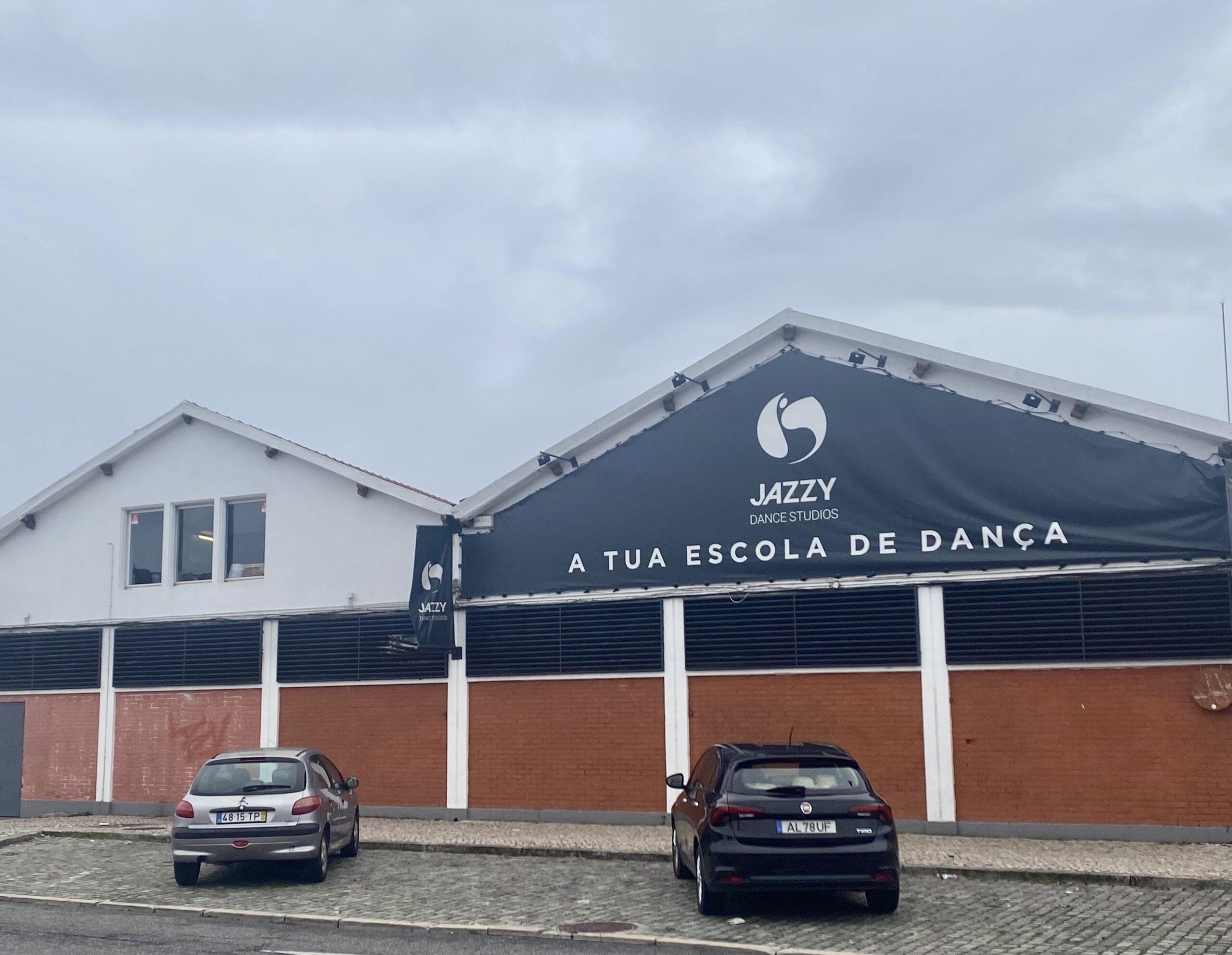
Jazzy Dance Studios promises rhythm, energy, and self-expression. It’s a space that allows you to immerse yourself in the world of dance. Learn the basics of ballet or master a hip-hop routine, with the emphasis always being on expression and technique. Furthermore, the passionate instructors help you explore the many sides of dance while staying fit. Whether you’re a seasoned dancer or someone with two left feet, Jazzy Dance Studios offers a welcoming environment for everyone.
Classes Offered: A variety of dance styles including hip-hop, contemporary, ballet, jazz, salsa, and more. They also offer fitness-focused dance classes like Zumba and dance aerobics.
Location: Several locations in Lisbon including a large location in Santos at Av. Brasília 254.
Hours of Operation: Monday to Wednesday, 12:30 pm – 11 pm, Thursday, 12:30 pm – 10:30 pm, Friday, 12:30 pm – 10 pm, Saturday, 10 am – 7 pm, Sunday, 10 am – 7 pm
8. XXI Crossfit
XXI Crossfit is devoted to each and every member, creating a true family environment. The gym does its best to embody the true spirit of Crossfit: community, resilience, and transformation. Every workout is designed to test your limits, ensuring that with each session, you’re a step closer to your best self. If you’re seeking a transformative fitness journey with a tight-knit community, XXI Crossfit is the place to be. In this environment, it’s also easy to make great friends.
Classes Offered: A range of CrossFit classes catering to beginners, intermediate, and advanced practitioners. They also offer strength training, mobility, and specialized WODs (Workouts of the Day).
Location: R. Aliança Operária 41
Hours of Operation: Hours change every day, so please carefully check the schedule on Google Maps before you go
9. DinaMite Team – Muay Thai ALCÂNTARA
DinaMite Team offers an authentic experience in the art and discipline of Muay Thai. Under the guidance of seasoned trainers, you’ll learn more the basic techniques and imbibe the spirit of Muay Thai. Moreover, the community here is bound by mutual respect and a shared passion. As you spar, train, and grow, you’ll find camaraderie, challenge, and a profound sense of achievement.
Classes Offered: Classes cover various aspects of Muay Thai including beginner sessions, advanced combat training, sparring, and conditioning.
Location: Av. de Ceuta LT 8 loja 2
Hours of Operation: Monday, Wednesday, and Friday, 7 am – 9:30 am, 4 pm – 9:30 pm, Tuesday, 7 am – 9:30 am, 6 pm – 9 pm, Thursday, 7 am – 9:30 am, 6 pm – 10:30 pm, Closed on weekends
10. Escala 25
Escala 25 is an outdoor climbing gym right next to the iconic Ponte 25 de Abril. It offers climbing experiences for both novices and seasoned climbers. The facility boasts a variety of walls, ensuring new challenges every time you go. The routes are frequently changed by the supportive instructors, and you can book classes catering to your skill level. Relax in the cafe after your climb and take a look at the climbing equipment available at the shop.
Classes Offered: Outdoor climbing for all levels, bouldering, lead climbing, and beginner courses. They also provide equipment rentals for those without their own gear.
Location: Avenida da India, Pte. 25 de Abril 52 Pilar 7
Hours of Operation: Mondays, 10 am – 6 pm, Tuesday to Friday, 10 am – 10 pm; Weekends 10 am – 6 pm.
11. Urban Sports Club Gym App
This is a different kind of option for people interested in checking out a variety of gyms and fitness opportunities. There are three tiers of membership with the higher tiers offering more visits per month and access to massages available at the different participating facilities. Urban Sports Club is available in several cities around the world, making it even more interesting for frequent travelers. Sign up for the classes you like in advance through the app or simply check-in for a regular workout at different gyms. Check out this link to sign up for the membership.
Classes Offered: The Urban Sports Club app grants access to a plethora of activities ranging from yoga, swimming, boxing, to specialized gym sessions, and more.
Location: Available across multiple venues in Lisbon, accessible via the app.
Hours of Operation: Varies depending on the partner facility or class you choose from the app.
In conclusion, Lisbon offers a dynamic range of fitness options to cater to every individual’s needs. From the rhythm and energy of Jazzy Dance Studios to the intense cycling sessions at Amplify, there’s a workout waiting for you in the heart of Portugal’s capital.
Portuguese Prime Minister Antonio Costa announced his resignation on Tuesday afternoon, amid the ongoing lithium corruption scandal. The PM presented his resignation to the President of the Republic, Marcelo Rebelo de Sousa, who accepted it.
The decision comes after the public Ministry searched the official residency of the PM and the ministries involved in the lithium exploration in Montalegre this morning, leading to arrests.
Antonio Costa told the country: “The dignity of the prime minister’s role is not compatible with any suspicion of criminal activity. I have, of course, submitted my resignation to the President of the Republic”.
He goes on to state his innocence, saying, “I want to say, looking into your eyes, that I do not carry any guilt of any unlawful act on my conscience. I have faith in justice”. Costa also said he was “surprised with the information that there will be a criminal case put forth against him” and that he is unsure what he is accused of.
The Prime Minister will maintain his position until he is replaced, calling it his “constitutional duty, legal and civic”.
In what was seen as his farewell speech, he thanked the Portuguese “for the trust placed in me over the past years” and his family.
“This is a chapter of life that comes to a close, and one that I close with my head held high, a clear conscience, and the same determination: to serve Portugal and its people just as I did on the day I became prime minister”, he stated.
This corruption case involves a business deal that gave the company Lusorecursos the right to the exploration of the lithium mine in Montalegre, although it was not part of the group of companies that were officially authorized.
Five people have been arrested surrounding the lithium corruption case, including businessman Diogo Lacerda Machado (a close friend of the PM), Vitor Escaria (Costa’s cabinet chief), and socialist Nuno Mascarenhas. Two businessmen from Sines were also arrested, including the CEO of Start Campus, Afonso Salema, and Rui Oliveira Neves.
The Portuguese minimum wage is set to increase again in 2024. The 7.895% surge will be the largest yearly increase ever registered.
According to the statements of the Prime Minister, and of the Minister of Labor, the minimum wage is expected to increase once again at the beginning of 2024. It will be the biggest increase ever in relative, and absolute terms.
Starting in January, the national minimum wage will go from 760 euros to 820 euros. This represents a 60 euro increase.
Note, however, that the values of 760 (current minimum wage) and 820 (future minimum wage) are not what the company pays or would pay, nor what gets or would get to the worker’s hand. The numbers 760 and 820 represent the values of the gross salary.
Currently, with the 760 gross salary, a company needs to spend 940.5 euros per month to pay a minimum wage, and the worker will only get 676.4 euros (liquid wage). In short, the real cost of the 760 gross wage, for the company, is 940.5 euros, and the real immediate value, for the worker, is 676.4 euros.
When it comes to the incoming 820 minimum gross wage, the company will have to spend 1014.75 euros per month, per salary, and the worker will only get 729.8 euros. So, the real cost, for the company, is 1014.75 euros, and the real immediate value, for the worker, is 729.8 euros.
Where does the difference go? According to the Portuguese legal system, minimum wage workers are not subject to taxes. Because they receive the minimum wage, they do not need to pay the Personal Income Tax (IRS). Although, there is money going somewhere.
The difference between what the company pays, and what the worker gets, in this case, is the value of the Single Social Fee (Taxa Social Única – TSU). This monthly fee, which is deducted from the gross monthly wage, works like an insurance.
Social Security, which is the governmental body to which the value of the Single Social Fee goes, is the institution responsible for the management of the Portuguese social protection system. Its objective is to promote social wellbeing and justice, by protecting the citizens in situations of vulnerability.
In short, the purpose of the social security system is to ensure complete social and economic protection in situations such as temporary or permanent incapacity, unemployment, oldness, disease, illness, and death, among others.
Even though the real immediate value of the wage for the worker is less than what the company actually spends on it, its real value should be the liquid value plus the perceived value of the existence of such insurance. This is why experts are requesting a software that enables workers to see what the company actually pays and what is deducted.
The Single Social Fee is deducted in two steps. First, the company itself has to pay a part of the fee, corresponding to 23.75% of the salary. If we’re talking about the 760, the company would have to pay a fee of 180.5 euros.
Then, the worker would have to pay an 11% fee on that same salary. So, now, for each 760 salary, the company and the worker have to pay a Single Social Fee of 180.5 euros and 83.6 euros, respectively. When it comes to the 820 gross salary, the company will have to pay 194.75 euros, and the worker 90.2 euros.
The 60 euro increase in the gross minimum wage corresponds to a 20.85 increase in the value received, per wage, by Social Security. The Single Social Fee per wage/worker will go from a total of 264.1 euros in 2023, to a total of 284.95 euros in 2024.
According to some, who have advocated for a reduction, the Single Social Fee is too demanding. Especially when it comes to the burden for the companies. However, according to the Government, it cannot be lower than what it is. If it were, the social protection system would not work.
Subscribe to our newsletter below to get the latest news, reviews, info and more!
We use cookies to ensure that we give you the best experience on our website. If you continue to use this site we will assume that you are happy with it.