
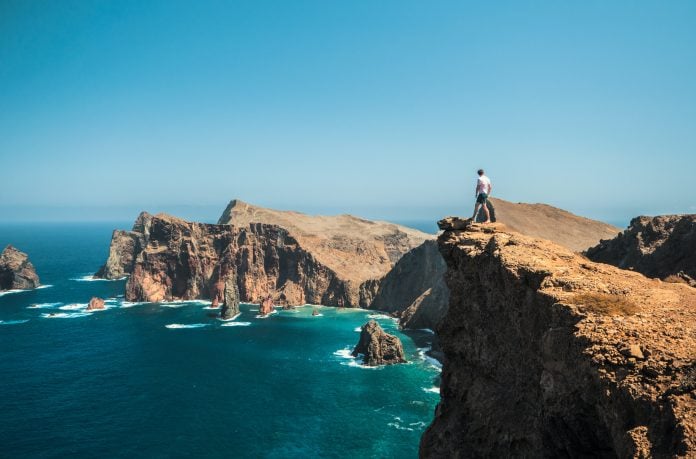
It’s not surprising that over 1 million tourists travel to Madeira every year. Not only is it one of the safest travel destinations in the world, but tourists can also enjoy an all-year-round summer climate even in winter, gorgeous landscapes, and tropical-like beaches. Madeira was elected the “World’s Leading Island Destination” from 2015 to 2021 by the World Travel Awards.
Madeira is an autonomous region of Portugal, like the Azores. It’s an archipelago in the North Atlantic Ocean, 400 kilometers to the north of the Canary Islands. The archipelago includes the islands of Madeira, Porto Santo, and the Desertas. Around 250,000 people live on the island and the capital is Funchal. For soccer fans, Funchal is the hometown of Cristiano Ronaldo. The airport is actually named after him!
Things to do in Madeira Portugal
Let’s take a look at the best things to do in Madeira.
1. Enjoy the Views from Miradouros
Madeira has plenty of miradouros (viewpoints) that provide gorgeous views. The best way to get to these are definitely by car. The most famous viewpoints in Madeira are Miradouro Pico dos Barcelos in Funchal and in Porto Santo, Miradouro da Portela. If you have time, also stop by these miradouros: Balcoes, Veu da Noiva and Eira da Achada.
2. Take a Ride on a Cable Car
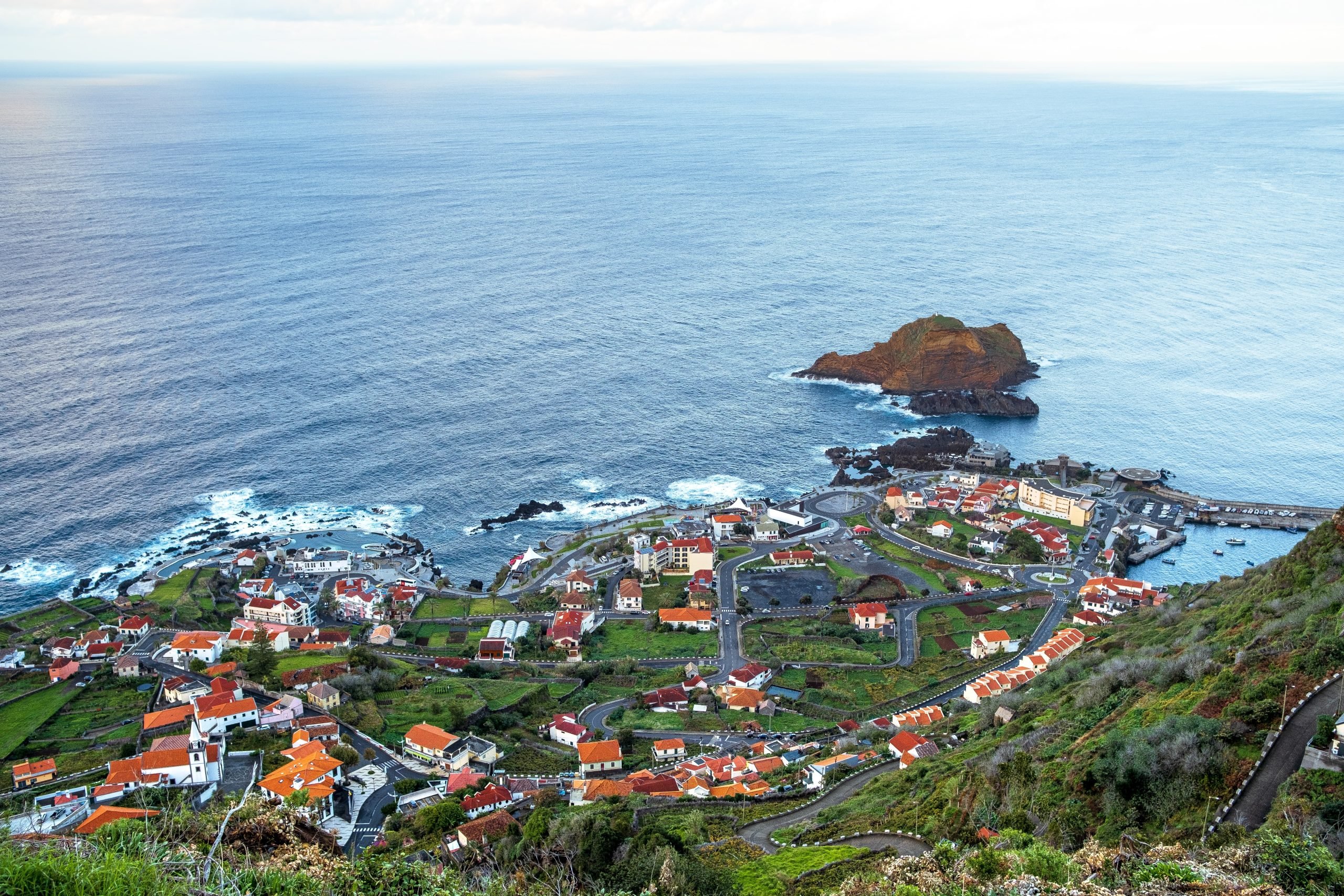
The cable cars in Madeira are a great way to see the island and ocean views. This is the perfect activity for the whole family. The best cable car is the one in Funchal, a 20-minute ride that goes up to 560 meters high. We also recommend the Achadas da Cruz cable car, on the Northern part of Madeira in Porto Moniz. This cable car is around 450 meters high and passes through the Fajã da Quebrada Nova where you can see crystal clear waters.
3. Madeira Dolphin and Whale Watching
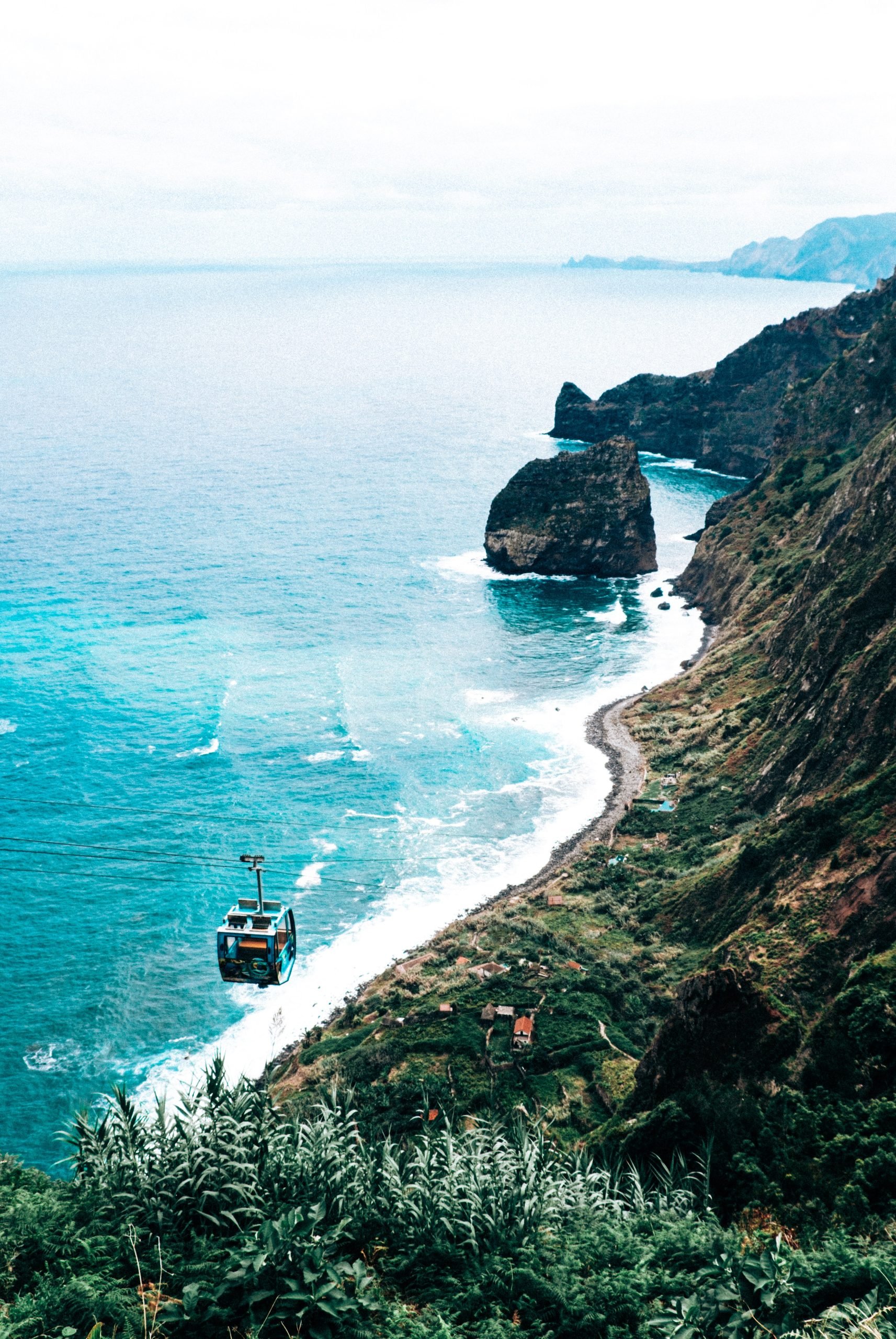
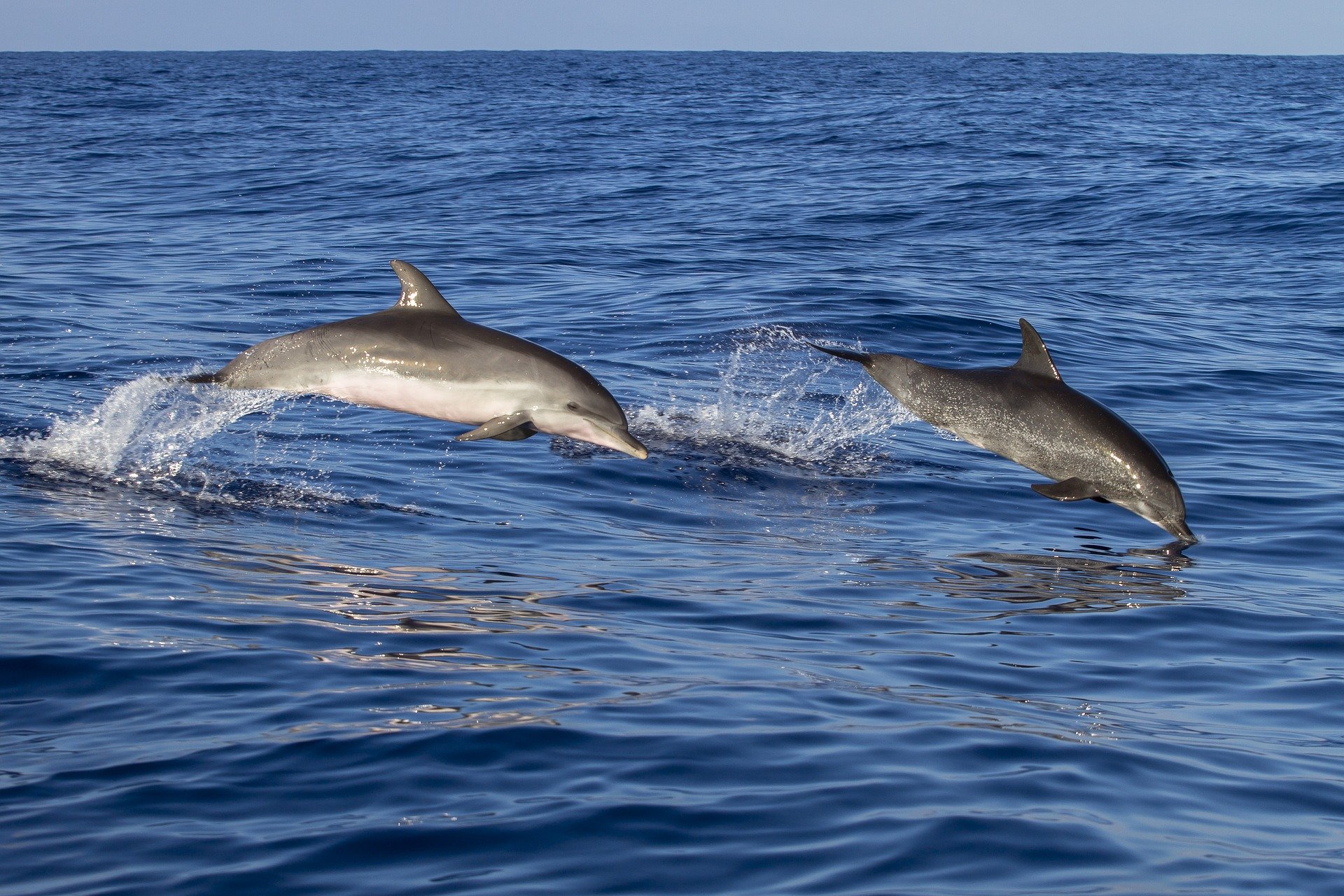
Madeira is known all over the world for dolphin and whale watching. There are over 20 dolphin species and around 3 whale species you can spot. The best time to see whales, in particular, is between April and October, although the pilot and sperm whales can be seen at any season. You won’t have any problem spotting dolphins as these are around all year. You must book a tour to go dolphin and whale watching, where you will learn more about these amazing marine life animals. We recommend the following tours:
- Sailing catamaran experience, a dolphin and whale watching cruise from Funchal for €25.
- Speed boat experience, a dolphin, whale, turtle, and bird watching tour for €45.
- VIP luxury catamaran experience, a dolphin and whale watching trip with champagne, cocktails, and snacks included for €57.
See more dolphin and whale watching experiences in Madeira
4. Best Beaches in Madeira Portugal
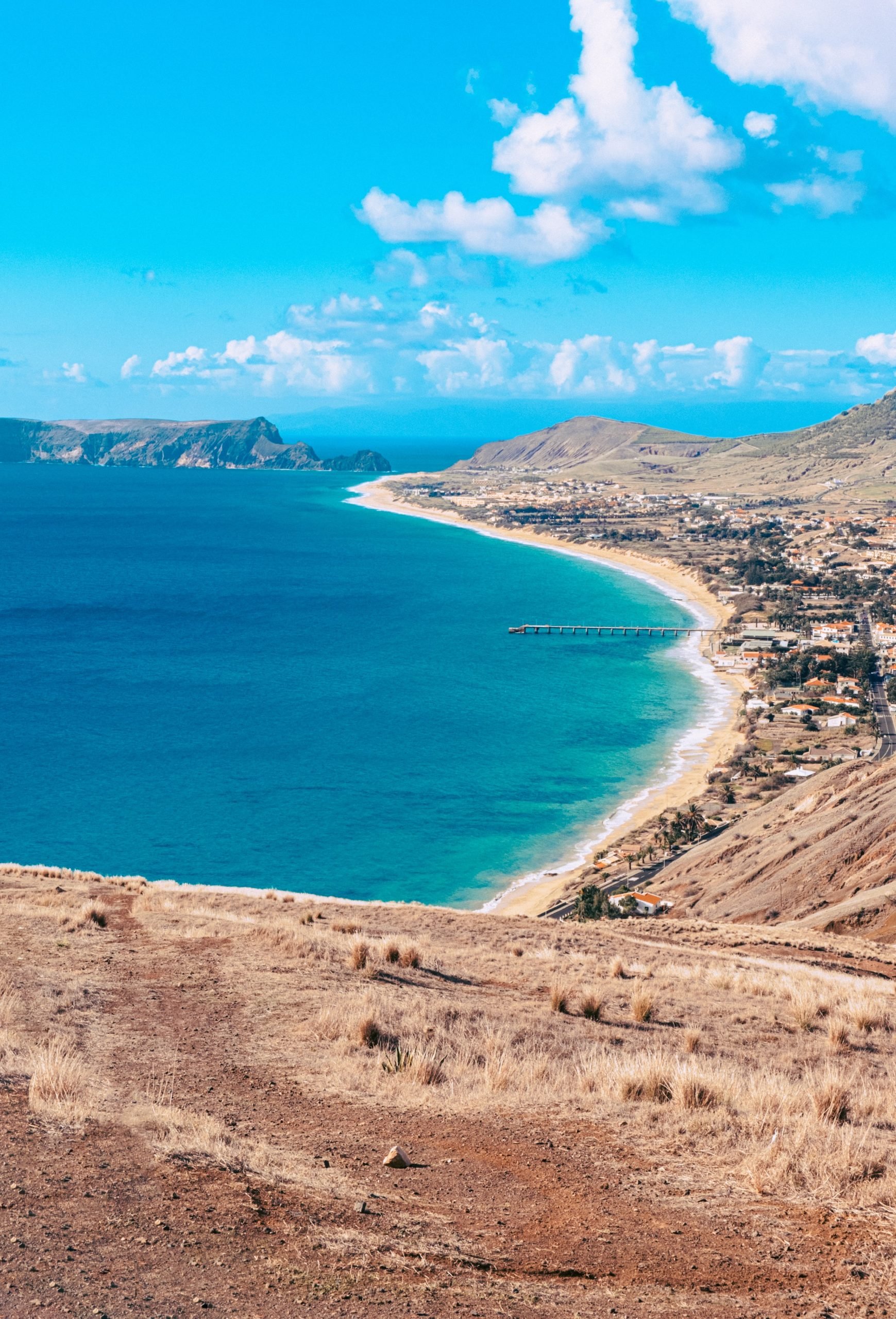
Madeira and Porto Santo are a hotspot for tourists for many reasons, but predominantly its quality beaches. You have beaches all over the island that feature gorgeous rock and mountain views. Water temperatures are warm all year round, rating between 19°(66°F) in the winter and 24°C (75°F) in the summer. The best month to visit for warm water and the perfect beach days is in September. The beach options in Madeira are endless so luckily we have selected the best beaches in Madeira Portugal:
- Porto do Seixal beach (sandy)
- Porto Santo Beach (sandy)
- Praia do Vigário (pebbles)
- Machico Bay Beach (sandy)
- Prainha Beach (sandy)
5. Experience the “Basket Cars”
A quirky transportation method in Madeira are the “basket cars”, with more than one hundred years of history. These cars are made of wood and wicker and can carry two to three people. The most fun part is that these basket cars are literally a big basket going down a two kilometers hill with no mechanical breaks, only controlled by two specialized men who make this experience unforgettable.
6. Take a Guided Tour
Madeira has a lot to offer and discovering the island with the help of an expert local provides a unique experience. No more spending time in touristy attractions filled with people, it’s time to visit Madeira like a local! Here are the best guided tours in Madeira for a memorable trip:
Madeira Food & Cultural Tour, walking tour in Funchal with guide to discover food and culture for €70.
Full-Day Madeira North West Coast Safari from Funchal, includes swimming spots for €37.
Madeira Island Private Wine Full-day Tour, discover the wine culture in Madeira on an Open Top 4WD for €200 (price for 5 people).
See All Tours in Madeira
5 Best Restaurants in Madeira Portugal: Where to eat in Madeira?
Let’s take a look at the best restaurants in Madeira.
1. O Celeiro Restaurant
Highly praised by locals, O Celeiro is located in downtown Funchal and was founded in 1986, making it one of the oldest restaurants in the region. Its interior is decorated with dark woods, regional tapestries, and Portuguese tiles. This typical restaurant has a variety of Portuguese food as well as dishes specific to Madeira. You can enjoy their regional dishes on this place’s outdoor terrace. We recommend their codfish and octopus, as well as their steaks. A meal here is around €15.
2. Restaurante Il Gallo D’Oro
This restaurant has two Michelin stars and is part of the 5-star hotel in Funchal called The Cliff Bay. Il Gallo d’Oro was the first restaurant in Madeira to receive a Michelin star in 2009. It is also known for sustainability in its gastronomy and was awarded a “Green Star” by the Michelin guide for this reason. Chef Benoît Sinthon produces aromatic cuisine that is inspired by Iberian cookies and sources many ingredients from the PortoBay garden. The cuisine showcases regional products from Madeira. You can get a meal here for €75.
3. Quinta do Furão
Located in the Quinta do Furão hotel in Santana, this restaurant opened in 1993 and features regional dishes from Madeira, as well as international cuisine. The restaurant has two main spaces: an interior room with high walls, a wooden ceiling, and two fireplaces, as well as an outside area with a terrace offering a breathtaking view. We recommend the oxtail soup and the slow-cooked lamb leg. This restaurant also has plenty of vegetarian options. You can get a meal here for €20.
4. Zarcos
Known for its large portions, Zarcos, located in Funchal, offers Madeirense dishes and traditional Portuguese food. The interior is decorated in an authentic Portuguese atmosphere, with wooden touches and stoned walls. The restaurant also has a terrace where you can try some food and enjoy a sea view. They specialize in meat dishes cooked in a fire barbecue. We recommend their sauce pepper steak. You can get a meal here for €10 to €15.
5. The Snug
The Snug is a modern smokehouse located in the Old Town that has an inviting atmosphere and is well-known for its friendly hospitality. They serve international food like American burgers, as well as traditional Portuguese food and Madeirense dishes. They also offer vegan and vegetarian options. We recommend trying their tasty milkshakes, burgers, and sardines. You can get a meal here for €15.
Best Clubs Madeira
- Vespas Club
- Copacabana
- Mini Eco Bar
- Dubai Club
Top Bars Madeira
- 23 Vintage Bar
- Dash Cocktail Bar
- Bananas Pub
- Taberna Popular
- Venda Velha
- FugaCidade
Transportation in Madeira Portugal: How to get around Madeira
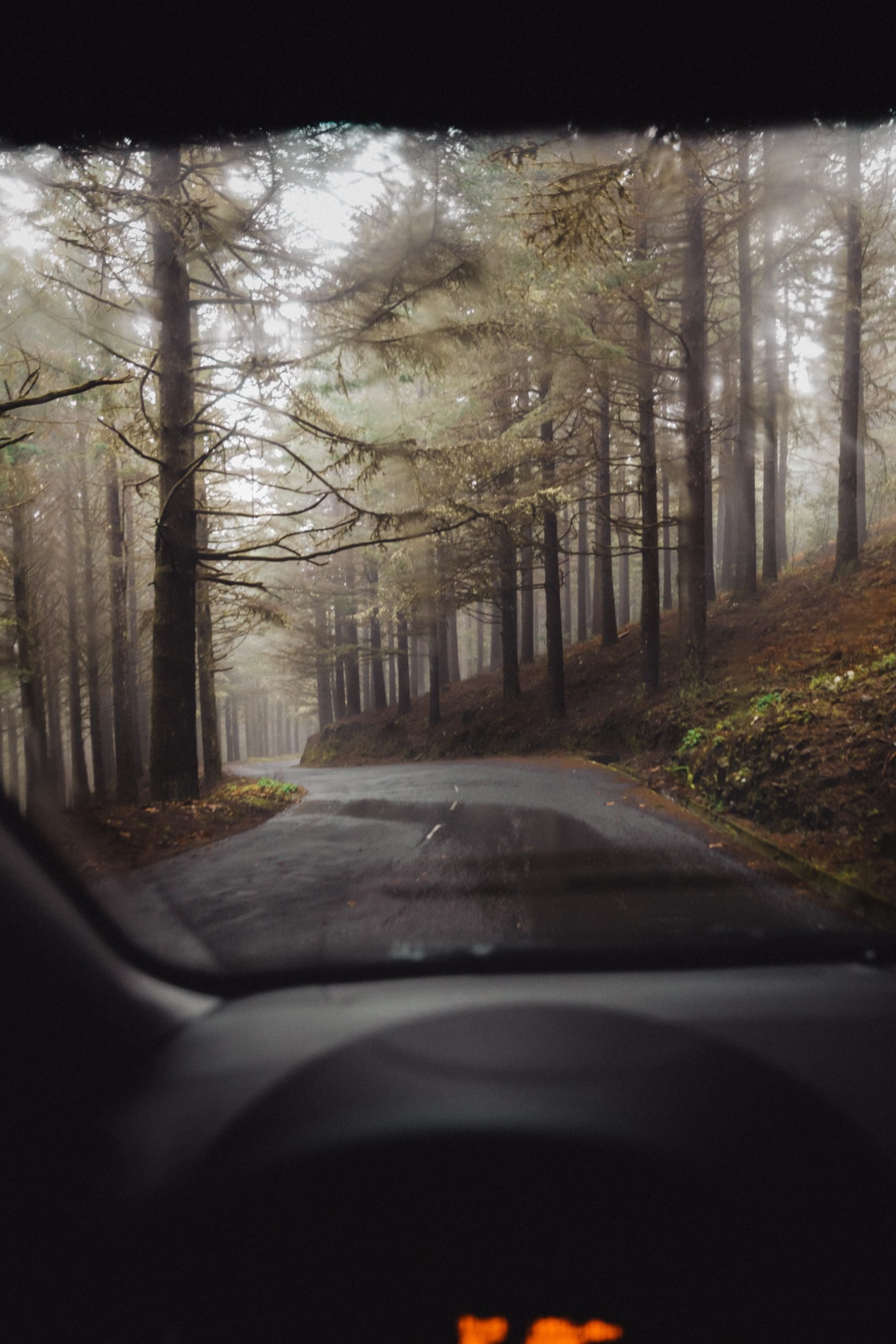
The best way to get around Madeira is by renting a car. You can pick up and return a car at the airport. You can rent a car starting at €35 for 3 days. Are Madeira roads safe to drive on? Definitely. There are three types of roads in Madeira: highways, uphill double lane roads, and narrow steep roads. Make sure to drive slowly on the latter and you will be safe.
You can also make use of public transportation in Madeira. The bus system in Madeira is affordable and very reliable. There are four transport companies in Madeira: Horários do Funchal, SAM, Rodoeste and EACL (Empresa de Autocarros do Caniço). They all offer cheap prices and can get you around the island easily.
Frequently Asked Questions about Madeira, Portugal
Madeira Location: Where is Madeira Portugal?
Madeira is an archipelago located in the Atlantic Ocean, in the African plate, over 900 KM south of Portugal and over 700 KM west of the African coast. Even though it is quite far from Portugal, it is considered an autonomous region of Portugal, like the Azores.
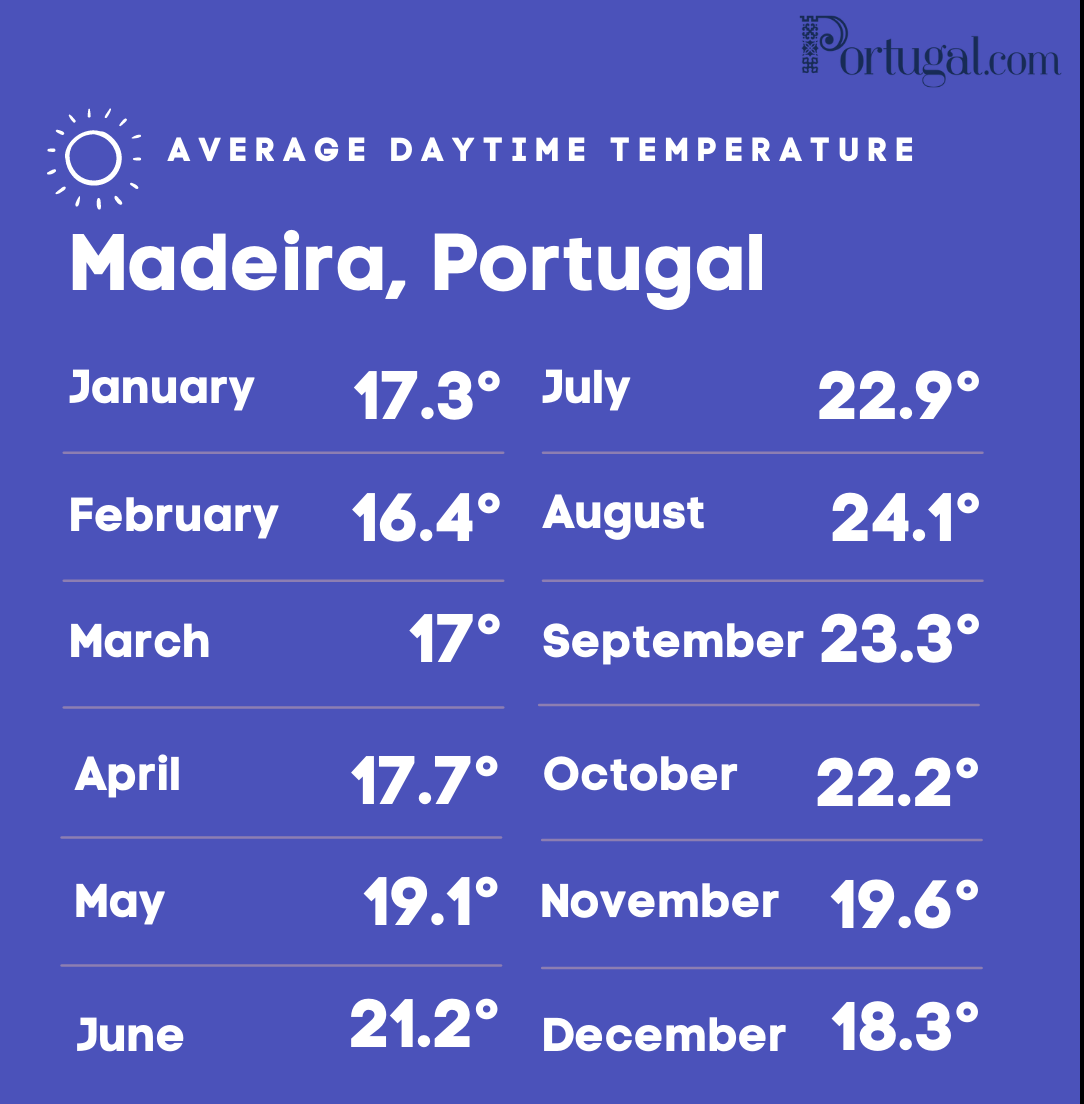
Madeira Weather: What is the weather like in Madeira Portugal?
Madeira Weather in January
- Average temperature 16°C (61°F)
- High temperature 18°C (64°F)
- Low temperature 14°C (57°F)
- Rainfall 108 mm
- Rainfall days 13 days
Madeira Weather in February
- Average temperature 16°C (61°F)
- High temperature 18°C (64°F)
- Low temperature 14°C (57°F)
- Rainfall 72 mm
- Rainfall days 10 days
Madeira Weather in March
- Average temperature 16.5°C (62°F)
- High temperature 19°C (66°F)
- Low temperature 14°C (57°F)
- Rainfall 52 mm
- Rainfall days 10 days
Madeira Weather in April
- Average temperature 16.5°C (62°F)
- High temperature 19°C (66°F)
- Low temperature 14°C (57°F)
- Rainfall 60 mm
- Rainfall days 10 days
Madeira Weather in May
- Average temperature 18.5°C (65°F)
- High temperature 21°C (70°F)
- Low temperature 16°C (61°F)
- Rainfall 15 mm
- Rainfall days 8 days
Madeira Weather in June
- Average temperature 20.5°C (69°F)
- High temperature 23°C (73°F)
- Low temperature 18°C (64°F)
- Rainfall 9 mm
- Rainfall days 5 days
Madeira Weather in July
- Average temperature 21.5°C (71°F)
- High temperature 24°C (75°F)
- Low temperature 19°C (66°F)
- Rainfall 6 mm
- Rainfall days 4 days
Madeira Weather in August
- Average temperature 22.5°C (73°F)
- High temperature 25°C (77°F)
- Low temperature 20°C (68°F)
- Rainfall 3 mm
- Rainfall days 4 days
Madeira Weather in September
- Average temperature 22.5°C (73°F)
- High temperature 25°C (77°F)
- Low temperature 20°C (68°F)
- Rainfall 36 mm
- Rainfall days 9 days
Madeira Weather in October
- Average temperature 21°C (70°F)
- High temperature 23°C (73°F)
- Low temperature 19°C (66°F)
- Rainfall 90 mm
- Rainfall days 12 days
Madeira Weather in November
- Average temperature 19°C (66°F)
- High temperature 21°C (70°F)
- Low temperature 17°C (63°F)
- Rainfall 90 mm
- Rainfall days 12 days
Madeira Weather in December
- Average temperature 17.5°C (64°F)
- High temperature 20°C (68°F)
- Low temperature 15°C (59°F)
- Rainfall 81 mm
- Rainfall days 16 days
Is Madeira expensive? What is the cost of living in Madeira Portugal?
Madeira is a cheap place and the cost of living is quite low. Let’s go through the prices of most products and services in Madeira.
- A meal for two people will cost you around €15 to €30
- A half a liter beer costs €2.
- A one-way ticket for local transportation will not cost you more than €2.
- A mid-range bottle of wine costs €3.
- A one-bedroom in the city center to rent as housing costs between €300 and €700 a month.
Retire in Madeira: Is Madeira Portugal a good place to retire?
Madeira is a good place to retire. The retirement community in Madeira is quite large, with expats coming from all over the world, but mostly from the US and UK. Madeira is not only an affordable place to be, but expats can also access the public healthcare system, as well as other services at a great price. It’s a great place to purchase a house and the climate is mild, making Madeira the perfect place to retire for a slow-paced life.
Travel to Madeira from the UK: How can you travel to Madeira Portugal from the UK?
You can easily and affordable travel to Madeira Portugal from the UK. You can travel from various cities in the UK directly to Madeira. The flight is around 4 hours and costs a minimum of €60 usually. The following airports have flights to Madeira:
- Birmingham Airport
- Bristol Airport
- East Midlands Airport
- Gatwick Airport
- Glasgow Airport
- Leeds Airport
- Luton Airport
- London Heathrow
- Manchester Airport
Is Madeira Portugal family-friendly?
Madeira Portugal is a family-friend vacation place. The whole family can enjoy natural pools, beaches, playgrounds, and gardens that are suitable for all ages. Madeira is also incredibly safe and has low crime rates, making it a great place to visit with kids.