Home Blog Page 62

7 Best Places to Celebrate Valentine’s Day in Porto

Porto is an idyllic destination for Valentine’s Day, truly one of those cities that makes your jaw drop at the first sight of its most beautiful views. The city’s historic charm effortlessly flows through its streets just like the majestic Douro River carving through the center.

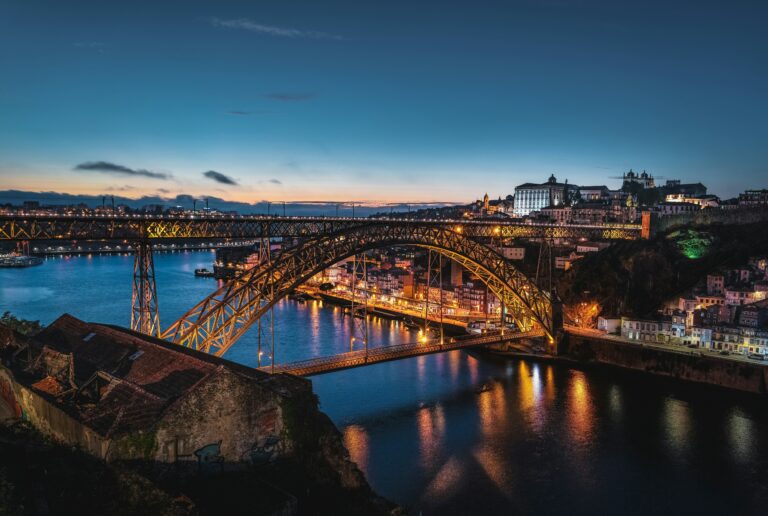
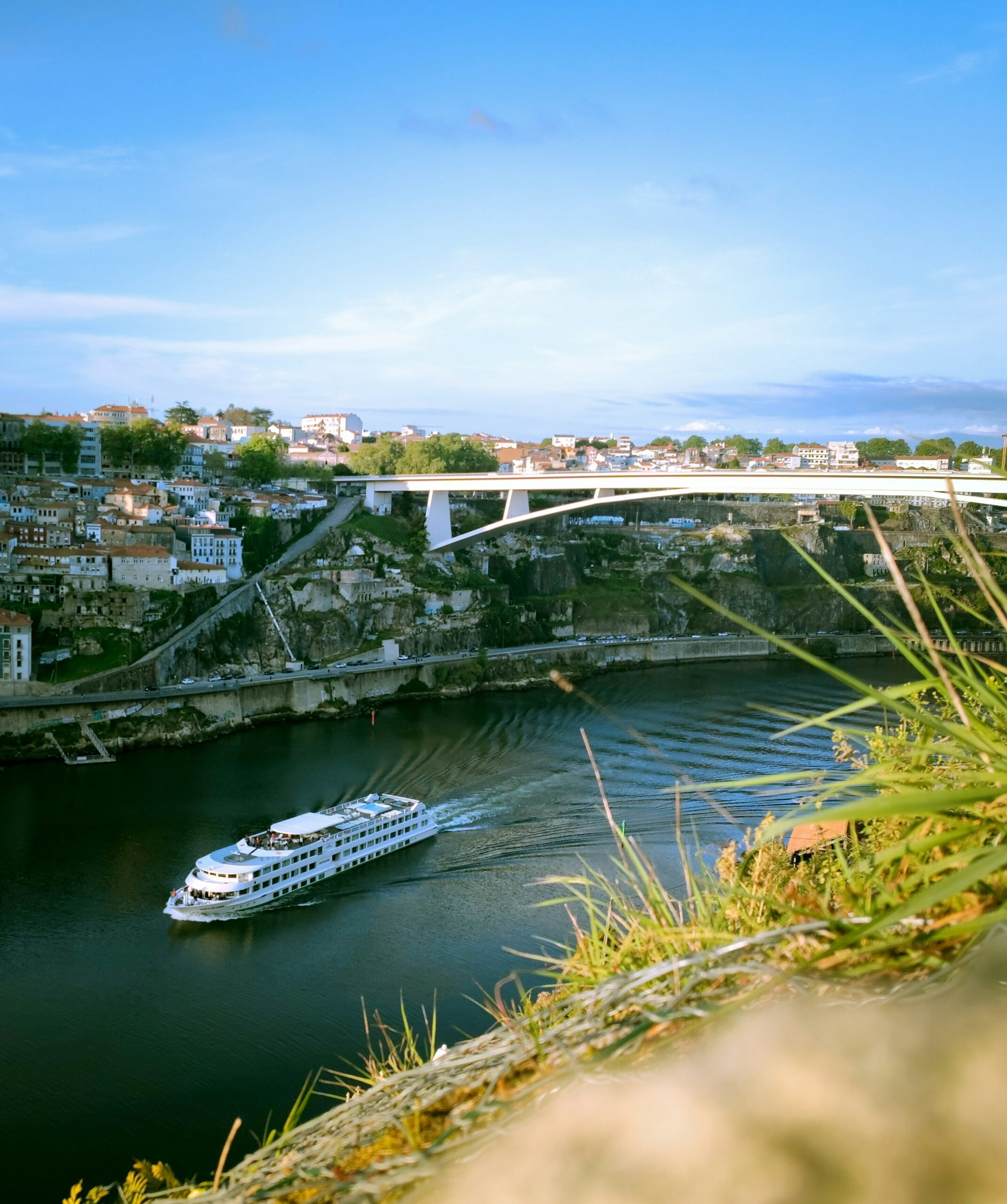
Couples stroll along the riverbanks, absorbing the vibrant energy of the Ribeira District. The iconic Dom Luís I Bridge offers breathtaking views, especially at sunset, making it a perfect spot for an unforgettable Valentine’s moment.

Porto is also known for its exquisite cuisine and the range of flavors available in the city continues to grow. Many restaurants offer special themed menus for Valentine’s Day and many of them feature Porto’s eponymous drink, giving that special Portuguese touch to the evening.

Having a meal on the banks of Douro with the Dom Luís I Bridge in sight, the world passing by your table, street performers showcasing their talents, and boats cruising down the channel makes for an unforgettable romantic evening.   

Explore Porto’s rich history with your partner in hand. Walk down the quaint streets of the UNESCO-listed historic center and discover hidden gems on the outskirts of the city such as the Serralves Museum.

While the chances of it being cold and rainy in Porto on Valentine’s Day tend to be high, the beauty of the city is well worth the potential chill in the air. In  Porto, the range of potential activities you can enjoy on Valentine’s Day is truly endless.   

Let’s dive into our 7 best places to celebrate Valentine’s Day in Porto!

1. Have a picnic in the City Park (Parque da Cidade)

Location: Estrada Interior da Circunvalação, 4100-083, Porto, Portugal

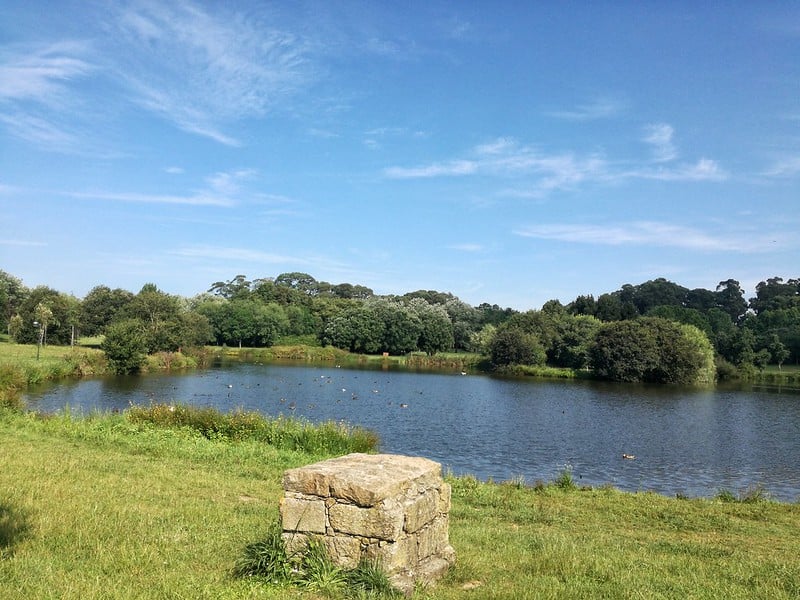
Parque da Cidade do Porto is the largest urban park in Portugal, stretching across 205 acres of lush greenery all the way to the picturesque coastline. There are over 74 species of trees and over 6 miles of meandering trails. The park’s design was originally a vision from the 1960s by architect Robert Auzelle and brought to life in the 1990s by Sidónio Pardal.

If your partner enjoys nature and doing something active, this is a great place to start your Valentine’s Day. Grab some pastéis de nata from Manteigaria (Rua dos Clérigos 37) and a nice picnic lunch from the supermarket and head on over to the City Park to go for a long walk along the trails with your partner to find the perfect spot to enjoy your Valentine’s Day lunch.

Finish your City Park adventure at Matasinhos Beach if you really want to go for a long hike. The park ends just south of where this beach begins. 

City Park in Porto, Photo by Ryi Aquir, Flickr

2. Dinner on the Vila Nova de Gaia side of the Douro River

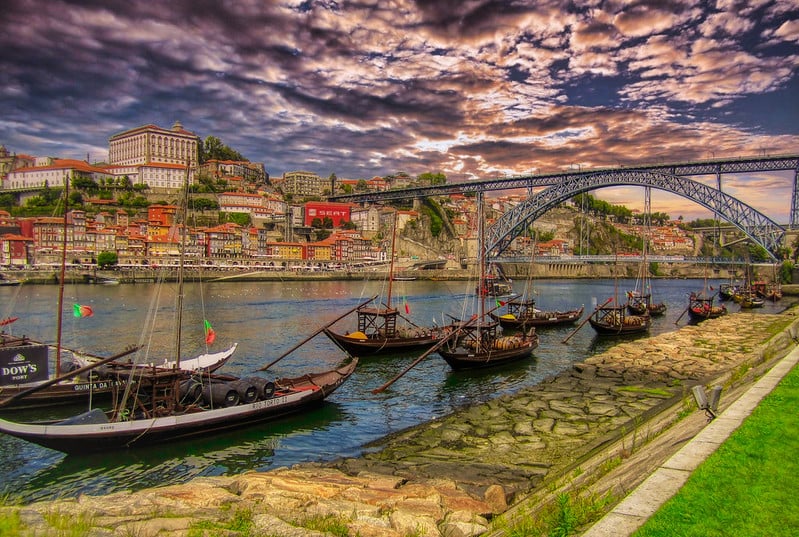
Cross over the iconic Dom Luís I Bridge from the Ribeira side of Porto to the Vila Nova de Gaia side and start your evening with drinks, most famously the city’s eponymous drink that is everywhere on the Vila Nova de Gaia side – port. Many bars and restaurants along the river here serve port from the local port houses including Taylor’s, Cockburn’s, Sandeman, and Cálem.

You can also go on tours of these houses and try a port tasting if you’d prefer to start your Valentine’s Day with a deep dive into the history of the drink that helped put Porto on the map. 

The view of the Douro River, illuminated by the city lights from the Ribeira side, creates quite a romantic ambiance and promises to be a highlight for any couple hoping to enjoy Porto’s most beautiful views. As for restaurants with some of the most beautiful views on the Gaia side of the river, try Dourum (Av. de Diogo Leite 454) or Taberninha do Manel (Av. de Diogo Leite 308).

Vila Nova de Gaia, Porto, Photo by Jobove-Reus, Flickr

3. Climb the Arrábida Bridge’s arch

Location: Via de Cintura Interna, 4400-492, Porto, Portugal

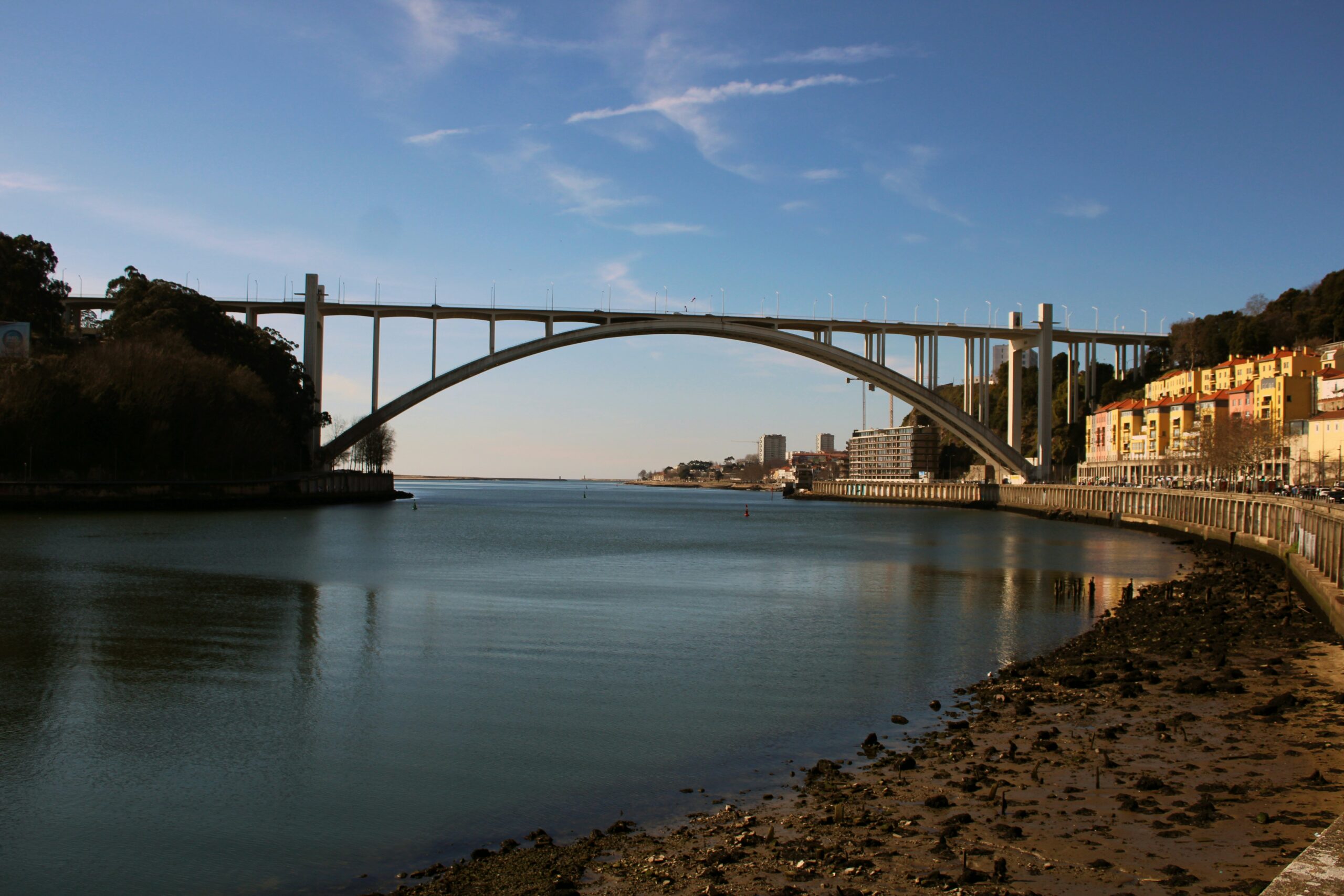
Climbing the Arrábida Bridge’s arch with Porto Bridge Climb offers a unique opportunity to explore an iconic 20th-century monument in Porto. This Valentine’s Day, take on the challenge of ascending 65 meters above the Douro River. The guided tour, equipped with safety harnesses and handrails, ensures that everyone can experience this memorable climb.

Reaching the summit reveals breathtaking views of Porto and Gaia, showcasing a relaxing spot that has opened to the public for the first time in 53 years. At the base, an exhibition detailing the bridge’s construction and the other five bridges connecting Porto and Gaia invites visitors to learn more about the history of this amazing city. Climbing the bridge together will undoubtedly create a memorable bonding moment for you and your partner.

Please wear sneakers or closed shoes. Flip-flops and high heels are obviously prohibited. Additionally, skirts and dresses are not suitable due to the harness. With the option of Italian and German-speaking guides available upon request, the Porto Bridge Climb is accessible to a diverse group of adventurers. This Valentine’s Day, conquer the Arrábida arch together!

Ponte da Arrábida no Porto, Photo by Armando Brenlha, Unsplash

4. 6 Bridges Port Wine River Cruise with 4 Tastings

Location: Rua da Praia 430, 4400-554, Vila Nova de Gaia, Portugal

Embark on a romantic journey this Valentine’s Day with a six bridges cruise in Porto. That’s right – 6 bridges! Glide along the Douro River and marvel at Porto’s stunning landscapes and historic bridges. Each bridge has its own story, adding another layer to the history of the city. If you’d like to bring the romance up a level, depending on how close you already are, you can make a game of your cruise and decide to kiss under each bridge!

Enhance the experience with an exclusive wine tasting session. Sample Porto’s celebrated port wine. The combination of a unique cruise passing under 6 bridges and exquisite port wine tasting offers a nice blend of adventure and luxury. This is truly a one-of-a-kind Valentine’s Day experience.

Cruising under the bridge in Porto, Photo by Diogo Oliveira, Unsplash

5. Helicopter Ride in Porto

Location: R. das Gáveas 51, 1200-206, Lisboa, Portugal

Get your wallet ready because this isn’t going to be a cheap Valentine’s Day, but it’s certainly going to be memorable! Experience the thrill of a helicopter flight this Valentine’s Day, soaring over Porto’s impressive landscape. As you hover above, take in panoramic views of the city and the winding Douro River. This unique perspective reveals Porto’s historic heart, its iconic monuments, and its main attractions, all from an extraordinary vantage point.

Glide over the renowned port wine cellars on the Vila Nova de Gaia side. The helicopter tour offers an unparalleled view of the city’s famous bridges arching gracefully over the Douro. Witness the charming blend of old and new, the historic and the modern, down below.

The experience extends to the picturesque coastline. Marvel at the beauty of Foz, the picturesque beaches of Miramar, and the Senhor da Pedra chapel. This 20-minute helicopter tour, accommodating up to three passengers, is an intimate and breathtaking way to celebrate your Valentine’s Day.

Get ready for a helicopter tour, Photo by Greg Wilson, Unsplash

6. Take a trip to the Douro Valley for a wine tour with lunch, tastings, and river cruise

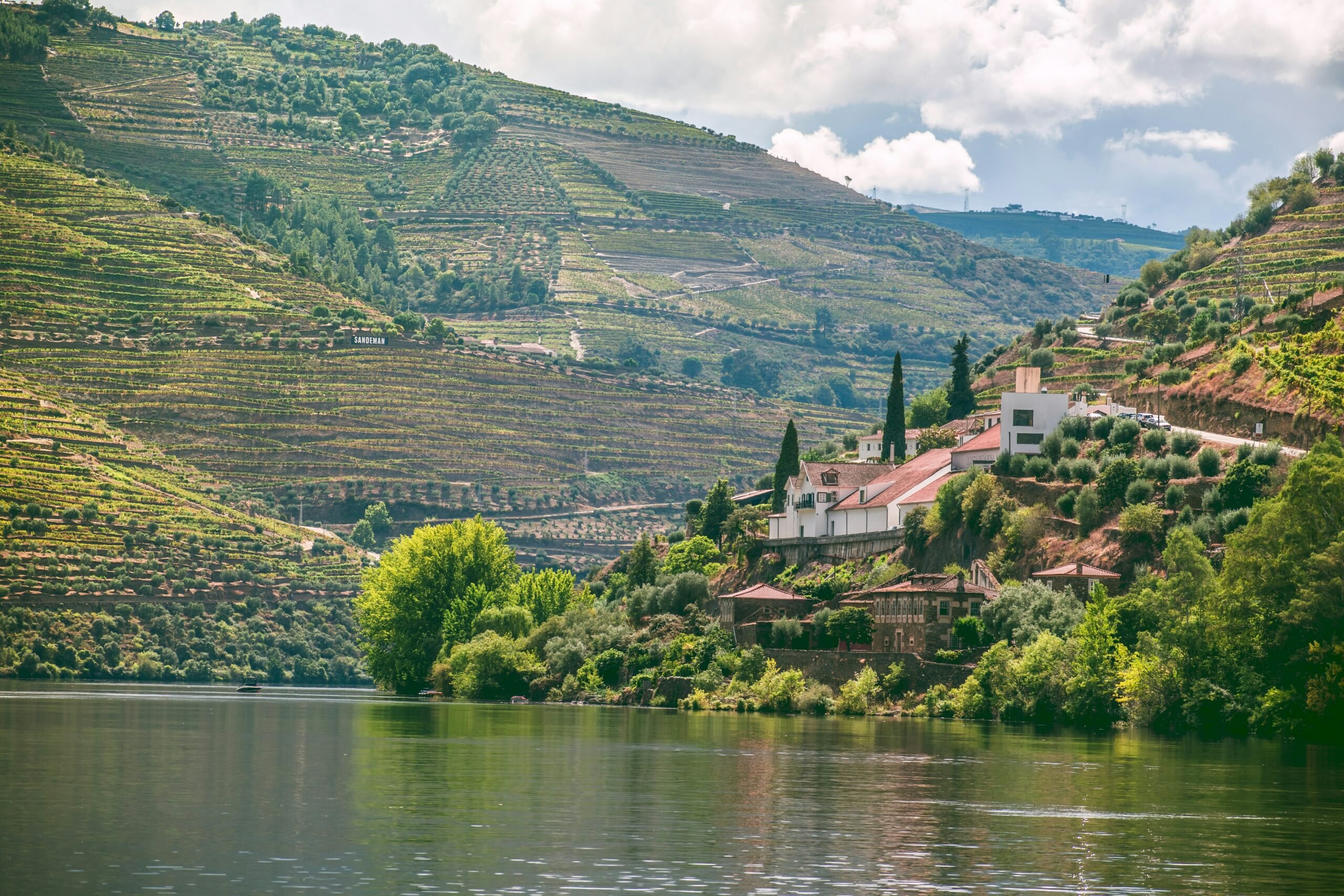
It doesn’t get more romantic than taking a Douro River Cruise in the Douro Valley for Valentine’s Day. The romantic views of terraced vineyards and classic Portuguese architecture climbing the hills create the perfect backdrop for February 14 magic.

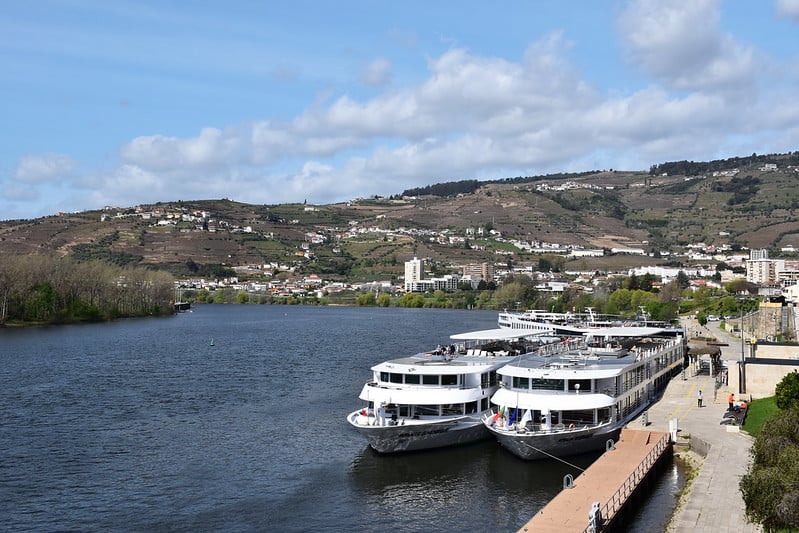
Your guided tour of this region includes a wine tour and lunch followed by a short cruise through the Douro Valley. The gentle breeze and sweeping views of the slopes, as you cruise along, create a memorable setting for romance in a place in Portugal where time continues to stand still. This magical experience, combined with the enchanting setting, ensures a romantic and delicious Valentine’s Day.

Cruising in the Douro Valley, Photo by kaysgeog, Flickr

7. A Day in the Douro Valley

A full private tour for Valentine’s Day in the Douro Valley, a UNESCO World Heritage site and the world’s oldest demarcated wine region, promises a day filled with love in the air – whether it’s with the land, your partner, or both. This journey begins in the picturesque city of Amarante, where couples can explore its historic center.

The tour then unfolds into the majestic Douro Valley, known as the ‘stairs of the giants’ due to its terraced vineyards. Here, you’ll have the opportunity to absorb the valley’s serenity and beauty. The patchwork of vineyards, traditional farms, and quaint villages draped along the rolling hills offers a truly romantic ambiance and feels like stepping straight into a postcard.

The day reaches its picturesque peak in Pinhão, home to one of Portugal’s most beautiful train stations. After admiring its unique azulejos (tiles), couples can enjoy a relaxing cruise offering panoramic views of the Douro’s unique landscapes.

The experience is crowned with visits to two renowned wine estates, complete with tastings of the celebrated port wine. If you truly want to make an entire day of it, the Douro Valley offers one of the most romantic settings that Portugal has to offer for Valentine’s Day.

The Douro Valley, Photo by Rach Sam, Unsplash

Final Thoughts

When it comes to Valentine’s Day, Porto truly has it all—from its alluring bridges to its delicious local port wine, its sprawling parks, and beautiful beaches. Every corner, from the serene Douro River to the vibrant local cafes, resonates with love, making Porto an unforgettable destination for those seeking a truly special Valentine’s Day.

Portuguese Islands’ Folk Tales

We need to know how to interpret and distinguish legends from reality, as well as why these legends exist in the culture of each people and region. Portugal is a country extremely rich in stories, myths, and ancient legends, which inspire customs and superstitions. There are hundreds of Portuguese legends, tales, sayings, and popular beliefs that make our culture so rich and interesting.

Told in the evenings in the cold winters by our ancestors, from werewolves to fairies, witches to mermaids, ghosts and feathered souls to the miracles of saints, there isn’t a creature that our folklore doesn’t include, with the exception, perhaps, of vampires, because this isn’t a subject that is part of our legendary imagination.

But not all Portuguese legends are about creatures and monsters. Many of them reveal lands and people of courage, stories of revenge, justice, impossible loves, and perfect loves, others concern true events but with touches of imagination, probably to increase the dramatic or heroic charge of what really happened.

In fact, legends are such an important part of Portugal’s core that some even precede the country’s history, such as the legend of the Battle of Ourique. The legend goes that shortly before the battle, Afonso Henriques was visited by an old man, whom the man who would become Portugal’s first king four years later believed he had seen in his dreams.

The man gave him a prophetic revelation of victory. He also told him to leave the camp alone the following night, as soon as he heard the bell from the hermitage where the old man lived. The king did so.

It was then that a ray of light illuminated everything around him, allowing him to gradually make out the Sign of the Cross and Jesus Christ crucified. Overcome with emotion, he knelt down and heard the voice of the Lord, who promised him victory in this and other battles. The next day, Afonso Henriques won the battle.

According to legend, King Afonso Henriques then decided that the Portuguese flag would have five shields, or quinas, in a cross, representing the five vanquished kings and the five wounds of Christ.

There are so many myths that have shaped this country that it would be impossible and unfair to contain them all in a single article, so I’ve decided to create a series that will cross the country from north to south. In this article, we’ll visit the legends that have the Azores and Madeira, Portugal’s two archipelagos, as their backdrop. Let’s get to it!

Legend of Nossa Senhora do Monte

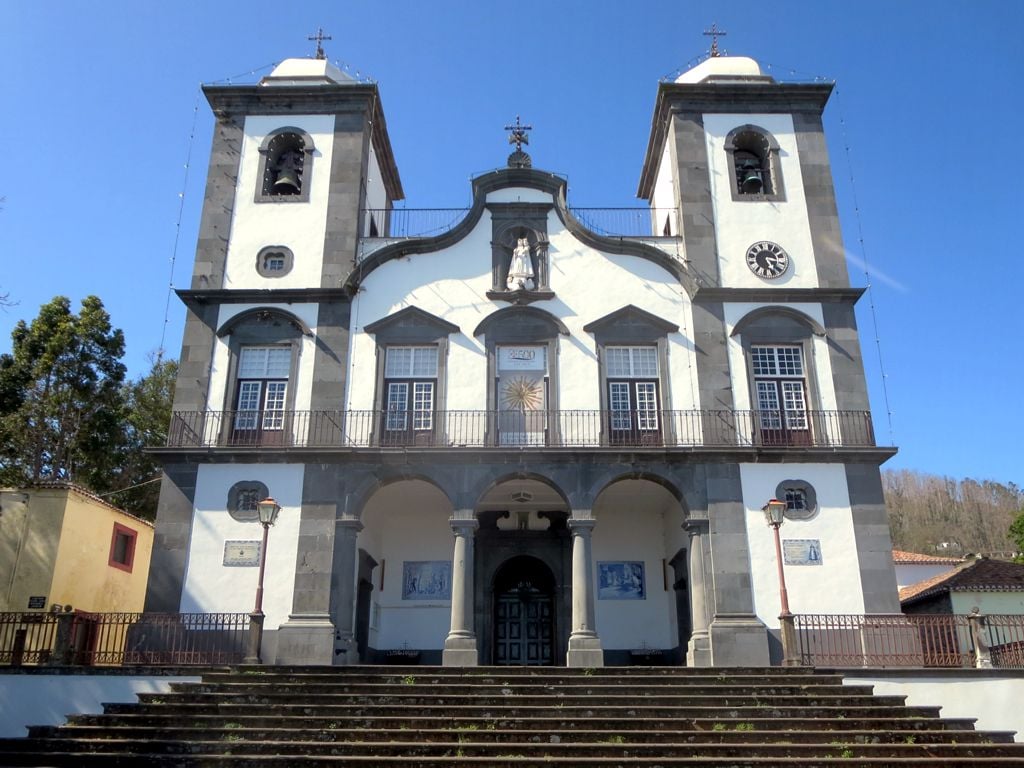
Nossa Senhora do Monte Church Madeira Island Portugal
The Church of Nossa Senhora do Monte in Funchal, Madeira, was rebuilt after the earthquake of December 1818. Photo by David Stanley (Flickr).

It is said that at the end of the 15th century, about a kilometer above the church of Nossa Senhora do Monte, in the town of Terreiro da Luta, a little girl was playing in the afternoon with a shepherdess. The shepherdess offered the little girl a snack.

The little girl, very pleased, told her family what had happened, who didn’t believe her story, as it was unlikely that a little girl would appear in that deserted forest so far from the village. The next afternoon, the little girl went back to play with the shepherdess, who again gave her a snack, and the shepherdess told her family again.

The next day, at the time indicated by the shepherdess, her father went to observe the scene in secret. That’s when he saw a small image of the Blessed Virgin Mary on a rock and, in front of her, the innocent shepherdess, who hastened to tell him that the image was the little girl he was talking about.

The father, perplexed, didn’t dare touch the image and reported it to the authorities, who ordered the image to be placed in the Chapel of the Incarnation, near the present-day church of Our Lady of the Mount. From then on, that venerable image was given this name.

Legend of Machim

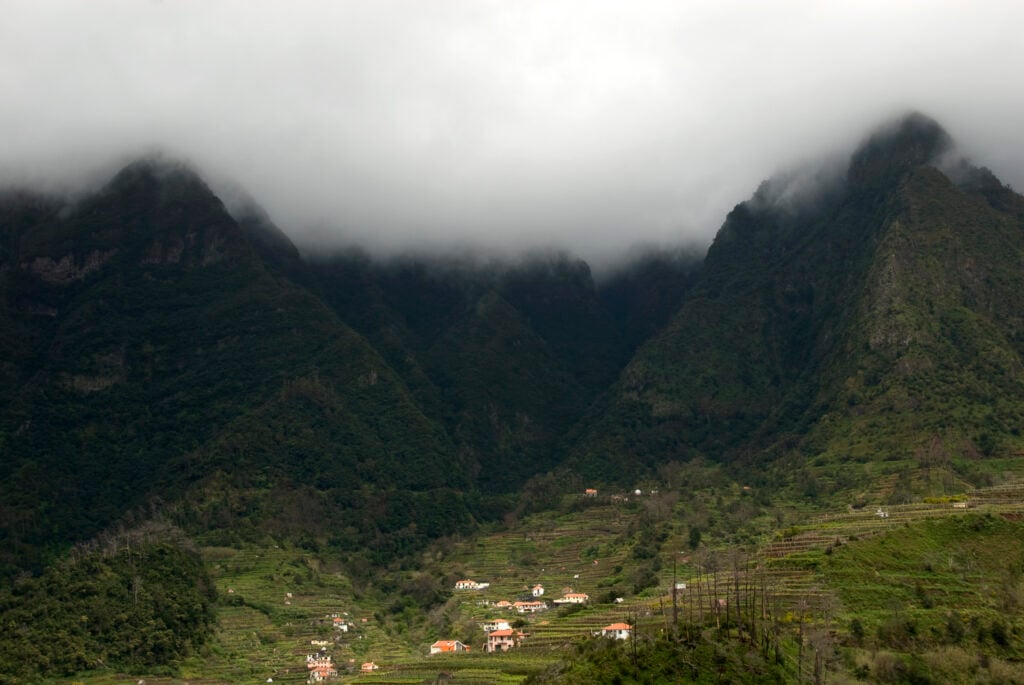
Laurisilva Forest Madeira Island Portugal
Visiting Madeira and its Laurisilva Forest (a World Heritage Site) feels otherworldly, like something out of a fantasy book. Photo by Mal B (Flickr).

According to the legend, between the end of the 14th century and the beginning of the 15th century, there was a young man in England called Roberto Machim, a legendary knight at the court of King Edward III of England. He was in love with an English lady, Anne of Arfert (or Anne of Harfert), who reciprocated his love but, by the will of her relatives, had to marry a nobleman.

Machim and his friends devised a plan to rescue the bride before the wedding and take her by boat to France, which at the time was at war with the English in the Hundred Years’ War. The date of the escape was agreed with the young woman for the eve of her wedding day.

While fleeing far from the English coast, the lovers were surprised by a storm that blew them off course. Suffering setbacks due to the storm, and not having an experienced pilot on board to put them back on course, the couple in love drifted for days until they saw a “big green spot” in the distance. They were in front of the island that would later be called Madeira.

Despite their fear of the unknown, their desperation drove them closer and, as the lady was ill from spending so much time at sea, they landed in the cove that is now Machico Bay. They were so anxious to set foot on dry land that they disembarked without taking the necessary steps to anchor the boat.

After exploring that part of the island and quenching their thirst, they realized that a new storm was approaching. They sought refuge among the roots of a leafy tree that was there because the diameter of its trunk was such that at its base there was a cavity that could hold many people.

When the storm calmed down, they noticed that the raging sea had taken their boat. The tormented lady, whose health was already failing, died a few days later. Machim erected a huge wooden cross on the grave of his beloved, next to the leafy tree where they had found shelter. Machim was affected by an enormous melancholy and, in less than a week, he joined his beloved in death.

It is said that the remaining members of the expedition who stayed there tried to survive and engraved the brief history of the two lovers on the cross. Some of them died, while others survived until a Moorish ship came and rescued them and took them to North Africa to be sold as slaves. One of them had been rescued by the payment for the release of captives that Christians usually made to African traders. It was this survivor who told the saga of Machim to the Portuguese.

Legend also has it that when the Portuguese explorers arrived a few years later, they discovered the wooden cross and the inscription. They then built the island’s first chapel in the hollow of the tree and named the town Machico in honor of the inscription.

Legend of Saint Sylvester

Fireworks
Madeira’s New Year’s Eve fireworks are known for being some of the most spectacular in the world. Photo by Kim Kemoole (Flickr).

Legend has it that on the last night of the year, as the Virgin Mary looked down from heaven over the ocean, Saint Sylvester came to speak to her. Our Lady told him the reason for her sadness: she remembered the beautiful Atlantis, sunk by God to punish its inhabitants.

As she spoke, Our Lady shed tears of sadness and mercy. Saint Sylvester then noticed that her tears were not tears but real pearls. One of these tears fell on the original site of the extraordinary Atlantis, giving rise to the island of Madeira, which became known as the Pearl of the Atlantic.

The ancients say that, for a long time, on the night of St. Sylvester, when the twelve chimes struck, a vision of light and fantastic colors would appear in the sky, leaving a dazzling scent in the air.

Over the years, this sight has disappeared, but people have found a way to keep it alive, through the fireworks of the famous New Year’s Eve celebrations, which enhance the celebrations of St. Sylvester’s Eve.

Legend of the Seven Cities

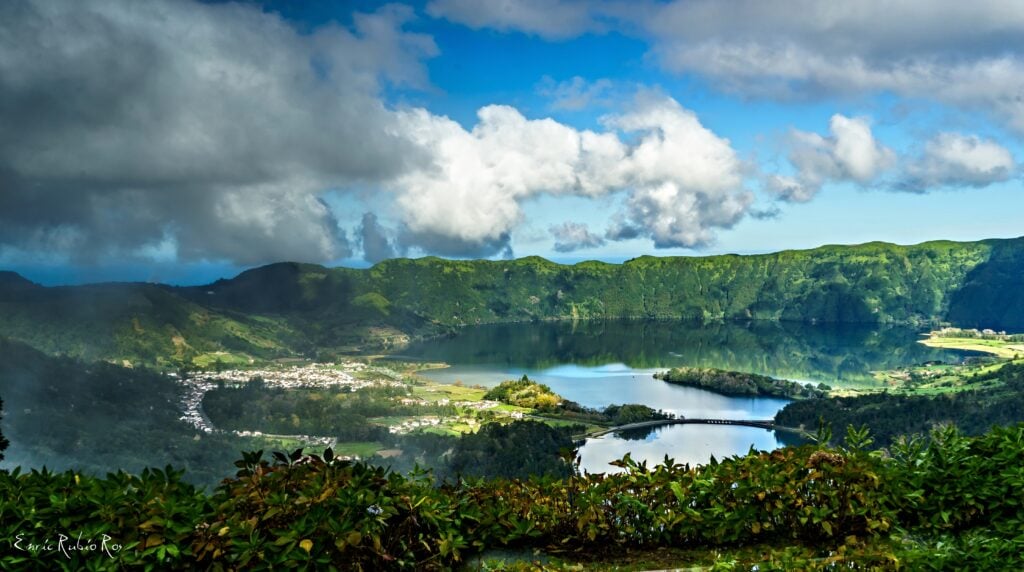
Lagoon Seven Cities Azores Islands Portugal
Few places in the world look like paradise as much as the Lagoon of the Seven Cities, in the Azores. Photo by Enric Rubio Ros (Flickr).

Legend has it that the Azores archipelago is what remains today of a wonderful and strange island. On this island lived a king who regretted not having any children. This pain made him bitter and cruel.

One night, a very bright star descended from the heavens and gradually materialized into a beautiful woman. She promised the king a daughter as beautiful as the sun, but she imposed a few conditions: first of all, the king had to stop being cruel and start being patient.

He would also have to build a palace, surrounded by seven cities, surrounded by bronze walls that no one could cross. The little princess would have to be kept there for thirty years, away from the king’s eyes and affection.

The king immediately accepted the challenge. However, after 28 years, he couldn’t take it anymore. Despite being warned that he would die and his kingdom would be destroyed, he went to the walls to destroy them. As soon as he started, the earth shook and the sea swallowed up the island.

At the end of it all, only the nine islands of the Azores and the princess’s palace remained, now transformed into the Lagoon of the Seven Cities. The lagoon split in two: one green, like the princess’s dress, and the other blue, the color of her shoes.

Legend of the Kingdom of Atlantis

Azores Islands Portugal
It’s easy to see similarities between the idyllic Azores islands and the mythical Atlantis. Photo by Feliciano Guimarães (Flickr).

In the great civilizations of antiquity, it was said that beyond the Pillars of Hercules, today the Strait of Gibraltar and where the Atlantic now stretches, the mighty empire of the Atlantas ruled.

This empire was made up of a federation of ten kingdoms, under the protection of Poseidon, so the Atlanteans were exemplary in their behavior, not allowing themselves to be corrupted by vice and luxury.

The whole of Atlantis was a dream and a delight. The land produced precious woods; there were mines of noble metals; the exceptional climate favored flourishing agriculture; the houses and palaces showed comfort and wealth; there were excellent roads and bridges; and the economic respite provided for the emergence of wise men and artists.

Everyone was happy just to enjoy and exploit the riches of their kingdom, but they were still practicing the art of war.

So it wasn’t difficult for the Atlanteans to defend their territory from the attacks of those who, driven by envy, longed to conquer the prodigious Atlantis. They defended the land in such a way that pride blossomed and the ambition to extend the kingdom’s domains arose for the first time.

The mighty Atlantean army spread throughout the then-known world and dominated the people. Inebriated by time, they allowed themselves to be taken by pride and vanity, falling into luxury and corruption, disrespecting the gods.

Zeus called a council to punish the Atlanteans, who were now so depraved. As a result, the earth shook violently, the sky darkened as if it were night, fire licked the forests, and the sea swept over the land and swallowed up villages and cities.

Atlantis and all its prosperity disappeared forever into the immensity of the sea, but nine of the highest mountains of that beautiful land remained uncovered. Many years later, these small islands, remnants of the great continent, were populated and are today the 9 islands of the Azores which, due to their beautiful climate and landscape, are reminiscent of the prosperous Atlantis.

Last Thoughts

Portuguese legends are not just stories from the past; they are threads woven into the tapestry of national identity, shaping world views and passing on values from generation to generation. Each tale, such as the epic Battle of Ourique, not only feeds the collective imagination but also influences national symbols, such as the chevrons on the flag.

Located right in the middle of the Atlantic Ocean, with water in each direction, as far as the eye can see, it’s simply to understand why the people of Azores and Madeira have felt the need to create myths that give them a sense of belonging, a sense of being a part of something bigger than their respective islands.

Just as Tolkien believed, these legends are not just fiction; they are reflections of deep truths that resonate through the centuries. The richness of Portuguese culture lies not only in its documented history but in the narratives that dwell in the hearts of the people, continuing to inspire and enchant each generation that delves into these timeless stories.

Thus, Portuguese legends remain not only as accounts of the past but as windows to understanding the soul of a people and the essence of their rich heritage.

Make sure you explore the country through its legends in these other articles: Northern Portugal’s Folk Tales, Central Portugal’s Folk Tales, Lisbon Region’s Folk Tales, and Southern Portugal’s Folk Tales.

Northern Portugal’s Folk TalesCentral Portugal’s Folk Tales, Southern Portugal’s Folk Tales, and Lisbon’s Region Folk Tales.

Portuguese culinary among the best in the world

0

Portuguese chefs, and Portugal, as a food destination, are among the best in the world. According to an article published by the creators of MesaMarcada, a renowned Portuguese culinary critics blog, Portuguese chefs and Portuguese cuisine are becoming more and more praised all over the world.

Today, after years of huge success from the “The World 50 Best Restaurants” ranking, things changed a bit. “La Liste” and “Best Chef Awards” are the two yearly culinary lists that tell us who, and what is worth noting and eating. The first tells us about the best places, and the second, obviously, about the best chefs.

This year, (not) surprisingly, Portugal was in the spotlight. The country, more precisely its culinary, won the “New Destination Champion Award” attributed by La Liste. Such a prize is awarded to the best culinary destination of the year.

When it comes to the best chef awards, there are three Portuguese restaurants within the first 100 spots. José Avillez (Restaurante Belcanto) was #33, Hans Neuner (Restaurante Ocean) #71, and João Oliveira #100 (Restaurante Vista).

Moreover, apart from the international rankings, MesaMarcada has its own yearly gala. Similarly to the other two, it provides a list of who, and what is worth noting.

In this year’s edition, restaurant Prado took the top spot, and Hans Neuner’s restaurant Ocean was number two. The New Restaurant of the Year special award was attributed to the restaurant Cozinha das Flores.

When it comes to the best chef awards, the first place was attributed to João Rodrigues from the restaurant O Canalha, and the second place to Vasco Coelho dos Santos from Euskalduna.

Ikea says it is not contributing to the political debate with marketing campaign

0

Ikea used the scandal of the Portuguese Prime Minister’s Chief of Staff for a marketing campaign.

During Operation Influencer, which was covered here, the Portuguese authorities found 75.800 euros hidden in a bookshelf and a few other places, inside the Prime Minister’s Chief of Staff’s office, in Lisbon.

This week, Ikea Portugal chose to use the situation to build a marketing campaign that echoed throughout the entire country. The advertisement is for a bookshelf and says, in bold large letters: “Good for storing books. Or 75.800 euros.”

According to the statement of the Portuguese branch of the Swedish multinational company, this is a marketing move with a sense of humor that reflects real life.

Due to the fact that Portugal is a bit more than one month away from the next legislative election, which is happening as a result of the resignation of the Prime Minister because of Operation Influencer, some have criticized the campaign.

The company, however, told CNN Portugal that it did not mean to contribute to the political debate in this pre-electoral context. On the contrary, it simply wished to alleviate the tension of the current political paradigm with some humor.

In fact, if one takes a look at the website of Ikea Portugal, one can find other marketing campaigns with political references.

Lisbon-Porto high speed train to have 10x more passengers than Lisbon-Madrid

0

The Portuguese Under-Secretary of State for Infrastructure said, last Monday, that the number of estimated passengers for the Lisbon-Porto high-speed train is 10 times bigger than the number for the Lisbon-Madrid.

According to the data from the inquiry concerning the high-speed train connections, the number of expected passengers for the Lisbon-Porto connection is 10 times bigger than the number that is expected for any of the proposed international connections (Lisbon-Madrid; Porto-Vigo; Porto-Madrid).

The Under-Secretary’s statement came as a response to the questions posed by the public about the Lisbon-Madrid connection. The Mayor of Lisbon publicly stated that, in his opinion, it seemed a bit odd that the Lisbon-Madrid connection would not be the first to be built.

The Under-Secretary argued that given the results of the inquiry that was made to the population, the Lisbon-Madrid connection will not be a priority for now. The Lisbon-Porto connection expects around 10 to 12 million passengers per year. Contrarily, Lisbon-Madrid expects only 1 to 1.5 million.

The project is about to start, and naturally, given these estimations, the priority will be building the Lisbon-Porto connection first.

The Under-Secretary also stated that it is obvious that international connections are important. However, one thing at a time. 

After all the plans are completed, the Lisbon-Porto high-speed train is set to connect the cities in around 1h15 minutes, hopefully around the year 2030. 

8 Portuguese-Inspired Valentine’s Day Gift Ideas

Have you booked your tickets to Portugal for Valentine’s Day this year? That’s great, you’ve made an excellent choice! We’re sure you’ll return home from your mini-holiday with some truly unforgettable memories!

If you haven’t chosen a gift for your significant other, we’re coming to your rescue! There’s no need to buy something before leaving for Portugal. You can find the perfect gift on the spot. Even more so, it will have a Portuguese touch and remind you both of your romantic getaway in Portugal.

So why don’t we get down to business?! Keep reading to find 8 Portuguese-inspired Valentine’s Day gift ideas that you’ll absolutely love! We’re sure your significant other will appreciate them just as much as they’re proof of how much effort you’ve put into finding them!

1. Paint Your Own Azulejos

If you’re spending Valentine’s Day in Portugal, you simply have to paint your own azulejo tile! Anyone who has at least once visited Portugal knows it’s a country of tiled buildings, each with its unique design that somehow still contributes to the country’s architectural uniformity.

Well, imagine spending an afternoon with your significant other painting your own tile! You can paint something symbolic for your relationship that will stand as a tangible memory of your Valentine’s Day in Portugal.

You can look for local tile manufacturers, as they sometimes offer tourist programs and allow you to paint your tile for a small fee. For example, you can go to Azulejos de Azeitão. It’s located very close to Lisbon, only about half an hour away. You’ll be able to see and learn first-hand about the process of creating azulejo tiles and then have an amazing time mastering your own handicraft technique!

However, you must consider the fact that you probably won’t be able to take the tiles with you right away, as they have to be burnt at high temperatures before being ready. The staff will likely ask for an address to ship them when they’re done. Once your handmade tiles arrive, you can use them as home decor – always there to remind you of your quality time together!

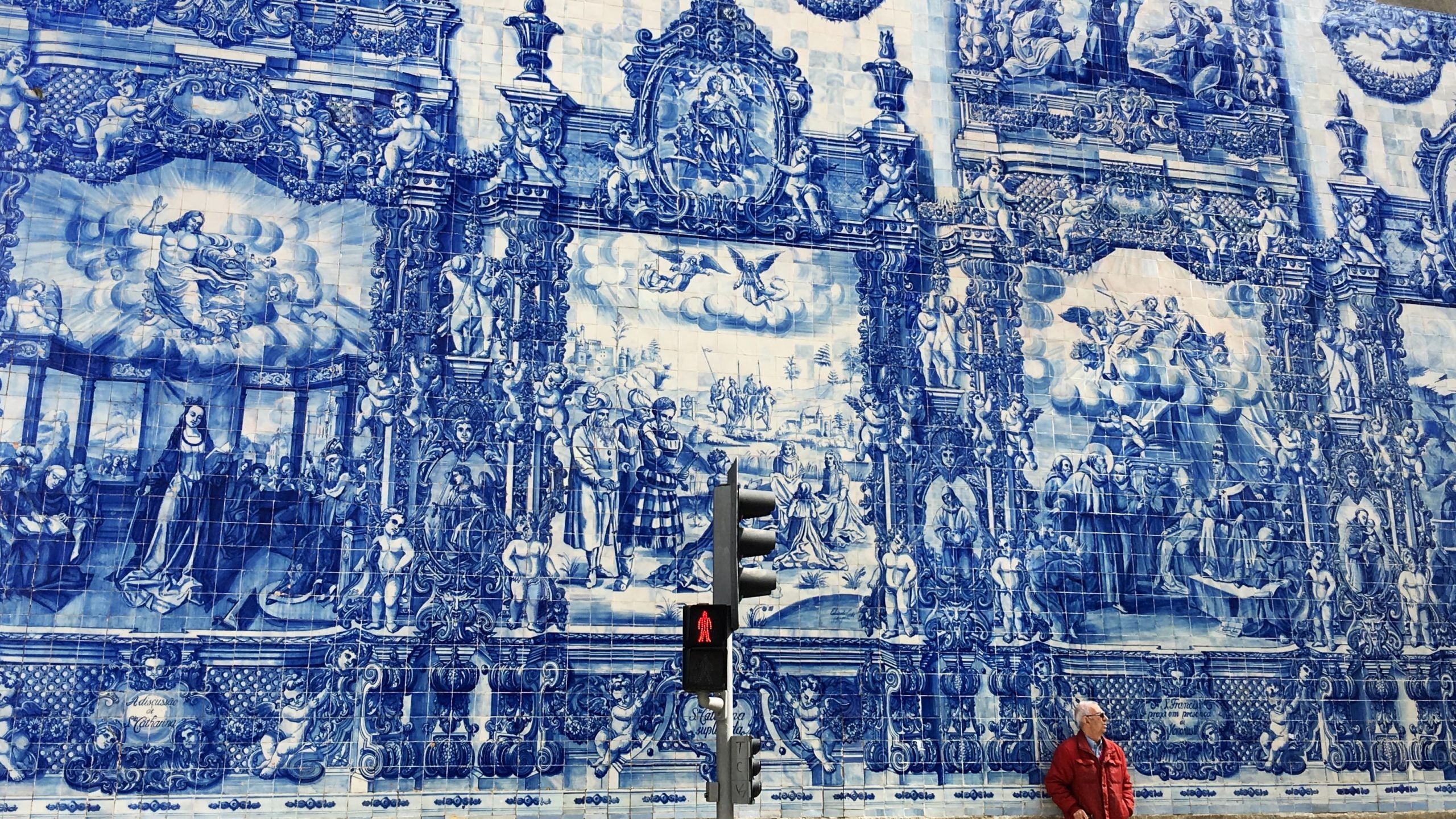
Azulejo Tiles in Porto. Photo by Serge Le Strat (Unsplash)

2. Filigree Jewelry

Have you ever heard of filigree jewelry? It’s a form of metalwork of gold and silver created using threads, which are arranged in artistic motifs.

It is believed that the filigree “method” dates from as early as 3,000 BC, originating from Mesopotamia. In the Iberian Peninsula, archaeological finds point to 2,000-2,500 BC as the earliest period of filigree production.

In Portugal, the method started being used extensively in the 8th century, and, compared to Spain, where the tradition started becoming increasingly less relevant, Portuguese people perfected it. The filigree jewelry-making tradition still stands as one of the country’s most valued treasures and arts, having acquired, over the years, unique motifs and shapes.

As such, offering your significant other filigree jewelry is possibly the most thoughtful and inspired Valentine’s Day gift that bears a Portuguese touch.

If you’re in Lisbon, you can check out Joalharia do Carmo located on R. do Carmo 87B. The shop’s handmade jewelry pieces stand as a bridge between the art of jewelry-making and the country’s most iconic cultural and historical aspects.

You can also find a Joalharia do Carmo shop in Obidos and Ponta Delgada.

3. Heart of Viana Necklace or Earrings

The heart of Viana is a highly valued symbol in Portugal. It was first created in the 18th century at the request of Dona Maria I, the Queen of Portugal between 1777 and 1816, after she had given birth to her son. The heart of Viana was crafted in honor of the Sacred Heart of Jesus.

At first, this crowned golden heart had religious connotations only. It also pointed to the connection between the mother and the child. The heart symbolizes female fertility, while the rounded shape surrounded by the so-called crown is the link between the child in the womb and the mother.

Over the years, however, it gained more and more popularity, having become a symbol of love, faith, and friendship. Offering your significant other a heart of Viana necklace or piece of earrings stands as evidence of your commitment to the relationship and appreciation for the traditional Portuguese culture.

4. Lenço dos namorados

The Lenço dos namorados tradition, which translates as Valentine’s (or lover’s) handkerchief, originates from Vila Verde, Portugal. It is believed that the first handkerchiefs of this kind date from the 19th century. They were handcrafted by women and given to their lovers who would keep them as symbols of commitment when they were apart.

Sometimes, these handkerchiefs were offered as a kind of courtship ritual. A woman put her soul into crafting it and subsequently offered it to the man she intended to start a relationship with. If the man agreed to the relationship, he wore the handkerchief in public. If he did not want to be in a relationship, he returned the handkerchief.

These handkerchiefs weren’t simply proof of women’s embroidery talents. They embroidered various symbols, quotes, verses, dates, or names. Some of the most common symbols were keys, hearts, doves, crosses, and even agricultural motifs like baskets or parting symbols like ships or doves with letters.

Today, some people return to the art of lenço dos namorados, relying on them as proof of their love and appreciation, offering such handkerchiefs as Valentine’s Day gifts. You can either create one yourself if you’re passionate about handicrafts or buy one, as there are plenty on the market with various motifs and verses. It will definitely make for a unique gift that will surprise your partner!

5. A Swallow as a Symbol of Love

Once you explore a few souvenir shops in Portugal, you’ll find yourself wondering what’s with the swallows… Well, this story takes us back to 1891, when Rafael Bordallo Pinheiro, one of Portugal’s most well-known and widely recognized artists, created some ceramic swallows. Did he know back then that these swallows would survive for more than a century as a pillar symbol of Portuguese culture?

Considering that the swallow, a migratory bird, always returns to the same place to nest and, besides this, mates for life, it’s unsurprising that people have come to associate the bird with family, home, love, and loyalty.

As such, it has become one of the most symbolic gifts lovers exchange. So, if you want to show your partner how much light and tranquility they bring into your life, pick a ceramic swallow! It will serve as proof of your commitment and appreciation.

6. A Cork-Made Gift

Yet again – if you’re looking for souvenirs in Portugal, you quickly start asking yourself why cork is so popular in Portugal. Cities are filled with cork-made products – bags, shoes, hats, coasters, wallets, and whatnot.

The thing is – Portugal is actually the world’s largest producer of cork. The other thing is – cork-made products are sustainable, as no trees are cut down or damaged in the process.

So, if you’re looking for a unique, Portuguese-inspired, eco-friendly gift, don’t hesitate to choose something made of cork. Luckily, there are plenty of choices on the market for any preferences!

7. Espresso Cups

Once you set foot in Portugal, you become increasingly aware that locals have mastered the espresso-drinking tradition. You can master it yourself in no time, even if you’ve never liked espressos! That’s how tasty Portuguese coffee is!

So why not look for a quality set of espresso cups (go for handmade ones if the budget allows it!) as a Valentine’s Day gift for your significant other? You’ll bring back the espresso-drinking habit to your home country (that is, if this hasn’t already been a tradition, depending on where you’re from) and spend a few minutes every morning together, immersing yourself in happy memories of your Valentine’s Day spent in Portugal!

8. A Literary Gift

Is your significant other a literature enthusiast? Luckily, Portugal has given rise to quite a few literary geniuses!

You can go for a new edition of one of the country’s most acknowledged authors like Jose Saramago or Fernando Pessoa. If you want to go the extra mile, however, find an older or even first edition of their most famous works.

Even if it’s in Portuguese and your partner won’t understand it – the book will make for an awe-striking gift for any bibliophile! The mere fact that they’ll hold it in their hands will be a breathtaking experience. But taking it back home, finding it a perfect spot on the bookshelf – a true delight!

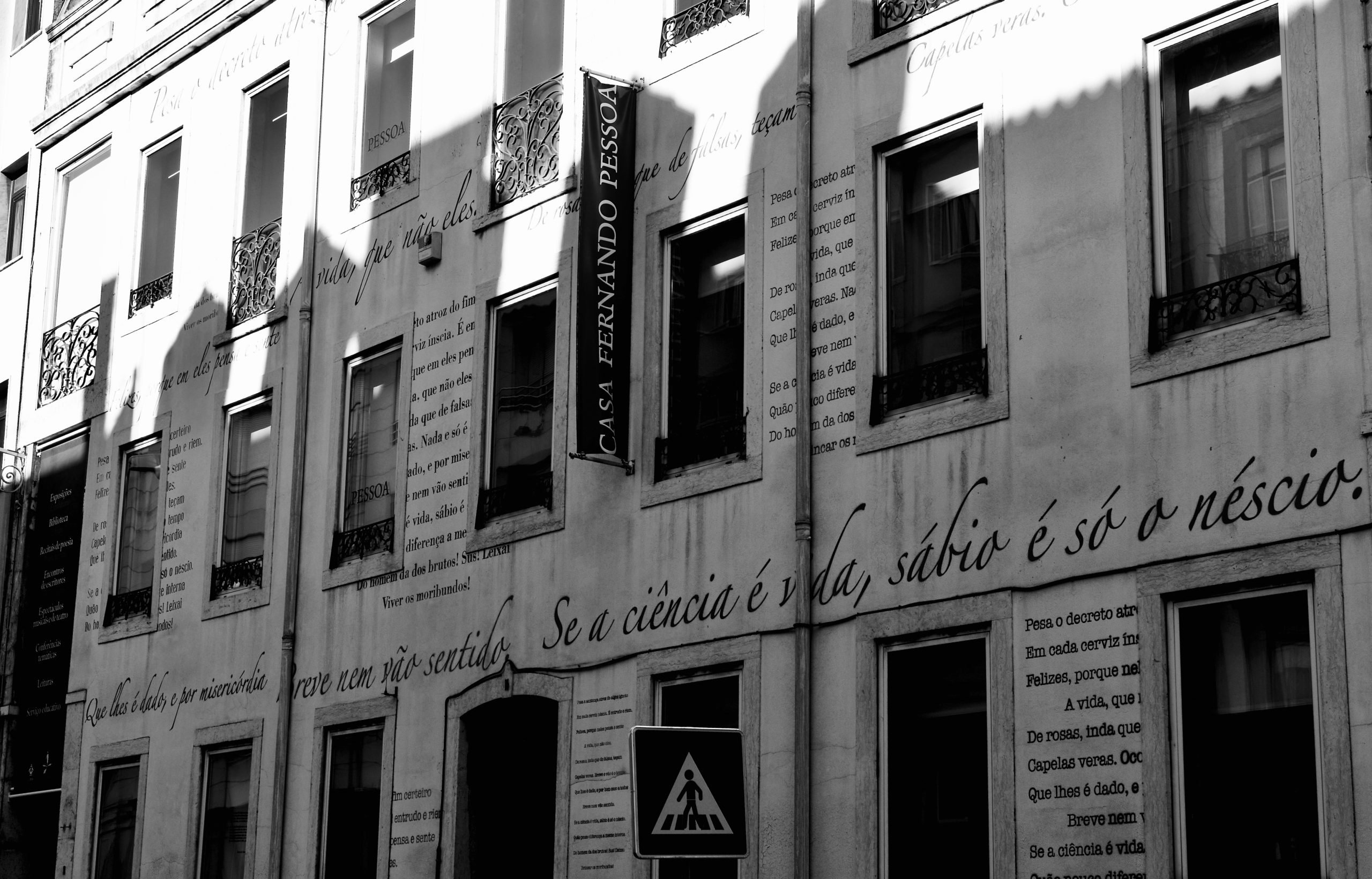
Casa de Fernando Pessoa. Photo by Pedro Ribeiro Simões (Flickr)

Southern’s Portugal Folk Tales

We need to know how to interpret and distinguish legends from reality, as well as why these legends exist in the culture of each people and region. Portugal is a country extremely rich in stories, myths, and ancient legends, which inspire customs and superstitions. There are hundreds of Portuguese legends, tales, sayings, and popular beliefs that make our culture so rich and interesting.

Told in the evenings in the cold winters by our ancestors, from werewolves to fairies, witches to mermaids, ghosts and feathered souls to the miracles of saints, there isn’t a creature that our folklore doesn’t include, with the exception, perhaps, of vampires, because this isn’t a subject that is part of our legendary imagination.

But not all Portuguese legends are about creatures and monsters. Many of them reveal lands and people of courage, stories of revenge, justice, impossible loves, and perfect loves, others concern true events but with touches of imagination, probably to increase the dramatic or heroic charge of what really happened.

In fact, legends are such an important part of Portugal’s core that some even precede the country’s history, such as the legend of the Battle of Ourique. The legend goes that shortly before the battle, Afonso Henriques was visited by an old man, whom the man who would become Portugal’s first king four years later believed he had seen in his dreams.

The man gave him a prophetic revelation of victory. He also told him to leave the camp alone the following night, as soon as he heard the bell from the hermitage where the old man lived. The king did so.

It was then that a ray of light illuminated everything around him, allowing him to gradually make out the Sign of the Cross and Jesus Christ crucified. Overcome with emotion, he knelt down and heard the voice of the Lord, who promised him victory in this and other battles. The next day, Afonso Henriques won the battle.

According to legend, King Afonso Henriques then decided that the Portuguese flag would have five shields, or quinas, in a cross, representing the five vanquished kings and the five wounds of Christ.

There are so many myths that have shaped this country that it would be impossible and unfair to contain them all in a single article, so I’ve decided to create a series that will cross the country from north to south. In this article, we’ll visit the legends that have the south of Portugal as their backdrop. Let’s get to it!

Legend of the “Estremoços” or Estremoz

Estremoz Portugal
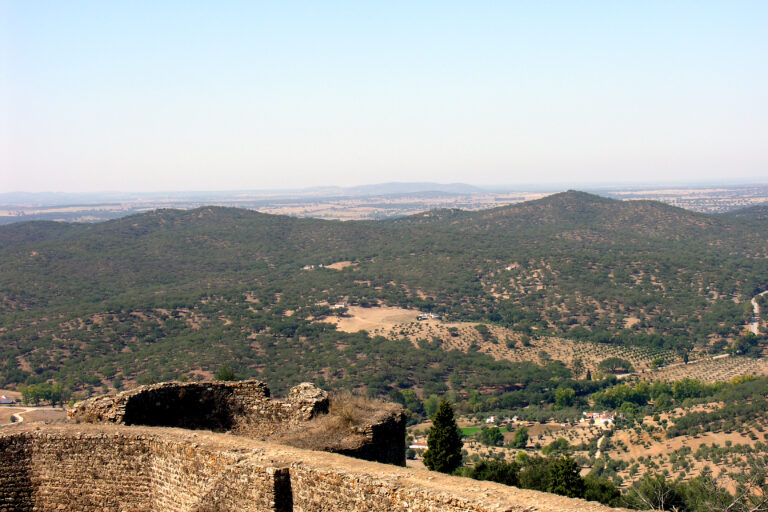
Today, Estremoz is a cultural-focused city, well-worth a visit. Photo by Patrick Nouhailler (Flickr).

The story goes that many centuries ago, a man, a woman, and a child were traveling in a carriage across the Alentejo plains. Political hatred and wrongly convicted crimes had thrown this family onto the endless road, so they were looking for a new home in a faraway land. After such a long journey, the heat was biting and thirst was torturing them. The dust made their mouths chapped and their tongues rough.

They needed to rest, to escape the sun of that immense plain beyond the River Tagus. Suddenly a large, welcoming shade appeared in the distance, like an oasis in the desert, a lupine tree, the only shelter they could find on the way. The family pitched a tent and spent the night there.

The next morning, they were woken up by the owner of the land with his men, who complained about the family’s presence on his property without his permission. Hearing that the family was being persecuted, albeit unjustly, for crimes they hadn’t committed, the old landowner ordered them to leave immediately. Feeling insulted, but with a clear conscience, the strangers refused to leave the shelter of the lupine tree.

After a while, the father and mother found their daughter missing. She had gone to meet the old landowner. She told him that her parents were noble and honest people with the ability to turn that place into a beautiful village. Convinced by the girl’s intelligence, simplicity, and courage, the old landowner went to her parents and accepted her presence on his land and help.

Years later, the prosperous village was granted a charter by King Afonso III. There were so many suggestions for names for the land that the old owner decided to leave it up to the children to choose. In honor of the tree, he named it Estremoços (the name given to lupins at the time). Today it is known as the city of Estremoz and the lupin tree is depicted on the city’s coat of arms. Estremoz is also home to a really cool castle that you should definitely visit. So cool, in fact, that it even made our 19 Coolest Castles in the Alentejo list.

Legend of the Seamstress

Alentejo Portugal
The Seamstress, locally known as the “costureirinha”, is a legend told throughout the Alentejo region. Photo by Paulo Valdivieso (Flickr).

This is one of the legends that has the most versions throughout Baixo Alentejo. One of them says that at the beginning of the 20th century, there was a seamstress in Baixo Alentejo who worked a lot, including on Sundays. For not respecting the holy day according to Catholic tradition, God punished her and made her wander the world of the living after her death.

Another version is that this seamstress had made a promise to St. Francis in life and never fulfilled it until she died. So she had to redeem herself by spending a period wandering before ascending to heaven. We don’t know why, but what we do know is that the seamstress became a penalized soul and wandered among the living, invisible.

Other versions tell us that once upon a time, a certain seamstress made a wedding dress for her daughter, but she died before the wedding. Filled with sadness, she continued to sew for eternity. It is also said that a certain seamstress fell seriously ill.

In order to recover her health, she promised to donate her sewing machine if she got better. However, as soon as she recovered, she forgot what she had promised, so when she died, as punishment, she was forced to continue sewing.

In all the versions, it is said to this day that in the silence of the night, the seamstress was heard sewing, and many heard the machine working, the scissors cutting, the thimble falling. However, this haunting didn’t frighten the people of Alentejo, because the seamstress was familiar. To learn more about this region and its people, check out our Alentejo Region Guide, or our love letter to the region, The Edge of Cultivation.

Legend of the Moura Salúquia

Moura Portugal
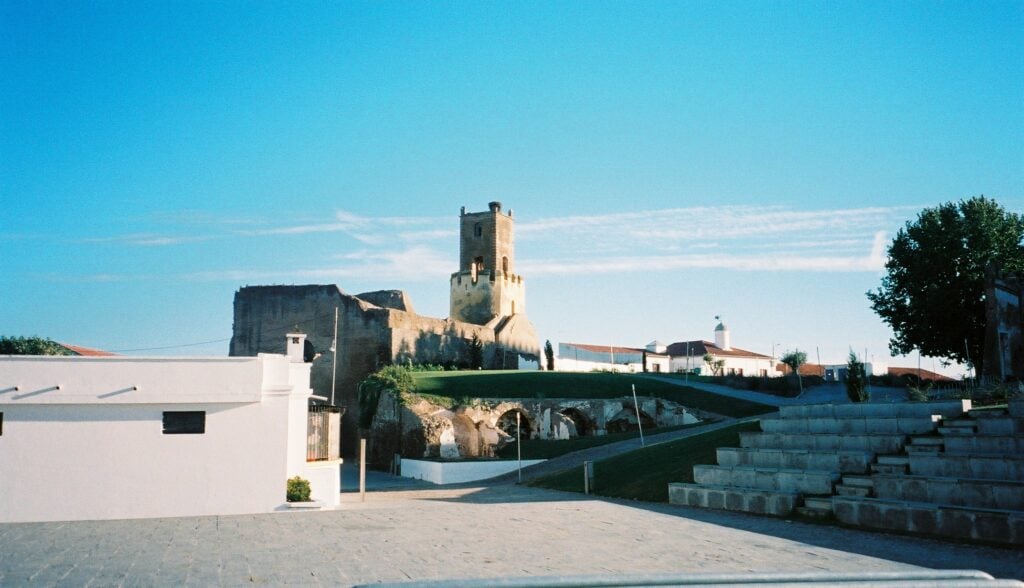
The Tower of Salúquia still stands in Moura’s renovated castle. Photo by João Trindade (Flickr).

The coat of arms of the town of Moura – which is now a city – essentially shows a tower and a female figure lying in front of the fortification. The story goes that this woman, a Moor by the name of Salúquia (and daughter of the town’s governor), lived in this land during the Christian Reconquest and fell in love with a man called Bráfama, from the village of Aroche (about 50 km away, for those who are curious).

One day the Christians killed him, took the clothes of this beloved man and his entourage, and headed for the town that is now Moura. Salúquia, seeing them in the distance, thought it was Bráfama and ordered the city gates to be opened. Faced with this inattention, the Christian fighters easily entered the town and managed to conquer it without any difficulty.

Then, realizing what she had caused, in the midst of her misfortune this Moor climbed the castle tower and committed suicide. The memory of the beautiful Moor, who committed suicide out of love, lingered on in the local culture, and so the town changed its Islamic name, which seems to have been Al-Manijah, to the current one.

But then… why was the town named “Moura” and not “Salúquia”? Since, given the context of this whole legend, it can be inferred that Christians changed the name, it is likely that the original name was gradually lost over time, or that they were unaware of the name of the deceased, but wanted to pay homage to her for the precious “help” she gave in conquering the place.

This second hypothesis is certainly possible if we are to believe the events surrounding this legend of the Moura Salúquia, which continues to live on today in the memory of the city’s inhabitants.

At the same time, the presentation of this main character as an Islamic woman who also loved a practitioner of the same religion is curious. In many other legends of Moors and Christians, it is much more common for them to fall in love with knights of the other religion, even ending up betraying their city for love.

Here, the town is betrayed, yes, but almost accidentally by Salúquia, and she is soon ready to pay the price for her action (some versions even add that all this took place on the day she thought she was going to get married, which further emphasizes her suffering).

Legend of the Almond Tree Blossoms

Flowers Blossom
The blossoming season is a beautiful time of the year in the Algarve region. Photo by Toshiyuki IMAI (Flickr).

A long time ago, before Portugal existed and when the Algarve belonged to the Arabs, there was a king who had never known defeat. One day, among the prisoners of a battle, he saw the beautiful Gilda, a blonde princess with blue eyes and a haughty bearing. She was enchanting and everyone called her the “Beauty of the North”.

Impressed, the Moorish king gave him his freedom. He gradually won her heart and asked for her hand in marriage. Despite the festivities that took place on this occasion, Gilda seemed to be very sad. The princess suffered from nostalgia for not seeing the fields covered in snow, as in her homeland.

Afraid of losing his beloved wife, the king had a good idea: he ordered large plantations of almond trees to be planted throughout the Algarve, and by early spring they were all covered in blossoms. The Moorish king took Gilda to the balcony of the castle’s highest tower to discover the landscape together.

The queen clapped her hands and shouted for joy when she saw the whole land covered in a white blanket, which she thought was snow. Seeing this indescribable sight completely cured her homesickness.

The couple had an intense love affair, waiting year after year for spring, which brought the spectacle of almond trees in bloom.

The Algarve is a beautiful, and very well-known region, full of surprises. To make sure you don’t miss a thing, check out our Algarve Region Guide.

Legend of Praia da Rocha

Praia da Rocha Beach Portimão Algarve Portugal
Today, Praia da Rocha is one of the most popular beaches in Portugal. Photo by Antonio da Silva Martins (Flickr).

The story goes that, many, many years ago, a beautiful mermaid was passing along the Algarve coast and, tired as she was, decided to rest on the rocks that rested there.

He fell asleep. As the sun rose, he smiled slightly. His eyes slowly open to the sound of the waves crashing on the rocks and he begins to glimpse a shadow in front of him.

In her distress, her eyes open wider and she notices that he is a very old man, with a long, white beard and wide, long white robes. He was, as he told the beautiful mermaid, the Fisherman, son of the Sea. So the Fisherman told the mermaid that he didn’t want her to leave, he wanted her to stay with him so that they could get married, because she was, without a doubt, the most beautiful being he had ever seen.

The fisherman continued to woo the beautiful mermaid. She, very attentive, was already inclined to accept the white-bearded man’s invitation. She didn’t do it straight away, but she didn’t do it afterward either. Another old man appeared from the top of the rocks, this one with a long brown beard and wide, long robes, as brown as his beard. He was a Serrano.

He too wanted to marry the mermaid and promised her the trees and flowers, the hills and valleys, the shadows, the smell of wet earth, in short… Worlds and worlds! For his part, the Fisherman stole Serrano’s airtime and promised the beautiful mermaid the waves, the corals, the beauty of the fish, the reflection of the sun in the ocean water… Then it was the Serrano’s turn. Then it was the fisherman’s turn again.

And so it went for months on end, without the mermaid deciding. And it lasted so long, but so long that the mermaid turned into the beautiful sand of Praia da Rocha and the two old men married each other.

Last Thoughts

Portuguese legends are not just stories from the past; they are threads woven into the tapestry of national identity, shaping world views and passing on values from generation to generation. Each tale, such as the epic Battle of Ourique, not only feeds the collective imagination but also influences national symbols, such as the chevrons on the flag.

The south of Portugal, as the last region to be reconquered from the Muslims, still retains many Arab influences, something that is easy to understand by learning about many of the legends that are passed down from generation to generation.

Just as Tolkien believed, these legends are not just fiction; they are reflections of deep truths that resonate through the centuries. The richness of Portuguese culture lies not only in its documented history but in the narratives that dwell in the hearts of the people, continuing to inspire and enchant each generation that delves into these timeless stories.

Thus, Portuguese legends remain not only as accounts of the past but as windows to understanding the soul of a people and the essence of their rich heritage.

Make sure you explore the country through its legends in these other articles: Northern Portugal’s Folk Tales, Central Portugal’s Folk Tales, Lisbon Region’s Folk Tales, and Portuguese Islands’ Folk Tales.

Lisbon Region’s Folk Tales

We need to know how to interpret and distinguish legends from reality, as well as why these legends exist in the culture of each people and region. Portugal is a country extremely rich in stories, myths, and ancient legends, which inspire customs and superstitions. There are hundreds of Portuguese legends, tales, sayings, and popular beliefs that make our culture so rich and interesting.

Told in the evenings in the cold winters by our ancestors, from werewolves to fairies, witches to mermaids, ghosts and feathered souls to the miracles of saints, there isn’t a creature that our folklore doesn’t include, with the exception, perhaps, of vampires, because this isn’t a subject that is part of our legendary imagination.

But not all Portuguese legends are about creatures and monsters. Many of them reveal lands and people of courage, stories of revenge, justice, impossible loves, and perfect loves, others concern true events but with touches of imagination, probably to increase the dramatic or heroic charge of what really happened.

In fact, legends are such an important part of Portugal’s core that some even precede the country’s history, such as the legend of the Battle of Ourique. The legend goes that shortly before the battle, Afonso Henriques was visited by an old man, whom the man who would become Portugal’s first king four years later believed he had seen in his dreams.

The man gave him a prophetic revelation of victory. He also told him to leave the camp alone the following night, as soon as he heard the bell from the hermitage where the old man lived. The king did so.

It was then that a ray of light illuminated everything around him, allowing him to gradually make out the Sign of the Cross and Jesus Christ crucified. Overcome with emotion, he knelt down and heard the voice of the Lord, who promised him victory in this and other battles. The next day, Afonso Henriques won the battle.

According to legend, King Afonso Henriques then decided that the Portuguese flag would have five shields, or quinas, in a cross, representing the five vanquished kings and the five wounds of Christ.

There are so many myths that have shaped this country that it would be impossible and unfair to contain them all in a single article, so I’ve decided to create a series that will cross the country from north to south. In this article, we’ll visit the legends that have the north of Portugal as their backdrop. Let’s get to it!

Legend of St. Vincent, Patron Saint of the City

Lisbon Portugal
Saint Vincent is intimately connected to Lisbon and the Tagus River. Photo by Luca Sartoni (Flickr).

In the 4th century, Vincent of Zaragoza was tortured by order of Emperor Diocletian for refusing to worship pagan gods. The martyr was put on a grill over hot coals and his legs and arms were torn off, the body parts being abandoned in a field to be devoured by dogs and wolves. It was then that the crows appeared for the first time in the narrative, defending the body from this final carnage.

With the Muslim invasion of the Iberian Peninsula, Vicente’s remains were placed on a boat that somewhere in time washed ashore on the cape of Sagres. In the 12th century – eight centuries later – King Afonso Henriques promised to recover the martyr’s bones if he succeeded in conquering Lisbon, which he did. Two ravens then protected the ship on its journey to Lisbon. The saint became the patron saint of Lisbon and the ship and the ravens became symbols of the capital.

Legend of the Works of Santa Engracia

Santa Engrácia Lisbon Portugal
The Church of Santa Engrácia is an omnipresent monument in Lisbon’s cityscape. Photo by Guillaume Flament (Flickr).

Legend has it that in the mid-1630s, a beautiful maiden by the name of Violante, daughter of an important Lisbon nobleman, fell in love with a young Christian by the name of Simão Pires Solis. The young woman’s father, who did not take kindly to the two lovers, had his daughter locked up in the convent of Santa Clara, located next to the church of Santa Engrácia, which was still under construction.

The young Simão Pires Solis didn’t deny his love for Violante and rode every day to the convent of Santa Clara to meet Violante on the sly. One day, Simão asked his beloved to run away with him. That night, by coincidence, the reliquary of the Portuguese martyr Saint Engracia, so dear to Infanta Maria, was stolen.

The next day, on the agreed date, Simão Pires Solis was woken up by the king’s men, who had come to arrest him, accusing him of stealing the relics from the church of Santa Engrácia, located very close to the convent. In order not to compromise Violante, Simão Solis didn’t want to reveal why he had been seen there the night before.

Despite repeatedly claiming his innocence, Simon Solis was arrested and sentenced to death at the stake for this reason, aggravated by his Jewish ancestry. The execution ceremony took place next to the new church of Santa Engrácia, work on which had already begun.

Legend has it that when the flames engulfed Simon Solis’ body, he cried out that he was as certain to die innocent as that the work would never end. Also, according to legend, years later, the novice Violante was called to the presence of a dying man when he was at death’s door, because she wanted to confess to him that he had been the thief of the reliquary of Saint Engracia.

Aware of Simon Solis and Violante’s secret relationship, he had framed the young man, who was seen there almost every night, and now wanted to ask for forgiveness from the woman who had lost her love in the most cruel and unjust way anyone could. However, Violante accepted his forgiveness.

What is certain is that the work on the church, which began when Simão Pires Solis was in charge, seemed never to end. So much so that people have become accustomed to comparing everything that seems to have no end to the works of Santa Engrácia, hence the popular saying.

Legend of Santa Iria

Tomar Portugal
According to this legend, Tomar is the birthplace of Saint Iria. Photo by Javier Habladorcito (Flickr).

The story goes that in ancient Nabância (now Tomar), Iria was born, a beautiful young woman named Iria or Eirena, who belonged to a wealthy family in the region. From an early age, Iria discovered her religious vocation and entered a monastery. The young Iria received a thorough education and was professed in a monastery of Benedictine nuns, which was governed by her uncle, Abbot Sélio.

Because of her beauty and intelligence, Iria soon won the affection of the nuns as well as the locals, especially the young men and noblemen, who disputed Iria’s virtues among themselves. At the time, the region was ruled by Prince Castinaldo, whose son Britaldo was in the habit of composing troves near the church of St. Peter.

One day, Britaldo saw Iria and fell madly in love with her. He became sick with love and in a feverish, desperate state, he demanded the young woman’s presence. Iria asked him to forget her because her heart and her love were from God. Britaldo agreed, on the condition that she belonged to no other man.

Remigius, a monk who was Iria’s spiritual director, was aware of Britaldo’s love affairs, and the maiden’s beauty had not gone unnoticed. Burning with jealousy, the monk Remigius gave Iria a tisane that was supposed to make her drunk, and which caused her body to appear opulent after pregnancy.

For this reason, she was immediately expelled from the convent, retreating to the river to pray in despair. When Britaldo found out, he was furious and jealous. He followed her on one of his usual trips to the River Nabon, where Iria was murdered by a servant of Britaldo’s or by Britaldo himself, stabbed, and thrown into the water.

Iria’s body was carried by the waters of the River Nabão to the River Zêzere and from there to the Tagus. After many searches and when they had almost given up, Iria’s body was found near the town of Scalabis (Santarém), enclosed as if by miracle in a beautiful marble tomb.

They wanted to remove it, but the waters of the Tagus, which had suddenly subsided to show the tomb, rose again, covering the martyr’s grave forever. The people surrendered to the miracle and she was considered a saint. From then on, the town was called Santa Iria, later Santarém.

About six centuries later, legend has it that the waters of the Tagus opened up again to reveal the tomb of Queen Isabel, who worshipped Saint Iria.

Did you know that Tomar is actually home to one of Portugal’s World Heritage Sites? That’s right, the Convent of Christ is a marvel that you can’t miss. To find out what else there is to see, head to our Tomar City Guide.

Legend of the Boca do Inferno

Boca do Inferno Cascais Portugal
It’s easy to understand how Boca do Inferno (Hell’s Mouth) got its name. Photo by Tomasz Baranowski (Flickr).

This legend takes place in the Cascais area, where it is said that there was once a castle inhabited by a demonic sorcerer (along with the version that says he was a malevolent giant). This sorcerer and malevolent figure chose the most beautiful maiden in the area to marry, but when he saw her in person and saw her rejection, he decided to arrest her and hide her, mad with jealousy at her beauty.

Obsessed by the beauty of the young woman and angry at being unrequited, the man locked her in an inaccessible tower near the sea and hired a faithful knight to guard her. The maiden was confined to a lonely tower, with the knight on guard, without ever being able to see each other.

The years went by and the two chatted, keeping each other company, until one day the knight, out of curiosity, decided to go up to the tower to see his friend. Legend has it that when the knight opened the door, he was overwhelmed by the beauty of the maiden and quickly fell in love with her.

The lovers decided to flee on horseback, forgetting that the sorcerer had bewitched the maiden and knew everything. So they fled on the sorcerer’s white horse and galloped along the cliffs of the coast on a beautiful moonlit night. The sorcerer, enraged and thirsty for revenge, summoned a fierce storm that hit the rocks where the lovers were fleeing.

Legend has it that the cliffs opened like a mouth and the waters swallowed up the maiden and the knight, crashing them into the raging sea. The hole has never closed since and on stormy days it seems that the place itself regrets the tragedy that took place there.

The local population began to call it “Boca do Inferno” (Hell’s Mouth), because of the unfortunate fate the pair met. On windy and stormy days, people seem to want to tell everyone the unfortunate story of those two lovers.

But Boca do Inferno is but one of the many, many highlights of Cascais. Want to find out what else there is in the “Portuguese Riviera”? Then make sure you check out our Cascais City Guide.

Legend of the Alfacinhas

As well as being one of Portugal’s best cities to live in, Lisbon is also surrounded by small and large Portuguese folk legends. One of them is the Legend of the Alfacinhas, which tries to explain why the city’s inhabitants are called colloquially called alfacinhas.

One of the theories goes back to the occupation of Lisbon by the Moors between 711 and 714, who began to cultivate “Al-Hassa”, which eventually became “Alface” (lettuce) in Portuguese. The plant was used for various purposes, both medicinal and culinary.

According to legend, after a war, the locals only had lettuce to eat, which is why they became known as this.

Lisbon is a city with so much to offer (other than lettuce!), so make sure you read our Lisbon Travel Guide before you get there, so that you don’t miss a thing.

Legend of Ulysses and the Founding of Lisbon

In this legend, Ulysses, during the ten years he was lost trying to return to Ithaca, is said to have landed at the mouth of the Tagus, in a territory called Ophiusa, which meant “Land of the Snakes” and was ruled by a fearsome and seductive half-woman, half-snake queen, who fell in love with the hero, promising him the creation of the most beautiful city in the world, which he would name: Ulisseia.

In some versions, the queen’s strange anatomy is no obstacle to Ulysses falling in love with her and climbing to the highest mountain, shouting to the winds that he would find the most powerful city in the world: Olissipo.

In others, the hero deceives the queen, pretending to be in love with her, while the sailors recover and refuel the ships. When they are ready, Ulysses and his men set off under cover of night, and the queen, discovering that she has been abandoned, runs snaking after the hero, opening up valleys with her body and thus creating the hills of Lisbon.

Last Thoughts

Portuguese legends are not just stories from the past; they are threads woven into the tapestry of national identity, shaping world views and passing on values from generation to generation. Each tale, such as the epic Battle of Ourique, not only feeds the collective imagination but also influences national symbols, such as the chevrons on the flag.

Today’s modern, cosmopolitan Lisbon wasn’t always like this. In fact, there was a time when Lisbon was still a place where the country’s different cultures came together, yet without mixing, thus maintaining their traditions and myths. This is one of the many explanations as to why this region is so rich in legends.

Just as Tolkien believed, these legends are not just fiction; they are reflections of deep truths that resonate through the centuries. The richness of Portuguese culture lies not only in its documented history but in the narratives that dwell in the hearts of the people, continuing to inspire and enchant each generation that delves into these timeless stories.

Thus, Portuguese legends remain not only as accounts of the past but as windows to understanding the soul of a people and the essence of their rich heritage.

Make sure you explore the country through its legends in these other articles: Northern Portugal’s Folk TalesCentral Portugal’s Folk Tales, Southern Portugal’s Folk Tales, and Portuguese Islands’ Folk Tales.

Countertop Dining Restaurants: The 28 Best Counters in Lisbon

0

Today, the concept of counter dining has undergone a remarkable transformation. It transcended its humble origins and became an exquisite experience in various parts of the world. The story is a tale of culinary evolution that mixes European influences, the birth of an American institution, and a total revolution of the concept.

It all began with European traditions, where neighborhood ‘épiceries’ in France and the English tearooms and coffeehouses of the 17th and 18th centuries set the stage. These places featured counters where people could gather and embrace the idea of communal eating and drinking, in an informal ambiance. 

As the years went by, these European practices found their way across the Atlantic to the United States, where the fast-paced industrialization and urbanization of the late 19th and early 20th centuries prompted the rise of American diners. Here, the concept of counter dining blossomed.

The American diner counter, with its long counters and inviting bar-like stools, embodied a fusion of European inspiration and American innovation. It offered a glimpse into the heart of food preparation, becoming a symbol of simplicity, accessibility, and community in American culinary culture. It was in the United States that counter dining found its true home and became part of the beloved American dining experience.

In Portugal, however, the counter was, for many years, the spot that no one wanted. “We only have a seat at the counter” was a classic wail of the waiter. The truth is that this perception is changing. The stigma around counter dining is ending, and so are the uncomfortable stools, the ugly furniture, and the lousy snack-bar type foods and drinks.

The concept has evolved from its less glamorous past to emerge as a sought-after culinary trend. Some of the most upscale and innovative restaurants have embraced this concept wholeheartedly, redefining the traditional dining experience that was mentioned above. These modern establishments feature elegant, well-designed counters where clients can indulge in culinary experiences that offer an intimate and interactive encounter with the artistry of the chefs.

The idea of dining at the counter, which once symbolized quick and casual dining has now been elevated to an avant-garde experience that blends tradition with culinary excellence, where clients can eat amazing food while witnessing a free show cooking that resembles a beautiful dance. Today, the concept of counter dining is blended with the idea of the chef’s table, and it is a true treasure. 

I love the idea of eating at the counter. I have done it in several parts of the world (such as Paris, New York, Lisbon, and Porto, for example) and I have to say it is an amazing experience, completely different from what most people are used to. It is way more than merely eating at a restaurant. It is a mix of eating, hearing, and watching. In fact, it is a unique way of eating out. Sometimes I go alone, sit at the counter, in silence, and just appreciate everything that is in front of me. Not just the food, but also the beautiful kitchens, the beautiful cooking, and, above all, the experience as a whole.

Below, I will provide you with a list of what I consider, and what seem to be, the best counters in Lisbon (and its surroundings), where you do not have to do anything but eat, drink, observe and, if you wish, talk. I have been to some, but not all of them. Nevertheless, I can assure you that there is a counter for every taste and that you will have an amazing experience independently of your choice.

1. Sala do Corte, Cais do Sodré

This year, Sala de Corte was considered the 34th-best steakhouse in the world. The restaurant is known to have the best meat in town. From what I know, it is true. The best steaks I had in Lisbon were there, at the counter. Every piece is cooked within a ‘josper’, which combines a grill with purely vegetable coal, and a high-temperature oven. This cooking method emphasizes the texture, the flavor, and the succulence. If you are a steak lover, this is definitely the place for you. Moreover, the service is great. If you decide to go there, sit at the counter, order any cut of matured meat, observe its preparation, and delight yourself.

Where? Praça D. Luís I, 1200-148 Lisboa

Phone number: +351 213 460 030

When? Sunday to Thursday, from 12pm to 12am; Friday and Saturday, from 12pm to 1am

2. Restaurante O Frade, Belém

This small restaurant in Belém is a true gem. Specializing in new cuisine/traditional Portuguese food, O Frade is a Michelin Guide restaurant. To clarify, it serves traditional Portuguese food in a more elaborate and beautiful way. Do not get me wrong, it is not one of those places where you go and leave the table still hungry. You will be more than happy with your food. The counter, which is a half circle around the preparation area, allows you to see and hear everything. My suggestion is that you order the ‘arroz de pato’ (duck rice), and ask for a wine to go with it. The dish is one of the best things I have ever eaten.

Where? Calçada da Ajuda, 1300-014 Lisboa

Phone number: +351 939 482 939

When? Tuesday to Sunday, from 12pm to 3:30pm, and from 7pm to 11pm

3. Tapisco, Príncipe Real

Tapisco belongs to the Portuguese chef Henrique Sá Pessoa, and specializes in Iberian food. The idea behind the spot was to create a place where people could go and eat traditional Portuguese and Spanish snacks. According to the chef, the two complement each other very well. I definitely agree. Everything is worth trying. When I was there, I had a mix of snacks, from both countries, to share. The food is great, and the service is highly professional.

Where? Rua Dom Pedro V 81, 1250-093 Lisboa

Phone number: +351 213 420 681

When? Monday to Friday, from 12pm to 4pm, and from 7pm to 12am; Saturday and Sunday, from 12pm to 12am

4. Pigmeu, Campo de Ourique

This is the one restaurant in Lisbon that only serves pork. The menu displays a mix of snacks and sandwiches, and the environment is very cool. If you’re up for it, try the weirdest snack you find. Portugal has a series of dishes that may sound scary but are actually very, very good. If you’re not up for the snacks, do try the sandwiches. In my opinion, well-made sandwiches are one of the best things there is, and the sandwich selection at Pigmeu is full of good surprises.

Where? Rua 4 da Infantaria 68, 1350-274

Phone number: +351 218 252 990

When? Tuesday to Friday, from 12pm to 3pm, and from 6:30pm to 11pm; Saturday and Sunday from 1pm to 4pm, and from 6:30pm to 11pm

5. Coelho da Rocha, Campo de Ourique

Coelho da Rocha, which got the name of the street where it is located, was opened by the former owners of one of the most well-known Alentejan restaurants in Lisbon. Hence, it was already famous before opening its doors. The food is typically Portuguese, traditional, and very flavory. There are snacks, dishes, and desserts for almost every taste.

Where? Rua Coelho da Rocha 104, 1350-075 Lisboa

Phone number: +351 213 900 855

When? Monday to Saturday from 11am to 11pm

6. O Trevo, Bairro Alto

Do you know who Anthony Bourdain is? He surely knew O Trevo. In fact, this place was where he found himself the most happy when he was in Lisbon. Why? Because of the famous ‘bifana’. As he called it, it is “the glory of Lisbon”. Differently from the vast majority of the restaurants referenced throughout this article, O Trevo is a place where you typically would not choose to go in advance. The place is not pretty at all. It is like all other normal caffés and snack bars. Although, it is worth it for its food. The counter is as it is, there are no stools, and under the glass below your elbows are soda cans and pastries. However, if you’re up for a perfectly seasoned thin pork steak inside two pieces of bread, O Trevo is the place for you.

Where? Praça Luís de Camões 48, 1200-243 Lisboa

Phone number: +351 213 468 092

When? Monday to Saturday, from 7am to 10pm

7. Bistro 100 Maneiras, Chiado

This is the ideal place to go if you’re looking for a fancy meal. It belongs to one of the most well-known chefs in Portugal, Ljubomir Stanisic. It is not by chance that it is where you’ll find the highest number of celebrities by square meter. The food and the wine selection are amazing, and the cocktails are even better. If you’re willing to pay the price, it is ideal for an exquisite counter experience.

Where? Largo da Trindade 9, 1200-466 Lisboa

Phone number: +351 910 307 575

When? Monday to Friday, from 6:30pm to 2am; Saturday and Sunday from 12pm to 3pm, and from 6:30pm to 2am

8. Eu O Canalha

O Canalha is one of the new spots in town. Its creator is the former chef of Feitoria, a Michelin-starred restaurant in Belém. The environment is very pleasant, and the decorations are beautiful. The food is what would be expected from someone of that caliber. When I was there, I had the ‘bitoque’. Anywhere else, the ‘bitoque’ is the cheap but good steak. Here, it is a proper Portuguese steak. In my opinion, it is the best choice. However, there are other dishes worth trying. Regardless of what you ask for, I guarantee that you’ll enjoy it.

Where? Rua da Junqueira 207, 1300-338 Lisboa

Phone number: +351 962 152 742

When? Tuesday to Saturday, from 12pm to 3pm, and from 7pm to 11pm

9. Gambrinus, Santa Maria Maior

This timeless restaurant is one of the oldest and most well-known houses in Lisbon. The service is highly professional, in every sense. They’re professionals in serving, but also in selling. If you’re not paying enough attention, you will end up with a bill higher than you’d like. My recommendation is a mixed ‘imperial’ (beer), some croquettes, toast, and a ‘prego’. Make sure you order the ‘prego no pão’, because the last time I was there, even though I have been there many times, I ended up eating a steak with cream and mushrooms (they call it prego à Gambrinus) when I wanted to order the ‘prego no pão’. If you are in for something heavier, order the ‘empadão de lagosta’, which is like a pot pie made of lobster. When you’re there, make sure you observe the peculiar and beautiful flow of the service.

Where? Rua das Portas de Santo Antão 23, 1150-264 Lisboa

Phone number: +351 213 421 466

When? Monday to Sunday, from 12pm to 11:45pm

10. Galeto, Avenidas Novas

This is another timeless place. Almost at the level of Gambrinus. It opened in 1966 and was the hotspot at the time. Its face is a huge counter with 150 meters. The project is so exquisite that it is classified by the Portuguese Institute of Architectonic Patrimony. Since its opening, not much has changed. The food is great and the ever-existing waiting line proves it. The biggest difference is that anyone can get in nowadays. Before, this was not the case. It was considered an ultra-luxurious place, and the entry was highly selected. Every time I go there, I order ‘prego’, ‘esparregado’ (spinach pure), and french fries. For me, it is the best combination possible.

Where? Avenida da República 14, 1050-191 Lisboa

Phone number: +351 213 544 444

When? Every day, from 1.30pm to 3am

11. Lota d’Ávila, Avenidas Novas

Lota is the name of the place where the fresh fish comes after being caught. This somewhat new seafood restaurant chose the perfect name. The counter displays a beautiful selection of freshly caught national seafood and is also where you can eat. It works like a display, where you can literally point to what you want, which is right in front of you, observe it being prepared, and eat it. Perfect for seafood lovers.

Where? Avenida Duque d’Ávila 42, 1050-083 Lisboa

Phone number: +351 925 906 950

When? Wednesday, Thursday and Sunday, from 12:30pm to 3:30pm, and from 6:30pm to 11pm; Friday and Saturday, from 12:30pm to 3:30pm, and from 6:30pm to 12pm

12. Sea Me, Bairro Alto

This modern fish restaurant became very popular right after it opened. Luckily, it was able to ride the momentum when fish became trendy again. In terms of concept, it is a mix between The Fish Market in San Diego, where you can find a wide range of seafood dishes, from simple grilled fish to oysters, scallops, etc, and an actual fish market. You can eat in a fancy way in the same place you can buy fresh fish. Ideal for sea lovers. Every product is fresh and national. I suggest starting with the sardine nigiri.

Where? Rua do Loreto 21, 1200-241 Lisboa

Phone number: +351 213 461 564

When? Monday to Friday, from 12:30pm to 3:30pm; Saturday and Sunday, from 12pm to 11:45pm

13. Corrupio, Cais do Sodré

A beautifully decorated venue located right in the heart of Cais do Sodré. Notwithstanding, it is 100% Portuguese. Some call it a real work of art, and they’re not far from the truth. Corrupio has a huge tile panel with drawings and illustrations related to Portuguese artists. The action takes place at the counter and around it, and the food is as mesmerizing as the space itself. True Portuguese food, at real Portuguese prices. A team of three chefs is responsible for a wide range of dishes from all over the country, which are well prepared and made with quality products. In my opinion, you should start with the ‘canja de galinha’ (chicken soup).

Where? Rua da Moeda 1 F/G, 1200-275 Lisboa

When? Every day, from 12pm to 12am 

14. Brilhante, Cais do Sodré

Luís Gaspar, the owner, loves counters. It is not by chance that both Sala de Corte and Brilhante, two restaurants where the counter takes center stage, belong to him. Interestingly, the two restaurants are very close to each other. Although they are very different. Brilhante, because of its decoration and environment, resembles the old Lisbon caffés. Its big marble counter and the lowered kitchen right on the other side of the marble foster a great relationship between the clients and the chefs. It is the perfect place for those looking for an exquisite Portuguese and/or French meal. The ‘Bife à Marrare’ (steak marrare) is my suggestion.

Where? Rua da Moeda 1G, 1200-275 Lisboa

When? Monday to Friday, from 12pm to 4pm, and from 6:30pm to 1am; Saturday and Sunday, from 12pm to 1am

15. A Cevicheria, Príncipe Real

The one restaurant in Príncipe Real that is always, always full. Chef Kiko Martins, the owner, fell in love with the Peruvian dish Ceviche on one of his trips, and decided to open A Cevicheria. This beautiful restaurant, right in the heart of one of Lisbon’s coolest neighborhoods, is one of the city’s most sought-after venues. The permanent sea of people at the door proves it. Notwithstanding, independently from the waiting line, I definitely recommend it. It is impossible to book, thus, I recommend that you go with will and patience. While you wait, delight yourself with its amazing cocktails. Pisco Sour is my suggestion. And, once you’re seated, order the white fish ceviche. The service and the decoration live up to the buzz around the place.

Where? Rua Dom Pedro V 129, 1250-093 Lisboa

Phone number: +351 218 038 815

When? Every day, from 12pm to 11pm

16. Las Dos Mano, Príncipe Real

Chef Kiko Martins loves international cuisine. Las Dos Manos is his brand new restaurant, which blends elements from Mexico and Japan. The idea behind the concept was to mix Mexican cuisine with Japanese techniques and products. The counter provides a true gastronomic spectacle. It is the ideal place for witnessing the chef’s amazing work. Apart from the menu, where you’ll find numerous Mexican dishes prepared in an innovative way, with Japanese products, there is also a tasting menu. Regardless of what you choose, I guarantee you will enjoy it.

Where? Rua de São Pedro de Alcântara 59, 1250-238 Lisboa

Phone number: +351 215 835 283

When? Every day, from 12pm to 11pm

17. Izcalli Antojeria, Alcântara

This extremely small restaurant seats only 9 people. 7 at the counter and two on the terrace. It is the ideal place if you’re looking for something that resembles eating inside a real mexican kitchen. The dishes are small, just like the restaurant. However, they’re very authentic. There is a difference between what people think Mexican food is, and what it actually is. If you’re willing to go beyond TexMex and try real Mexican food, this is the place for you.

Where? Avenida Infante Santo 356A, 1350-182 Lisboa

Phone number: +351 214 390 493

When? Tuesday to Saturday, from 7pm to 10pm

18. Crispy Mafya, Príncipe Real

A restaurant specializing in fried chicken where you’re supposed to eat without thinking about getting your hands dirty. It is the perfect place if you’re a fried chicken lover, or if you’re looking for true comfort food. My suggestion is the chicken waffle burger and, if you’re brave enough, add the syrup on top. This sweet-and-sour mixture is absolutely amazing. 

Where? Rua Cecílio de Sousa 85, 1200-100 Lisboa

Phone number: +351 214 003 108

When? Monday, from 6pm to 11pm; Tuesday to Friday, from 12pm to 3pm, and from 6pm to 11pm; Saturday and Sunday, from 12pm to 3pm, and from 6pm to 11:30pm

19. Tricky’s

Portugal is becoming more trendy every day. Because of that, foreigners are moving in and opening remarkable venues. Tricky’s is one of those venues. The restaurant belongs to Jennifer Duke, a North American, and the Portuguese chef João Magalhães Correia, and has been on the lips of many. The buzz around it is legitimate. Good food, good environment, good wine selection, and good music. Everything that is required for a great place to exist. The counter is called ‘the chef’s counter’, and is where you want to be. The menu, which consists of international dishes, changes according to the products of the season, but the quality never drops.

Where? Rua da Boavista 112, 1200-069 Lisboa

Phone number: +351 939 588 019

When? Tuesday to Saturday, from 7pm to 12am

20. Omakase Ri, Alcântara

This is one of the smallest restaurants in town. One counter, seven seats, one tasting menu, and two shifts. The name speaks for itself, ‘omakase’ means being left in the hands of the chef. It is your only option if this is the restaurant you choose. The menu, which consists of 15 portions, changes according to the products of the season and the quality of the suppliers.

Where? Rua de Alcântara 13A, 1300-023 Lisboa

Phone number: +351 914 094 506

When? Tuesday to Saturday, 7pm and 9:30pm

21. Izakaya, Cascais

This new restaurant quickly became one of the coolest and most sought-after venues in Cascais. The food is very good, the environment is cool, and the service is very laid back whilst still being attentive. The counter is your only option. If you’re in Cascais and enjoy Japanese food, it is definitely worth trying.

Where? Rua do Poço Novo 180, 2750-465 Cascais

Phone number: +351 214 045 106

When? Tuesday to Thursday, from 12:30pm to 3:30pm, and from 7pm to 10:30pm; Friday and Saturday, from 7pm to 2am

22. Hikidashi, Campo de Ourique

This restaurant is, in my opinion, one of the best Japanese restaurants in Lisbon. The venue is beautiful, and the food is perfect. My suggestion is that you order the Wagyu steak. However, you can also delight yourself with traditional sushi to sashimi. The Japanese tavern, as it is known, is the perfect place for those looking for a peaceful and somewhat secluded evening, full of great dishes made with high-quality products.

Where? Rua Coelho da Rocha 20A, 1250-088 Lisboa

When? Every day, from 12:30pm to 3pm, and from 8pm to 12am

23. Soão, Alvalade

If you’re looking for Asian food, Soão is the restaurant for you. The Asian Tavern, as it is known, allows every customer to be immersed in a truly Asian experience. From the food to the decoration, everything is very well thought out. My suggestion is that you try your luck and ask who is behind the counter about the ‘robata’ dishes that are not on the menu. Robata is the Japanese version of a kebab, where the food is grilled on a skewer.

Where? Avenida de Roma 100, 1700-037 Lisboa

Phone number: +351 210 534 499

When? Monday to Friday, from 12:30pm to 4pm, and from 7pm to 11pm; Saturday and Sunday, from 12:30pm to 4pm, and from 7pm to 12am

24. Go Juu, Avenidas Novas

It is definitely one of the most exclusive restaurants in Lisbon. It is very difficult to find any information about it online. At night, it functions as a private club. If you’re not a member, forget about it. However, you may be lucky to get a spot during lunch, as it is when the venue is open for the common mortals. My suggestion? If you’re lucky enough to be able to go there, try everything you can.

Where? Rua Marquês de Sá da Bandeira 46A, 1050-149 Lisboa

Phone number: +351 218 280 704

When? Tuesday, Wednesday and Sunday, from 12:30pm to 3pm; Thursday, Friday and Saturday, from 12:30pm to 3pm, and from 7pm to 11pm

25. Bonsai, Príncipe Real

If you aren’t able to go to Go Juu, this should be your next option. Bonsai, which opened 30 years ago, offers one of the most comfortable and delicious counters in Lisbon. The restaurant, which specializes in Japanese food, is very cozy, and the cuisine is great. There are special dishes every day, and a menu full of delightful things. My suggestion is that you ask for the specials.

Where? Rua da Rosa 248, 1200-391 Lisboa

Phone number: +351 213 462 515

When? Tuesday to Friday, from 12:30pm to 2:30pm, and from 7:30pm to 11pm; Saturday, from 1pm to 3:30pm, and from 7:30 to 11pm

26. Izakaya Tokkuri, Bairro Alto

You either sit at the counter or on the floor. I recommend the counter to avoid future backaches and to be able to see what is being prepared for you to eat, and how. You may be able to escape the backache, but your neck will not be so lucky. The menu is handwritten on a piece of slate that is hung right behind the counter stools. Independently of the possible aches, the saké will guarantee that you get home safe. The food is great and the products are of high quality.

Where? Travessa dos Fiéis de Deus 28, 1200-189 Lisboa

Phone number: +351 213 461 500

When? Tuesday to Sunday, from 5pm to 2am

27. Aura Dim Sum, Alfama

If you’re a fan of the traditional Chinese handmade ravioli-like pasta, this is the place for you. The new venue has more space both to cook and to eat and allows customers to sit comfortably while eating. The menu is full of dim sums separated by cooking method (steamed, in the frying pan, fried, or immersed in hot sauce), baos, and some Vietnamese food. My suggestion is that you try at least one of each because the food is amazing.

Where? Rua das Escolas Gerais 88A, 1100-215 Lisboa

Phone number: +351 910 116 489

When? Tuesday to Saturday, from 12pm to 3pm, and from 6:30pm to 11pm

28. Gunpowder, Between Príncipe Real and Chiado

This new restaurant, opened by the chef Harneet Baweja, specializes in food that is typical of the coastal villages between Mumbai and Goa. It offers a new approach to Indian food that comes straight from London, which was where the chef opened its first venue (also named Gunpowder). However, this one uses Portuguese products. The dishes are made using Portuguese fish and seafood. Hence, they’ll be different from what is served in London. The best way to understand Gunpowder and its philosophy is by taking advantage of its counter. Go there, ask whatever you want to ask (or not), order, observe the preparation, and eat.

Where? Rua Nova da Trindade 13A, 1200-303 Lisboa

Phone number: +351 218 227 470

When? Every day, from 12pm to 4pm, and from 7pm to 12am

Portuguese principals say they do not have enough resources for an inclusive education

0

More than 80% of Portuguese School Principals affirmed that they do not have enough resources for a truly inclusive education.

According to a questionnaire that was made by FenProf (National Federation of Teachers) and released to the public last Monday, the majority of school principals said that they lack the necessary human and material resources to provide the level of education that is requested by the Government.

The questionnaire collected information from 112,187 students, 12,157 teachers, and 5,266 operational assistants. The sample corresponds to 10% of total schools.

Then, considering the information that was collected, FenProf asked the Principals to provide an assessment of the law decree of 2018, on Inclusive Education.

73% of the Principals stated that the number of special education teachers is insufficient, 78% had the same opinion about the number of operational assistants, and 85% about the number of specialized technicians.

Only 6% of the operational assistants have the required specialized training to work with students with special needs. Additionally, there are very few psychologists, and speech and occupational therapists. Note that 8% of the total number of students have special needs.

Moreover, apart from the human resources, a considerable number of Principals affirmed that they lack the necessary equipment and infrastructure.

As a result of the assessment of the data that was collected and analyzed, FenProf stated that the needs that are necessary for guaranteeing a truly inclusive education, which should be a priority, were not met with the legislation that was passed in 2018.

Hence, the entity requested the Government to re-evaluate its practical application.