Home Blog Page 50

Who Are the Top 10 TikTok Influencers from Portugal?

0

In the last few years, TikTok has become one of the hottest platforms for creators to showcase their talents, stories, and personalities. But who are the biggest TikTok influencers in Portugal? Here’s a rundown of the 10 biggest TikTokers in Portugal, based on their follower count, engagement rate, and average likes.

1. Fernando Daniel (@ofernandodaniel)

  • Number of Followers: 483.1k

Fernando Daniel is an accomplished singer who rose to fame after winning The Voice Portugal in 2016. Known for his powerful voice and emotional performances, Fernando uses TikTok to share behind-the-scenes moments of his life as a musician, as well as clips from live performances and covers of popular songs. His ability to connect with fans through music has earned him a solid follower base, not just in Portugal but also in Brazil and Angola. His 8.14% engagement rate is well above average, showing that his followers are deeply invested in his content.

2. Otan Martins (@_o.t.a.n)

  • Number of Followers:  476.4k

Otan Martins brings a unique and vibrant energy to TikTok with his mix of dance, comedy, and lifestyle content. Hailing from Angola but based in Portugal, his content reflects a rich cultural blend that resonates with audiences across the Lusophone world. Otan is known for his high-energy videos, often featuring dances to trending songs, which explains his impressive 11.27% engagement rate and the high average of 31k likes per post. His broad international appeal, particularly in Angola, Mozambique, and Brazil, has made him a cross-border influencer with strong ties to African and Portuguese communities.

3. The Voice Portugal (@thevoiceportugal)

  • Number of Followers:  470.6k

The official account for The Voice Portugal gives fans exclusive access to highlights, behind-the-scenes footage, and interviews with contestants and coaches. With 470.7k followers, this account serves as an extension of the popular television show. Fans love reliving the emotional moments from the show and following their favorite contestants’ journeys. While the 3.93% engagement rate is not so high, its content remains highly relevant to music lovers across Portugal and Brazil, where The Voice franchise is immensely popular.

4. Tiago Pereira (@bytiagopereira)

  • Number of Followers: 470.0k

Tiago Pereira is a content creator who focuses on humor, lifestyle, and relatable everyday situations, often presenting them with a lighthearted, fun twist. His content appeals largely to younger audiences in Portugal, with 76.87% of his followers coming from his home country. Tiago’s videos range from hilarious skits to quick life hacks, making him a versatile creator with broad appeal. His ability to generate 19.3k likes on average per post, combined with a 6.34% engagement rate, reflects his consistent popularity and growing influence on TikTok.

5. Marvin (@tvmarvin_)

  • Number of Followers:  466.6k

Marvin is one of Portugal’s most engaging TikTok creators, with an incredible 16.09% engagement rate, showcasing just how much his audience connects with his content. Marvin produces a mix of comedic sketches, reaction videos, and lifestyle content, often featuring his infectious energy and witty humor. His videos frequently go viral in both Portugal and Brazil, where nearly 24% of his audience resides. With an average of 16.1k likes per post, Marvin is a creator who knows how to entertain and keep his followers engaged.

6. Rita Serrano (@rita.serrano)

  • Number of Followers:  466.0k

Rita Serrano’s TikTok is all about authenticity. Her content spans lifestyle, fashion, and personal anecdotes, which resonate with her diverse, international audience. Rita’s style is down-to-earth, and she often shares moments from her daily life, whether it is beauty tips, fitness routines, or just chatting with her followers. Her 3.53% engagement rate and 1.3k average likes may seem modest compared to others on this list, but her global audience, particularly in the United States and Egypt, sets her apart as a truly international influencer. Her mix of cultures and topics keeps her followers coming back for more.

7. TVI (@tvioficial)

  • Number of Followers:  464.1k

As the official TikTok account for TVI, one of Portugal’s largest television networks, this account serves as a digital platform for the channel’s programming highlights, trailers, and sneak peeks. From reality TV to drama series, TVI uses TikTok to engage with its audience, and gives fans exclusive content that they might miss on television. Although its engagement rate is 2.70%, the network’s massive reach in Portugal (with 77.88% of its followers being locals) makes it an essential hub for entertainment lovers. It is also gaining traction in Brazil and Angola, which extends the channel’s influence into other Portuguese-speaking countries.

8. Joana d’Albuquerque (@peoplecallmewest)

  • Number of Followers:  455.4k

Joana d’Albuquerque first gained recognition through her appearance on Big Brother Portugal, where she captured viewers’ attention with her bold personality. Now, as a TikTok influencer, Joana continues to share her life with her fans, offering a mix of fashion tips, personal insights, and the occasional humorous take on social media trends. Her loyal fanbase in Portugal accounts for nearly 84% of her followers, and her 4.82% engagement rate highlights how invested her audience is in her content. With an average of 5k likes per post, Joana’s influence extends far beyond reality TV, and she has successfully transitioned into a social media star.

9. wuant (@owuant)

  • Number of Followers:  455.3k

Known for his humorous takes on everyday life and social situations, wuant is one of Portugal’s most popular TikTok influencers. His relatable content has garnered him a massive 12.68% engagement rate, with his videos consistently racking up high likes—an average of 11.7k per post. Wuant’s ability to poke fun at the small frustrations and joys of life resonates particularly with his Portuguese followers, who make up over 80% of his audience. His comedic timing and authentic personality have made him a beloved figure on TikTok, with a following that extends into Brazil and the United States.

10. Catt Ameixa (@cattameixa)

  • Number of Followers:  449.3k

Catt Ameixa is a rising star in the Portuguese TikTok scene, known for her playful, creative, and stylish content. Her high engagement rate of 14.87% reflects her ability to connect with her audience on a personal level, often through relatable humor and trendy challenges. Catt’s TikTok is a colorful mix of fashion, beauty, and lifestyle content, attracting a predominantly Portuguese audience (86.61%) but also resonating in Brazil. With an impressive average of 20.8k likes per post, Catt is one to watch as she continues to grow her influence and collaborate with brands looking to tap into her highly engaged audience.

Final Thoughts

These top 10 influencers in Portugal are shaping the local TikTok scene with their unique styles, engaging content, and wide-reaching influence. With engagement rates that far surpass the platform’s median, these creators are capturing the hearts of audiences both within and beyond Portugal.

Exploring 20th Century Portuguese Literature – Key Authors and Their Best Works

Portuguese literature provides an excellent resource for European Portuguese language learners. From contemporary writers to classic voices, these 20th century authors and their books offer both insightful narratives and a means to deepen your cultural understanding the country.

1. Fernando Pessoa (1888-1935)

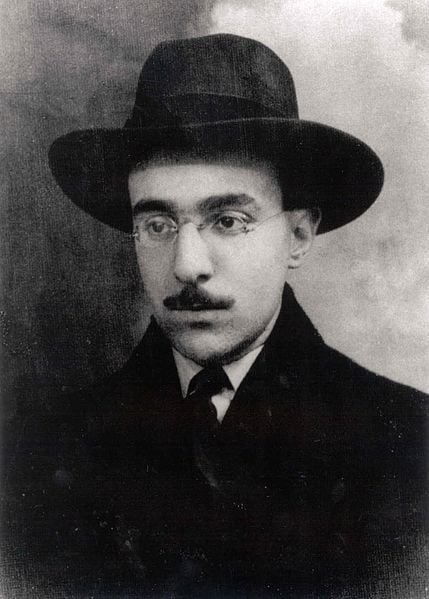
One of the most iconic figures in Portuguese literature, Fernando Pessoa is renowned for his poetic genius and for creating several distinct literary personas or “heteronyms,” each with its own style and philosophy. His most famous works include “Mensagem”, a nationalistic epic, and “Livro do Desassossego” (The Book of Disquiet), a fragmented and philosophical introspective narrative attributed to his heteronym Bernardo Soares. Pessoa’s profound and complex use of language makes his works a challenging but rewarding resource for advanced learners looking to grasp both formal and literary Portuguese.

Fernando Pessoa
Fernando Pessoa

2. Ilse Losa (1913-2006)

German-born Ilse Losa was a significant figure in Portuguese literature, often writing about exile, memory, and identity. Her book “O Mundo em Que Vivi” tells the semi-autobiographical story of a Jewish girl growing up in Nazi Germany and her later experiences in Portugal. The language is poetic yet direct, making it accessible for intermediate learners of Portuguese while offering historical and cultural perspectives.

3. Maria Judite de Carvalho (1921-1998)

Known for her introspective and minimalist style, Maria Judite de Carvalho wrote novels that explore themes of loneliness, societal pressures, and personal reflection. “Os Armários Vazios” is a poignant exploration of a woman’s inner world, with clear yet profound prose that is ideal for intermediate learners who want to improve their grasp of descriptive language and emotional depth.

4. Carlos de Oliveira (1921-1981)

Carlos de Oliveira is a major figure in Portuguese neorealism. His novels “Uma Abelha na Chuva” and “Pequenos Burgueses” are insightful portraits of rural Portuguese life, exploring themes of poverty, class, and societal struggles. His descriptive style and social commentary make these novels both challenging and enriching for advanced learners.

5. António Lobo Antunes (1942- )

A heavyweight in Portuguese literature, António Lobo Antunes is known for his dense, psychological novels. “O Manual dos Inquisidores” is an intense and intricate exploration of human nature and Portuguese history. His narrative complexity, including long sentences and stream-of-consciousness style, makes this novel a challenge, but also a great exercise for advanced language students interested in the richness of the Portuguese language.

António Lobo Antunes at the Salon du Livre in Paris, Georges Seguin, Wikimedia Commons

6. Mário de Carvalho (1944- )

Mário de Carvalho is a celebrated Portuguese writer whose historical novel “Um Deus Passeando pela Brisa da Tarde” transports readers to the Roman Empire while exploring universal themes of power, morality, and human nature. His clear yet evocative language is a great tool for learners to study both historical context and Portuguese grammar in a richly layered narrative.

7. Lídia Jorge (1946- )

Lídia Jorge is one of the leading voices in modern Portuguese fiction. Her novel “O Vale da Paixão” explores themes of family, memory, and the complex dynamics of rural life in Portugal. Jorge’s lyrical style and rich descriptions provide learners with a deeper appreciation of Portuguese grammar and sentence structure while immersing them in the cultural landscape of the country.

8. Nuno Bragança (1929-1985)

Nuno Bragança’s “A Noite e o Riso” is a surreal and introspective novel that offers an experimental take on Portuguese literature. Known for his unique narrative style, Bragança challenges readers to explore deeper philosophical questions through his fragmented, poetic prose. This novel is ideal for advanced learners looking to expand their understanding of Portuguese literary styles.

9. Mário Zambujal (1936- )

Known for his humorous and light-hearted storytelling, Mário Zambujal’s “À Noite, Logo Se Vê” is a comedic novel about life in Lisbon. Zambujal’s conversational tone and use of informal Portuguese make his works an entertaining way for learners to get comfortable with everyday expressions and idiomatic phrases.

Mário Zambujal, Wikimedia Commons

10. José Saramago (1922-2010)

Portugal’s only Nobel laureate in literature, José Saramago is renowned for his unique narrative style, blending historical, philosophical, and existential themes. His novels “Ensaio sobre a Cegueira” (Blindness) and “O Evangelho Segundo Jesus Cristo” (The Gospel According to Jesus Christ) are world-famous, known for their lack of conventional punctuation and their stream-of-consciousness style. Saramago’s works provide a challenging yet enriching experience for advanced learners of Portuguese, offering deep philosophical insights and a powerful use of the language.

José Saramago in 2005. Photo by Mario A. P. (Flickr)

11. Miguel Sousa Tavares (1950- )

Miguel Sousa Tavares is a prominent journalist and novelist. His novel “Não te deixarei morrer, David Crockett” reflects his interest in history and personal identity. It mixes Portuguese culture and global themes and offers readers a complex yet accessible narrative. Tavares is also known for his remarkable prose style, which is ideal for learners who wish to encounter rich vocabulary and vivid storytelling.

12. Dulce Maria Cardoso (1964- )

Dulce Maria Cardoso is a modern Portuguese novelist whose works delve into themes of displacement and identity. “O Retorno” tells the story of Portuguese citizens returning from Angola after decolonization, while “Os Meus Sentimentos” explores personal and emotional journeys. Her straightforward language, combined with complex emotional narratives, provides a rewarding reading experience for learners of Portuguese.

13. Válter Hugo Mãe (1971- )

Válter Hugo Mãe is a highly innovative voice in Portuguese literature. He is known for his experimental and poetic prose. “A Máquina de Fazer Espanhóis” explores the lives of elderly residents in a nursing home, while “As Doenças do Brasil” is a complex narrative dealing with colonialism and national identity. His writing, while challenging, offers a beautiful exploration of the Portuguese language’s flexibility and depth.

14. Ricardo Araújo Pereira (1974- )

A master of humor and social commentary, Ricardo Araújo Pereira is a celebrated comedian and writer. His book “Novas Crónicas da Boca do Inferno” is a collection of witty essays that dissect Portuguese society with sharp humor and cultural references. The simplicity of his writing makes it a great way to study colloquial Portuguese, while his humor provides insight into contemporary social issues.

15. José Luís Peixoto (1974- )

One of the most acclaimed contemporary Portuguese authors, José Luís Peixoto is known for his emotionally powerful works. “Regresso a Casa” and “Morreste-me” are two of his most intimate books. They explore themes of loss, love, and returning home. Peixoto’s poetic style and simple yet profound language are perfect for learners who want to experience the beauty of Portuguese while engaging with universal emotions.

16. João Tordo (1975- )

João Tordo is a novelist whose works often blend mystery and psychological depth. His books “Naufrágio” and “O Bom Inverno” feature intricate plots and nuanced characters, which make them accessible yet deeply engaging reads for language learners. Tordo’s clear writing style and use of dialogue offer a good balance for intermediate readers seeking to improve their comprehension skills.

These authors and their works offer a range of styles, themes, and levels of complexity, making them perfect for learners of Portuguese who wish to deepen their language skills while exploring the rich literary heritage of Portugal. While reading in Portuguese may be struggle, it will undoubtedly improve your grasp of the language and deepen your connection to the country itself. Stick with it and you will be amazed at how quickly you improve. 

Portugal’s Lost Villages

In Portugal, there are villages that time has abandoned, lost in the mountains or buried by the waters, which today survive only in the memory of those who knew them. They are places that speak of the past, of hard work, the inevitable exodus, and the weight of history.

The Weight of Abandonment

Portugal is a country shaped by centuries of emigration, by the departure of sons and daughters in search of new opportunities. Once full of life, many of these villages have felt their inhabitants slip through their fingers over the decades. In the valleys and mountains, the land became too ungrateful, life too hard. And so, little by little, silence set in. Villages like Drave, in the depths of the Serra da Freita, or Vilarinho das Furnas, now submerged by the waters of a dam, are just two examples of places that have lost so much – that have disappeared.

Drave – The Village with No Way Back

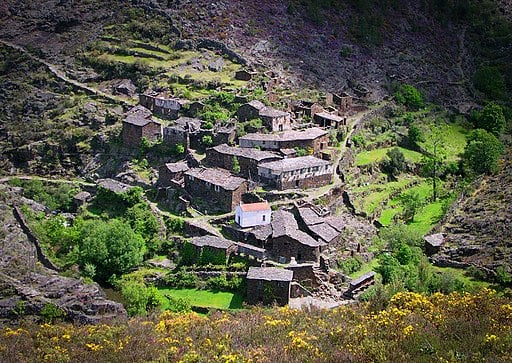
The village of Drave, also called the “Magic Village,” is a unique example. Nestled in a steep valley, between crystal-clear streams and rugged mountains, Drave was home to just a few families for centuries. With no access road, the village had always depended on the resilience of its inhabitants. Today, the village is deserted, but it continues to attract those looking for a vestige of a different, simpler life that has faded with modernity.

The stone walls, built with the calloused hands of generations, still stand, but the echo of voices has disappeared. In Drave, the feeling of isolation is almost palpable. It is as if time itself had given up passing through. The sound of water flowing through the natural streams is the only music that fills the silence that has remained.

General view of the village of Drave, municipality of Arouca, Portugal, João Nuno Brochado, Wikimedia Commons

Vilarinho das Furnas – The Submerged Oblivion

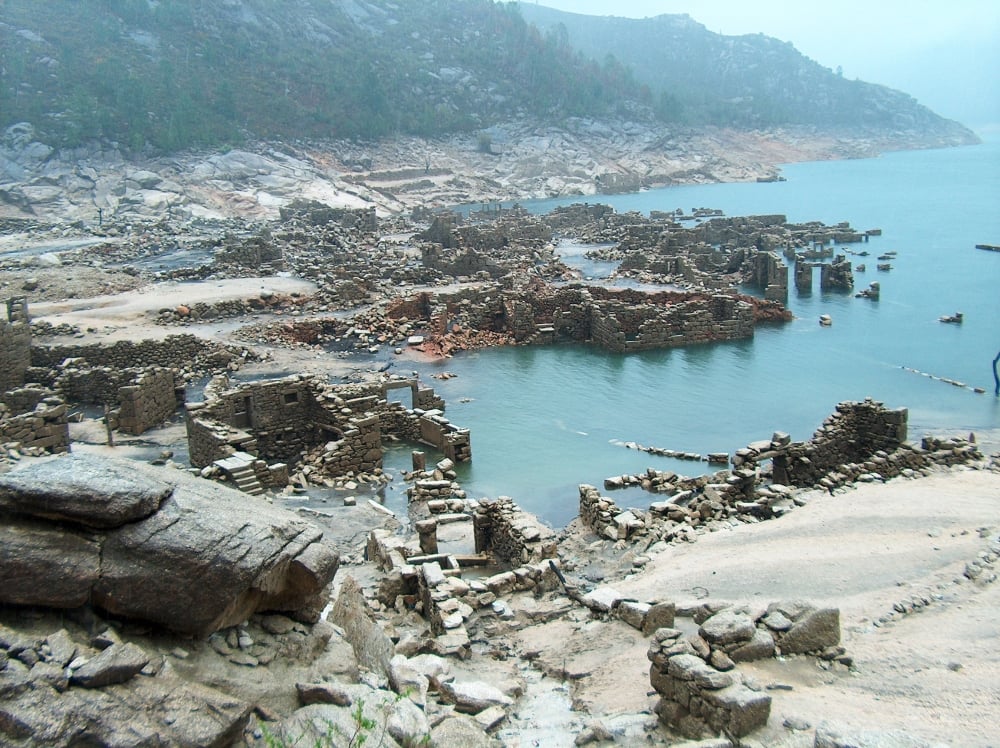
Vilarinho das Furnas, a village that was once home to more than 300 inhabitants, is now a submerged ghost town. Located in Gerês, this village was sacrificed in the 1970s for the construction of a dam. The waters swallowed up everything: the houses, the streets, the church. But in years of drought, when the water level drops, the skeletons of its structures emerge, revealing the traces of an old life, a life interrupted.

What was once a bustling village, where cattle were herded and crops were harvested with sweat and effort, is now a distorted reflection in the still waters. The foundations of the houses stand like ghosts, a reminder of how modernity can erase centuries of history with one gesture.

The ruins of Vilarinho da Furna during the dry season, when the former-village becomes exposed, Benkeboy, Wikimedia Commons

Aldeia de Anta – The Fight against being Forgotten

In Trás-os-Montes, the village of Anta is facing oblivion with stubborn resistance. Although many of its inhabitants have left, there are those who refuse to leave their place. With only a few souls left to keep the fire burning, Anta is a symbol of the fight against total abandonment. The houses, made of sturdy stone and slate roofs, still stand firm, but the loneliness weighs heavy on the days and nights.

Every lost village tells a story of departure, but in Anta, abandonment is fought by those who decided to stay, against all odds. The village seems suspended in time, a window onto a Portugal that once was, where traditions resist, even if the echo of the future insists on calling them away.

Aldeia da Luz -The Village That Was Erased

In the Alentejo, next to the great lake of Alqueva, is the new Aldeia da Luz, but the old one, which carried centuries of history, was submerged by the waters, just like Vilarinho das Furnas. This village disappeared in the 2000s when the Alqueva dam created the largest artificial lake in Europe. What had once been a small Alentejo community, where people lived around the land and cattle breeding, was forced to abandon its roots.

The move was difficult. Although the inhabitants have been relocated to a new, modern, and carefully planned village, nothing can replace the place where generations were born and died. The old Aldeia da Luz is now underwater, but, like Vilarinho, it remains alive in the memories of those who lived there. The cemetery has been moved, the stones of some of the buildings have been reused, but the identity of that village has remained trapped at the bottom of the lake.

Alqueva Dam, Manuel Faisco, Flickr

Over and Out

Portugal’s lost villages are living testimonies of a country shaped by emigration, the harshness of rural life, and the inexorable passage of time. Each stone, each dirt track tells a story of departure, loss, and resistance. These forgotten, submerged, or abandoned places are reminders that time, no matter how hard it tries, cannot completely erase what once existed. They are memories in ruins, ghosts of a past that, despite everything, continue to speak to us, if we are willing to listen.

Why You Should Still Move to Portugal in 2024

The stories are true. Portugal is not the same place that it was 10 years ago. The cost of accommodation has skyrocketed – both to buy and to rent. In 2024, it is no longer possible to buy property to get a Golden Visa.

While Golden Visas are still available, the investment vehicles to obtain them are less attractive than the property schemes. The NHR (Non-Habitual Residence) scheme, which allows qualifying residents to be taxed at a top rate of 20% for 10 years, is now geared for workers with specialized skills. It is still available, but it no longer gives benefits to retirees. The waiting times for residency appointments, getting new residency cards, and receiving citizenship have gotten longer, not shorter, despite a new immigration agency being set up at the end of 2023. Immigration protests are becoming more frequent as locals clamor for lower rent and more housing in general.

All of this begs the question – Should you move to Portugal in 2024? Is it still worth it?  As someone who has now been in Portugal for almost four years, my answer is still yes. And while you may not agree with my reasoning, I will still lay out my case for it anyway. (And I would love to hear your comments.) Here’s why you should still move to Portugal in 2024.

1. The Weather

After four years in Portugal, I have come to adore the weather in Portugal. I have never lived in a place (Lisbon) with such consistent sunshine. Although there are months, typically November and February, which can be quite rainy, the high number of sunny days in southern Portugal means that I can go out for long walks or enjoy a coffee or wine on an outdoor terrace with friends much more often.

This means that I live more of my life outside looking at the views and staying in shape as I climb the hills. Not every city in Portugal has year-round sunshine, but if good weather is what you’re looking for, Lisbon and southern Portugal, Madeira, and the Azores has it.

Being next to the sea, Portugal also gets ample cool air from the Atlantic, which cools things off during the summer evenings. While the rest of non-Scandinavian Europe is baking in the summer heat, the Portuguese coast still feels fresh (not always but a good majority of the time). Of course, this is not the case for central and northern Portugal, where high temperatures have caused numerous fires over the last several years, burning large tracts of land.

Historic villages in Portugal
Views from Arcos de Valdevez. Photo by Artur Azevedo (Unsplash)

2. The Safety

Portugal consistently ranks in the Top 10 safest countries in the world. When you’re here, you will understand why. There is a calmness that pervades and a strong Catholic faith in the older generation whose sense of morality has been passed down to the younger people. Family traditions are strong and people even look out for other people’s children on public transport.

This creates a safe environment where people treat others as they want to be treated. Even in the middle of the night, walking alone in Lisbon, I feel safe. I don’t get harassed and I don’t get followed. At least, that has been my experience so far. That piece of mind is invaluable these days. I have been to many other European capitals and they don’t feel as safe. This is something that I really appreciate about Lisbon and Portugal in general.

3. The People

The more local people I meet, the more I am charmed by the Portuguese people. As I mentioned in No. 2, people value family and children. You will never feel like your children are in the way in Portugal, as locals will be smiling at them, adopting them from afar as their own children on public transit. The Portuguese have been through a lot of repression and change in the last century, and they maintain an authenticity and curiosity for learning about the outside world.

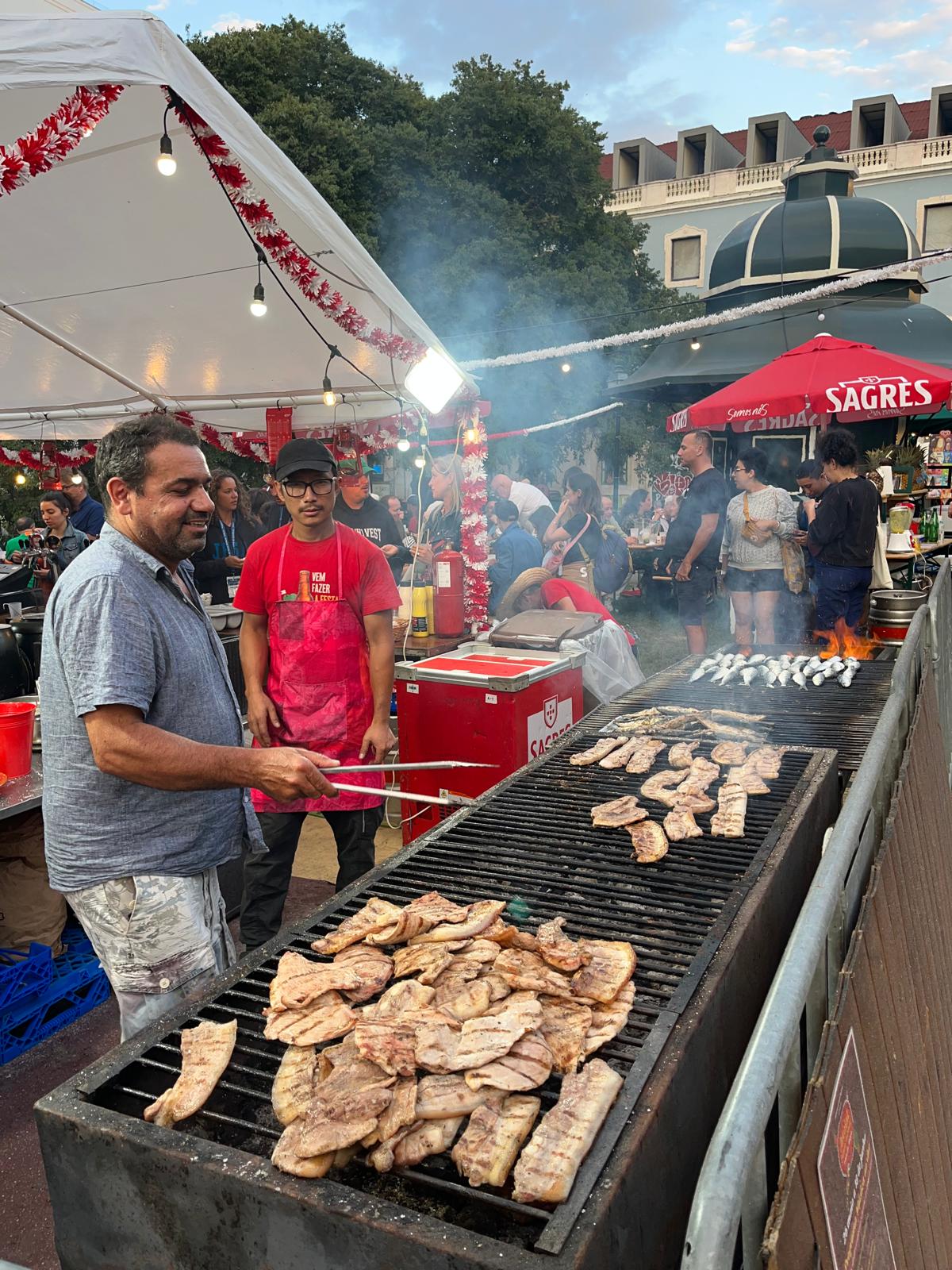
I have been invited into homes, introduced to children, and eaten sardines at barbecues. I have had Portuguese friends tell me that I could call them in the middle of the night. I have heard their life stories in the first few days of knowing them. As an American, this feels very familiar to me. Like home. Like a soft place to land.

Santos Populares, Lisbon, Photo by Hannah Dalke

4. The Healthcare

Because I am a freelancer and American, I am double cursed when it comes to getting affordable health care in the United States. Even if my health care was reasonable, it likely wouldn’t cover many procedures that I might need.

Portugal not only has a free public health care system, but it also has a private health care insurance system that is available to anyone who can pay the premiums. Available and affordable. I have already had one major surgery that only cost me 500 euros out of pocket. I have received excellent care from multiple doctors, scheduled using an app on my phone. Admittedly, it took me about a year to find out my preferred doctors and I did have to wait about one month for my surgery, but I can assure you that it has all been worth it and brings an invaluable peace of mind.

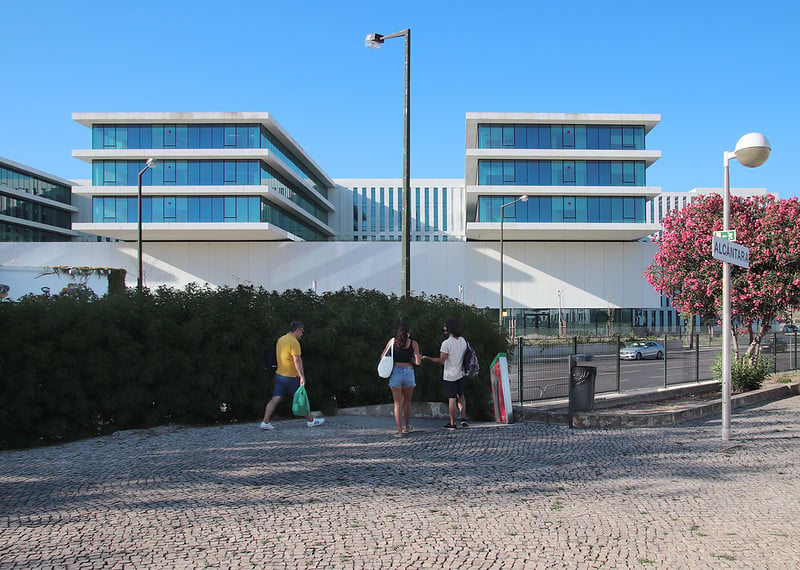
One of many CUF hospitals across the country, trevor.patt, Flickr

5. The Beaches

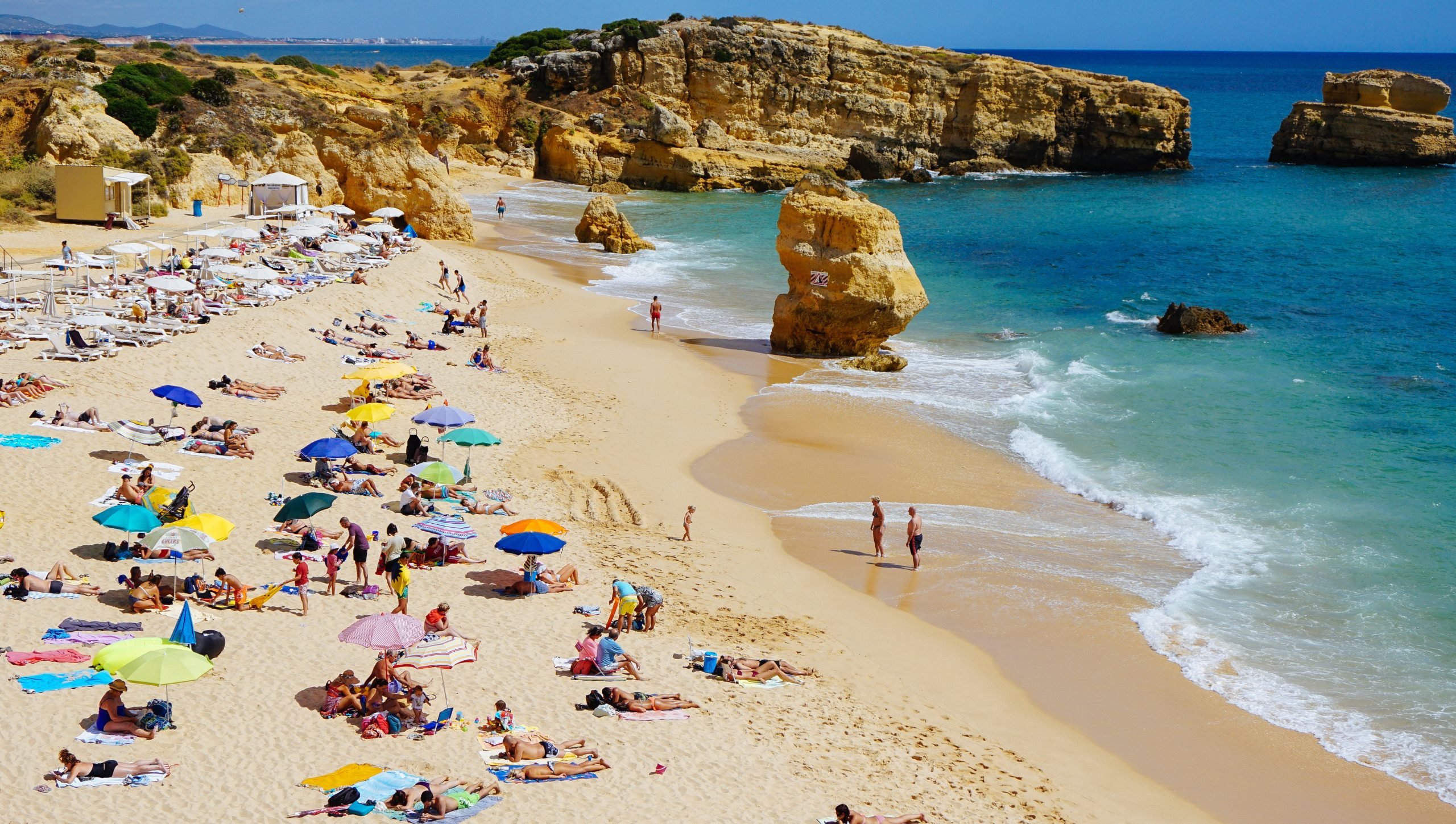
Not everyone is a beach person (me included), but I can appreciate a beautiful beach and happily take a long walk down it. Portugal invites you to the sea with its sand and surf, and there is plenty where that came from – whether it’s the biggest waves in the world in Nazaré, the beautiful rock formations in Lagos, or the black sands on the island of São Miguel in the Azores.

There is nothing more calming than taking a walk down the beach with your dog and sitting down with a good book on your beach towel. Or having a picnic on the beach with friends. Being by the sea gives everyone a feeling of space and adventure for free as far as the eye can see.

Beach in the Algarve. Photo by Dan Gold (Unsplash)

6. The Cost of Living

Apart from the aforementioned accommodation costs, Portugal is still relatively affordable compared to other European countries. It’s only €30 per month to get anywhere you want in central Lisbon. For students and residents 65 and over, it’s free. You can still find reasonable prices at the supermarket and to attend events around the cities. Residents in Portugal can go to museums and monuments for free for 52 days a year. There are no ATM fees for any Portuguese banks. Several bus companies including FlixBus and Rede Espressos can get you from Point A to Point B across the country for less than €10 one way. Taxis and Rideshare companies in Lisbon and Porto are easily 1/2 to 1/3 the price of other European cities. Portuguese tascas still offer plates that will fill you up for less than €15 per plate. While it has gotten more expensive in the last ten years, it is still much cheaper than London, Paris, and Amsterdam, for example.

Euros
Euros, Omid Armin, Unsplash

7. The Mortgages

If you have the money for a down payment, Portuguese banks are willing to give residents a 30-year fixed mortgage for a reasonable interest rate. You don’t have to be a Portuguese or European citizen to get a mortgage. They will give mortgages to non-Europeans as long as they are Portuguese residents. As a non-European, you will usually have to pay 20-30% of the total purchase price of the house. The rest will be covered by the mortgage. For those who can afford it, this can be a great option for finding a place to finally call home.

Keys, Jakub Zerdzicki, Unsplash

8. The Food and Wine

Portugal’s gastronomic scene has taken off in the last ten years, and its wine has made its way around the globe. The fresh seafood and delicious whites and reds are incredible, but I also appreciate the simplicity of the food, especially at the supermarket. While it may not  match the quality of Italy or France, it is not pumped full of antibiotics and preservatives like the American food that I grew up eating. I finally know what it means to eat fresh and I can trust that the government is following EU-wide mandates to keep food healthy. The Portuguese have one of the oldest populations in Europe – so the food must be doing something right.

9. The Geography

Portugal is out of the way and right on the edge, though still connected. Not only did this prove advantageous during World War II, but it is also a benefit now, as conflicts worsen elsewhere. If you are from the United States, Portugal is also the closest European nation, making it easy to visit friends and family back home.

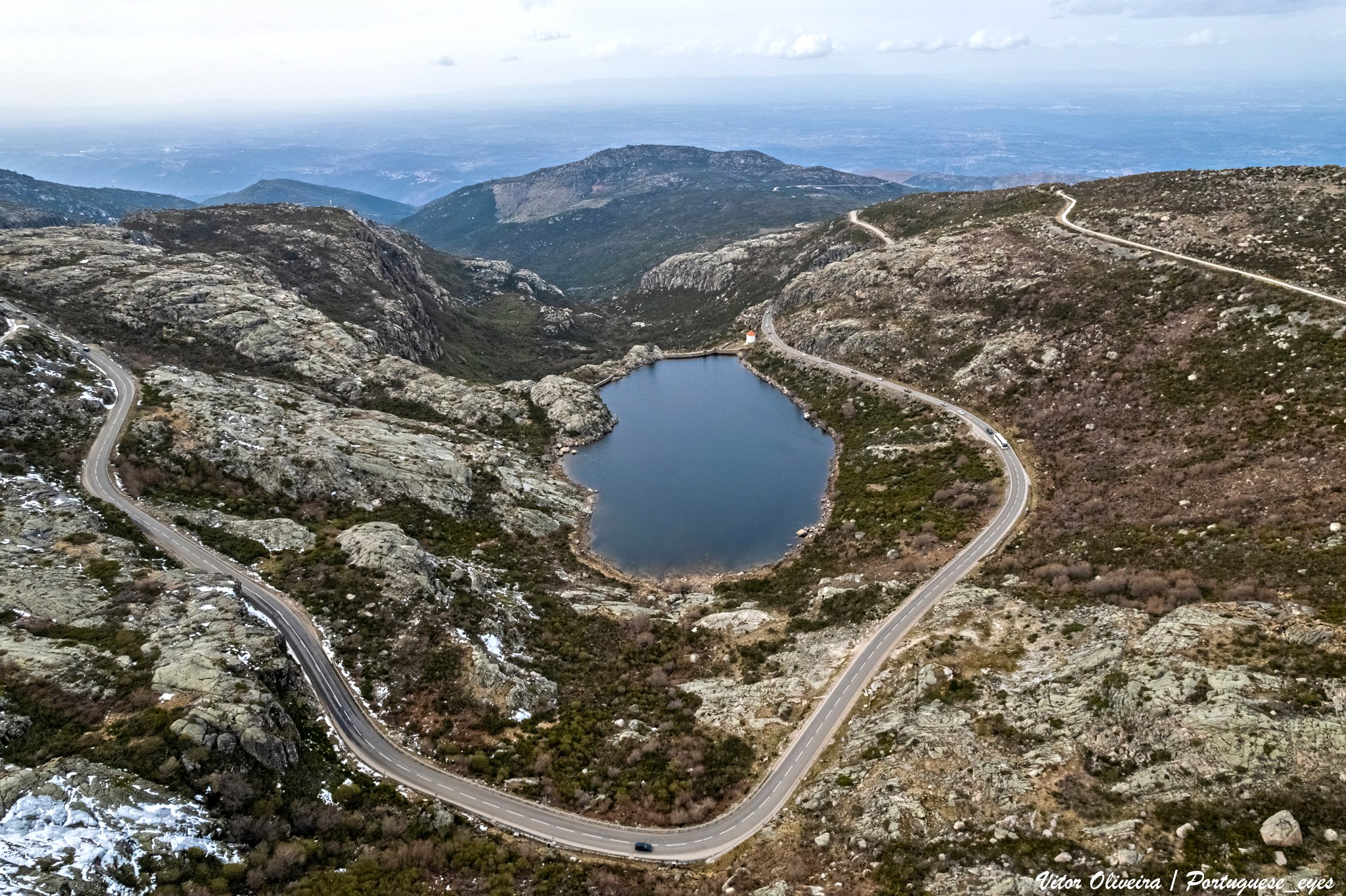
Portugal also has a wide variety of terrain despite its small size – from the mountains of Serra da Estrela to the beaches of the Algarve and the vineyards of the Douro. In addition, any place you want to go is within a seven hour drive (check this) – end to end.

Serra da Estrela Portugal
Serra da Estrela, Photo by Vitor Oliveira (Flickr).

Final Thoughts

Portugal has its downsides to be sure, but it also offers an affordable, laid-back, and safe place to live. It is full of interesting, vibrant, and kind people that will make you feel welcome. Its government policies will allow you to retire here or work remotely as long as you can prove that you earn enough to support yourself. Portugal is not perfect, but we all know that no place is going to check all the boxes. In an uncertain world, I still choose Portugal.

The Top 10 News Stories in Portugal – September 21-September 28, 2024

0

1. President and Prime Minister to Jointly Visit Burnt Areas on Monday, September 30

The President of the Republic and the Prime Minister will visit, together, some of the areas affected by the fires in the north and center of the country on Monday morning, September 30. The delegation will fly over the burnt areas by helicopter and will stop in Baião, Vila Pouca de Aguiar, and Sever do Vouga. Marcelo Rebelo de Sousa and Luís Montenegro will be accompanied by the Minister of Territorial Cohesion, the Minister of Internal Administration, and the Secretary of State for Civil Protection. The first stop will be in Baião, at around 10:25 AM, where they will visit the areas affected by the fires and interact with local residents impacted by the flames.

About an hour later, the helicopter will land in Vila Pouca de Aguiar. The last stop will be in Sever do Vouga, where they will hold a meeting with the mayors of the municipalities most affected. Between September 15 and 20, forest fires consumed around 135,000 hectares, bringing the total burnt area this year to almost 147,000 hectares, the third-largest in the last decade. In response, the Portuguese Government will fund up to 150,000 euros for the reconstruction of primary residences, offer a special subsidy of up to 6,000 euros to compensate for agricultural losses, and create a support line for business treasury and factory reconstruction.

Read more from our source here.

2. The Tool to Stop Fires That Came from California

Wade Salverson is in Portugal to present the Forest Resilience Bond, a financial instrument that mobilizes resources from the private sector to stimulate forest management and prevent fires. Launched in California in 2018, this tool accelerates conservation and generates returns for investors. Salverson explains, “This tool is being used to improve forest management and manipulate forest fuels.” In California, a company that draws water from a mountain reservoir benefited, “seeing an increase in water production” and avoiding a “severe fire” that could cause problems with water quality. Salverson believes this initiative “can serve as inspiration to Portugal.”

Salverson is eager to share his experience, “looking for potential ecosystem services” that could attract investors in Portugal. He emphasizes that “managing forests to make them more resilient” is essential in both California and Portugal. The impact of wildfires depends on “the type of fuel, the type of vegetation,” and scientists have had to adapt to the reality of climate change, with temperatures “not dropping enough at night” and humidity not increasing. Biomass accumulation has created conditions for “severe fire behavior,” which explains the intense wildfires witnessed in recent years.

Read more from our source here.

3. Parliamentary Hearing with the Minister of Justice: 24 Individuals Detained for Arson

In Portugal, in September, 24 people were detained for arson, with 80% placed in preventive detention, according to the Minister of Justice, Rita Alarcão Júdice. This information was shared during a parliamentary hearing, responding to criticism from the Left Bloc political party about the Prime Minister’s “penal populism” regarding wildfires. The minister emphasized the need for thorough investigations to identify potential patterns behind these fires. She also mentioned ongoing studies to include the Public Security Police (PSP) in fire investigations and possibly establish a new team in the southern region.

The minister addressed a variety of other issues, including the judicial recruitment process and prison conditions. She defended the contested recruitment for judicial employees, which has already attracted 1,700 candidates, and she acknowledged the “serious situation” at Vale de Judeus prison, where five inmates recently escaped. An audit of prison security is underway to prevent such incidents.

During the hearing, the minister also addressed anti-corruption efforts, including the creation of a working group to develop a new legal regime for forfeiting criminal assets, further discussed the state of Portuguese prisons, and outlined plans to improve security protocols and upgrade conditions.

Read more from our source here.

4. Repatriation of Portuguese Citizens from Lebanon

A group of 44 people, composed of 28 Portuguese nationals and their families, who had requested to be repatriated due to the conflict in the Middle East, arrived in Lisbon on a military repatriation flight operated by the Portuguese Air Force, landing at Figo Maduro airport. The repatriation operation, initiated by the Ministry of Foreign Affairs and the Ministry of National Defense, involved two phases: first, the citizens were transported to Larnaca, Cyprus, and then to Portugal. Originally, 24 people were expected to leave, but an additional 20 requested repatriation.

Nuno Sampaio, Secretary of State, praised the Portuguese Air Force for operating under difficult conditions in Lebanon. He stated that there could be further repatriations, as more people may need to organize their departure or are reluctant to leave behind their lives. The decision to leave Lebanon came after Israel’s bombing campaign against Hezbollah, following Hamas’s attack on Israel on October 7, which resulted in 1,200 deaths. On Saturday, Hezbollah confirmed the death of their leader, Hassan Nasrallah, in an Israeli airstrike.

Read more from our source here.

5. Scientific Expedition to the Largest Portuguese Underwater Mountain

The scientific expedition to the Gorringe Bank, Portugal’s largest underwater mountain, aimed to assess the area’s biodiversity and raise awareness about the urgent need for protection. Over three weeks, 30 scientists from 14 research centers conducted a comprehensive study aboard the Santa Maria Manuela and other vessels. They gathered data using 211 dives, 26 ROV immersions, and acoustic recordings, covering 12 kilometers between 40 and 154 meters of depth.

This expedition forms part of Portugal’s strategy to ensure 30% of the ocean is protected by 2030, with 10% under strict protection. According to the expedition coordinator, Emanuel Gonçalves, the findings support the case for effective management of the Gorringe Bank and highlight the need for political action. The government, along with the Fundação Oceano Azul, emphasized the importance of protecting the country’s natural values.

Note that the Gorringe Bank, mapped in 1875 by Henry Gorringe, is an underwater ridge 240 kilometers southwest of Cape St. Vincent. The expedition aligns with international efforts from organizations such as Oceana and National Geographic Pristine Seas to safeguard marine ecosystems. The Santa Maria Manuela and its crew also played a logistical role, providing over 3,700 meals throughout the journey.

Read more from our source here.

6. Discover the Strategy of Portuguese Ports to “Set Sail” for Growth

National ports are focusing on growth through new investments, digitization, and sustainability. The government is supporting these efforts by increasing the concession period for port terminals from 30 to 75 years. Each port is developing its own strategy for expansion and modernization, aiming to maximize potential and attract new players, while maintaining a coordinated national vision.

Leixões struggles with a lack of expansion projects. Modernization is underway, expected to finish by 2027, focusing on new roads, logistics platforms, and sustainability. The goal is for Leixões to meet future capacity demands through economic competitiveness, environmental and social sustainability.

Viana do Castelo aims to become an industrial port. It seeks to support industries reliant on maritime transport for importing raw materials and exporting finished products, focusing on expanding cargo capabilities and becoming an industrial hub like Aveiro.

Setúbal plans a new ro-ro concession for heavy vehicles, leveraging its proximity to Autoeuropa. It will also support offshore wind energy projects and attract businesses related to new fuels, benefiting from future developments in the surrounding logistics and port city near Alcochete.

Lisbon envisions itself as a maritime innovation hub. It plans to reduce its fragmented concessions into a container terminal and multipurpose terminal while attracting innovation, and renegotiating existing concessions to align with this vision.

Aveiro seeks to expand its entrance capacity to accommodate larger ships and enhance its industrial port capabilities. Known for its industrial experience, the port will continue to support central industries, focusing on becoming an energy hub while growing its chemical sector.

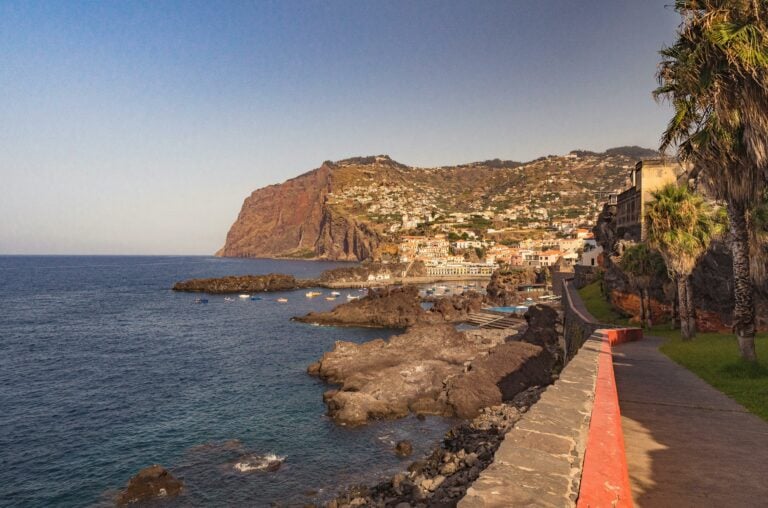
Madeira seeks to rival the Caribbean in cruise tourism by positioning itself as a prime cruise destination in the Macaronesia region. Investments are being made to supply ships with electricity, aiming for sustainability leadership in cruise tourism by 2030.

Read more from our source here.

7. Business Leaders Demand the Approval of the State Budget

Over forty business leaders, managers, and association heads assert that approving the 2025 State Budget is crucial for ensuring stability and predictability for companies and the economy. They emphasize that any rejection of the budget could lead to unnecessary political and economic crises, with opinions divided between governing in twelfths or calling for early elections. As such, many business leaders highlight the importance of a stable framework, expressing hope that the Prime Minister and the leader of the Socialist Party will reach a responsible agreement.

As the Government seeks to lower corporate tax rates and implement direct support to families, there are concerns over the IRS Jovem proposal, aimed at reducing tax rates for younger taxpayers. The upcoming negotiations, particularly the meeting between Prime Minister Luís Montenegro and Pedro Nuno Santos, are seen as crucial. With the Recovery and Resilience Plan (PRR) at stake, experts warn that failing to approve the State Budget would jeopardize growth and stability. Business leaders unanimously call for cooperation between the Government and the opposition to ensure that the proposal is negotiated and approved for the benefit of the country.

Read more from our source here.

8. The Mayor of Lisbon Empowered the Municipal Police to Make Arrests

Carlos Moedas, the Mayor of Lisbon, has authorized the Municipal Police to make arrests for citizens caught in the act of committing a crime. However, it is important to note that the Municipal Police already had the legal authority to perform such detentions under Article 255 of the Code of Criminal Procedure (CPP), which allows any judicial authority or police entity, as well as any citizen, to detain a suspect in flagrante delicto. Legal experts emphasize that the Mayor’s order is unnecessary since the law already grants this power to citizens and police. However, outside of these circumstances, the Municipal Police cannot detain individuals without specific legal mandates, and this is something Moedas has confirmed he does not wish to pursue.

Moedas has expressed concerns that Municipal Police must currently contact the Public Security Police (PSP) after detaining an individual, which can lead to delays if the PSP is unavailable. However, legal interpretations indicate that the Municipal Police do not need to wait for the PSP and can immediately transfer any detained individuals to the nearest police station. Additionally, the Municipal Police lack the necessary facilities to hold individuals temporarily. Experts argue that, while the framework for Municipal Police operations is already established in Portuguese law, there are differing interpretations, leading to confusion regarding their role in detaining suspects.

Read more from our source here.

9. Young People Can Now Access Public Guarantee to Buy a Home

The Portuguese Government has formalized the conditions for implementing a public guarantee aimed at financing 100% of young people’s first homes, specifically for individuals aged 18 to 35 with tax residency in Portugal and income up to the 8th IRS bracket. This guarantee will cover 15% of the transaction value, allowing banks to finance the total cost of the property, with a maximum transaction value of 450,000 euros. Institutions adhering to the measure must implement the necessary procedures within 60 days, and the overall amount of the guarantee will be distributed among banks based on a protocol signed with the Minister of Finance.

This public guarantee will last for 10 years from the signing of the credit contract and will extinguish early if the borrower fulfills all obligations. However, note that it does not alter existing rules, such as the 90% limit on the loan-to-value ratio and the debt service-to-income ratio, which dictates that credit payments should not exceed 50% of the borrower’s net income. The measure is available for contracts signed until December 31, 2026, with the potential for extension following an assessment of its impact.

Read more from our source here.

10. Demonstrations for the Right to Housing Shake Lisbon, Porto, and 20 other Portuguese Cities

Protests advocating for the right to housing erupted in Lisbon, Porto, and over 20 other Portuguese cities, organized by the movement Porta a Porta. Thousands gathered to demand “social prices” for housing and improved utilization of vacant state properties. Demonstrators criticized the government for being “held captive” by property owners and banking interests, asserting that urgent measures are needed to lower housing prices through regulation. André Escoval from Porta a Porta highlighted the deteriorating housing situation, emphasizing that “it is worse to find a place to live” and calling for actions to address the crisis.

In Porto, approximately five thousand protesters rallied, chanting slogans such as “Stability yes, evictions no,” to emphasize their demand for affordable housing amidst rising prices. Similar protests took place in Faro, where participants called for a fight against speculation and an increase in public housing availability. The movement stressed that the state must not relinquish its responsibilities regarding housing rights, advocating for public policies that can effectively tackle rising rents and housing shortages. This collective action showcases the growing urgency for systemic changes to ensure housing is a fundamental right for all.

Read more from our source here.

8 Events to Attend in Porto in October 2024

The months of September and October are truly the best to visit Porto or, if you’re a local, enjoy some leisurely walks around the city or read a book while delighting in your after-lunch coffee!

However, if you want to diversify your schedule a bit, there are plenty of activities to choose from – luckily, Porto doesn’t start hibernating when summer ends; on the contrary, it’s still filled to the brim with all kinds of events!

Read on to learn more about eight of the most captivating October events in Porto!

1. Memory of the Summer of ’74 + Deep End

When: October 2, 3:15 p.m.bn                                        

Where: Batalha Centro de Cinema, Praça da Batalha 47, 4000-101 Porto, Portugal

How much: 2.5 EUR – 5 EUR

Hey, movie lovers! Don’t miss out on a special screening of Memory of the Summer of ‘74 and Deep End at the Batalha Centro de Cinema in Porto.

The first one is a short film directed by György Kovásznai, a famous Hungarian animation artist, and it portrays a surrealist Budapest in the 1970s, ensuring a deeply sensory experience. Deep End is a 1970 film directed by Jerzy Skolimowski. It tells the story of Mike, a 15-year-old, who falls in love with Susan, a woman 10 years older than him, and develops an obsession for her. Eventually, he ends up sabotaging her relationship with her fiance, which leads to a tragic end. 

Whether you’re a film enthusiast or just looking for something interesting to do on a Wednesday afternoon, these screenings are definitely worth checking out. Don’t forget to grab your tickets! And if you’ve enjoyed these, check Batalha Cinema Center’s agenda – there are plenty of events in October!

2. A Noite

When: October 4, 9 p.m.

Where: Ageas Porto Coliseum, R. de Passos Manuel 137, 4000-385 Porto, Portugal

How much: 22.50 EUR – 30 EUR

Get ready for an unforgettable night of theater at the Ageas Porto Coliseum – A Noite signed by Jose Saramago. The action takes place on the night of April 24th to 25th in 1974, so the performance is aimed to celebrate the 50th anniversary of April 25th, which is marked this year. Obviously, the performance is in Portuguese, so we recommend attending it only if you can speak the language.

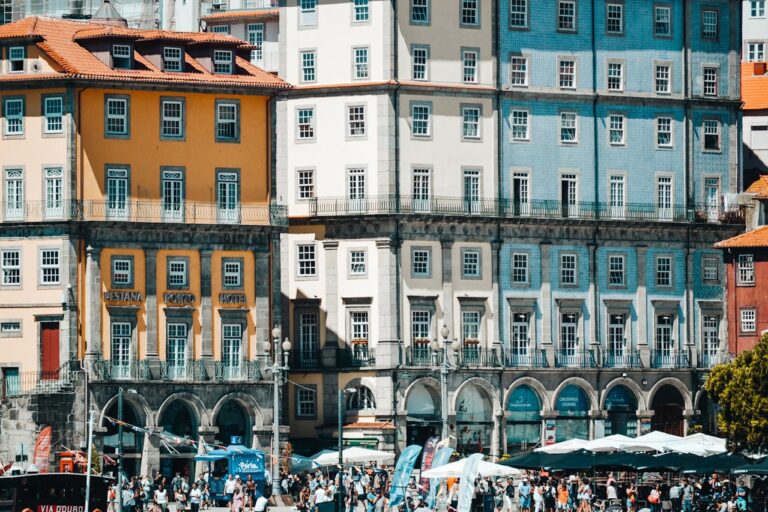
Things to do in Porto in October
Porto. Photo by Darya Chervatyuk (Pexels)

3. Guided Tour of the Batalha Cinema Center

When: October 5, 11:30 a.m.

Where: Batalha Centro de Cinema, Praça da Batalha 47, 4000-101 Porto, Portugal

How Much: 3 EUR

Have you enjoyed the screenings on the 2nd of October at the Batalha Centro de Cinema (mentioned above)? Why not take this guided tour of the Batalha Cinema Center for an exciting behind-the-scenes experience?

This tour offers a unique look at one of the city’s most iconic cultural venues, so you could learn more about its history and architecture. You’ll explore the stunning interior and the spaces unknown to regular visitors, including the roof that overlooks Praça da Batalha, as well as the projection booths. We’re sure you’ll enjoy this tour regardless of how passionate you are about cinema – it’s a fantastic way to appreciate Porto’s cultural heritage!

4. Porto Worldwide Photowalk

When: October 5, 4:45 p.m.

Where: Esplanada do Café Porta do Olival, Campo dos Mártires da Pátria 126, 4050-367 Porto, Portugal 

The Worldwide Photowalk is, just like its name suggests, a worldwide event – on the 5th of October, photographers from all over the world will grab their cameras and attend the Worldwide Photowalk group in their towns. Imagine being part of such an extensive photo community!

In Porto, this event starts at 4:45 p.m. at Esplanada do Cafe Porta de Olival, and it will be guided by José Manuel Santos, a photographer who’s been promoting this event in Porto for three years already. He has also organized numerous other photo tours through Porto, so you’re in good hands! You’ll be taken through the most iconic places in the city, as well as other lesser-known spots that are undoubtedly worth checking out!

5. Porto Coffee Week

When: October 1 – 6

Where: Various locations across Porto

Gilmore Girl fans, are you with us? (Everyone seems to be watching Gilmore Girl this autumn, so we’re probably on the same page here!) Lorelei’s missing the event that would get to the top of her bucket list – the Porto Coffee Week!

Between October 1 and 6, you can fill your time with coffee tastings, workshops, and special events at various cafes across the city. This is a fantastic opportunity to discover new flavors, learn more about various brewing techniques, and meet fellow coffee enthusiasts (maybe even Lorelei herself!). Grab your friends and join the fun at the country’s biggest coffee festival!

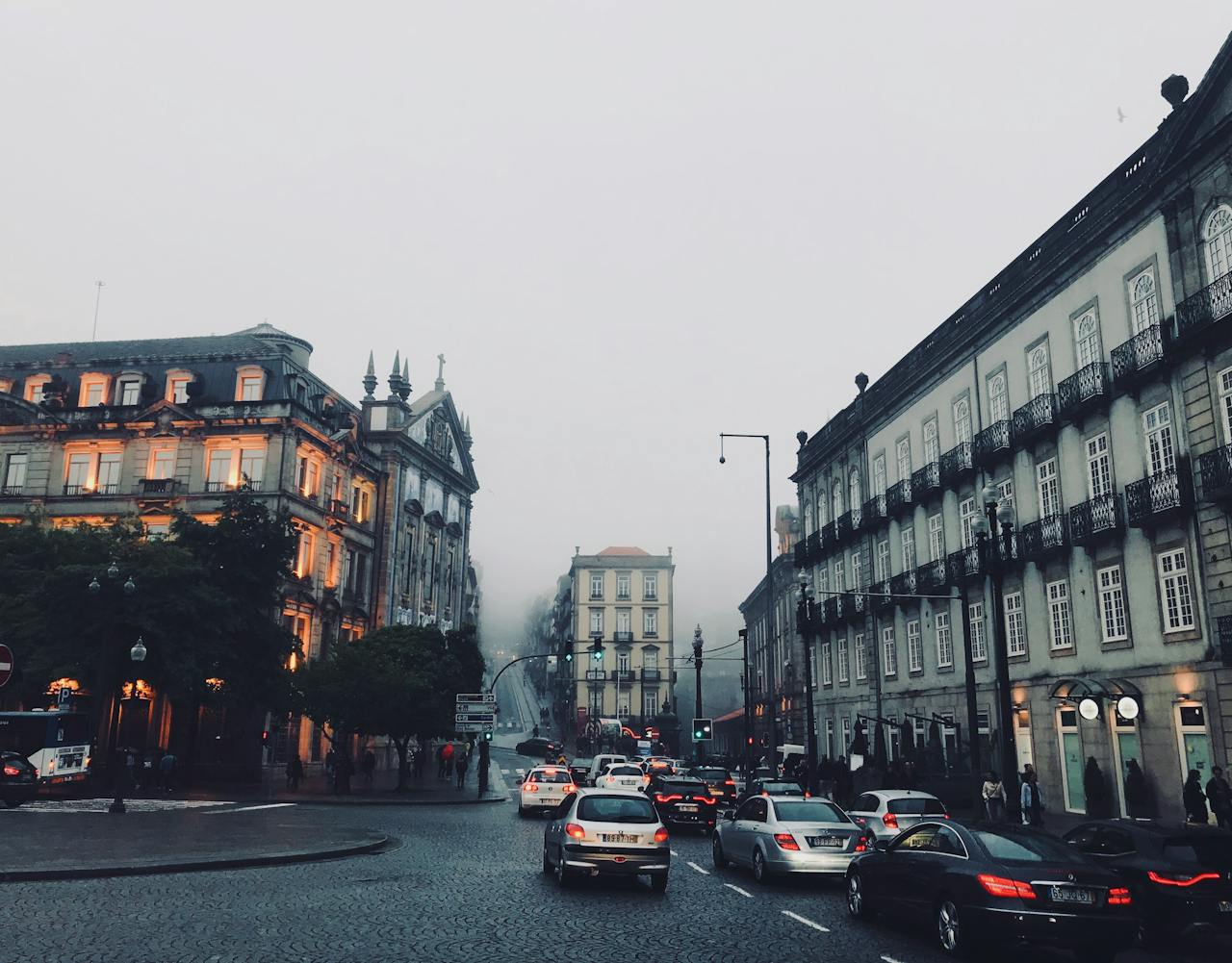
Events in Porto in October
Porto. Photo by Cátia Matos (Pexels)

6. Queer Porto

When: October 8 – 12

Where: Various locations across Porto, including Batalha Cinema Center and Livraria Aberta

How much: 4 EUR

Get ready for Queer Porto, an exciting film festival in the heart of Porto celebrating LGBTQ+ cinema!

It was created in Lisbon in 1997, and it is now one of the world’s most renowned festivals of this kind. Luckily, it has reached Porto as well, so you can now attend it between October 8 and 12, delighting in a myriad of films that showcase new perspectives and highlight issues like racism, xenophobia, social exclusion, and mental health.

It’s an excellent opportunity to enjoy thought-provoking cinema. The festival also includes special events, talks with filmmakers, and parties, so it’s a great way to connect with like-minded film enthusiasts in a welcoming atmosphere!

7. De Passagem: Moçambique 1970–1973 

When: September 19 – October 13 

Where: Museu Nacional Soares dos Reis, R. de Dom Manuel II 44, 4050-342 Porto, Portugal

How much: Free

Make sure to check the fascinating exhibition “De Passagem: Moçambique 1970-1973” at Museu Nacional Soares dos Reis. You’ll have the unique opportunity to see the incredible photos taken by Mário Martins capturing life in Mozambique during the Colonial War between 1970 and 1973. Since the photographer was a soldier himself in Mozambique at the time, the photos he took offer visitors a rare glimpse into Portuguese and African history.

8. O Rouxinol (The Nightingale)

When: October 31 – November 1

Where: TNSJ — Teatro Nacional de São João, Praça da Batalha, 4000-102 Porto, Portugal

How much: 5 EUR – 20 EUR

Don’t miss out on the opportunity to see O Rouxinol or The Nightingale, which brings to life the famous fairy tale written by Hans Christian Andersen! Perfect for all ages, it combines storytelling with a magical atmosphere that will leave you spellbound. Enjoy an evening filled with creativity and inspiration in one of Porto’s most iconic cultural locations.

12 Things to Do in Lisbon in October 2024

Lisbon in October can be summed up in one word: delightful! It’s not that hot anymore, but it’s not that cold yet either. You can still enjoy hours of sunshine punctuated by occasional 5-minute rain showers. In other words, it’s a pleasure to walk the streets of Lisbon in the middle of autumn – and we encourage you to enjoy it!

Even though the summer is long gone, the cultural agenda never stops, so there are plenty of events to attend in Lisbon in October – from film festivals to intriguing art exhibitions!

Keep reading to learn more about the 12 things to do in Lisbon in October!

1. Festa do Cinema Francês (French Film Festival)

When: October 3 – 13

Where: Cinema São Jorge, Av. da Liberdade 175, 1250-096 Lisboa, Portugal

How much: 5 EUR per ticket

The French Film Festival will take place from October 3 to November 30 across several cities in Portugal, with a focus on Lisbon, where you can attend it from October 3 to 13, 2024. The 25th edition of this annual event celebrates French cinema, showcasing films, retrospectives, and special screenings for each and everyone’s cinematic taste.

On the 3rd of October, you can watch The Count of Monte Cristo in Sala Manoel de Oliveira. The screening begins at 8 p.m. and is presented by the actor Patrick Mille and producer Dimitri Rassam. The last festival day in Lisbon presents Beating Hearts starring François Civil, Adèle Exarchopoulos, and Malik Frikah. Between these, you can enjoy classic movie screenings, new movie premieres, and different discussion events that can be truly inspiring for cinema enthusiasts!

2. ModaLisboa (Lisbon Fashion Week)

When: October 10 – 13

Where: Pátio da Galé, Praça do Comércio nº 10 (10-12-14, 1100-148 Lisboa, Portugal

The 63rd edition of ModaLisboa, Lisbon’s Fashion Week, takes place in October 2024. This event is a celebration of Portuguese fashion and design. The program includes runway shows, exhibitions, and the SANGUE NOVO competition for new designers.

ModaLisboa showcases both established and up-and-coming designers, so it should definitely be added to your Lisbon to-do list if you happen to be in town between October 10 and 13 and if you’re interested in this kind of event.

The events will take place at Patio da Gale, a luxurious venue in Lisbon featuring a modern decor that still preserves some of the building’s historical richness.

Lisbon events in October
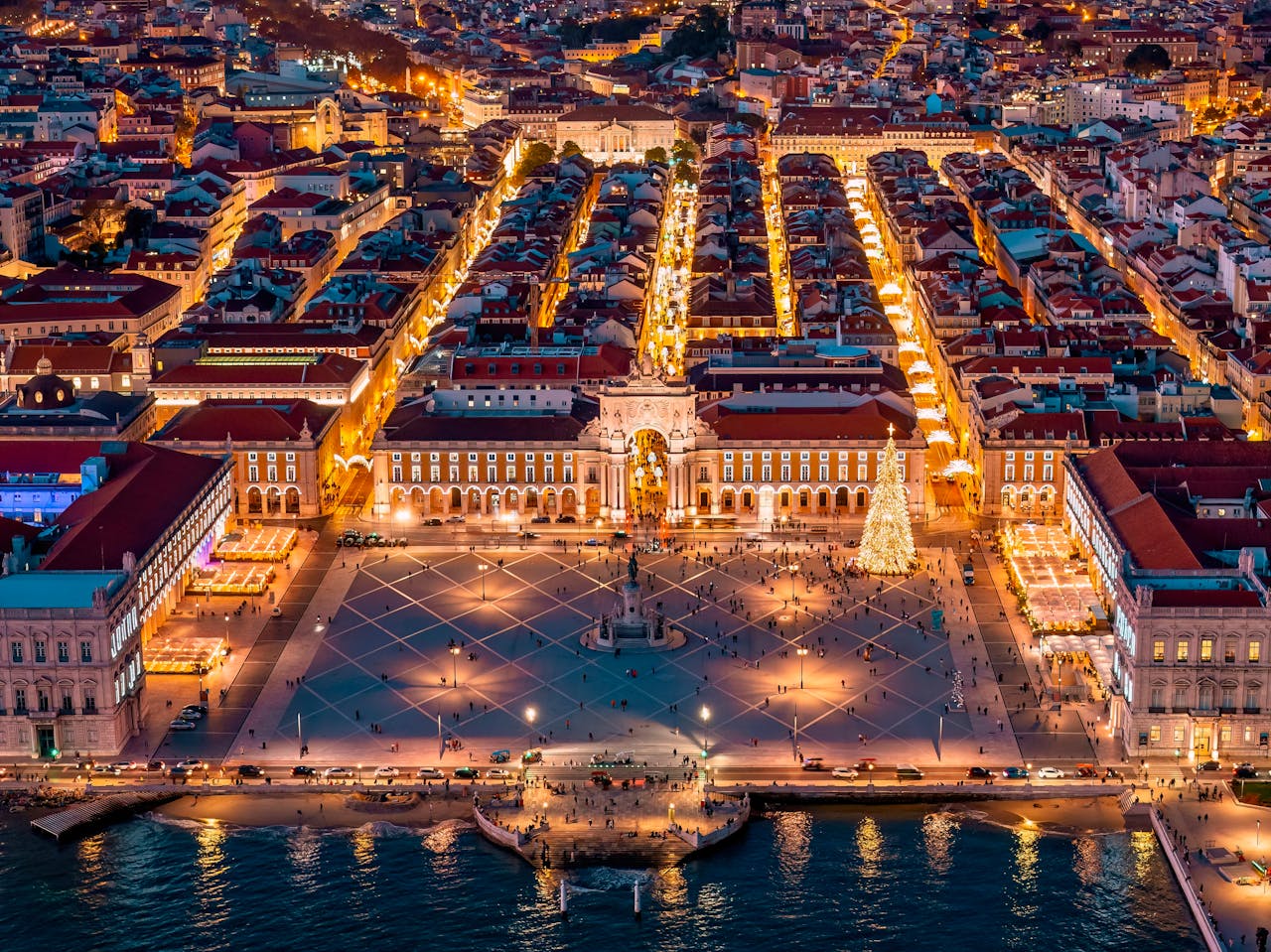
Lisbon, Praca do Comercio. Photo by Lisa Fotios (Pexels)

3. TimeHunt Experience Lisbon

When: October 23 – 27

How much: 750 EUR

Want to have some fun in Lisbon? Make sure to book a ticket for the TimeHunt Experience! It is an interactive urban adventure game that takes you to a completely different universe for seven days! Imagine spending an entire week having fun in escape rooms and scavenger hunts!

You’ll solve puzzles, decipher clues, and navigate through the historic streets of Lisbon while uncovering the city’s hidden secrets and stories. Without a doubt, you’ll have fun alongside other players, as you’ll work in teams, racing against the clock to complete your missions!

The ticket for the entire week costs 750 EUR. Besides the activities mentioned above, it includes various breathwork sessions, meals, and a rooftop party at the end of the week!

4. André Rieu Concert

When: October 30 and 31

Where: MEO Arena, Rossio dos Olivais, 1990-231 Lisboa, Portugal

How much: 45 EUR – 130 EUR

World-renowned Dutch violinist and conductor André Rieu will bring his Johann Strauss Orchestra to Lisbon in October 2024 for a spectacular concert! If you enjoy listening to classical music, this is your chance to have an unforgettable night out in Lisbon!

The concert will feature a repertoire of classical masterpieces, waltzes, movie scores, and popular music, all presented with Rieu’s signature flair for showmanship. The event promises to be a visually stunning and emotionally stirring experience, with elaborate costumes, stage design, and special effects complementing the music.

It will take place at MEO Arena on October 30th and 31st, as well as November 1st and 2nd. 

Lisbon events in October
Lisbon. Photo by Francesco Panetta (Pexels)

5. Nick Cave and the Bad Seeds Concert

When: October 27

Where: MEO Arena, Rossio dos Olivais, 1990-231 Lisboa, Portugal

How much: 40 EUR – 75 EUR

The iconic Australian rock band Nick Cave and the Bad Seeds will perform in Lisbon in October 2024. This band is known as one of the most celebrated post-punk and alternative rock bands in the world, so listening to them live in Lisbon is undoubtedly an amazing opportunity if you like this type of music. In fact, their shows are among the most anticipated concerts in 2024, so hurry up and buy a ticket!

6. Kafka: Carta a um Deus Desconhecido

When: October 15, 7 p.m.

Where: Goethe-Institut Lisboa, Campo dos Mártires da Pátria 37, 1169-016 Lisboa, Portugal

How much: Free

Are you a bibliophile, or do you simply enjoy attending cultural events? If so, don’t miss out on Kafka: Carta a um Deus Desconhecido! This event will likely take place in Portuguese – but don’t worry, we’re sure you’ll still be able to understand parts of it, communicate with others, and maybe even learn a bit of Portuguese if you don’t already speak it!

This event, which takes place at the Goethe-Institut library, discusses Franz Kafka’s exploration of spirituality and existence. The discussion will also focus on Kafka’s unfinished letter to his father. You’ll also have the opportunity to meet Isabel Castro Silva, the translator of a newly published translation of Kafka’s Letter to His Father.

7. Grandes Coros de Ópera

When: October 13 and 24, 5 p.m.

Where: Teatro Nacional de São Carlos, R. Serpa Pinto 9, 1200-442 Lisboa, Portugal

How much: 10.50 EUR – 31.50 EUR

This grand musical event at the São Carlos National Theatre in Lisbon showcases some of the most beloved and powerful choral pieces from the opera repertoire performed by the Choir of the Teatro Nacional de São Carlos and the Portuguese Symphony Orchestra.

You’ll have the chance to delight in iconic selections from famous operas, including works by composers such as Verdi, Wagner, and Puccini. It’s an opportunity for both opera aficionados and newcomers to experience the grandeur and drama of classical music in a historic venue!

Lisbon events
Lisbon. Photo by Matej Simko (Pexels)

8. Percurso Pedestre: Lisboa dos Espiões

When: October 27, 11 a.m.

Where: Tivoli Avenida Hotel, Av. da Liberdade 185, 1269-050 Lisboa, Portugal

How much: 16 EUR

This walking tour offers a unique perspective on Lisbon’s history through the lens of espionage and international intrigue. Although Portugal was not a WWII participant, Lisbon was definitely a battlefield for secret services. So, if you’re a history enthusiast, you’ll certainly want this experience on your Lisbon bucket list!

You’ll explore various locations throughout the city that played significant roles in covert operations, including historic hotels, cafes, and other landmarks known to have been frequented by spies and diplomats. The guides will share stories about famous operatives, secret missions, and the city’s role in global intelligence networks.

The meeting point is in front of the primary entrance of the Tivoli Avenida Hotel, and the tour takes approximately two hours. If you want to register for the tour, send an email to [email protected] or contact them at 91 477 38 36.

9. Crystal Fighters Concert

When: October 15, 8:30 p.m.

Where: Lisboa ao Vivo, Av. Mar. Gomes da Costa 29 B1, 1800-255 Lisboa, Portugal

How much: 29 EUR

The Crystal Fighters, an English electronic music band known for their unique fusion of Basque folk music and electronic dance, will bring their vibrant live show to Lisbon in October 2024. Their performances are celebrated for creating a festive, almost euphoric atmosphere, blending traditional instruments like txalaparta with modern synthesizers and drums.

The band’s colorful stage presence promises a visually stunning experience. This concert offers you a chance to experience the Crystal Fighters’ eclectic sound that bridges cultural and musical boundaries, creating a dance party with a global twist – in other words, fun is guaranteed!

If you want to check out other events held at Lisboa ao Vivo, check out their website here. In October, you can attend the DKB World Tour Dark Strange, the Lisbon Tattoo Rock Fest, the MC Daniel concert, and others.

Things to do in Lisbon, Portugal in october
MAAT, Lisbon. Photo by Magda Ehlers (Pexels)

10. Daniel Blaufuks Exhibition

When: July 17 – October 7, 10 a.m. – 7 p.m.; Wednesday to Monday

Where: MAAT, Av. Brasília, 1300-598 Lisboa, Portugal

Daniel Blaufuks is a renowned Portuguese visual artist whose visual-textual diary for the year 2023 is currently exhibited at MAAT in Lisbon – don’t miss the last days to see them, as the exhibition ends on the 7th of October.

You’ll have the possibility to admire, analyze, and ponder upon over 450 works, including photographs, collages, and clippings with personal notes. They offer you a glimpse into Blaufuks’ creative process and method of documenting life. His work explores themes of time, memory, and the interplay between personal and historical narratives.

Since you’ll be at MAAT for the exhibition, you can visit the entire museum – after all, it’s one of the most famous in Lisbon!

11. Doclisboa – International Film Festival

When: October 17 – 27

Where: Multiple locations

The 22nd edition of Doclisboa will take place from October 17 to 27, 2024, in Lisbon. This prestigious documentary film festival is dedicated to exploring new paths in documentary cinema and the relationship between film and reality. The festival has several sections, including:

  • International Competition
  • Portuguese Competition
  • New Visions
  • Heartbeat
  • Green Years
  • From the Earth to the Moon
  • Doc Alliance

Doclisboa aims to present films that engage with the world’s complexity and experiment with cinema’s artistic and political possibilities. You can choose among over 180 films featured at Doclisboa, having been selected through a unique curatorial model.

Screenings will be held at various venues across Lisbon, including Culturgest, São Jorge, Cinemateca Portuguesa, and Cinema Ideal. The festival also includes a project called Nebulae, which consists of various activities and meetings during which you can discover more about the development of independent cinema.

12. Impressive Monet & Brilliant Kilmt by Ocubo

When: October 1 – 13

Where: Reservatório da Mãe d’Água das Amoreiras, Praça das Amoreiras 10

How much: 12.50 EUR

Until the 13th of October, you have the opportunity to delight in an immersive artistic exhibition that combines the Impressionism of Monet and the Symbolism of Klimt! While it is undoubtedly a dream experience for artists and art enthusiasts, you’ll definitely enjoy it even if you’ve never been interested in Monet’s or Klimt’s artwork!

The exhibition is held in a 2000-square-meter space filled with 360º light projections and even a floating platform! If you’re in Lisbon with your kids, they’ll definitely enjoy the exhibition as well – the works of both Monet and Klimt are highly colorful and eye-catching for children!

However, please note that the event features bright lights and sound effects, so people with epilepsy should refrain from attending it.

The Top 10 News Stories in Portugal – September 14-September 21, 2024

0

1. Almost 200 Portuguese Parishes Come Together to Fight Fire

As of this weekend, 182 parishes in Portugal have joined a solidarity network created by the national association of parishes (Anafre) to connect local officials in need of aid after the recent fires, especially in the north and center. The network will remain active for other crises, such as floods. On the first day of the platform’s availability, 182 parishes registered, providing information about their resources to tackle fires and other emergencies. The platform aims to link parishes directly, facilitating the distribution of support, and improving communication in times of need.

In the past week, almost 120,000 hectares burned, mainly in Viseu and Aveiro, resulting in seven deaths, around 120 injuries, and the destruction of several homes and facilities. The damage to infrastructure has left many communities in urgent need of reconstruction support. Currently, there are no significant ongoing incidents due to less favorable weather conditions for large fires.

The solidarity network allows parishes to request or offer materials and equipment, enabling neighboring parishes to help minimize damage. Jorge Veloso, president of Anafre, emphasized the importance of this platform for ensuring that aid reaches the most affected areas. This initiative, sparked by the fires, will also be used for future crises, such as floods, ensuring continuous support and communication between parishes. The network reflects a growing sense of community and resilience in the face of natural disasters.

Read more from our source here.

2. No Fines for Companies That Miss VAT and Withholding Deadlines Due to Wildfires

The Portuguese Government has decided not to impose fines on companies affected by wildfires that fail to meet VAT and withholding tax deadlines this Friday, according to the Order of Certified Accountants (OCC). After discussions with the Secretary of State for Fiscal Affairs, the Government is developing a mechanism to waive the penalties for companies and accountants unable to comply due to the fires. The OCC had requested earlier this week that the Government either extend the deadlines or remove the consequences, as the fines are “extremely high.”

Initially, the Government refused to extend the deadlines but promised to find a solution for the fines. Following criticism from the OCC, a commitment to create an exceptional mechanism was made. Paula Franco, president of the OCC, expressed relief that “common sense prevailed” and hopes that the process will be straightforward without the need for legal assistance. The mechanism will apply to all affected parties, with final details still to be confirmed. The OCC continues to stress the need for clarity and simplicity in the solution to ensure proper protection for businesses and accountants impacted by the wildfires.

Read more from our source here.
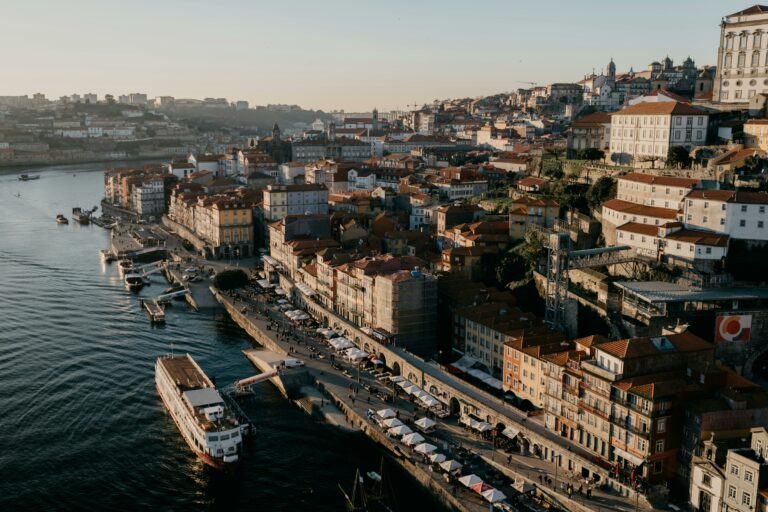
3. Fado Returns To Alfama in September

The Caixa Alfama festival returns to Lisbon’s Alfama neighborhood on September 27-28, regaining its original name from 2013 to 2017 and some of its former vitality. Known for bringing almost fifty fado artists to various venues in the historic district, the festival is now a well-established event in the city. This year’s lineup includes top male performers like Camané, António Zambujo, Ricardo Ribeiro, and Marco Rodrigues, along with the acclaimed Carminho. Despite some less exciting editions and the temporary loss of its original sponsor, Caixa Alfama remains a significant event in Lisbon’s cultural calendar.

The festival pays homage to fado legends Fernando Maurício and Amália Rodrigues. The first day includes a tribute to Maurício by fado singer Jorge Fernando and others, while the second day features a concert by younger performers honoring his legacy. Amália is celebrated with a live edition of Em Casa d’Amália, featuring performances by António Zambujo and Carminho. Additional highlights include Paulo Bragança, Marina Mota, and Nuno Guerreiro, with concerts spread across various venues in Alfama, including churches, cultural centers, and the Fado Museum.

Several locations (Alfama). September 27-28 (Friday-Saturday). 25-45€

Read more from our source here.
4. ‘Heróis do Mar’, Lisbon’s New Fish and Seafood Festival, Happens in October

Heróis do Mar, a new fish and seafood festival, will be held in Lisbon from October 3 to 6 at the Doca da Marinha. The festival features ten restaurants led by renowned Portuguese chefs, such as José Avillez and Justa Nobre, alongside international chefs like Quique Dacosta from Spain, Rafael Costa e Silva from Brazil, and Moreno Cedroni from Italy. Visitors can enjoy dishes from these chefs, attend talks on fish consumption and tourism, and participate in exclusive banquets, including a €250 meal by Quique Dacosta and José Avillez on October 4.

The event will offer 700 seats for tastings, with discussions on the restaurant industry crisis and tourism’s role in seafood consumption. The festival highlights local Lisbon restaurants with diverse culinary styles, from traditional Portuguese to international influences like Japanese and Brazilian cuisine. Special presentations from chefs such as André Cruz and Vítor Matos will take place, along with cooking classes and a gourmet market. Concerts celebrating Lusophone music will be held each night, featuring artists like Lura, Matias Damásio, GNR, and Mallu Magalhães. The festival, produced by Essência and supported by Turismo de Portugal, aims to become an annual event showcasing Portuguese fish and seafood.

Schedule: October 3-4, from 5:00pm to 12:00am; on the 5th, from 12:00pm to 12:00am; and, on the 6th, from 12:00pm to 10:00pm.

Price: the entrance costs 5€ and includes a Riedel glass and a wine tasting and two waters, access to concerts, classes, talks and presentations. Tastings in restaurants cost between 5€ and 20€.

Read more from our source here.

5. Big Portuguese Companies Inject Their Own Funds into Entrepreneurship

Large Portuguese companies, some over a century old, are investing their own funds in entrepreneurship, fostering a dynamic corporate venture capital (CVC) scene in Portugal. EDP, NOS, CTT, and Sogrape are leading strategic investments that enhance innovation in their operations and support the broader entrepreneurial ecosystem. Together, these companies have €173 million to invest, part of which is already supporting national entrepreneurship. EDP Ventures, launched with €150 million, has €73 million invested across 40 companies in 12 countries. This has led to “more than €115 million in contracts” between EDP and startups like ChemiTek, Arquiled, and Probely, proving the “strategic value” of these partnerships.

NOS has committed €10 million to the NOS 5G Fund, investing in six Portuguese startups that can benefit from 5G technology. These include Reckon, Knok, and Didimo, with more investments planned. CTT, through its 1520 Innovation Fund, has invested in eight startups, such as Neuralshift, which uses AI to improve delivery operations. Sogrape Ventures, with €5 million to invest, has already seen “more than 80 startup applications” and is preparing its first investment, highlighting the potential of partnerships with startups to drive disruptive technologies. The focus on co-innovation and strategic collaborations is transforming these businesses and boosting Portugal’s entrepreneurial landscape.

Read more from our source here.
6. Quinta do Crasto Anticipates “a Good Year of Harvests with Good Quality Grapes”

Despite challenges such as labor shortages and rising costs, this year is shaping up to be a promising one for grape quality in the Douro region. Many producers are optimistic about the harvest, with expectations similar to 2023, when the region produced high volumes of grapes, enough to yield millions of bottles of wine. The Douro’s unique terroir, with its microclimate, sun exposure, and soil, continues to offer exceptional conditions for growing high-quality grapes, crucial for both Port and Douro DOC wines.

At Quinta do Crasto, for example, this year’s harvest is expected to reach around 1.3 million bottles of wine, similar to last year’s production. Although the lack of labor remains a significant concern, particularly due to the rural exodus, some vineyards have managed to offset this issue with an increasing number of immigrant workers. Additionally, the steep terrain in the Douro makes mechanizing the harvest difficult, further driving up costs. Nevertheless, the region’s wine producers remain hopeful, noting that “the Douro, a UNESCO World Heritage site, has immense potential,” and the quality of grapes this year could lead to exceptional wines.

Read more from our source here.

7. Grândola Will Alter its Municipal Master Plan to Increase Tourism Capacity

Grândola is set to amend its Municipal Master Plan (PDM) to increase its tourist capacity from 14,294 to 17,153 beds, thanks to an inter-municipal agreement on tourist intensity redistribution with Santiago do Cacém and Odemira. This proposed change, currently in public consultation until October 7, allows Grândola to respond to the high number of pending or suspended requests for prior information (PIP), which anticipated surpassing the municipality’s maximum tourist capacity of 14,915 beds. The agreement, based on the Alentejo Regional Spatial Planning Plan (PROTA), permits redistributing tourist capacity when the municipal limits are exceeded.

In 2022, Grândola had suspended the PDM in certain areas to prevent real estate speculation and halted new tourist developments. However, recent negotiations with five municipalities in the Alentejo Litoral region have resulted in a consensus that Grândola, with the highest tourist demand, should increase its capacity. Santiago do Cacém and Odemira will cede a total of 2,859 beds, the maximum allowed under PROTA. The proposal also allows for licensing tourist accommodation in rural areas and urban centers, ensuring that valid previous authorizations and favorable environmental impact declarations are respected.

Read more from our source here.
8. Will the Portuguese President Call for New Elections?

Palácio de Belém (the President’s office) remains silent on the report that President Marcelo Rebelo de Sousa will call early elections if the State Budget for 2025 is rejected. The report, citing a source, claims that if Parliament votes down the budget, Marcelo will opt for new elections, excluding options like governing by twelfths or presenting a rectifying budget. Concerns over the consequences of rejecting the budget, such as a potential credit rating downgrade or delays in PRR payments, are reportedly driving this decision. An official source from the Presidency refused to comment on the matter.

Earlier in September, Marcelo had already dismissed the possibility of a rectifying budget, calling it unfeasible: “How can a government that sees its budget rejected present a rectifying budget proposed by those who rejected it?” In June, Marcelo also noted that political solutions must adapt to changing situations, acknowledging the importance of passing the budget to maintain economic balance. He emphasized that “a budget that would be good to pass” is critical to avoiding instability.

With three weeks until the 2025 budget submission, negotiations between the Government and PS are on hold due to wildfires, while the PS’s key proposals, focused on Health and Education, remain central to unlocking a budget agreement. These proposals, alongside earlier demands to abandon IRS Jovem and corporate tax reductions, are decisive for the Socialists to support the budget. The looming risk of political deadlock could push Marcelo to trigger early elections, marking the third in less than three years.

Read more from our source here.
9. Police Closes One Side of the 25 of April Bridge to Arrest Suspects

Ponte 25 de Abril was closed in both directions for an hour on Wednesday for a PSP operation to arrest three suspects involved in jewelry store robberies in Fátima. The PJ, with the support of the PSP, pursued the suspects after they fired at police in Fátima, and the chase ended on the bridge. The men, considered “very violent,” were arrested after attempting to flee, with one even trying to climb the bridge structure. Train traffic was briefly halted, causing a five-minute delay.

The PJ believes the group may have committed other robberies. The investigation started after a similar robbery on August 28 in Fátima, and the suspects were monitored closely. Thousands of euros in stolen goods were recovered, including items from the latest robbery. The suspects, aged 19 and 24, have prior criminal records for armed robbery. The PJ had been tracking the suspects, and when it was deemed safe, they were arrested on the bridge. The group is considered dangerous, and the PJ hopes their criminal activity has now been stopped.

Read more from our source here.
10. Portuguese Doctors Comment on the Minister’s Order on Vacation Adjustments

Doctors have strongly criticized the Ministry of Health’s new decision as “abusive and unilateral.” The order mandates hospitals to revise doctors’ vacations whenever staffing shortages affect emergency teams. FNAM, the National Federation of Doctors, argues that the vacations were already approved by hospital administrations in April and altering them won’t solve the problem but will worsen conditions for “exhausted” teams. They insist that changing vacations without a state of emergency “won’t guarantee more doctors” but will increase dissatisfaction among overworked staff.

Health Minister Ana Paula Martins defended the decision, stating its aim is to secure winter staffing for hospital emergencies. She added that exceptions would be made for “personal or family reasons.” However, FNAM counters that their proposed solutions to the medical staffing crisis were ignored. They argue that “motivating doctors” is key to resolving the issue and call for the restoration of the five-day vacation compensation for those who take leave during off-peak periods, to ensure more availability during high-demand seasons.

Doctors are set to strike on September 24 and 25, urging professionals and the public to join a protest outside the Ministry of Health in Lisbon to demand better working conditions and stronger support for the National Health Service (SNS).

Read more from our source here.

Portugal’s €7 Cristiano Ronaldo Coin Could Fetch up to €135,000

2

Cristiano Ronaldo already has his own museum and an airport named after him on his home island of Madeira, but now he will also be immortalized on a coin. Portugal is set to release a €7 coin featuring the image of its greatest football icon, celebrating his extraordinary achievements on the world stage.

The €7 coin, inspired by Ronaldo’s iconic shirt number, has already been predicted to become a major hit. Described as a “once-in-a-lifetime opportunity” for collectors, this limited-edition coin, bearing the image of Ronaldo and embossed with his famous ‘CR7’ brand, could fetch up to €135,000—or around $150,000—on the secondary market.

Though its face value is €7, and it can be used as currency, its true worth lies in its limited availability, the gold content, and, of course, the name of Cristiano Ronaldo. Portugal’s most famous footballer recently became the world’s first person to cross 1 billion followers across all social media networks, and his huge following is expected to attract enormous interest from both fans and collectors.

Ronaldo’s connection to the number seven has been a constant throughout his career, since his days at Manchester United, where he first emerged as a global superstar. From there, he moved to Real Madrid, where he solidified his place as one of the greatest players of all time. His subsequent stints at Juventus and his return to Manchester United before his current stint in Saudi Arabia have all seen him wear the number seven jersey, making it synonymous with his brand.

There is no denying that Ronaldo’s career is worthy of such a tribute. At 39, the Portuguese forward has scored 130 goals for his national team, an unprecedented tally that solidifies his place as one of the greatest footballers in history. His career is littered with historic moments, including leading Portugal to victory in the 2016 UEFA European Championship and the UEFA Nations League trophy in 2019. Portugal’s decision to mint a coin in his honor cements Ronaldo’s legacy in the country’s culture and history. It is a testament not only to his impact on football but also to his standing as a national hero.

The release of the coin comes at a time when Ronaldo continues to break records. Earlier this month, he scored his 900th career goal during a UEFA Nations League match against Scotland, edging closer to becoming the first man to score 1,000 professional goals. Ronaldo’s remarkable longevity and unparalleled scoring ability have kept him in the spotlight for over two decades, and there’s no sign of him slowing down. He now plays for Saudi Arabian club Al Nassr, continuing to add to his already incredible resume.

Will the average person use this coin as currency? Probably not. Its value as a collector’s item far outweighs its practical use. The combination of Ronaldo’s immense popularity, the coin’s limited availability, and the allure of owning a piece of football history make it more likely that these coins will end up in display cases rather than cash registers. And for Ronaldo, it’s yet another way his legacy will endure—long after he’s hung up his boots.

Portugal’s New Capital Gains Tax Rules on Property: What You Need to Know

0

Portugal has recently implemented significant changes to its capital gains tax laws for property sales. These new regulations, which came into effect on September 11, 2024, aim to provide more flexibility for homeowners. The revised rules allow for a shorter holding period before qualifying for tax exemptions on the sale of a primary residence.

Key Changes

Under the new law, homeowners can now buy and sell their primary residence within a one-year period. Previously, the requirement stood at two years. This change offers greater flexibility for those looking to move or upgrade their homes. However, it is crucial to note that the new decree-law does not have retroactive effects, which means that 2024 will have a dual regime.

Dual Regime for 2024

For property sales up to September 10, 2024, the old regime applies. This means the minimum period between selling a primary home and purchasing a new one remains 24 months. Additionally, families can only benefit from the IRS exemption on capital gains if they haven’t done so in the previous three years.

From September 11, 2024 onwards, the new tax regime takes effect. The period between buying and selling a primary residence is reduced to 12 months. Importantly, families can now use this regime multiple times without worrying about previous exemptions.

Impact on Tax Declarations

The date of the property sale determines which legal framework applies, affecting the IRS declaration for the following year. For sales before September 10, homeowners must have lived in the property for two years to qualify for the exemption. For sales from September 11 onwards, the residency requirement is reduced to one year.

Stimulating the Real Estate Sector

These new capital gains tax rules represent a significant shift in Portugal’s property market landscape. By reducing the holding period and allowing more frequent use of the exemption, the government aims to stimulate the real estate sector and provide homeowners with greater flexibility. However, the dual regime in 2024 adds complexity. This makes it crucial for property owners to carefully consider the timing of their transactions. As always, consulting with a tax professional is advisable to fully understand how these changes may impact your specific situation and to ensure compliance with the latest regulations.

Need Help Buying or Renting in Portugal?
I'm looking to
Your information may be shared with Portugal.com's Partners.

Frequently Asked Questions

Q1: How does the new law affect my plans to sell my home?

The new law provides more flexibility if you’re planning to sell your primary residence. If you sell on or after September 11, 2024, you only need to have lived in the property for one year to potentially avoid paying IRS on real estate capital gains. This shorter timeframe could be beneficial if you need to move sooner than initially planned.

Q2: Can I benefit from the capital gains exemption multiple times under the new rules?

Yes, under the new regime effective from September 11, 2024, you can benefit from the capital gains exemption multiple times. Unlike the old rules, which limited exemptions to once every three years, the new law allows you to use this benefit more frequently, providing greater flexibility for those who move homes often.

Q3: What if I sold my home before September 11, 2024?

If you sold your home before September 11, 2024, the old rules still apply. This means you must have lived in the property for at least two years to qualify for the capital gains exemption. Additionally, you can only benefit from this exemption if you haven’t used it in the previous three years. It’s important to consider these factors when filing your IRS declaration.