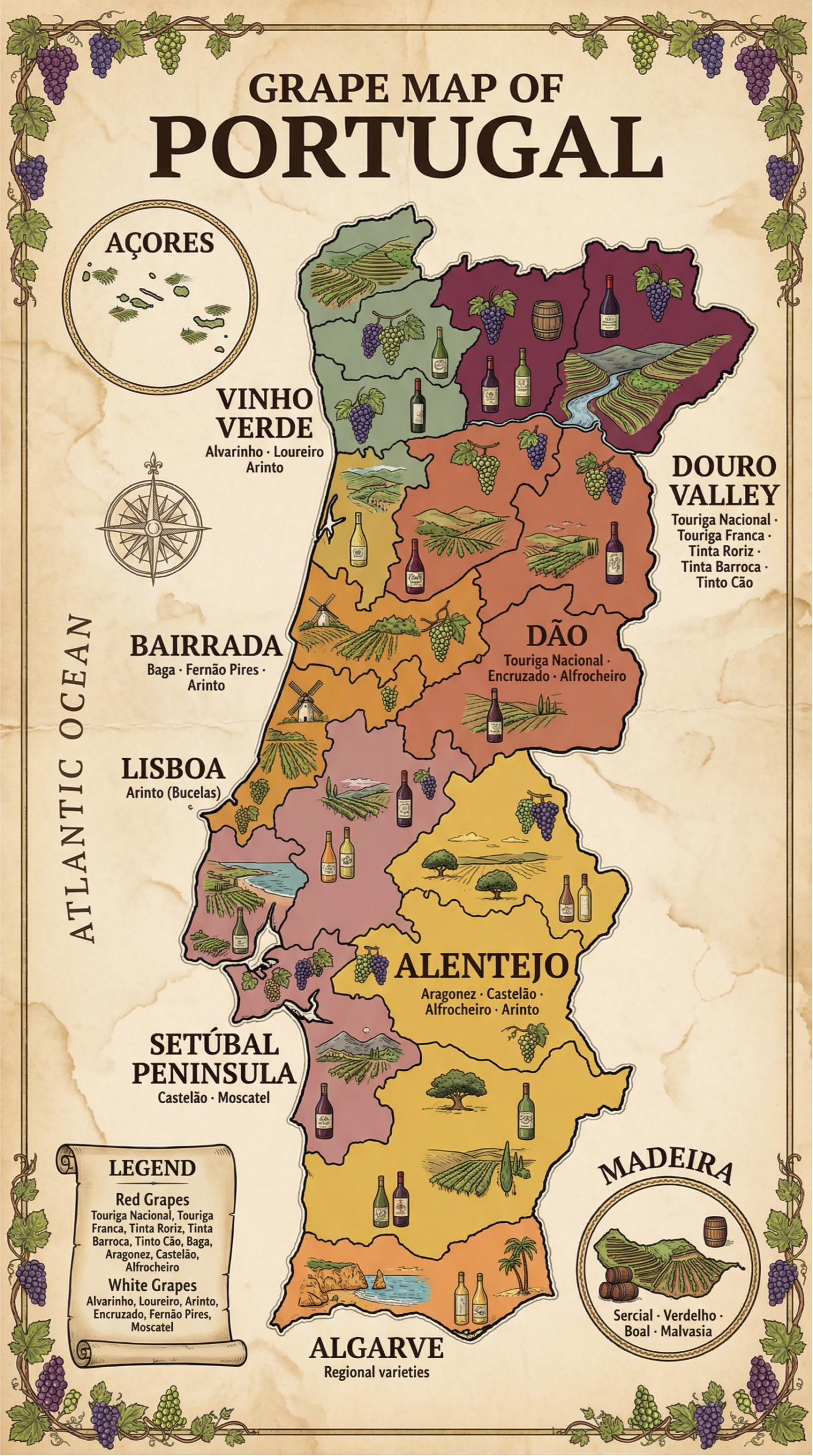
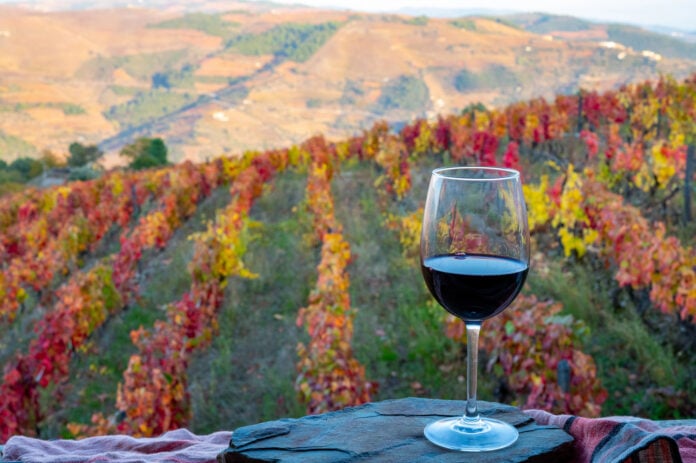
Portugal is one of the most exciting wine-producing countries in the world, and a big part of what makes Portuguese wine so special is the extraordinary diversity of native grape varieties that grow here. With over 250 indigenous grape varieties recognized across the country, Portugal has one of the richest viticultural heritages on the planet! Trust us when we say that there is something for oenophile in Portugal, and understanding Portuguese grapes is the key to unlocking a whole new world of flavor.
What Makes Portuguese Wine So Excellent?
Portugal’s geographic position on the Iberian Peninsula, combined with its dramatically varied terrain and Atlantic-influenced climate, creates ideal growing conditions for a wide range of grape varieties. From the cool, rainy, granite-rich soils of the Minho region in the north to the scorching, schist-covered hillsides of the Douro Valley and the volcanic soils of the Azores, Portuguese wine reflects the land it comes from in ways that few other wine-producing countries can match.
What truly sets Portuguese wine apart from the rest of the world is the fact that so many of the country’s most celebrated grape varieties are found nowhere else. These grapes evolved over centuries in Portugal’s unique environment and developed flavors, aromas, and characteristics that cannot be replicated anywhere else. For wine lovers looking for something genuinely different, Portuguese grapes offer a thrilling departure from the familiar Cabernet Sauvignons and Chardonnays that dominate so many wine lists.
What Are the Most Important Native Red Portuguese Grapes?
Touriga Nacional
If there is one grape that defines Portuguese wine on a global stage, it is Touriga Nacional. This thick-skinned, small-berry grape is widely regarded as Portugal’s greatest indigenous red variety and forms the backbone of many of the country’s most prestigious wines. Originally from the Dão region, Touriga Nacional is now grown across Portugal, most notably in the Douro Valley where it plays a starring role in Port wine production.
Wines made from Touriga Nacional are characterized by their deep, almost inky color, intense aromas of violets and dark berries, firm tannins, and remarkable aging potential. As a single-varietal dry table wine, Touriga Nacional produces powerful, complex bottles that truly stand out in the cellar over time. Patience is truly a virtue here. It is arguably the grape that has done the most to elevate the international reputation of Portuguese wine.
Touriga Franca
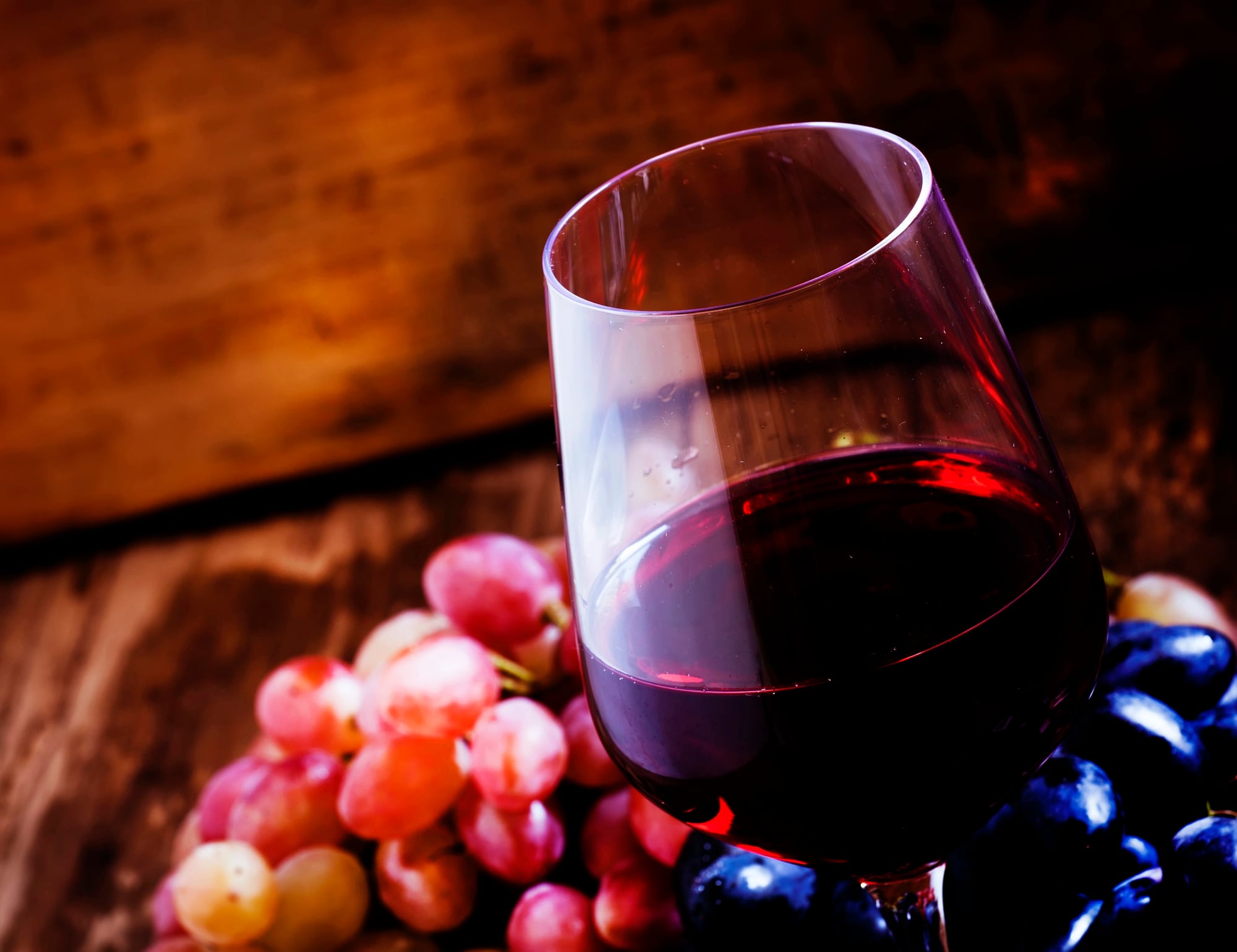
Often overshadowed by its more famous cousin, Touriga Franca is actually the most widely planted grape variety in the Douro Valley. While it may not carry the same prestige as Touriga Nacional, Touriga Franca plays an essential supporting role in many of Portugal’s greatest wines. They contribute elegant aromas of red fruits, floral notes, and a silkier texture that provides balance and complexity in blends.
Touriga Franca is highly adaptable and produces wines with good color, firm acidity, and considerable aromatic finesse. In some vintages and from the right producers, it can produce exceptional wines in its own right.
Tinta Roriz (Aragonês / Tempranillo)
Known in Spain as Tempranillo, this grape goes by two names in Portugal: Tinta Roriz in the north and Aragonês in the south. While it is not technically exclusive to Portugal, it has been cultivated here for so long that it is deeply woven into the fabric of Portuguese wine culture and is considered a cornerstone of many Portuguese blends.
In the Douro, Tinta Roriz contributes spice, red fruit character, and structure to both Port wine and dry table wines. In the Alentejo, where it is known as Aragonês, it tends to produce richer, rounder wines with notes of cherry, plum, and warm spices. It is one of the most versatile Portuguese grapes and appears in wines at every price point.
Tinta Barroca
Tinta Barroca is another native Portuguese grape with deep roots in the Douro Valley, where it has long been a key component in Port wine blends. It ripens early and tends to produce wines with softer tannins, generous fruit, and lower acidity compared to some of its Douro counterparts. Although it can struggle in extreme heat, in the right conditions, it contributes an approachable character that balances the more tannic grapes in a blend.
Baga
Native to the Bairrada region in central Portugal, Baga is one of the country’s most distinctive and polarizing grapes. It is thin-skinned but produces wines of tremendous color, biting acidity, and powerful tannins that can take decades to fully integrate. In the hands of skilled winemakers, Baga produces wines of extraordinary complexity and longevity, with earthy, herbal, and dark fruit characteristics that are entirely unlike anything else in the world of Portuguese wine.
Baga has experienced something of a renaissance in recent years as a new generation of winemakers has embraced its unique identity and worked to produce more approachable expressions without sacrificing its essential character.
Castelão
Castelão, also known as Periquita, is one of the most widely planted red grape varieties in southern Portugal. It thrives in the sandy soils of the Setúbal Peninsula and the red clay soils of the Alentejo while producing wines with cherry fruit and earthy notes. Castelão is a workhorse grape that forms the backbone of many everyday Portuguese wines, though in the right locations and with careful winemaking it can produce bottles of real quality.
Alfrocheiro
Often used as a blending grape in the Dão and Alentejo regions, Alfrocheiro is gaining increasing recognition as a variety capable of producing impressive wines on its own. It contributes deep color, vibrant acidity, and aromas of dark plums, violets, and spice to the wines it appears in.
The Most Important Native White Portuguese Grapes
Alvarinho
Alvarinho, known across the border in Spain as Albariño, is the star white grape of the Vinho Verde region in northern Portugal, particularly in the sub-region of Monção e Melgaço near the Spanish border. Portuguese wine lovers and international consumers alike have come to adore Alvarinho for its intensely aromatic profile, which bursts with citrus blossom, peach, apricot, and saline mineral notes and is backed by refreshing acidity and a characteristic slightly bitter finish.
At its best, Alvarinho from Portugal produces wines of considerable depth and complexity that can age gracefully for several years. It is most famous as the grape behind crisp, aromatic, young-drinking Vinho Verde, and the finest single-varietal Alvarinho bottlings from top producers in Monção e Melgaço are among the most serious and sought-after white wines in the country.
Loureiro
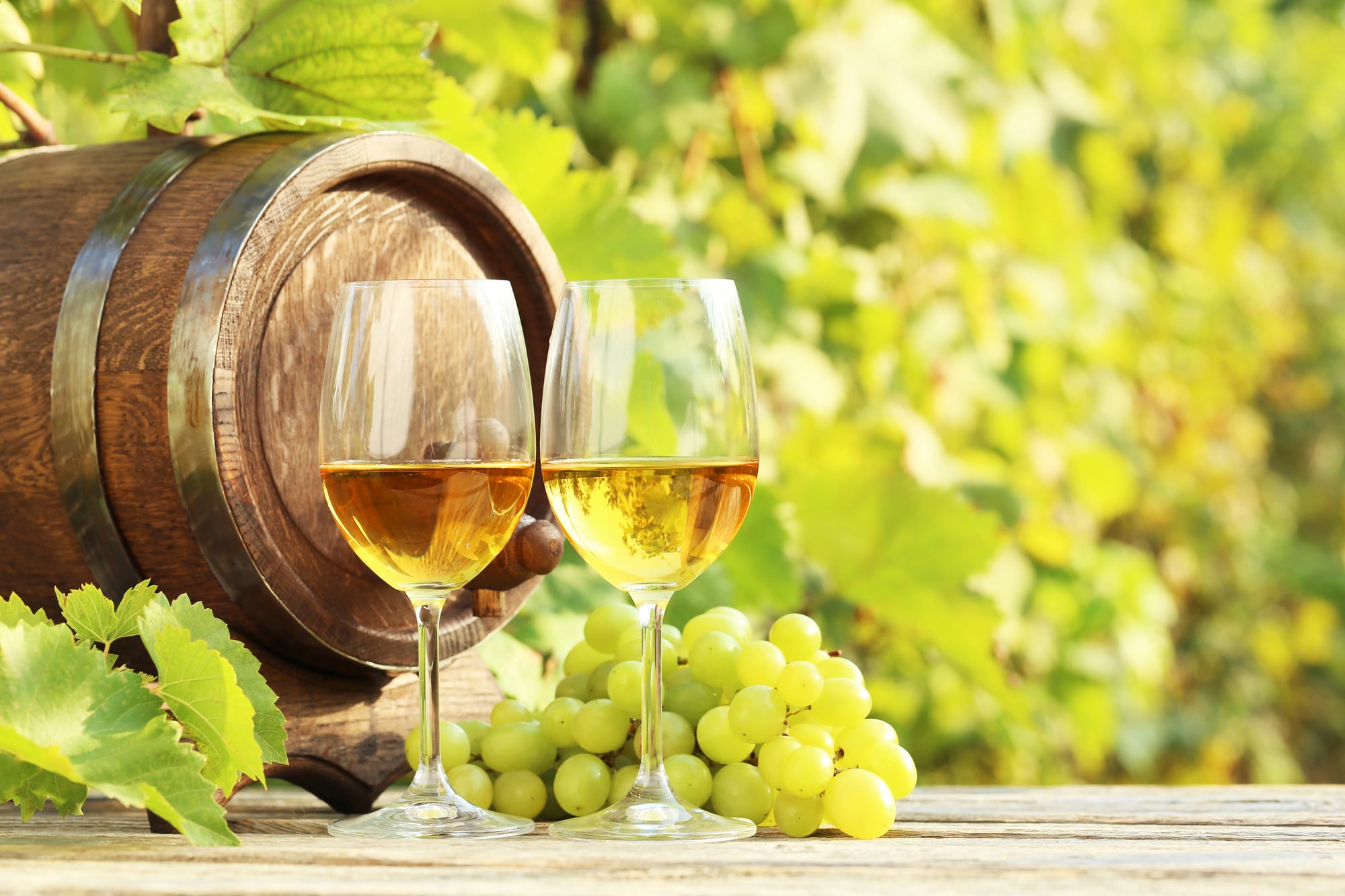
Another key white grape of the Vinho Verde region, Loureiro is named for the laurel tree (loureiro in Portuguese) because its distinctive aromatics are reminiscent of bay leaf and floral botanicals. Wines made from Loureiro are among the most perfumed and delicate in Portuguese wine, with notes of white flowers, citrus, stone fruit, and fresh herbs. It is widely blended with Alvarinho and other local varieties to create the classic Vinho Verde style, but it also shines as a single-varietal bottling.
Arinto (Pederna)
Arinto, also known as Pederna in the Minho region, is one of Portugal’s most versatile and widely planted white grape varieties. Its greatest calling card is its naturally high acidity, which gives the wines it produces remarkable freshness and longevity. Grown across several Portuguese regions, Arinto expresses itself differently depending on where it is grown.
In the Bucelas region near Lisbon, Arinto produces lean, mineral, and strikingly crisp white wines that can age for many years. In the Alentejo, the same grape produces a fuller, more tropical style while maintaining that signature acidity. Arinto is also an important component in Vinho Verde blends and plays a growing role in sparkling wine production.
Encruzado
The undisputed star of white winemaking in the Dao region, Encruzado is capable of producing some of the most complex, age-worthy dry white wines in all of Portugal. At its best, Encruzado develops impressive depth with aromas of white peach, citrus zest, toasted almonds, and subtle floral notes backed by firm acidity and a rich, textured palate. Aged versions can develop a creamy complexity that draws frequent comparisons to white Burgundy, which makes it one of the most exciting Portuguese grapes for serious white wine lovers.
Fernão Pires (Maria Gomes)
Fernão Pires, called Maria Gomes in the Bairrada region, is the most widely planted white grape variety in Portugal. It is known for its distinctive and somewhat exotic aromas of rose petals, white pepper, and tropical fruit along with a naturally low acidity that makes it approachable and easy to enjoy in its youth. While it may lack the depth and aging potential of Encruzado or Arinto, Fernão Pires produces charming, aromatic wines that are among the most accessible introductions to Portuguese wine.
Portuguese Grapes and Port Wine
No discussion of Portuguese grapes would be complete without mentioning Port wine, Portugal’s most famous wine export. The sweet, fortified wines of the Douro Valley are produced from a blend of indigenous Portuguese grapes with Touriga Nacional, Touriga Franca, Tinta Roriz, Tinta Barroca, and Tinto Cão being the five most celebrated varieties in Port wine production. Each grape brings something different to the blend, and the best Port wines are a testament to the remarkable synergy achievable among native Portuguese varieties.
Exploring Portuguese Wine Today
The world of Portuguese wine has never been more exciting. A new generation of winemakers is working with native Portuguese grapes in innovative ways and pushing the boundaries of what these varieties can achieve while honoring the traditions that have shaped them over centuries. The delicate, floral whites of Vinho Verde, the powerful, tannic reds of the Douro, the earthy complexity of Dão wines, and the rich, sun-soaked expressions of Alentejo together demonstrate how Portuguese wines and native grape varieties offer something for every palate.
Exploring the native grape varieties of Portugal is an invitation to discover a country, its history, its landscape, and its people through the most direct and delicious means possible: a glass of wine made from grapes found nowhere else on earth.