
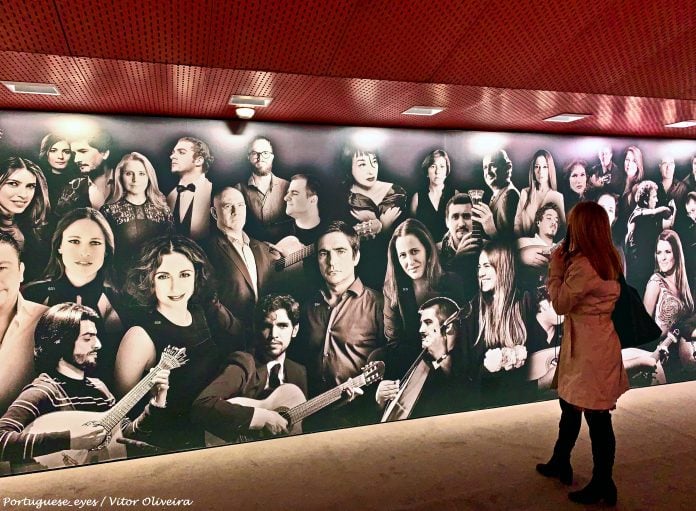
Fado Music
Fado music is the heart of the Portuguese soul. It is arguably the oldest urban folk music in the world. Some say it came as a dance from Africa in the 19th century and was adopted by the poor on the streets of Lisbon. Or perhaps it started at sea as the sad, melodic songs coaxed from the rolling waves by homesick sailors and fishermen.
Whatever its origins its themes have remained constant: destiny, betrayal in love, death and despair. A typical lyric goes: “Why did you leave me, where did you go? I walk the streets looking at every place we were together, except you’re not there.” It’s a sad music and a fado performance is not successful if an audience is not moved to tears.
By the early twentieth century, fado had become a fixture in the everyday life of Lisbon’s working class. It was played for pleasure but also to relieve the pain of life. Skilled singers known as fadistas performed at the end of the day and long into the night. Fado was the earthy music of taverns and brothels and street corners in Alfama and Mouraria, the old poor sections of Lisbon. (Another strain of fado, Coimbra fado, was favored among university students and professors.)
The fado is normally sung by men or women and accompanied by one Portuguese guitar and one classic guitar, which in Portugal is called viola. This song reached its golden era in the first half of the 20th century, when the Portuguese dictatorship of Salazar (1926-1968) forced the fado performers to become professional and confined them to sing in the fado houses and the so called "revistas", a popular genre of "vaudeville".
The main names of that period were: Alfredo Marceneiro, Amalia Rodrigues, Maria Teresa de Noronha and Armandinho and Jaime Santos (guitar players).
From the 1940’s until her death in 1999, the towering figure of Portuguese fado was Amalia Rodrigues. She was the diva of fado, worshipped at home and celebrated abroad as the most famous representative of Portuguese culture. When she died the country’s prime minister called for three-days of national mourning. Such is the hold of fado over the people of Portugal.
The essential element of fado music is “saudade,” a Portuguese word
that translates roughly as longing, or nostalgia for unrealized dreams.
Fado flowers from this fatalistic world-view. It speaks of an undefined
yearning that can’t be satisfied. For Portuguese emigrants fado is an
expression of homesickness for the place they left behind.
Like other forms of folk music such as American blues, Argentine tango
or Greek rebitika, fado cannot be explained; it must be felt and
experienced. One must have the soul to transmit that feeling; a fadista
who does not possess saudade is thought of as inauthentic. Audiences are
very knowledgeable and very demanding. If they do not feel the fadista
is up to form they will stop a performance.
Fado can be performed by men or women, although many aficionados prefer
the raw emotion of the female fadista. Dressed in black with a shawl
draped over her shoulders, a fadista stands in front of the musicians
and communicates through gesture and facial expressions. The hands move,
the body is stationary. When it’s done correctly, it’s a solemn and
majestic performance.
Aside from the Lisbon fado there is another completely different form of this song, sung by the students of Coimbra University whose ancient roots can be found in the medieval songs called trovas. Here the subjects are mainly love, friendship and nostalgia. This form of fado reached its most famous period in the 1950s and 1960s when names like Edmundo Bettencourt, Luis Gois, Jose Afonso and the musicians Artur Paredes, Carlos Paredes and Antonio Portugal among others, combined new forms and lyrics to a song which was limited to student circles.
The traditional accompaniment for the fadista is a Portuguese guitar,
or guitarra, a 12-stringed instrument, and a bass guitar, or viola.
Sometimes a second acoustic guitar is added. In recent years, fado
recordings have added piano, and violin and accordion, instruments which
sometimes accompany the music on the streets of Lisbon.
Today the younger generation in Portugal is respectful but not dedicated
to fado. But a new generation of young musicians have contributed to the
social and political revival of fado music, adapting and blending it
with new trends. Contemporary fado musicians like Misia have introduced
the music to performers such as Sting. Misia and fadistas like Cristina
Branco and Mariza walk the fine line between carrying on the tradition
and trying to bring in a new audience.
Article courtesy World Music Central (www.worldmusiccentral.org)