
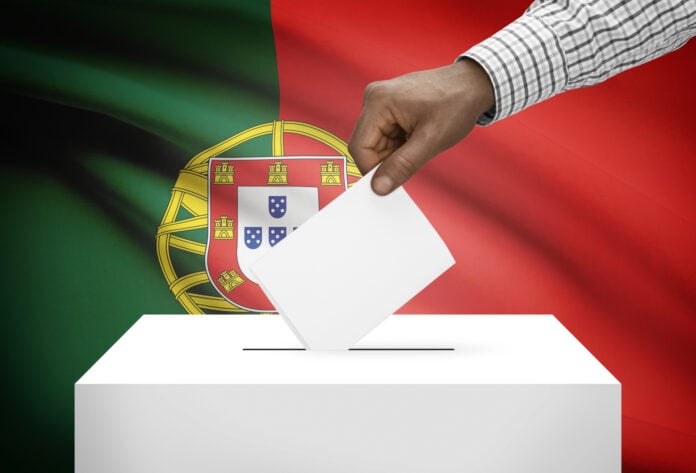
Portugal has just witnessed a pivotal moment in its democratic history, as voters turned out in unprecedented numbers for the presidential election on January 18, 2026. For the first time in 40 years, the country will hold a second round of voting to determine its next president on February 8. António José Seguro, the Socialist Party-backed candidate, emerged victorious in the first round with 31.11% of the vote, while far-right leader André Ventura secured second place with 23.52%. This sets up a showdown that will define Portugal’s political direction for the next five years.
A Night of Surprises and Historic Outcomes
The election results defied weeks of polling predictions that had suggested a much tighter race. More than 11 million Portuguese citizens were registered to vote in what became a referendum not just on leadership, but on the nation’s values and future direction. The turnout exceeded expectations, with an abstention rate of 38.50%, significantly lower than the 60.76% seen in the 2021 presidential elections, which were heavily impacted by the COVID-19 pandemic.
António José Seguro’s victory in the first round came as a surprise to many observers. The former Socialist Party secretary-general, who had been away from active politics since 2014, secured 1,754,895 votes. His campaign emphasized unity, democracy, and a non-partisan approach to the presidency, themes that resonated with voters concerned about political extremism.
André Ventura’s strong second-place finish with 1,326,644 votes confirmed the growing influence of his far-right Chega party in Portuguese politics. The party has emerged as a significant force since its founding just seven years ago. It became the main opposition party in parliament following legislative elections in May 2024 when it captured 22.8% of the vote.
The Fragmented Right and United Left
One of the election’s most striking features was the fragmentation on the right side of the political spectrum. João Cotrim de Figueiredo of the Liberal Initiative came in third place with approximately 16% of the vote, while Luís Marques Mendes, backed by the governing Social Democratic Party (PSD) and the Democratic and Social Centre-People’s Party (CDS-PP), finished in fourth position.
The result left Prime Minister Luís Montenegro and the PSD in an uncomfortable position. In a statement from party headquarters, Montenegro acknowledged the democratic verdict and congratulated all candidates, particularly Seguro and Ventura for advancing to the second round. However, he made a crucial announcement: the PSD would not issue any voting recommendation for the runoff, as he cited that the party’s political space would not be represented in the final contest.
Montenegro’s statement highlighted the predicament facing center-right voters. This neutrality reflects the deep divisions within Portuguese conservatism, torn between rejecting the far-right and finding a path forward for traditional center-right values.
Cotrim de Figueiredo echoed this frustration in his concession speech, describing the second-round choice as lousy and predicting that the next president would come from the Socialist Party. He attributed this outcome to what he called a strategic mistake of the leadership of the PSD and argued that Montenegro had failed to live up to the legacy of Francisco Sá Carneiro, a revered PSD founder.
The Left Rallies Behind Seguro
In stark contrast to the right’s fragmentation, left-wing parties quickly coalesced around Seguro’s candidacy for the February 8 runoff. The first to declare support was Jorge Pinto, the Livre party candidate who finished with a modest showing. Pinto called on all those who believe in Portugal’s Constitution to support Seguro, framing the choice as one between democratic values and extremism.
Catarina Martins, the Left Bloc candidate and only woman in the race, acknowledged her disappointing result. More importantly, she expressed concern about the performance of the far right and urged her supporters to vote for Seguro in the second round to block Ventura’s path to the presidency.
António Filipe, the Communist Party-backed candidate, received just 1.64% of the vote, marking the worst result for a PCP-supported presidential candidate since 1976. Despite this historic low, Filipe was unequivocal in his position, immediately calling for votes for Seguro to defeat Ventura’s reactionary purposes.
This unity on the left contrasts sharply with the strategic confusion on the right. Henrique Gouveia e Melo, the popular former admiral who led Portugal’s COVID-19 vaccination program and ran as an independent, admitted his results fell short of objectives. However, he stopped short of endorsing either candidate and maintained his non-partisan stance, expressing continued belief in the need to departisanize the presidency.
Seguro’s Message of Unity
Speaking to jubilant supporters in Caldas da Rainha, Seguro struck a tone of inclusive leadership. The candidate emphasized that his campaign is the home of all Democrats, who unite to preserve the fundamental.
Seguro invited all democrats, progressives, and humanists to join his candidacy and framed the February 8 vote as a choice between unity and division, between democratic values and the politics of hatred. His message resonated with voters concerned about the rise of far-right populism across Europe, and he positioned himself as a defender of Portugal’s post-1974 democratic settlement.
Running with what he calls “no strings attached,” Seguro’s campaign carefully cultivated an image of independence from the Socialist Party machinery, even while enjoying its organizational support. This positioning allowed him to appeal beyond traditional PS voters to those seeking stability and centrist leadership.
Ventura’s Campaign and Controversy
For André Ventura, advancing to the second round represents the greatest honor of his life and confirms that Chega leads the right in Portugal. His campaign featured controversial rhetoric on immigration and law enforcement. In December 2025, a Lisbon court ordered him to remove discriminatory campaign posters targeting the Romani people within 24 hours while threatening daily fines of €2,500.
Ventura’s election night speech immediately attacked Seguro. Hungary’s Prime Minister Viktor Orbán congratulated Ventura on reaching the runoff and linked him to a broader European populist movement that his opponents will likely emphasize in the coming campaign.
Ballot Confusion and Record Invalid Votes
The election featured 11 eligible candidates, though 14 names appeared on ballots. The Constitutional Court rejected three candidates, but there was not enough time left to reprint the ballots. Votes for these rejected candidates counted as null votes, which contributed to a dramatic 62% increase in null ballots compared to 2021 with a total of 65,376 votes. Blank votes also rose 23% to 61,210.
Historical Significance
Portugal last required a presidential runoff in 1986, when Socialist Mário Soares defeated Diogo Freitas do Amaral just over a decade after the Carnation Revolution ended 48 years of dictatorship. The current fragmentation preventing any candidate from reaching 50% reflects deeper divisions within Portuguese society and mirrors far-right advances across Europe.
The presidency, while largely ceremonial, carries significant constitutional powers. The president can veto legislation, dissolve parliament, call snap elections, and appoint the prime minister, making the office influential during political crises.
What Lies Ahead
The February 8 runoff promises intense polarization. Seguro enters as the favorite, and he benefits from consolidated left-wing support and likely centrist backing. Pre-election polling showed Ventura’s “rejection rate” exceeding 60% and suggests that it will be difficult to win a two-candidate race despite his mobilization capabilities.
The PSD’s neutrality creates uncertainty. Some center-right voters may support Seguro to block the far right, while others might abstain or back Ventura. The campaign will likely focus on fundamental questions about Portugal’s identity including democratic norms versus radical change, European integration versus national sovereignty, and inclusive governance versus immigration restriction.
Implications for Portuguese Democracy
This election has already transformed Portuguese politics. A far-right candidate reaching the presidential runoff breaks a psychological barrier and confirms Chega’s permanent status in the political landscape. For the Socialist Party, a Seguro victory would provide a powerful platform to challenge Prime Minister Montenegro’s minority government. The PSD, squeezed between left and far-right, faces strategic confusion that risks appearing weak and indecisive.
As Portugal prepares for February 8, the stakes extend beyond choosing Marcelo Rebelo de Sousa’s successor. This election will help determine whether the country continues its post-1974 path of democratic centrism and European integration or follows other European nations toward nationalist and populist politics. Portuguese voters will deliver their verdict in two weeks and bring with it a conclusion to one of the most significant elections in the nation’s democratic history.