
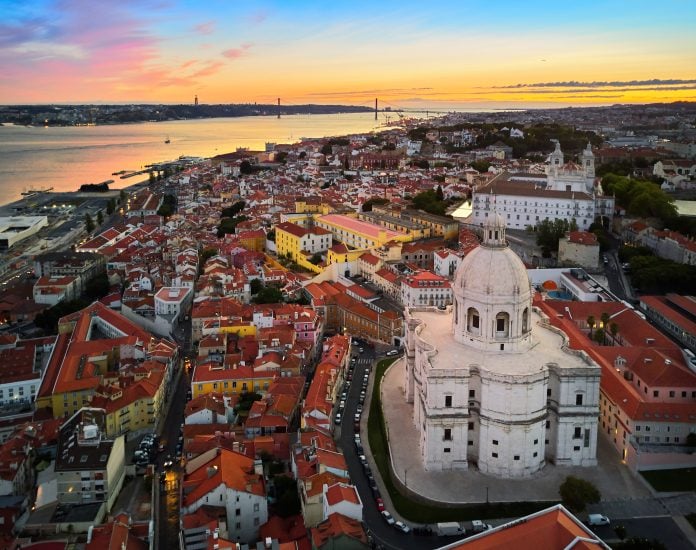
The National Pantheon, also known as Panteão Nacional, is an iconic monument situated in Lisbon, Portugal. This historic building serves as a testament to the nation’s rich cultural heritage as today it is the resting place of iconic Portuguese figures. Let’s delve into the history and architectural beauty of the National Pantheon, exploring its significance within the context of Portugal’s history.
History
The National Pantheon’s origins date back to the 17th century when it was initially erected as the Church of Santa Engrácia. Interestingly, this building acquired the nickname “The Incomplete Church” over the centuries due to the prolonged nature of its construction.
A significant turning point in the National Pantheon’s history unfolded during the 20th century when it underwent a remarkable transformation from being a place of religious worship to assuming the role of a national mausoleum. This pivotal shift was formalized in 1916 when it was officially designated as the National Pantheon.
With this transformation, its purpose evolved, no longer confined to spiritual devotion but to celebrate Portugal’s most distinguished individuals.
Presently, the National Pantheon serves as the final resting place for eminent Portuguese citizens, including poets, authors, statesmen, and military leaders. Notable luminaries interred within its hallowed walls include Luís de Camões, the highly venerated national poet of Portugal, and Amália Rodrigues, the renowned “Queen of Fado.”
Architecture
The exterior of the National Pantheon features the Baroque architectural style, characterized by its ornate facades and intricate embellishments. The facade is adorned with meticulously carved sculptures and decorative motifs.
At the heart of the National Pantheon lies its iconic dome, a true engineering marvel. The dome is intricately patterned and crowned by an imposing lantern, symbolizing enlightenment and casting its light over the city.
Inside, visitors are greeted by an interior that seamlessly combines elements of both Baroque and Neoclassical styles. The central nave showcases exquisite marble work, with intricate details that highlight the skill of the craftsmen. Traditional Portuguese blue and white tiles, known as azulejos, decorate the walls, depicting scenes from the lives of saints.
Visiting Times & Tickets
Tickets cost 4 euros.
October – March
From Tuesday to Sunday: 10:00 AM to 5:00 PM (last entry at 4:40 PM)
April – September
From Tuesday to Sunday: 10:00 AM to 6:00 PM (last entry at 5:40 PM)
Closed on Mondays, January 1st, Easter Sunday, May 1st, June 13th, and December 25th.