
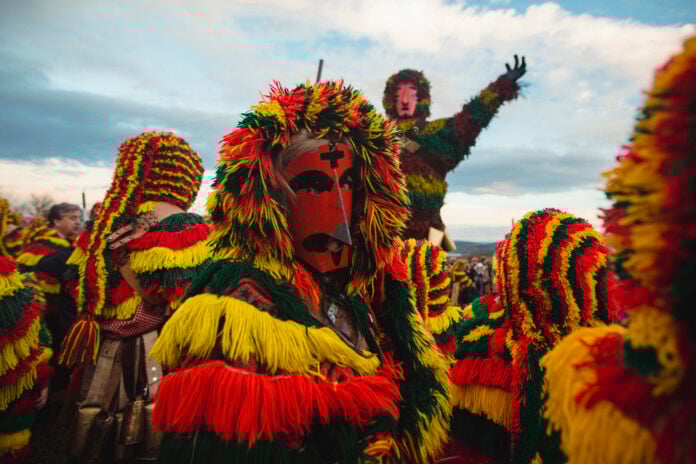
The Carnival of Podence, known locally as Entrudo Chocalheiro (the Rattling Carnival), is one of Portugal’s most ancient and captivating traditional celebrations. Held in the village of Podence in northern Portugal, this festival features devilish figures called Caretos who wear colorful fringed costumes and masks made of tin or leather with pointed noses and attach rattles around their waists. These mysterious masked characters roam the streets making noise and mischief during the three days of Carnival from the Saturday before Carnival through Shrove Tuesday. Here are nine amazing facts about this magic, UNESCO-listed festival.
1. The tradition has ancient Celtic roots that date back over 2,000 years.
The Careto tradition is believed to have prehistoric roots in Celtic traditions probably related to the existence of the Gallaeci and Bracari peoples in Galicia and northern Portugal. The tradition reflects ancient beliefs about the cyclical nature of life, the importance of fertility for both land and community, and the symbolic battle between winter’s darkness and spring’s renewal.
2. The masks are handcrafted from tinplate or leather with distinctive features.
The Careto wear tinplate or leather masks with costumes covered with colorful wool fringes and small bells. These masks feature exaggerated characteristics including pointed or prominent noses, sharp angular features, and are typically painted in vivid colors such as red, black, or yellow.
Many masks include a cross painted on the forehead, and they create a metallic, otherworldly appearance that catches the light as the Caretos move through the village streets. Traditional mask makers in Podence continue to make these distinctive pieces by hand using techniques passed down through generations. The masks allow the Caretos to remain anonymous, which is central to the carnival’s tradition of freedom from normal social constraints.
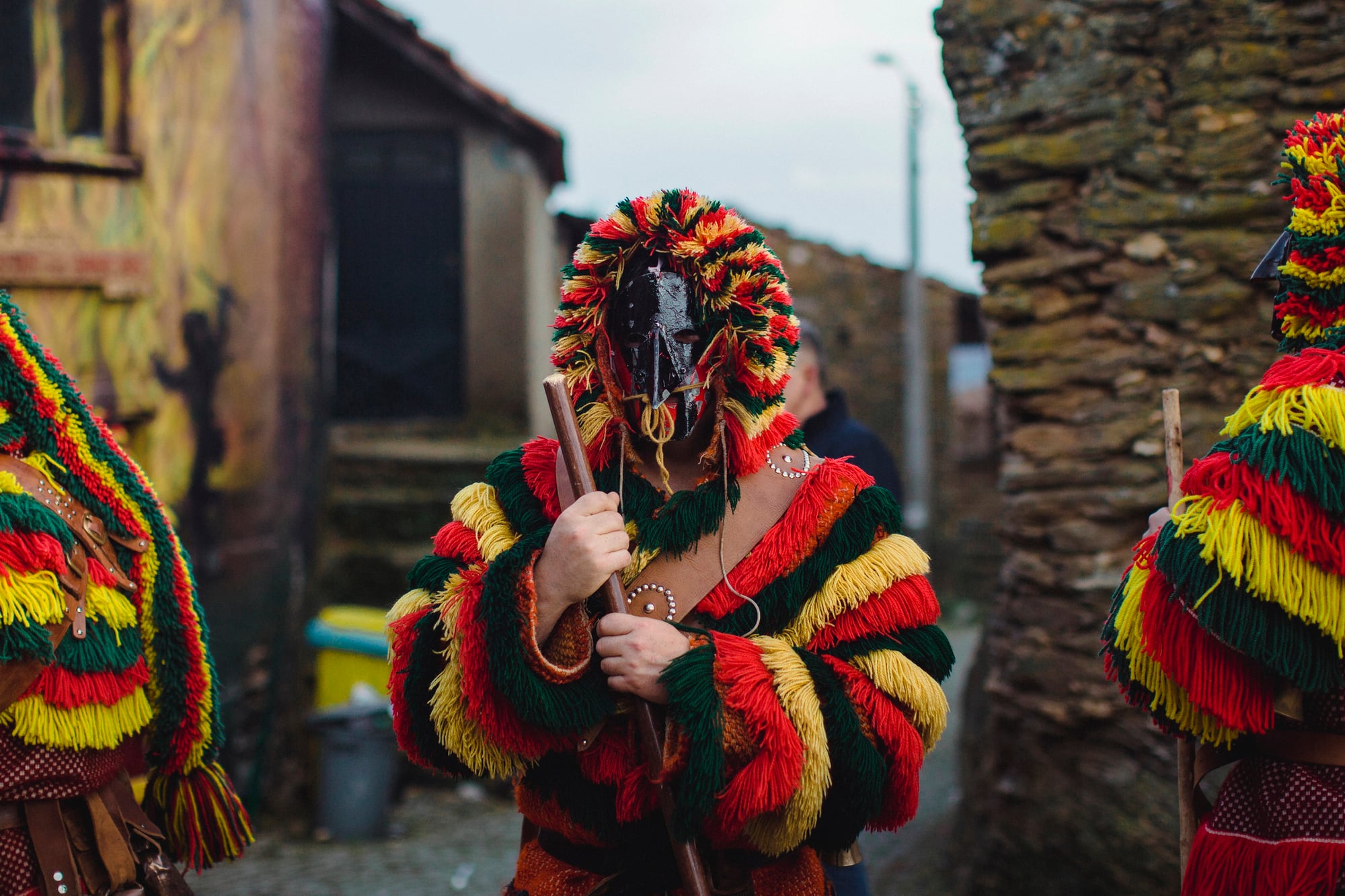
3. The colorful costumes feature red, yellow, and green wool fringes.
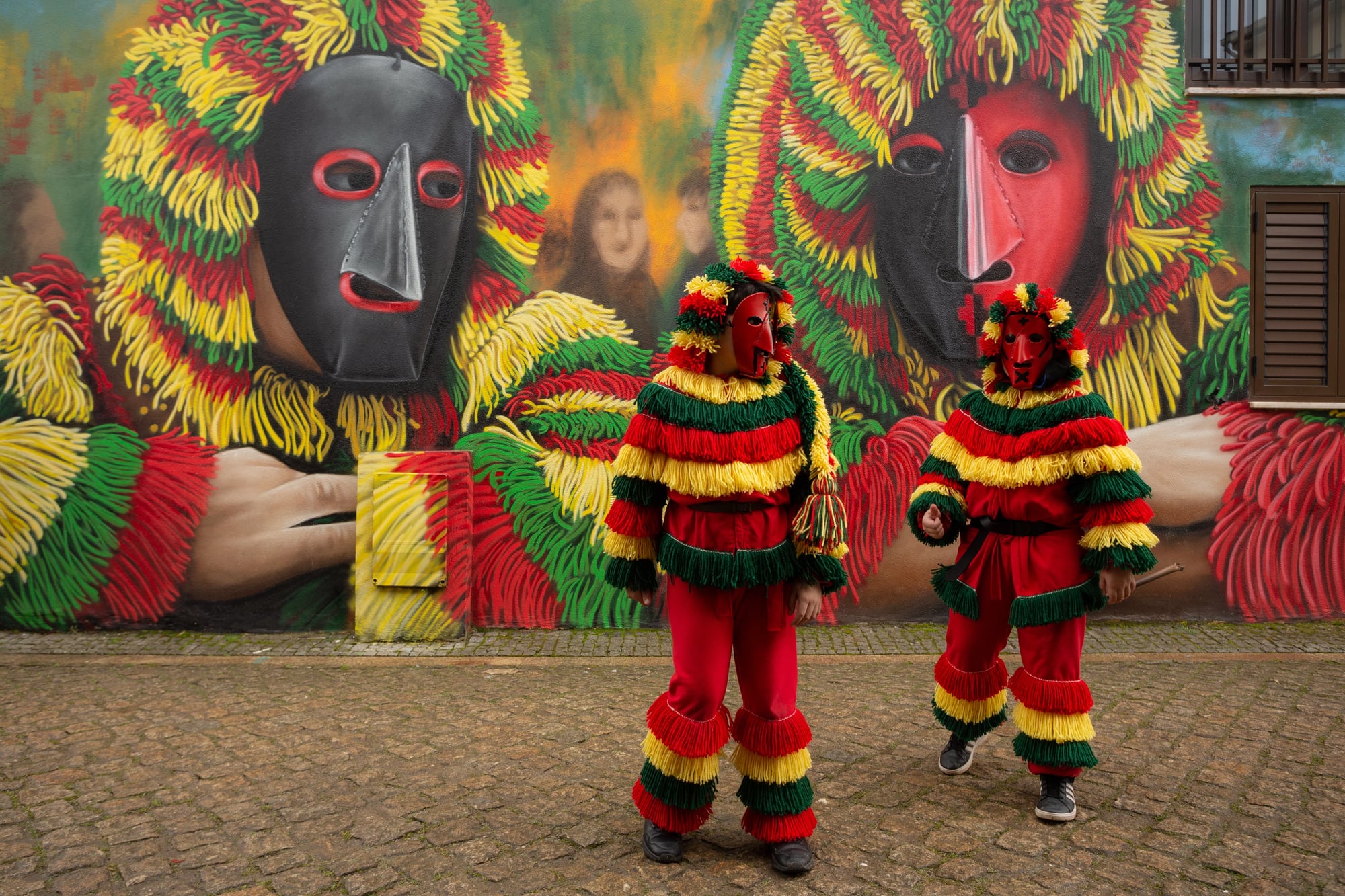
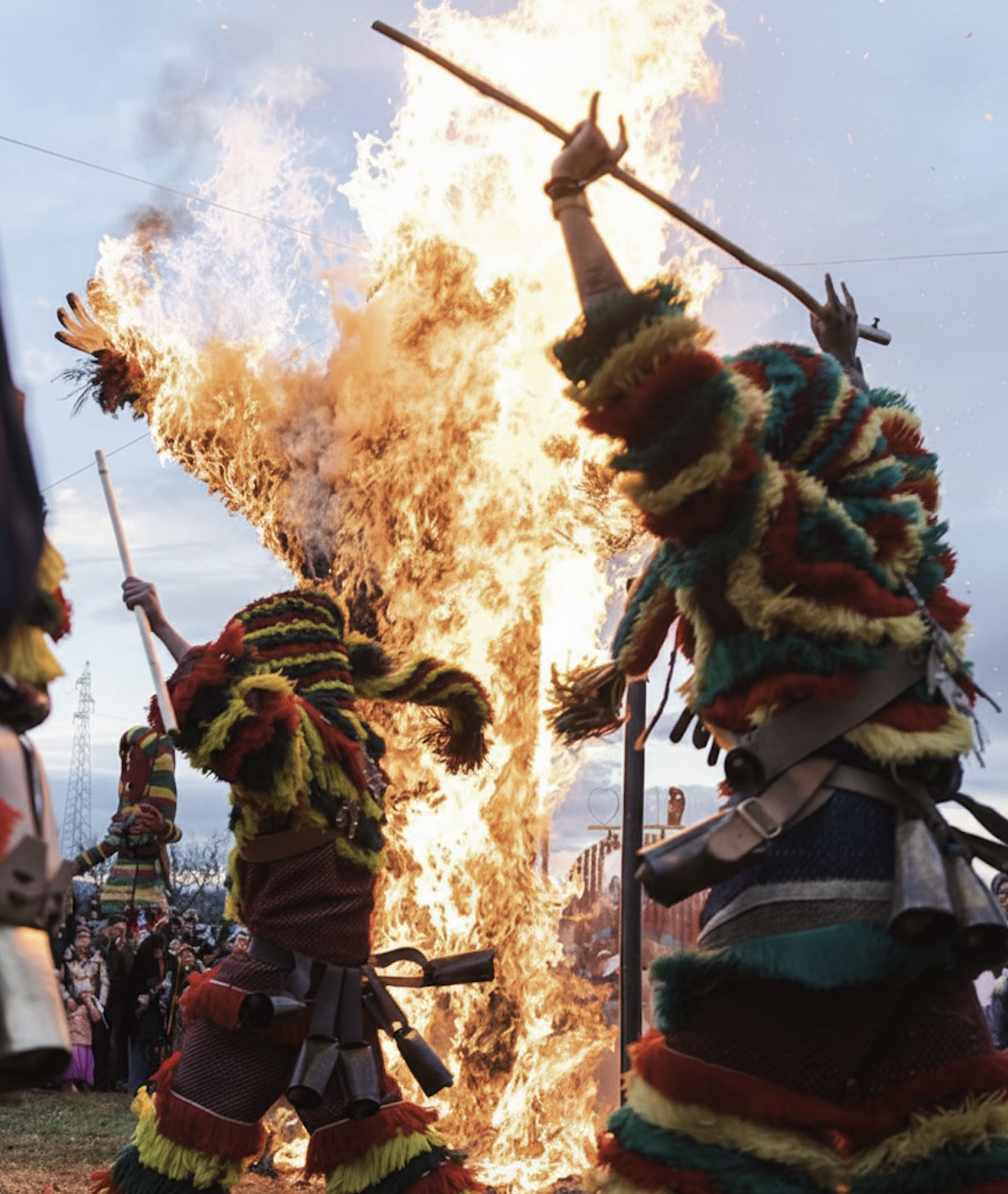
The Careto costume is as distinctive as the mask itself. The costume consists of a hooded jacket and trousers covered with thick fringes of colored wool, and recently they use overalls covered with fringed rows of fabric in bright and contrasting colors such as red, yellow, and green. The costumes are traditionally homemade, and families spend a considerable amount of time creating or maintaining these elaborate garments. The wool fringes shake and sway with every movement and create a sense of wild energy that adds to the chaotic atmosphere of the celebration.
The three primary colors (red, yellow, and green) are consistent across all Careto costumes. The hooded design conceals the wearer’s identity completely and reinforces the anonymity that allows participants to engage in the playful, transgressive behavior characteristic of the festival.
4. Cowbells and rattles create the signature “Chocalheiro” sound.
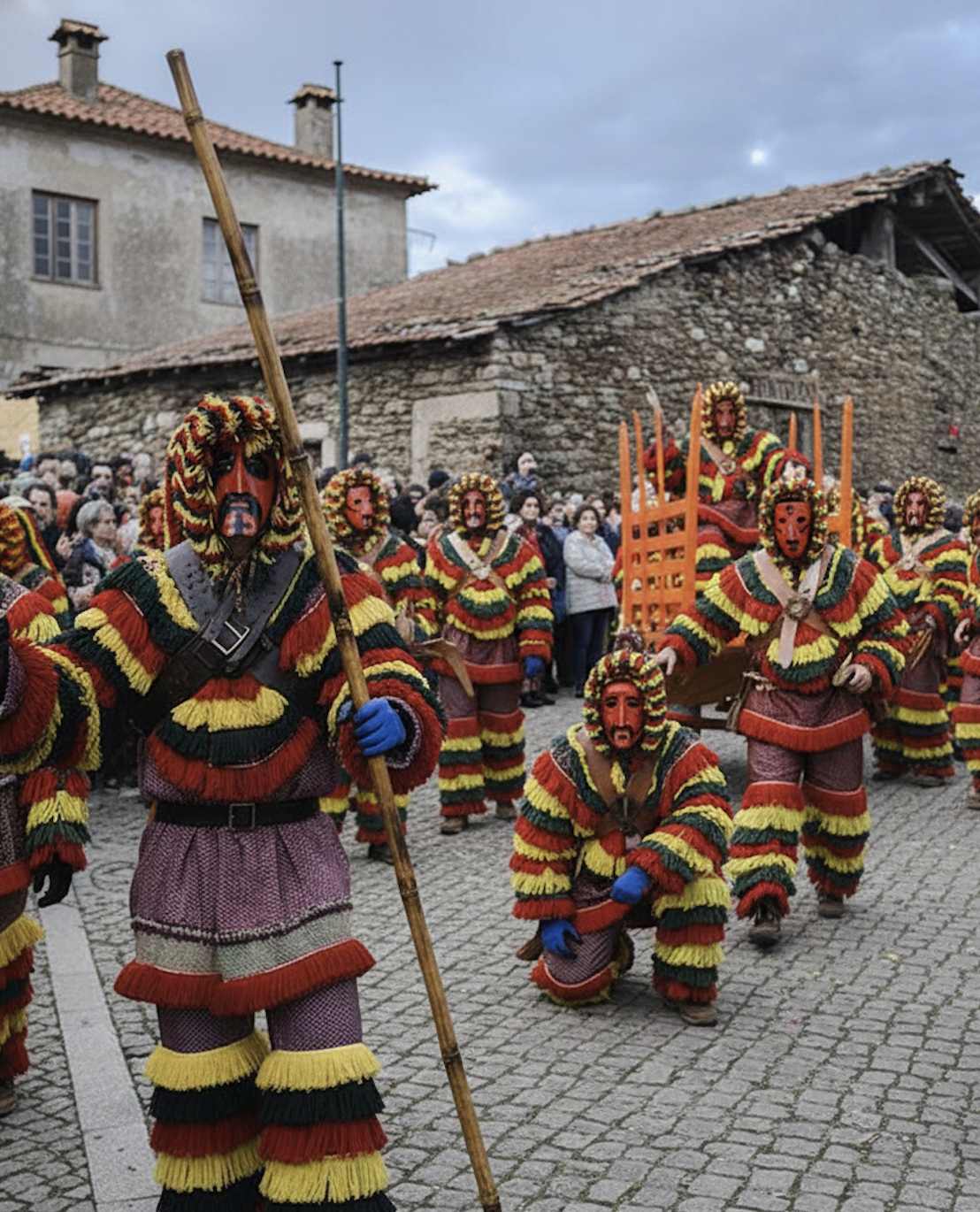
Sound is an essential element of the Podence Carnival experience. The festival earns its name Entrudo Chocalheiro from the distinctive rattling and clanging created by the Caretos. Participants wear belts equipped with cowbells and various rattles around their waists, and some wear cattle collars with bells over their shoulders. As the Caretos run, jump, and dance through the village streets, these bells and rattles produce a constant, rhythmic cacophony that can be heard throughout Podence.
The loud sounds are meant to drive away winter and awaken nature from its cold slumber announcing the arrival of spring. The bells also served historically to ward off evil spirits and bring protection to the community. The rhythmic shaking of the bells, particularly when Caretos dance around women, forms part of the fertility ritual that is central to the celebration. For many participants and observers, the distinctive sound of the chocalhadas (bell-ringing) is one of the most memorable and evocative aspects of the entire festival.
5. Originally only for men, it is now open to women and children to participate.
Initially, the Carnival of Podence was a rite of passage for men and has now been extended to women and children. Historically, the Carnival of Podence served as an important transition ritual for young unmarried men in the village and marked their passage into adulthood and their eligibility for marriage. Young men would don the Careto costume for the first time as a significant milestone in their lives. However, social changes have transformed this exclusively male tradition into a more inclusive celebration.
Today, women and children as young as five years old participate in the festivities. They wear their own Careto costumes and join the parades and dances. The group includes children dressed as Caretos, known as facanitos, who follow and copy their elders. They learn from them and ensure the continuity of the Entrudo Chocalheiro. These child participants, called facanitos or “little devils,” represent the future of the tradition.
6. It became UNESCO-listed in 2019.
UNESCO classified the Carnival of Podence as Intangible World Heritage due to the strong participation of the local community that has managed to preserve this tradition for centuries and its current importance in the region’s cultural events. On December 12, 2019, the Winter festivities, Carnival of Podence was officially inscribed on UNESCO’s Representative List of the Intangible Cultural Heritage of Humanity. This international recognition has brought global attention and more tourists to what was previously a primarily local and regional celebration.
The designation has also reinforced local pride in the tradition and encouraged younger generations to participate and learn the customs. The Casa do Careto, a museum dedicated to the tradition, helps educate visitors about the history and significance of the Caretos throughout the year, and UNESCO recognition ensures that this ancient tradition will be protected and celebrated for future generations.
7. The celebration centers on fertility rituals and spring renewal.
At its heart, the Carnival of Podence celebrates fertility and the cyclical renewal of nature. During the performance, the Caretos dance around women with their cowbells rhythmically moving their hips. This distinctive dance represents a blessing meant to grant fertility. Originally the Caretos were linked with the figure of the “devil on the loose” and represented the excesses, euphoria, and joy allowed at this time of year, after the cold winter months, while also celebrating the fertility of the approaching spring.
During these few days, participants can engage in playful pranks, loud behavior, and flirtatious interactions that would not be acceptable during the rest of the year. This controlled chaos serves a social function and allows the community to release tension before the solemnity of Lent while symbolically ensuring the fertility and prosperity of the coming agricultural season.
8. Fictitious weddings provide comic relief and community entertainment.
Among the most important moments of the Carnival of Podence are the fictitious weddings on the Sunday, a fun event when the people chosen have no chance to complain. These mock weddings represent one of the festival’s most beloved theatrical traditions. On the Monday night, there is a theatrical play when a group of men announce a fictional list of engaged couples. During these performances, community members are playfully “married off” to unlikely partners and often create humorous pairings that satirize local personalities or situations. The chosen couples must participate in the charade.
The wedding ceremonies often include parodies of actual wedding rituals complete with mock priests, witnesses, and wedding parties. The whole village participates either as performers or spectators, which makes it a true community event that reinforces social bonds.
9. The grand finale is an enormous bonfire that lights up the night sky.
On Shrove Tuesday night, after days of nonstop partying, the village gathers around a giant wooden figure stuffed with fireworks and branches. When they set it alight, the flames shoot thirty feet high while everyone screams, drums bang, and bagpipes wail. It’s the symbolic burning of winter, of all the bad luck, of everything that has held you back. Watching that monster burn while surrounded by hundreds of rattling Caretos is one of those moments that stays burned into your soul forever.
If you are fortunate enough to attend the Carnival of Podence, it offers an unforgettable glimpse into one of Portugal’s most memorable and ancient festivals – where the past and present dance together to the sound of cowbells and rattles, and where a small Portuguese village keeps a celebration alive that connects us all to the timeless cycles of nature and human community.