

Every language has its hidden treasures and words that say so much that translation can never quite capture them. European Portuguese is full of these playful, poetic, and sometimes hilariously specific gems that reveal the country’s humor and heart. Some of them describe feelings. Others describe quirks of daily life. All of them show why Portuguese is a language worth falling in love with.
1. Saudade
Perhaps the most famous of all Portuguese words, saudade has no exact English equivalent. It means a deep, nostalgic longing for someone or something that is absent, maybe forever. It is the ache of missing your childhood home, a loved one who has passed, or even a time in your life that you cannot return to. However, it is not entirely sad. Saudade carries warmth and love within the longing, as though the memory itself is a small comfort.
Example – “Tenho saudade das tardes longas na praia com os meus amigos.”
Translation – “I miss those long afternoons on the beach with my friends.”
2. Fazer festinhas
Literally “to make little caresses,” this sweet phrase means gently stroking or petting someone. It is often used with children, loved ones, or even pets. It conveys affection, comfort, and tenderness in a soft, familiar way. There is no single English word that carries quite the same gentle emotional weight.
Example – “Ela adormeceu enquanto a mãe lhe fazia festinhas no cabelo.”
Translation – “She fell asleep while her mother gently stroked her hair.”
3. Desenrascanço
If Portugal had a national skill, this would be it. Desenrascanço means the ability to untangle a mess or solve a problem at the last minute, often without the proper tools or plan. It is creative improvisation at its finest, a combination of resourcefulness, calm, and a bit of luck. In Portugal, it is a badge of pride to say, “Consegui desenrascar-me.”
Example – “O microfone avariou, mas fizemos um desenrascanço e tudo correu bem.”
Translation – “The microphone broke, but we improvised and everything went fine.”
4. Friorento / Calorento
These two words perfectly describe people’s temperature quirks. A friorento is someone who is always cold, no matter the weather. A calorento is the opposite, someone who is constantly too hot, even in mild temperatures. Both are part of daily teasing in Portugal.
Example – “Ela é tão friorenta que leva casaco até em agosto.”
Translation – “She’s so sensitive to cold that she wears a jacket even in August.”

5. Queridinho / Queridinha
This affectionate word is like “sweetheart” or “darling,” but with a softer, more familiar tone. It can describe someone you adore including a partner, a child, or even a pet. It can also be playful or teasing, depending on tone.
Example – “O meu cão é o meu queridinho, não consigo dormir sem ele.”
Translation – “My dog is my sweetheart, I can’t sleep without him.
6. Caprichar
To caprichar means to put extra effort into something, to do it beautifully and carefully. It is used when someone adds special touches, whether decorating, cooking, or dressing up. To caprichar is to care enough to make something shine.
Example – “Ela caprichou no jantar de aniversário, estava tudo perfeito.”
Translation – “She put so much care into the birthday dinner, everything was perfect.”
7. Remedeio
A true Portuguese word for a quick, temporary fix, a way to “patch things up” when the perfect solution is out of reach. A remedeio is not perfect, but it will do for now. It is related to the verb remediar, which means to make do or to salvage a situation.
Example – “A cadeira partiu-se, mas arranjámos um remedeio com um pedaço de corda.”
Translation – “The chair broke, but we fixed it temporarily with a piece of string.”
8. Malandro
A malandro is a rascal, someone sly, charming, and always one step ahead. Depending on the tone, it can mean playful trickster or clever opportunist. In Portugal, it often carries a kind of affectionate humor. Everyone knows at least one malandro who always finds an easy way out.
Example – “Aquele malandro convenceu o segurança a deixá-lo entrar sem bilhete.”
Translation – “That rascal convinced the security guard to let him in without a ticket.”
9. Marmita
In Portugal, a marmita is a packed meal, usually homemade and carried to work or school. When someone brings their marmita, it often means they have cooked something special instead of eating out.
Example – “Levei a minha marmita para o trabalho, sobrou do jantar de ontem.”
Translation – “I brought my lunchbox to work, it’s leftovers from last night’s dinner.”
10. Sobremesa
While sobremesa literally means “dessert,” it also refers to the long, leisurely time spent at the table after a meal chatting, laughing, or sipping coffee. The focus is on the food but more importantly the company and conversation.
Example – “Ficámos à sobremesa até tarde, a rir e a contar histórias.”
Translation – “We stayed after dinner talking and laughing until late.”

11. Miminho
A miminho is a small act of affection, a cuddle, a gift, or a sweet gesture. It can be as simple as bringing someone their favorite pastry or giving them a hug when they need it. It is one of Portugal’s most heartwarming words.
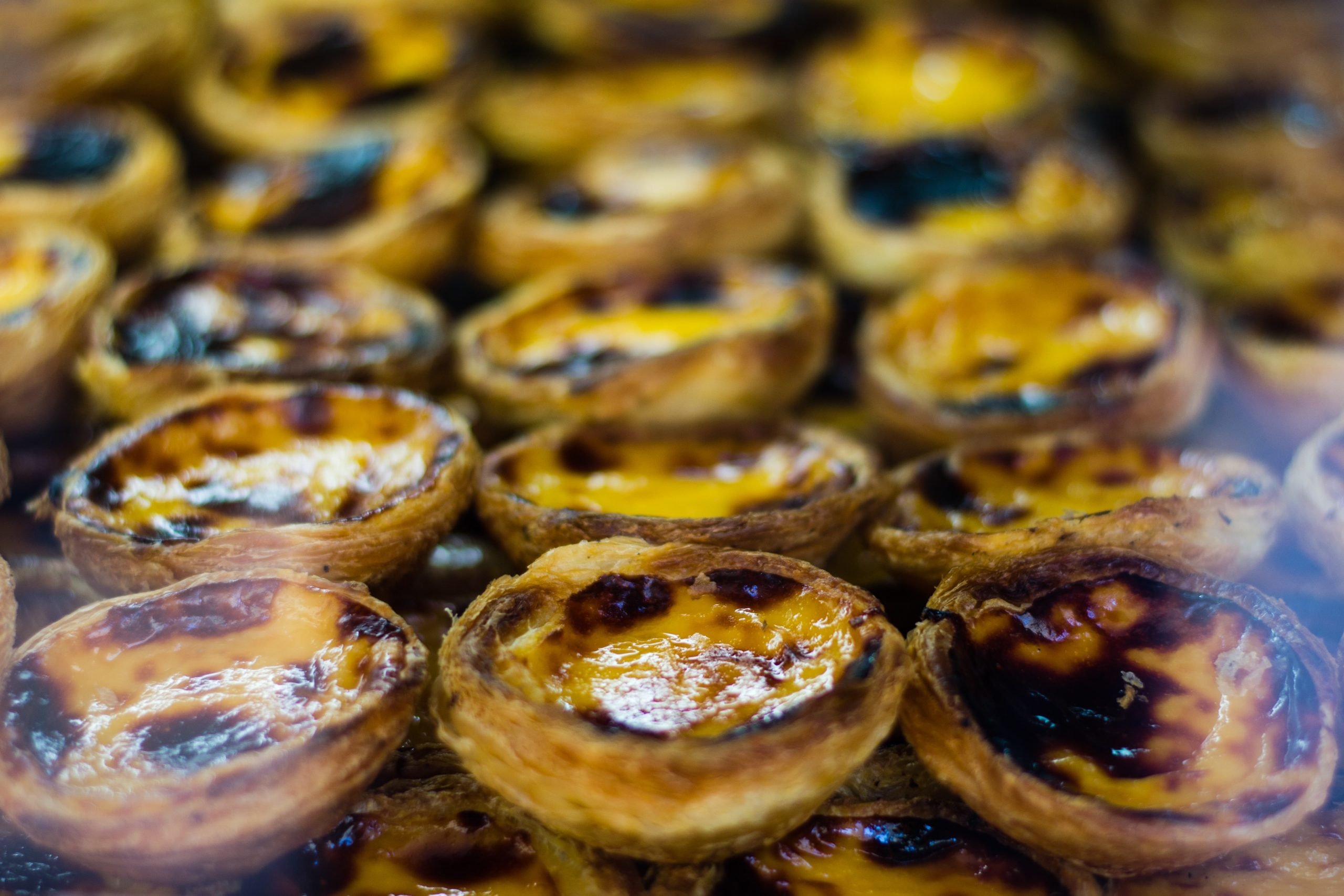
Example – “Trouxe-te um pastel de nata, só um miminho.”
Translation – “I brought you a custard tart, just a little treat.”
12. Passeio
Technically, passeio means a walk or a stroll, but in Portugal it has a deeper sense. It is about enjoying life slowly wandering through the streets, stopping for a coffee, and watching the world go by. It is about being truly present.
Example – “Ao domingo gosto de fazer um passeio à beira-mar depois do almoço.”
Translation – “On Sundays I like to take a walk by the sea after lunch.”
13. Embriagado de sono
Literally “drunk with sleep,” this lovely phrase describes that half-dreaming, drowsy state between sleep and wakefulness. It often refers to children in pajamas who can barely keep their eyes open.
Example – “O menino estava embriagado de sono e mal conseguia manter-se de pé.”
Translation – “The little boy was drunk with sleep and could barely stand.

14. Barrigudo / Barrigudinha
A playful word meaning “big-bellied,” but used affectionately, never harshly. You might use it to describe a plump pet, a round-bellied granddad, or a friend you adore. It is teasing in tone but full of warmth.
Example – “O meu gato está tão barrigudo que parece uma almofada.”
Translation – “My cat is so round-bellied he looks like a cushion.”

15. Cusco / Cusca
A cusco (male) or cusca (female) is a nosy person, someone who loves to gossip or peek into everyone’s business. It is often used humorously rather than critically, and almost every Portuguese neighborhood has one.
Example – “A vizinha é tão cusca que sabe tudo o que acontece na rua.”
Translation – “The neighbor is such a gossip that she knows everything happening on the street.”
The Charm of European Portuguese
These fifteen words capture what makes European Portuguese so charming. They show a language that values emotion, humor, and connection, one that lingers at the table, improvises when things break, and expresses love in tiny, meaningful ways.
Learning these words helps you step into the Portuguese way of life: slow, affectionate, resilient, and always ready with a story.