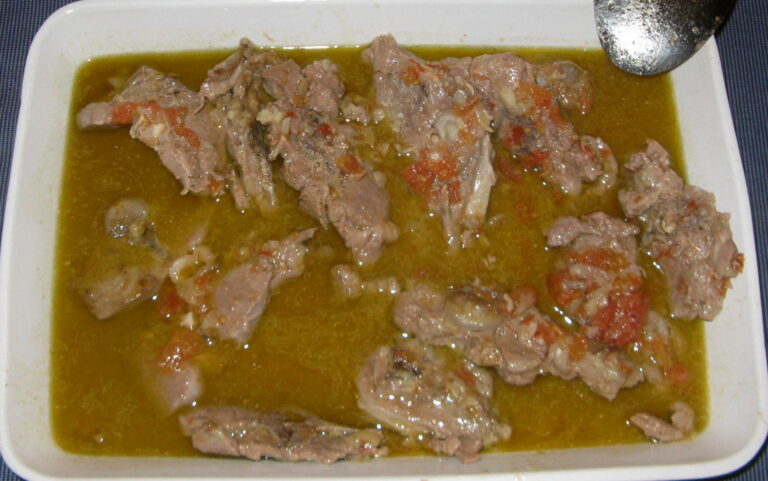
Lamb meat, which is very tender and succulent, is one of the most produced meats in Alentejo. The stew is the most popular dish made with this specific meat, not only because of the way it is cooked but also because of how it is presented.
This particular recipe is from a municipality in Évora District called Reguengos de Monsaraz. It is a true gem of Portuguese traditional cuisine. The popularity of lamb meat is showcased, to a large extent, by the municipality’s gastronomic week, which is dedicated specifically to the cooking and tasting of lamb dishes. This stew is one of that week’s most well-known, sought-after culinary delights.
Portuguese Lamb Stew Recipe
Ingredients (8 people)
2 kg (4.4 pounds) of lamb meat
500 grams (1.1 pounds) of onion
2 tablespoons of flour
200 grams (0.44 pounds) of lard
5 garlic cloves
1 bay leaf
1 tablespoon of peppercorns
1 dessertspoon of sweet paprika
1 small chili pepper
1 kg (2.2 pounds) of homemade bread
Salt
Instructions
Start by cutting the lamb meat into pieces, and dip them in flour.
Then, take 3 spoons out of the 200 grams of lard, and place the remaining inside a clay pot.
Heat the clay pot with the lard inside it for a bit, place the meat on it, and let it fry for another bit until it is brown.
On the side, in another clay pot, put the other 3 spoons of lard and braise the chopped onions, the sliced garlic cloves, and the peppercorns. Cook until the onions are soft and transparent.
Then, add the already browned meat to the second clay pot, the remaining seasonings (bay leaf, sweet paprika, chili pepper, and salt), and enough water to make the stew (start with a bit of water, and you can add more later on, if you think it is necessary).
Cover the pot and let it cook for one hour and a half, more or less, at medium/low heat.
When it is done, taste it and rectify the seasoning if needed.
When serving, slice the bread and pour the broth on top. The meat will be served on the side, in another recipient, but at the same time as the bread with the broth.
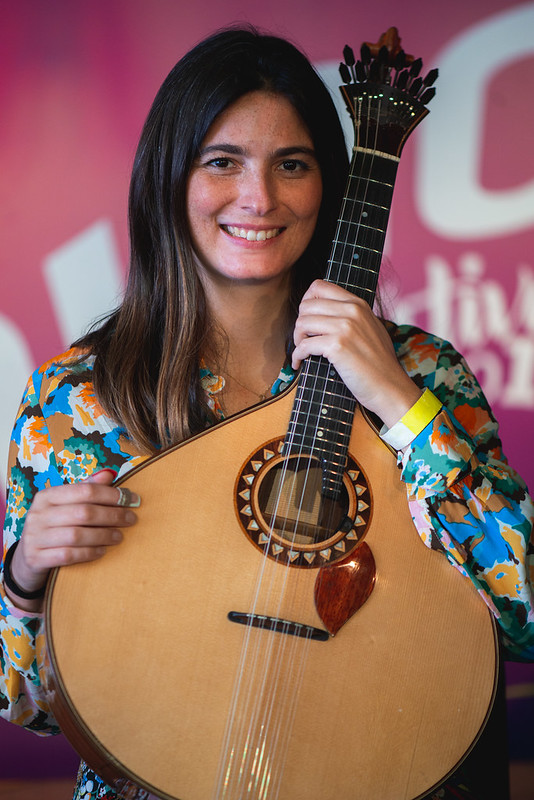
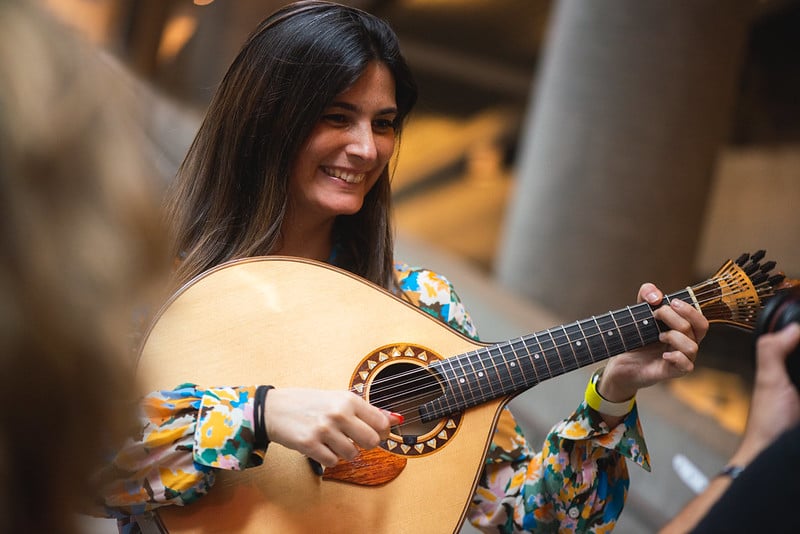
Marta Pereira da Costa was born in Lisbon in 1982 and started her musical training with the piano at the age of 4 and studied classical guitar at 8. At 18, she began learning the Portuguese fado guitar under Carlos Gonçalves, Amália Rodrigues’ guitarist. Although she graduated in Civil Engineering and worked in the field for eight years, she left her profession in 2012 to dedicate herself entirely to music.
Photo by MIMO Festival, Flickr
She is recognized as the first woman to professionally play the Portuguese Guitar in fado, blending it with jazz, world, and Portuguese music. This innovation led to her receiving the “Instrumentalist Award” from the Amália Rodrigues Foundation in 2014. In 2016, Marta released her debut album with Warner Music Portugal, featuring contributions from global and Portuguese musicians like Richard Bona, Dulce Pontes, Camané, and Rui Veloso.
Her international performances have taken her across Brazil, the USA, Canada, and Europe, with appearances at venues like Teatro Tivoli, NOS Alive, MIMO Festival, and Lincoln Center.
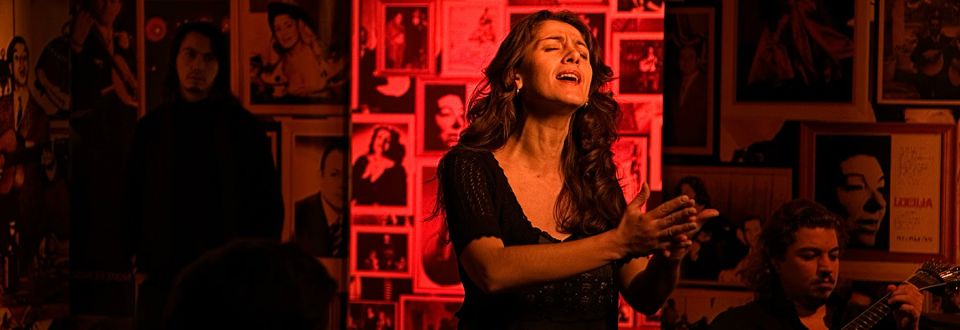
Marta’s stage presence is captivating, marked by a blend of sensitivity, intensity, and dynamism. Her performances, whether in intimate settings or large outdoor events, are unique and reflect her deep connection with the Portuguese guitar.
New York Music Daily reflected, “In the world of fado, she’s a rarity, as a woman instrumentalist, composer and bandleader.”
Performances and Album
Marta frequently visited Lisbon’s Clube de Fado, learning from masters like Mário Pacheco and Fontes Rocha. She accompanied notable singers such as Cuca Roseta and Rodrigo Costa Félix. Marta also performed with famous artists like Mariza and Carlos do Carmo. She joined Mário Pacheco’s group, contributing to concerts worldwide, especially after their 2005 album, recognized by Songlines magazine.
Pereira da Costa participated in Jaime Roldán’s CD on the track “Pasa.” In 2008, she was a soloist in “Mãe” from her husband Rodrigo Costa Félix’s album. She recorded on Rodrigo’s second CD, “Fados de Amor,” marking the first time in Fado history that a Portuguese Guitar was exclusively played by a woman. Her eponymous solo album debuted in 2016.
Performing Fado on the International Stage
National Public Radio (NPR)’s YouTube channel, which started in 2008 and now has over 8.5 million YouTube subscribers, recently showcased Pereira da Costa on its Tiny Desk Concert series. The Tiny Desk Studio is actually the desk of NPR Music’s All Songs Considered host Bob Boilen, which is located in Washington, D.C., USA, and has featured the likes of Coldplay, Ed Sheeran, Taylor Swift, and Jacob Collier.
Marta Pereira da Costa’s fingerpicking prowess delights in her Tiny Desk appearance, appearing alongside second guitarist João José Pita Junior and percussionist Pedro Segundo. Her entire performance is a musical journey through Portugal, from land to sea and everything in between. She plays four songs during a nearly 21-minute performance starting with “Terra” all the way through “Dia de Feira.”
You can enjoy her performance below.
Marta Pereira da Costa’s journey is a testament to innovation in traditional music forms. She has redefined the role of the Portuguese Guitar, creating a new path for the instrument and inspiring future generations of musicians.
To see Pereira da Costa’s upcoming schedule, please check her schedule here and get more information on Facebook.
Fado Tours in Lisbon
If you would like to catch fado in Lisbon, Pereira da Costa’s hometown, there are a number of options to try.
Fado in Chiado offers a daily live traditional fado show. It features a guitar, viola, and two singers. The show lasts under an hour in Chiado, immersing guests in fado’s melancholic vibes. Skip-the-line tickets are available, with drinks extra.
Explore Alfama’s fado roots with a guided tour, including Mouraria. The tour involves a traditional fado house visit and a typical dinner in Alfama. The tour includes a fado show entry and a drink.
For romance, try a sunset walking tour in Lisbon, ending with a fado show and dinner. Learn about Alfama’s heritage and enjoy ginjinha liquor. Post-sunset, savor a 3-course meal with fado entertainment.
For a unique experience, join a 4-hour walking tour with a fado singer. The tour covers historical streets, public squares, and taverns. Enjoy live fado performances and Portuguese snacks like chourico and caldo verde.
One of my favorite poems is Dylan Thomas’ “Do not go gentle into that good night” and there’s one particular line that always makes me think of lighthouses – “rage against the dying of the light.” There is something almost magical about lighthouses with their incessant lights beaming towards the seemingly infinite ocean ahead.
Well, it so happens that Portugal has almost 1800 kilometers of coastline, nearly 1000 of those on the mainland, so lighthouses are not too hard to find.
This got me thinking, after hearing about the mythical Nacional 2, how it would be really cool to drive from Viana do Castelo all the way up North to the legendary Cape St. Vincent, the southwesternmost point in mainland Europe, before ending the trip at Vila Real de Santo António, a stone throw away from Spain.
Did that sound intriguing? What if I told you, as you might have already figured out, that this whole road trip also takes you along Portugal’s best beaches? That ought to make you excited, right? Especially if you’re into surf and water sports since Portugal has some of the best conditions for those. So let’s dive in, we have a long journey ahead. A journey that will take us through ten of Portugal’s districts and leave us craving for more.
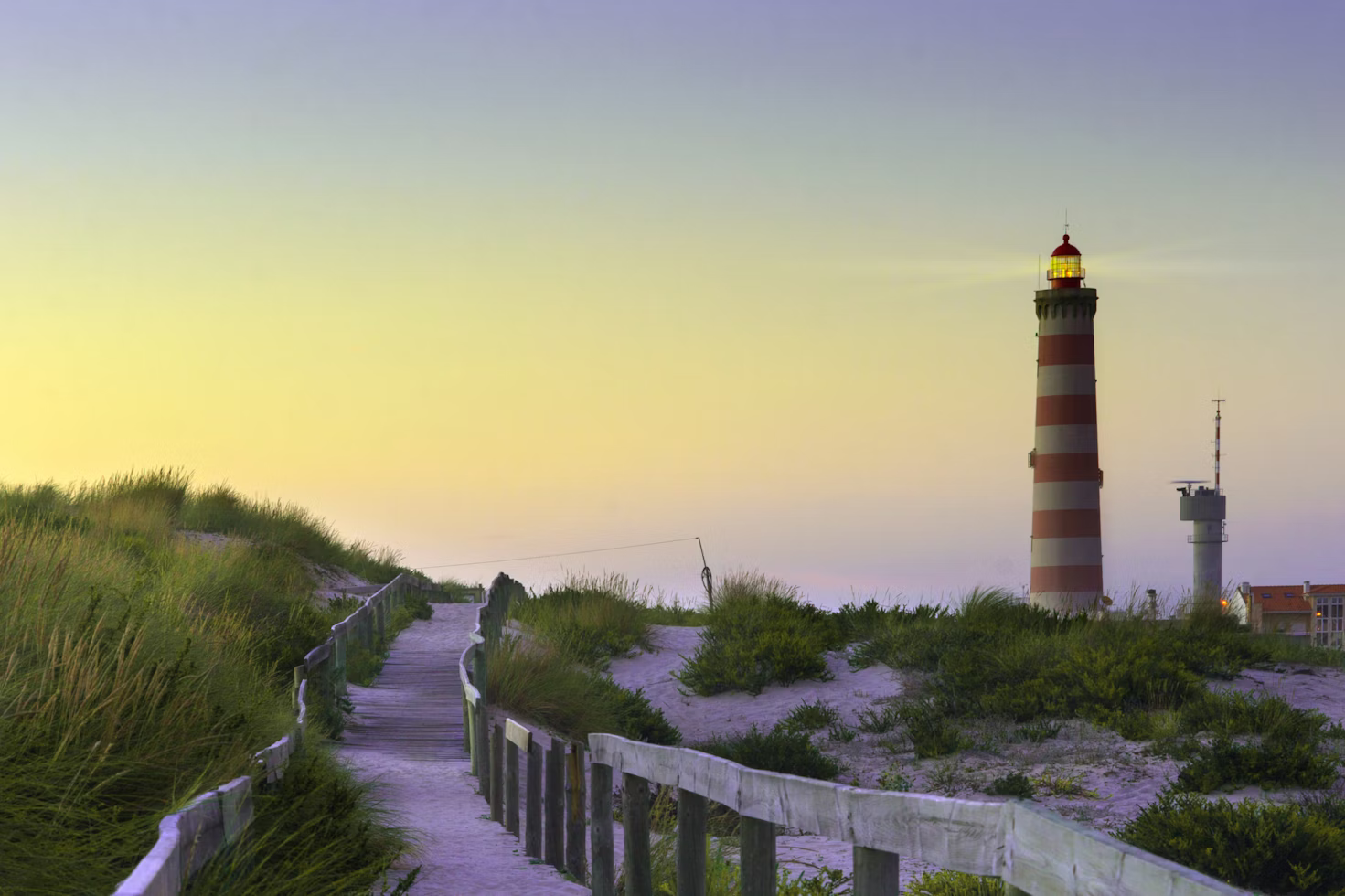
Barra Beach Lighthouse, Photo by Paulo Resende, (Unsplash)
LIGHT… HOUSE?
First things first. What is, after all, a lighthouse? Is it just a spot along the coast with a light pointed toward the sea? Well, it is that, but not only that. A lighthouse is a clearly visible elevated structure on top of which a light is placed to aid navigation. It essentially consists of the building (the “house” in “lighthouse”), the light source, and the optical apparatus.
Lighthouses are placed on coasts, islands, shallows, etc., and sometimes they’re even mounted on special boats so that they are a visible mark at sea. The characteristics of a lighthouse are its color, character, period and phases, light intensity, and range. By day, the shape and color of the lighthouse building serve as recognition, and by night, the characteristics of the light.
So, no, contrary to popular belief, lighthouses aren’t just useful at night. Sure, it serves to guide navigators by light at night, but it also serves to guide them by the body of the building by day. Navigators can usually tell where they are by recognizing the distinct shape of the lighthouse ahead, which is why lighthouses tend not to have similar designs.
A BIT OF HISTORY
The first references to the use of bonfires kept at conspicuous points or in towers by fishing communities for the reference of navigators, and later by religious brotherhoods, date back to the beginning of the 16th century.
In Portugal, the first structure to be classified as a lighthouse was ordered to be erected in 1528 at the mouth of the River Douro by Bishop Miguel da Silva, at São Miguel o Anjo. Next to the site where, until 2008, the Cantareira lighthouse was in operation.
There are also references to a lighthouse erected by the Bishop of the Algarve, D. Fernando Coutinho, in the convent of São Vicente, sometime between 1515 and 1520, and that, in 1537, the friars of the Brotherhood of Nossa Senhora da Guia de Cascais built a tower to serve as a lighthouse.
However, it wasn’t until February 1, 1758, when the Marquis of Pombal issued a decree, that the lighthouse service became an official organization, entrusted to the Board of Trade, following which the construction of lighthouses was ordered, the first of which was Nossa Senhora da Luz in 1761.
Since then, responsibility for the operation and maintenance of the structures has passed through various entities until, in 1892, it was finally assigned to the Ministry of the Navy and Overseas Territories, which is part of the Ministry of Defense nowadays.
OUR JOURNEY BEGINS
Just a heads up before we turn on the ignition. Portugal has 56 lighthouses scattered along the coast, 30 of them on its mainland. Some are imponent buildings, others are simple structures. But, in this article, we’ll focus on the fourteen lighthouses in mainland Portugal that are open for visits.
Before you visit them, make sure to check their websites because there are different operation times depending on the season and they might be going through renovations.
Finally, this road trip has the particularity of allowing you to choose which roads to take. You can drive along the highway from Viana do Castelo to Lisbon and for most of the Algarve coastline. But, if you have the time and feel like exploring other locations during your trip, I highly recommend that you take the more scenic routes along the coast.
MONTEDOR LIGHTHOUSE
We start our journey at a centennial lighthouse. In fact, it was built in 1910, the same year Portugal became a republic. In civil architecture, the lighthouse has a U-shaped plan with the entrance facing north and the tower in the center. The building is made of stonework and wedges of split stonework, ending in a double frieze.
This lighthouse is located in Viana do Castelo, one of the most beautiful cities in the north of Portugal. Its participation in the Portuguese Discoveries and, later, in cod fishing shows its traditional connection to the sea, so it was always an obvious spot to build a lighthouse.
Viana do Castelo is also considered a “Mecca of Architecture” thanks to the many important names in contemporary Portuguese architecture who have designed the city’s facilities and spaces. From the hill of Santa Luzia, you can see the privileged geographical location of the city, next to the sea and the mouth of the River Lima. This breathtaking view and the Temple of the Sacred Heart of Jesus, a revivalist building by Ventura Terra from 1898, can be the starting point for visiting the city.
BOA NOVA LIGHTHOUSE
Leça da Palmeira, Photo by Rui Alves (Unsplash)
You might feel drawn to Porto, but let me make a case for Leça da Palmeira. And I’ll start with its lighthouse. The Boa Nova Lighthouse, or Leça Lighthouse, is a white conical tower 46 meters high and 57 meters above sea level, inaugurated in 1927. It has an annex building housing a museum with a collection related to lighthouses that is well worth a visit.
Leça da Palmeira is a working-class city, intrinsically linked with some of the most important industries in the country. Up until recently, it was home to the largest oil refinery in Portugal, it is right next to Matosinhos which is home to one of the most important ports in the country, and it holds a long fishing tradition.
As a result of being a city born around its rich sea and fertile land, traditions are divided between activities linked to the ocean and those linked to agriculture. In preserving and disseminating these traditions, we should highlight the work carried out by the Rancho Típico da Amorosa, which is recognized worldwide and has toured many countries.
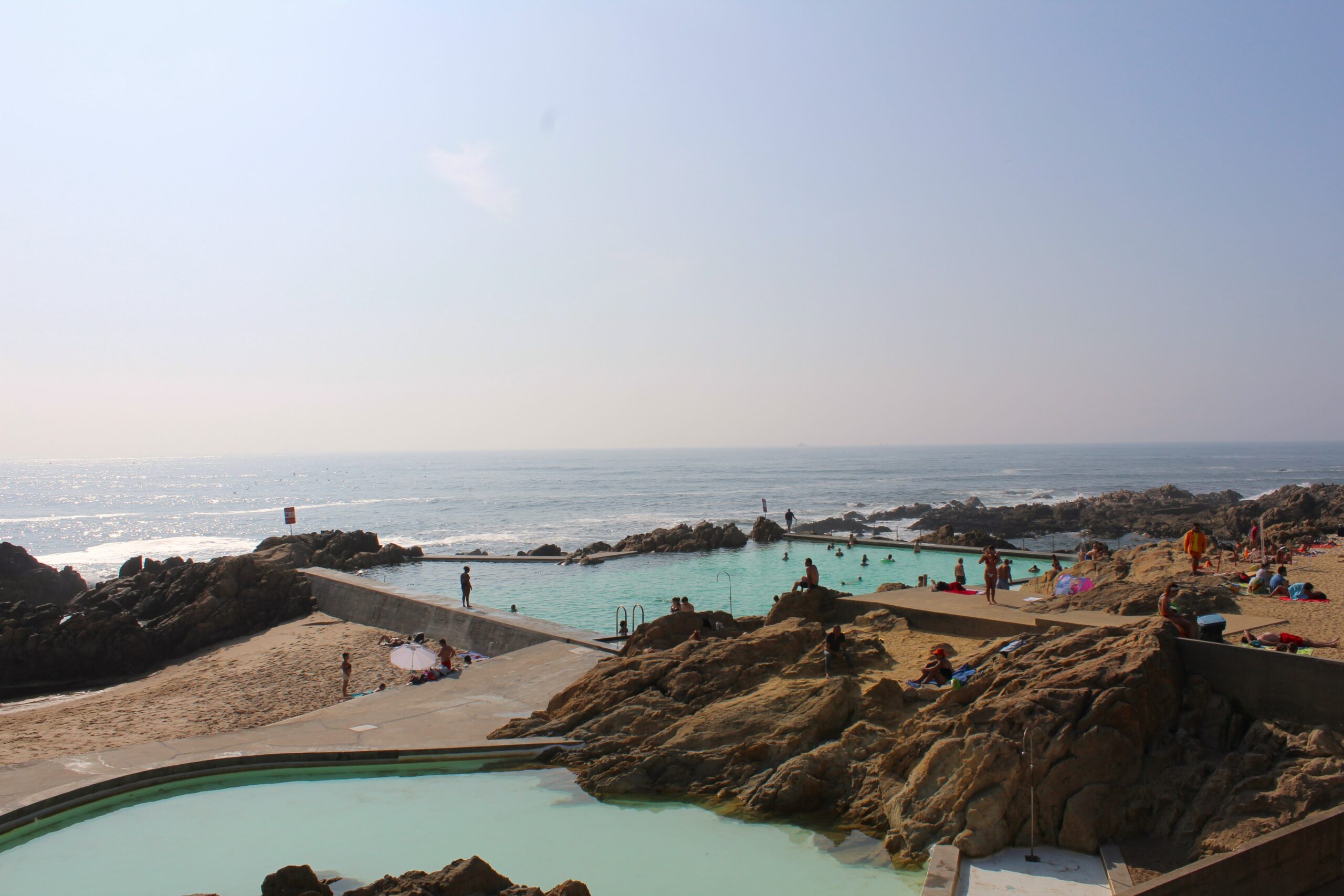
Leça da Palmeira is well-known for the Boa Nova Tea House and the Marés Swimming Pool, both works by the illustrious architect from Matosinhos, Siza Vieira, and both national monuments. But if you’ve brought your surfing board, you’re in for a treat. With a long stretch of sand bathed by the sea with strong waves, the Leça da Palmeira beach offers excellent conditions for surfing, bodyboarding, and kitesurfing, especially at its northern end, where it borders the Aterro beach.
BARRA LIGHTHOUSE
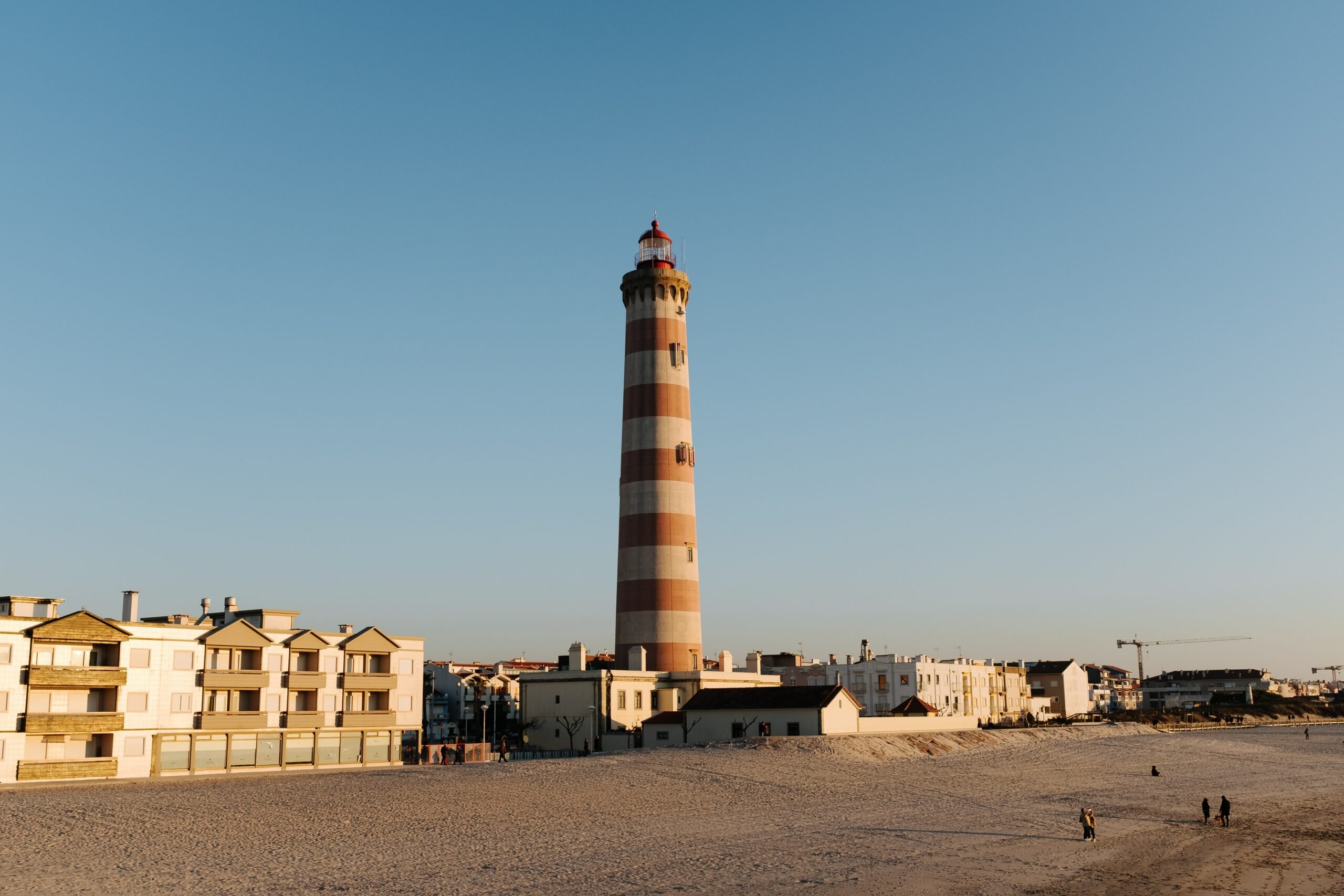
Barra Lighthouse, Photo by Ricardo Resende (Unsplash)
Leaving the Porto district behind, you start to feel a bit itchy to visit a large city. Well, welcome to Aveiro, also known as “Portugal’s Venice”. And it’s very easy to understand why as soon as you start walking through the city’s downtown with its quaint canals where the traditional moliceiros glide through the calm waters.
The Barra Lighthouse is the largest lighthouse on the Portuguese coast and the second largest on the Iberian Peninsula. It was built in the 19th century, electrified in 1936, and automated in 1990. From the top of the lighthouse, you can enjoy an excellent view over the beaches of Ílhavo and the surrounding coastline.
But canals are not the only highlight when you visit Aveiro. The pastel-colored Art Nouveau buildings are iconic and there are few places more Instagrammable in Portugal. One of those just happens to be the contrasting colorful Costa Nova beach houses, with their iconic, stripped façades, they delight any visitor.
While you’re in town, make sure you visit the famous fish market, home to some of Aveiro’s best seafood restaurants. Nearby you’ll find numerous restaurants and a wide range of stores and bars. Choose one of the traditional cafés as you stroll around the city and taste the divine ovos moles, which are the district’s specialty dessert.
CAPE MONDEGO LIGHTHOUSE
Figueira da Foz, Photo by Paulo Victor (Unsplash)
Located in the Boa Viagem Forest Park, the original tower dates back to the 19th century and served as a lighthouse until the early 20th century. The building consists of a central tower and two longitudinal bodies and the initial design had a second-order Fresnel lenticular optic powered by olive oil.
The lighthouse is located just a few kilometers north of Figueira da Foz. And Figueira da Foz has the peculiarity of being virtually unknown to foreigners. But to the Portuguese it is known for three things: its 120-year-old casino, its kickass New Year’s firework displays, and its raging Carnival. It’s not exactly Vegas, but you’re bound to have a fun time while you’re there.
Considered the “Queen of the Silver Coast” due to its long beaches, tourism is indeed one of its main economic resources and is one of the main tourist centers in the country, surrounded by the Atlantic Ocean, the Mondego River, and the densely wooded Boa Viagem mountain range, which gives it its unique characteristics.
One of the charms of Figueira da Foz is the beach with its striped wooden bars and its expanse of soft white sand. Known as “Praia da Claridade“, this vast stretch of sand was already favored by the aristocratic class at the end of the 19th century. Its 10 km-long waterfront promenade, with a river and seafront, allows for long walks or bike rides along the cycle path that runs along the banks of the River Mondego and the Atlantic Ocean.
PENEDO DA SAUDADE LIGHTHOUSE
The Penedo da Saudade Lighthouse, consisting of a 32-meter-high tower, which gives it an altitude of 55 meters, went into operation on February 15, 1912. One of the most significant periods in the lighthouse’s history was between March 1916 and December 1919, when it was switched off due to World War I.
This lighthouse is located in São Pedro de Moel, one of the most emblematic beaches on the central Portuguese coast, located on the border between the Leiria National Forest and the Atlantic Ocean. The town and the beach offer a fusion of sea, pine forest, history, architecture, and poetry, enveloped in an atmosphere of tranquility.
These characteristics, together with its privileged geographical location, give São Pedro de Moel a stamp of natural beauty and make it one of the most beautiful and attractive places in mainland Portugal. So much so that, as far back as the 14th Century, the king granted it as a gift to the noblemen.
Just a few kilometers further inland, you’ll find Marinha Grande. Fueled by the abundance of raw materials needed for its manufacture, firewood, and sand, this city has become the center of Portuguese glass and crystal manufacture, which bears the mark of the mastery of many generations of worker-artists in the production of unique pieces of renowned quality throughout the world.
CAPE CARVOEIRO LIGHTHOUSE
Located on the Peniche Peninsula a few meters from the Church of Nossa Senhora da Vitória, this quadrangular masonry tower lighthouse with a beautiful red balcony overlooks the Atlantic 57 meters from the shoreline. This lighthouse is one of the few Portuguese lighthouses ordered to be built by the Pombaline decree of 1758 and its history dates back to 1790, when it first shone its light over the sea of Peniche.
Peniche and the sea are inextricably linked. It is one of Portugal’s largest traditional fishing ports and a major Atlantic center for maritime tourist activities. In addition to fishing, which has naturally always been one of the population’s sources of income, Peniche is also known for the art of bobbin lace, which the women dedicated themselves to perfecting while the men were at sea.
Before heading to the beach, a visit to Peniche should include a walk through the historic center. In addition to the Sanctuary of Nossa Senhora dos Remédios, the Churches of São Pedro, and Misericórdia, the highlight is the Fort of Peniche, built in the 17th century to defend the coast.
It was important to Portugal’s history at various times, but it’s important to note that its most recent contribution was as a political prison during the Estado Novo, where some of the most important public figures in the resistance to the regime were held.
BERLENGA LIGHTHOUSE
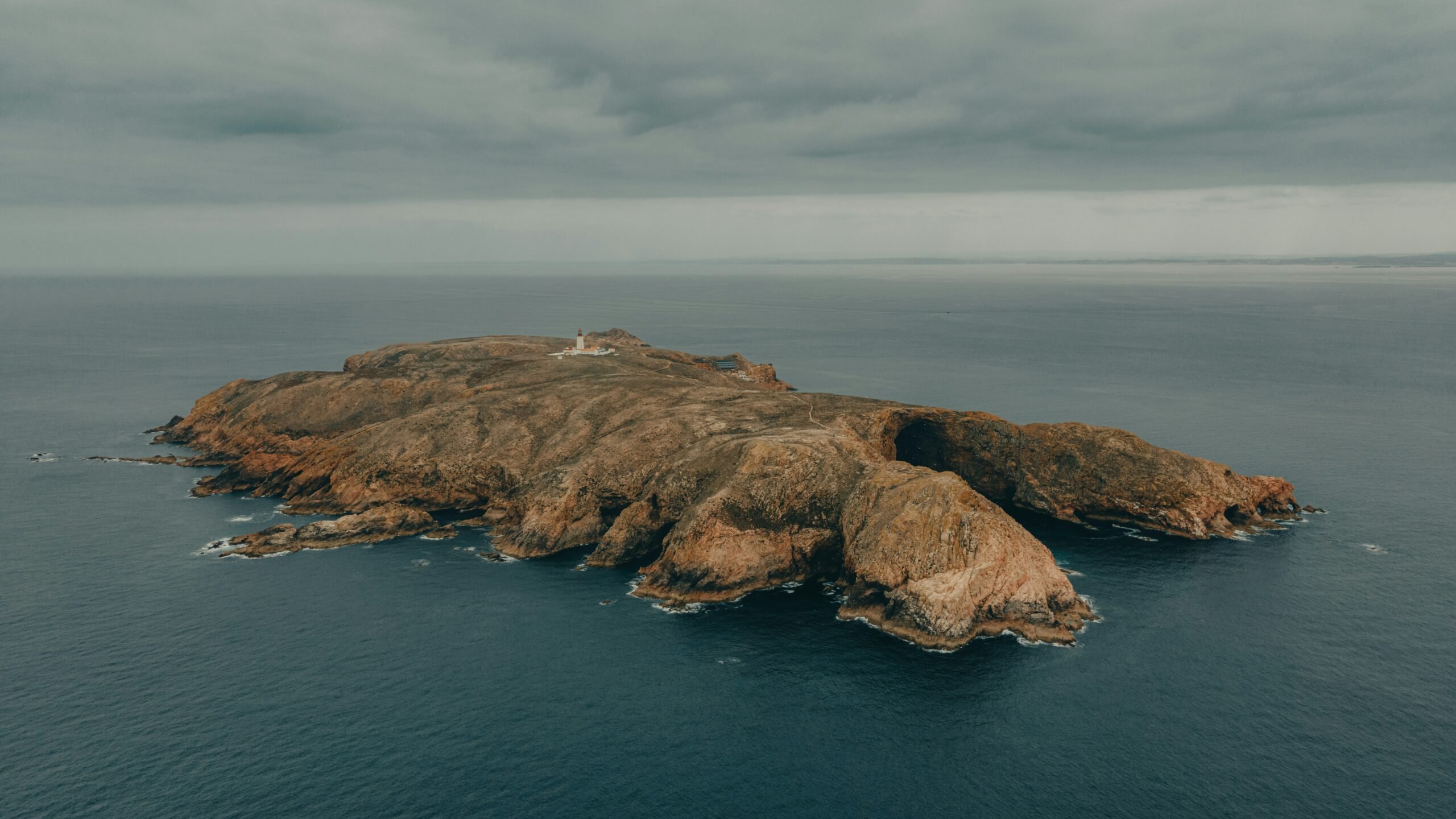
Berlenga Island, Photo by Sir Simo (Unsplash)
Now, to visit this one, you’ll need to park your car and put your road trip on hold for a bit. Head to Peniche’s port and hop on a boat headed to the Berlengas islands, which is where you’ll find this next lighthouse. I promise you, the boat ride might be a bit bumpy, but it’s well worth it.
The Berlengas are an archipelago of granitic islands located 15 km off the west coast of Peniche. The archipelago is made up of 3 islets: Berlenga Grande, Estelas, and Farilhões-Forcados, but it is Berlenga Grande that stands out due to its larger size. Here you’ll find nature at its purest, landscapes that leave you speechless, and a sea watercolor that’s simply irresistible. It’s one of the best places for diving and birdwatching in Portugal.
The confluence of the Mediterranean and Atlantic climates has created a unique ecosystem in the world with characteristic fauna and flora, together with geomorphology distinct from that of mainland Europe, in the Berlengas Islands. The fauna and flora are unique, which makes the Berlengas a biological heritage of high conservation interest.
CAPE ROCA LIGHTHOUSE
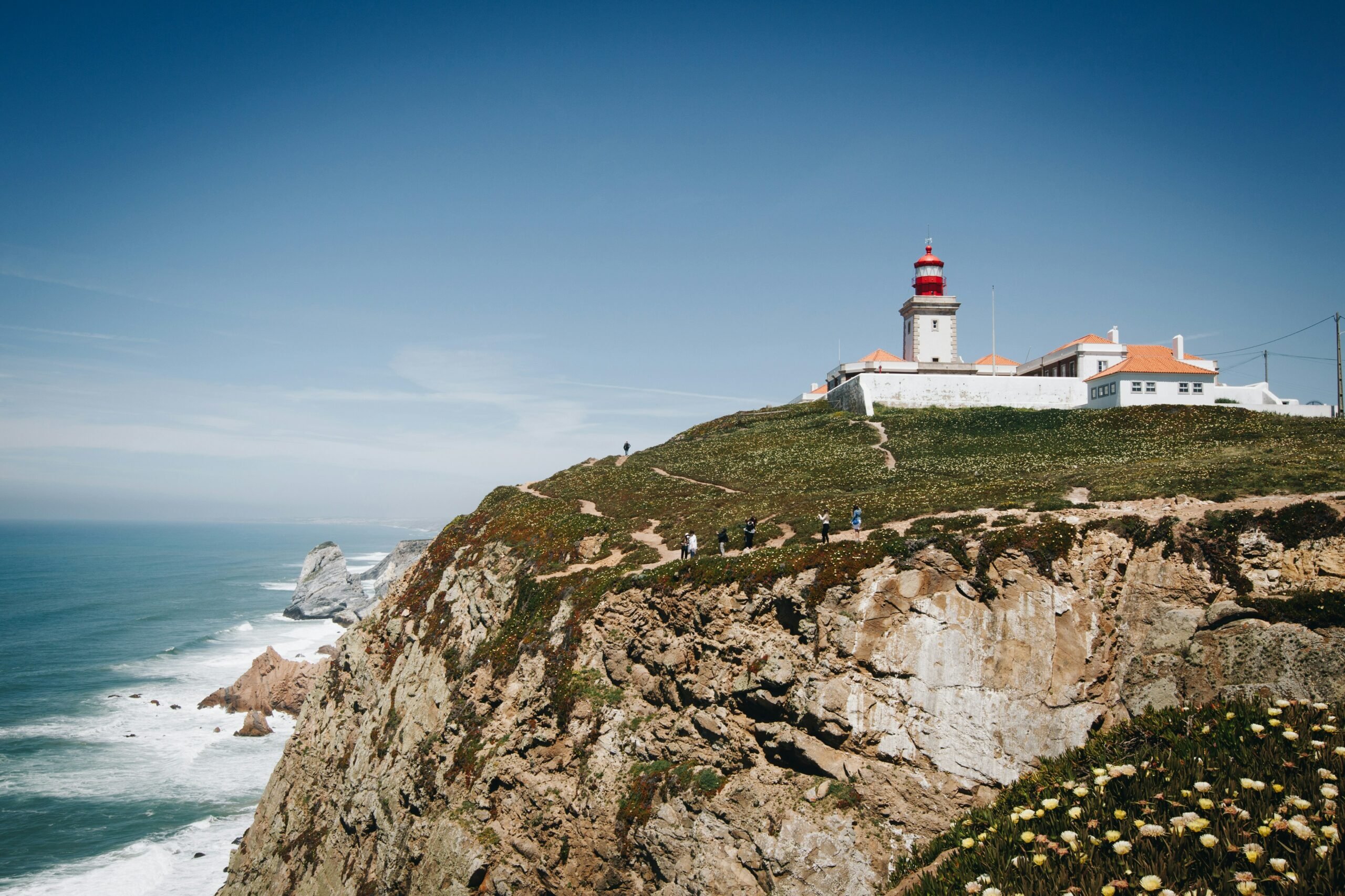
Cape Roca Lighthouse, Photo by Claudio Schwarz (Unsplash)
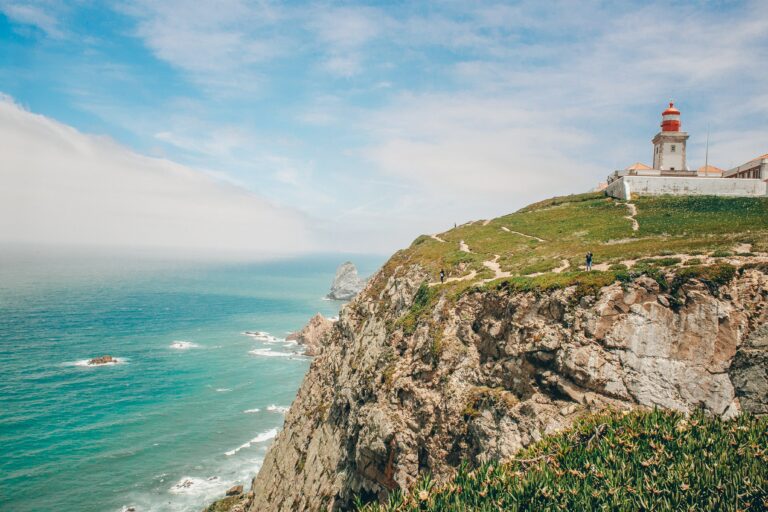
Cabo da Roca is the most westerly point on the European continent, located at the end of the Serra de Sintra, and one of Portugal’s most emblematic sites. Dating back to 1722, it consists of a 22-meter-high tower and its light has a luminous range of around 26 nautical miles, approximately 48 kilometers.
Sintra is a town located to the west of Lisbon and in the center of the Serra de Sintra, in a region of pine-covered hills. The slightly milder climate than the capital attracted Portugal’s nobility and elite, who built exquisite palaces, extravagant residences, and decorative gardens there.
The variety of fascinating monuments and historic buildings make Sintra a highly regarded tourist destination. Most travelers follow the popular route of a day in Sintra, which includes visits to the National Palace, with its Gothic architecture, the ruins of the Moorish Castle, and the splendid Pena Palace.
However, to fully discover Sintra, you should also visit Quinta da Regaleira, the grand Monserrate Palace, and the austere Capuchos Convent.
CAPE ESPICHEL LIGHTHOUSE
Sesimbra, Photo by Alexandre Contador (Unsplash)
At an altitude of 168 meters above sea level, the Cape Espichel Lighthouse has a light range of approximately 48 kilometers and produces a white light that emits three lightning bolts every 12 seconds. Don’t forget to visit the Sanctuary of Nossa Senhora of Cape Espichel, where dinosaur footprints can be seen on the cliffs.
The cape is located near the picturesque fishing village of Sesimbra, situated next to a sheltered bay, on top of the hill, around the Moorish castle which is now a must-visit point from where you can admire a truly breathtaking view of the village and the sea.
It was the wealth of fish in the Sesimbra Sea that led the population to come down from the top of the hill and move to its surroundings, turning the town into one of the region’s main fishing ports.
Special mention should also be made of the excellent regional cuisine, in which seafood and fresh fish are the main ingredients, and which can be enjoyed in the many restaurants here.
CAPE SARDÃO LIGHTHOUSE
Sudoeste Alentejano Natural Park, Photo by Miguel Bernardo (Unsplash)
This lighthouse has a special place in my heart because it was the first one I ever visited, back when I was a kid, during Summer vacation. I was fascinated by its 17-meter-high tower and I loved to climb all the way up to learn how its mechanisms work. I distinctly remember the sun setting on the horizon and seeing the light being turned on.
If you look at a map, you’ll quickly realize that there are no big cities around this lighthouse. In fact, there are barely any towns or villages, so make sure you come prepared. But the great thing is that the lighthouse is located in the Southwest Alentejo Natural Park, an incredibly beautiful and peaceful location.
The daytime breeze makes you forget about worries, rushing around, and bad moods. Here, everything is relative. All that matters is the communion of the senses. The overwhelming beauty and intoxicating peace will “force” you into introspection, an abandonment of the superfluous, and an easy search for happiness.
CAPE OF ST. VINCENT LIGHTHOUSE
Cape of St. Vincent Lighthouse, Photo by Alexander Edwards (Unsplash)
If you like to have neatly brushed hair, you might want to skip this one, as it’s probably the windiest place I’ve ever been to. It’s actually a pretty cool location too because the lighthouse itself is located in the same complex as the fortress of Sagres and the Corvo Convent.
Sagres, which is located at the crossroads between the Mediterranean Sea and the Atlantic Ocean, has been a port for fishermen and traders from various nations since time immemorial, but it has also been plagued by corsairs. It is the embodiment of the Portuguese sense of discovery.
The policy of Portuguese expansion in the 15th and 16th centuries led to the foundation of Vila do Infante. Thus, Vila do Infante and Sagres are intertwined in the course of time. It is a place of memory where nature, the sacred and man have always combined in a symbiotic way, generating religious cults and historical, political, and tourist myths, making it well worth a visit.
ALFANZINA LIGHTHOUSE
Portimão, Photo by Tânia Mousinho (Unsplashed)
The Alfanzina Lighthouse consists of a white, quadrangular masonry tower with an attached building, topped by a red cylindrical lantern. It’s located in a prime location because it’s right between the major beach destinations of Portimão and Armação de Pêra, and quite close to the cool town of Lagoa.
Portimão, with its picturesque turn-of-the-century historic center, the photogenic Arade Estuary, the trails along otherworldly cliffs, the superb views from the belvederes, the natural silence of the lively Ria de Alvor, the hot summer evenings wandering along the Passeio da Ribeirinha or in the Marina, ending with bar-hopping on Avenida Tomás Cabreira, is an absolute must.
In Lagoa, you can visit what has already been voted one of the most beautiful beaches in the world, the Marinha beach, or one of Portugal’s most famous caves, the Benagil caves. You can also hike over the cliffs, along the 7 Hanging Valleys, a route that has already been voted the best in Europe for walking.
SANTA MARIA LIGHTHOUSE
Farol Island, Photo by Felipe Castilla
The Santa Maria Lighthouse, better known simply as “Farol“, is located at one end of Culatra Island in Faro, which the locals call Farol Island. There’s a boat that takes you specifically to Farol and another to Culatra from Olhão.
Let me tell you that this is one of my favorite spots to relax and sunbathe in Portugal. The island has a village full of white, blue, and yellow houses built by the local fishermen that give it a very charming look. There are restaurants on the island and the fish and seafood are divine, so make sure you don’t skip lunch!
After that, don’t forget to visit Faro, the third most important city in the country, but its monuments and downtown are still a bit underappreciated by the tourists who usually just rush to the beaches around the city. A night stroll through downtown Faro during Summer is a great way to recharge your batteries.
VILA REAL DE SANTO ANTÓNIO LIGHTHOUSE
Vila Real de Santo António, Photo by Adrián Macías (Unsplashed)
Ah, and here we are, our last stop. With a 46-meter tower, a staircase with more than 220 steps, and a range of 48 kilometers, this lighthouse is a landmark on the east coast of the Algarve and still serves today as a reference point for ships navigating in Portuguese and Spanish waters.
The long-named town where the lighthouse is located was founded in 1774, by the express will of the Marquis of Pombal, near the mouth of the Guadiana. The city is an important historical testimony due to the fact that it was built from scratch in just two years, and the neoclassical layout of Lisbon’s Baixa Pombalina was followed, by a series of straight, perpendicular streets.
And, with the Spanish city of Ayamonte just a bridge away, Vila Real de Santo António, with its warm and calm waters, away from the crowds of central Algarve, feels like the perfect place to sit on the sand and enjoy the end of this trip that took us across the whole country both vertically and horizontally.
LAST THOUGHTS
So, what did you think of Portugal’s lighthouses? Did you notice how different they all were? Which one became your favorite? Don’t forget that there are dozens more and, even if they’re not visitable, you can still appreciate them from the outside.
I hope this trip was worth your time. It’s a great alternative to the Nacional 2 road trip and a great way to discover the whole country while still enjoying the two things that made Portugal famous: the beaches and the food. But now that you’re in southeast Portugal, why not follow the Border Castles Road Trip all the way to the North?
A couple of days before Christmas, the Portuguese Socialist Party rejected the petitions for the parliamentary hearings concerning the twins’ case.
During 2019 and 2020, two Brazilian twins of Portuguese descendancy, who were, at the time, 15 months old, accessed the Portuguese public services, requested, and received a very expensive medical treatment costing the state 4 million euros.
Given the strangeness of the process by which the twins were able to access the treatment, some figures started raising questions about how it all went down. As a result, eventually, it became one of the most mediatic judicial cases in Portugal.
Even though it all happened almost 4 years ago, the situation started being investigated by the Public Ministry only at the beginning of November. According to the intelligence retrieved and released by one of the main television channels in Portugal (TVI), there are 5 mysteries around this case that raise suspicions of possible corruption.
First and foremost, Portuguese nationality was obtained in record time. In order for the twins to be able to come to Portugal and receive the treatment, they needed Portuguese nationality. This is, most of the time, a long process. To provide an example, a girl who was pregnant, whose father was Portuguese, and who came to Portugal for her master’s degree, only got her nationality 8 months after initiating the process.
The twins, on the other hand, got their nationality in 13 or 14 days. Even though there are some cases that are processed faster than others, legal experts who were contacted by the media commented on the strangeness of the quick timeframe.
Second, the special request for the expensive medicine was approved in two days. Note that the medicine Zolgensma is known as ‘the most expensive medicine in the world’ and has a price of around 2 million euros.
At the time, the medicine, which was used by the twins, was not on the market yet. For that reason, the parents had to ask for special authorization of utilization. According to the National Index of Access to Hospital Medicines, this type of special authorization takes an average of 17 days to be accepted. In the case of the twins, it took only two days.
Third, the special request was approved on a Saturday. Apart from taking only two days, the special authorization of utilization requested by the twins’ parents was approved by Infarmed (official entity that regulates the utilization of medicine, among other things) during a weekend. According to the former president of Infarmed, the entity is closed on Saturdays and Sundays. Although it may exceptionally operate if it is a life or death situation, this was not the case.
Fourth, ‘the most expensive medicine in the world’ does not add much in terms of efficacy. One of the letters that reached the Portuguese authorities and that led to the development of the twins’ process mentioned the medicine as being ‘the only hope for a cure’. However, the twins suffer from spinal muscular atrophy and, according to experts, there is no cure for such illness.
Moreover, the official studies made by the relevant authorities state that there is no therapeutic advantage to taking Zolgensma. The only advantage is convenience. Contrary to other medicines, Zolgensma is only administered once throughout the life of the patient.
Fifth, the twins’ parents requested and received four very expensive electric wheelchairs. According to all the invoices, which were analyzed by TVI, the Hospital ordered and paid four wheelchairs for the twins. Each costs around 58 thousand euros. Until today, no other Portuguese children, independently of the case and diagnostic, got one of these chairs. The twins got four, and two of them are still to be taken from the hospital.
How could this all be? How could the Portuguese National Health Service spend more than 4 million euros on a treatment under such circumstances? Note that the twins came to Portugal to receive the treatment, which was subsidized by the National Health Service, and immediately returned to Brazil.
According to the intelligence retrieved by TVI, the mother of the twins confirmed the existence of Presidential influence. She stated: “We used our contacts. (..) I knew the President’s Daughter-in-Law, who knew the Minister of Health that sent an email to the Hospital”.
The Portuguese President, Marcelo Rebelo de Sousa, affirmed at first that he had nothing to do with the process. However, he ended up saying that in 2019 he got an email from his son, Nuno Rebelo de Sousa, about the twins’ cases at Santa Maria Hospital to which he argues he merely forwarded the email to the right institutions.
It’s now public knowledge that his son was highly involved in the case. Notwithstanding, he cannot be the only one to have led to this result.
For that reason, and in order to understand how this could all be, apart from the investigation of the Public Ministry, the opposing political parties requested parliamentary hearings with the twins’ parents, the son of the Portuguese President of the Republic, the former Secretary of State of Health (who was in office between 2019 and 2022), and the former Minister of Health (in office between 2018 and 2022).
However, a couple of days before Christmas, the Socialist Party rejected the hearings. The opposing parties accuse it of keeping the Portuguese citizens from the truth, blocking public interest.
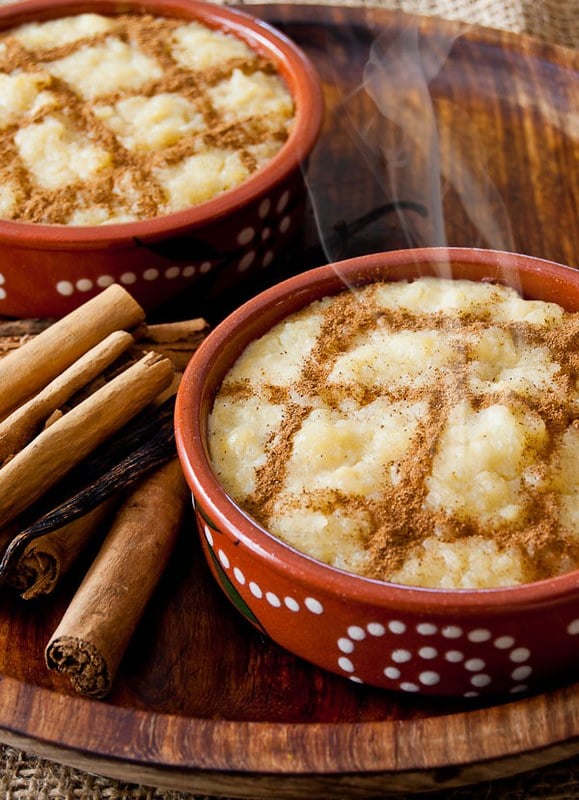
Arroz doce, a beloved Portuguese rice pudding, has a rich history dating back to the sixth century BC. Initially, records show rice boiled in milk with sugar. The dish’s origins trace back to when cane sugar from India reached the Middle East, where rice cultivation was already prevalent.
This dessert, often made with coconut milk in Asia, quickly gained popularity. By the thirteenth century, molasses was replaced with refined sugar in Europe, giving arroz doce its characteristic white color. The eighteenth century marked the moment when arroz doce gained prominence in European cookbooks.
Over time, arroz doce became a popular dessert in Portuguese households, especially during Christmas, Sunday lunches, weddings, and other festive occasions.
What is arroz doce?
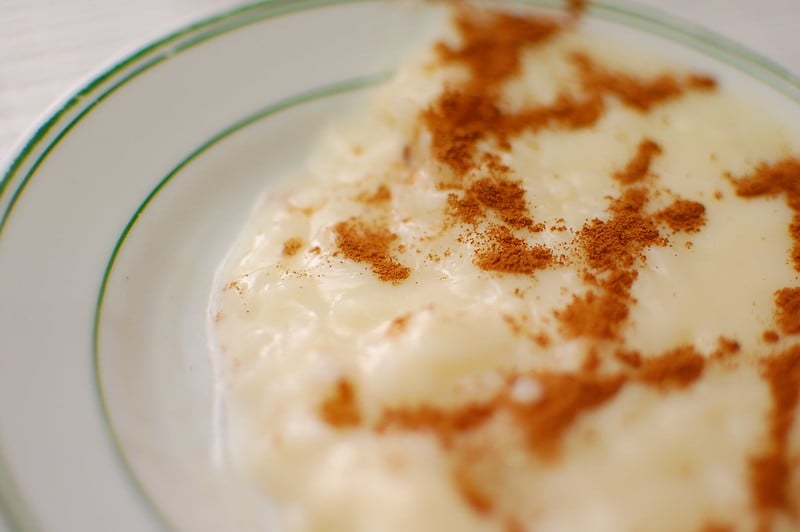
Arroz doce, or Portuguese rice pudding or sweet rice, is a staple dessert in Portugal, embodying the essence of warm and simple comfort food. But what exactly is arroz doce? It’s a creamy, sweet rice pudding, often infused with the subtle flavors of lemon and cinnamon.
Like many traditional Portuguese dishes, arroz doce is deeply rooted in the country’s culinary history, with variations found in every region. A common element across these variations is the use of simple ingredients like rice, milk, sugar, and eggs, turning them into a dish that’s both modest yet also luxurious.
Arroz doce. Photo by Basílio C. Vieira (Flickr)
Arroz Doce, the Classic Portuguese Rice Pudding Recipe
6-8 Portions
Ingredients
1 cup short-grain white rice
4 cups whole milk
1 cup granulated sugar
A pinch of salt
Lemon peel from one lemon
1 cinnamon stick
3 egg yolks, beaten
Ground cinnamon for garnish
Instructions
Begin by rinsing the rice under cold water. In a large saucepan, combine the rice, 4 cups of milk, lemon peel, cinnamon stick, and a pinch of salt. Cook over medium heat, stirring occasionally, until the rice is tender and the mixture has thickened.
Once the rice is cooked, add sugar and cook for an additional 5-10 minutes, stirring continuously. The mixture should have a creamy consistency.
In a separate bowl, beat the egg yolks. Gradually add a cup of the hot rice mixture to the yolks, stirring constantly to temper them. Then, slowly pour the yolk mixture back into the saucepan, stirring continuously.
Cook the mixture over low heat for a few more minutes until it thickens slightly. Be careful not to let it boil.
Remove the lemon peel and cinnamon stick. Pour the arroz doce into a serving dish or individual bowls. Let it cool slightly, then sprinkle the top with ground cinnamon for garnish.
Allow the arroz doce to cool down, then refrigerate it for a few hours before serving.
Resist the temptation to eat it all by yourself. You can also find arroz doce as one of the traditional Portuguese flavors offered at ice cream shops in tourist areas such as Sintra and Lagos. Keep your eyes open for it, but there is nothing like a freshly made arroz doce.
You’re spending your winter holidays in this extraordinary country, which offers delicious food and tasty drinks enjoyed alongside the friendliest people you’ve ever met. So how can you at least not consider attending a party or a Fado event for New Year’s Eve in the warm Portuguese capital?!
Luckily, we’ve done the research for you and found some amazing events you may want to attend. So keep reading to discover where you can celebrate New Year’s Eve in Lisbon!
Concerts and Parties – New Year’s Eve in Lisbon
Obviously, our first recommendation would be to attend the official party on Praça do Comércio, where everyone gathers for the fireworks and the joy. Alternatively, you can go to some festas in other locations around Lisbon, where you’ll have just as much fun! Opt for Almada or Setubal, for instance.
Furthermore, we definitely encourage you to check out our New Year’s Eve dinner recommendations – you never know, maybe you’re about to discover your new favorite restaurant in Lisbon!
But if you want to have an even more special evening… We’re here for you with the answers! We’ve found some Fado concerts, parties, and even an event with dance and game programs where kids will have the best time of their lives! Keep reading to discover more about each.
Attend a Fado Event
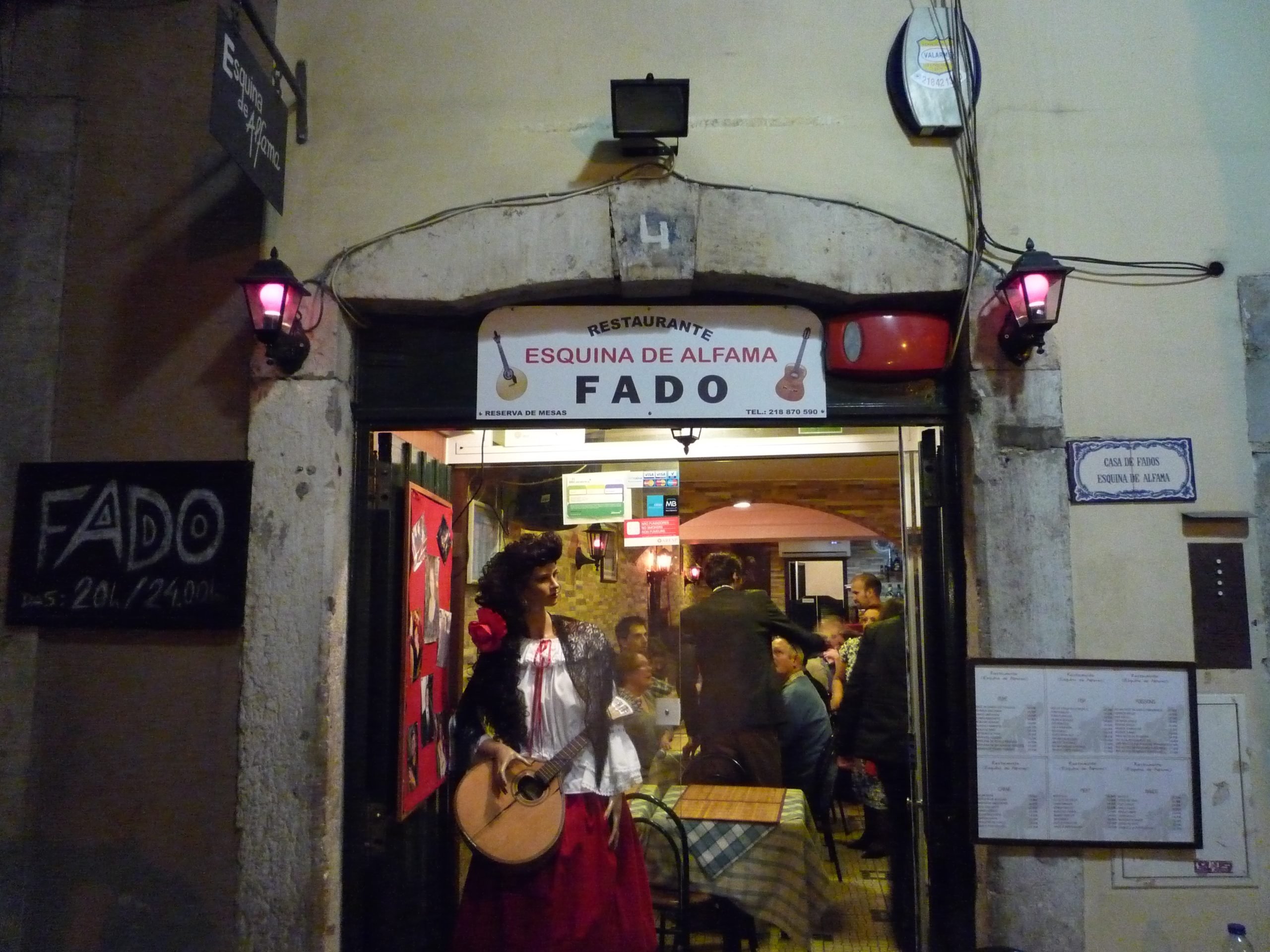
If you’re planning to celebrate New Year’s Eve in Lisbon by dining out, why not combine the dinner with a Fado event? This way, you won’t only enjoy a traditional meal but also immerse yourself in an atmosphere of saudade, of bittersweet longing, conveyed by the music.
Luckily, Lisbon doesn’t lack New Year’s Eve Fado events, so there’s plenty for you to choose from.
Photo by Chris (Unsplash)
Adega Machado
Location: R. do Norte 91, 1200-284 Lisboa, Portugal
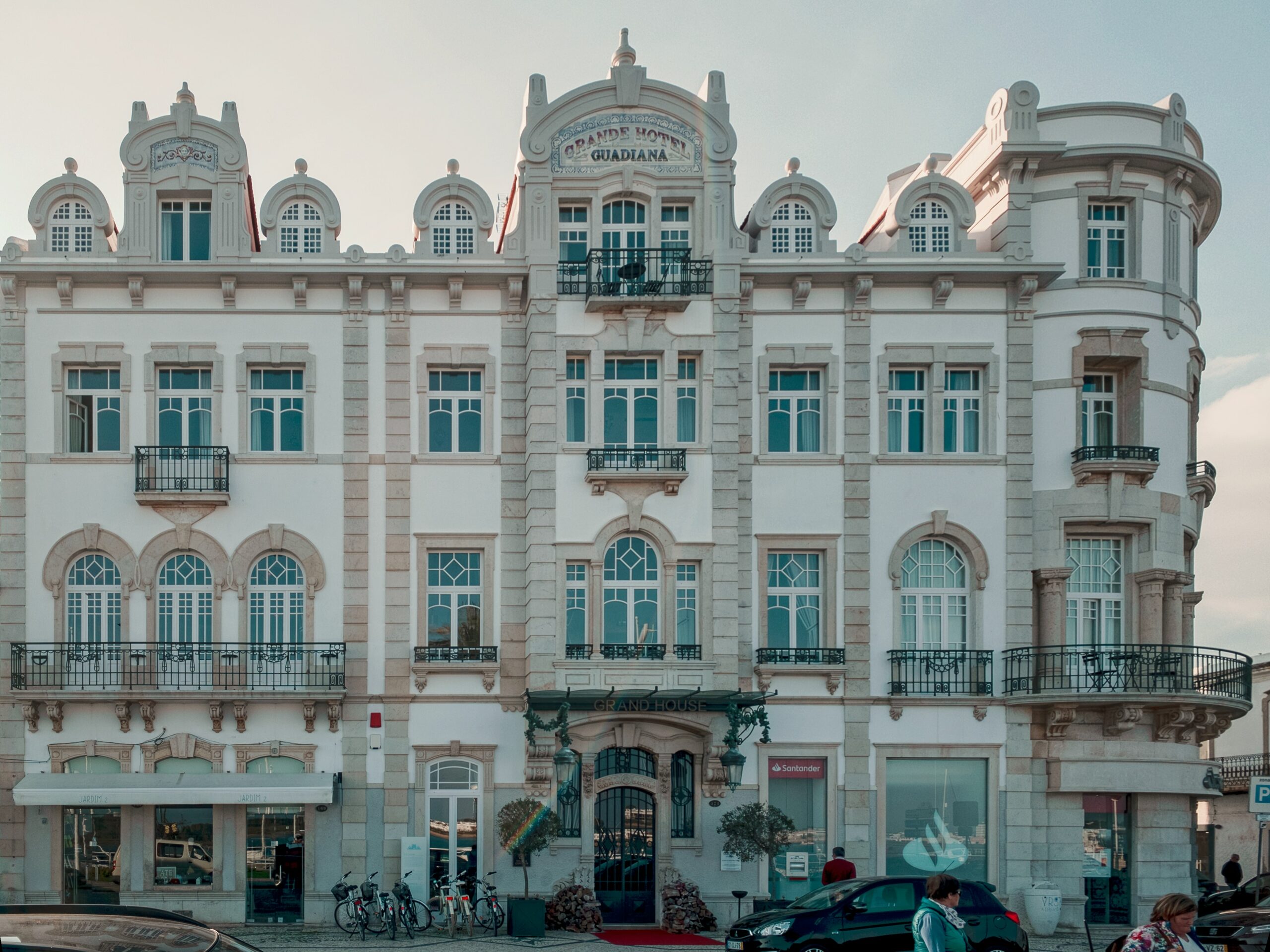
Adega Machado is an iconic Fado House in Lisbon that served as a performing place for many famous Fado artists. Other notable personalities, like Calouste Sarkis Gulbenkian, Prince Andrew of the United Kingdom, or Don Juan de Bourbon, also stepped foot into this restaurant and probably liked it so much that they quickly returned!
Well, if Adega Machado has been inspiring the saudade feeling for almost a century, why stop on New Year’s Eve?! That’s why you can now book your seat for the 31st of December.
Their New Year’s Eve program starts at 8 p.m. and costs 150 EUR per guest, which, obviously, includes a Fado concert. Naturally, the menu is quite exquisite, providing a combination of various traditional dishes. It also includes drinks, desserts, and coffee or tea.
O Faia
Location: R. da Barroca 54 56, 1200-050 Lisboa, Portugal
O Faia, a restaurant founded in 1947, offers locals and tourists daily Fado nights held by famous Fado artists, including Lucília do Carmo, Alfredo Marceneiro, Fernando Maurício, and others.
At the moment, the Fado atmosphere is created by Lenita Gentil, Sara Correia, António Rocha, Maura Airez, and Beatriz Felício. They are accompanied by Fernando Silva and Paulo Ramos.
On New Year’s Eve, you can, of course, have the best night of the year at o Faia, savoring their delicious dishes and allowing the Fado music to get to your heart!
The menu costs 220 EUR per person and includes drinks, starters, main course, and desserts. At midnight, you’ll welcome 2024 with a glass of Champagne Moet & Chandon!
Cafe Luso
Location: Tv. da Queimada 10, 1200-365 Lisboa, Portugal
One of the most historically and culturally enriching locations in Bairro Alto – Café Luso, located in the old wineries of Palácio Brito Freire. The restaurant’s interior design and decor are undoubtedly worthy of a New Year’s Eve dinner served on a background of Fado music.
The Fado concerts usually begin at 8 p.m. and last until 2 a.m., although we recommend checking with the restaurant beforehand to ensure you’ve got the correct details.
The New Year’s Eve menu at Café Luso costs 150 EUR. It includes a wide variety of dishes, starting with mini tartelle with foie gras and fig in syrup and a salmon or shrimp dish for the main course and ending with coconut and mango panna cotta, accompanied by a delightful coffee or tea. These are only some options you’ll find in the extensive menu.
Maria da Mouraria
Location: Largo da Severa 1 e 2, Largo Severa 2, 1100-588 Lisboa, Portugal
Maria da Mouraria, a fado house and restaurant managed by the Fado Museum, offers locals and tourists Fado nights held by Hélder Moutinho, as well as Bela and Carlos Silva.
The restaurant prepared a selection of dishes for those who want to step into the new year outside their houses or hotels. They offer a welcome drink, starters, first and second courses, as well as dessert and drinks.
Additionally, Maria da Mouraria has vegan options, including spinach pastries with seaweed risotto and lagareiro-style tofu.
The dinner will be accompanied by Fado music, as well as fireworks at midnight. The menu costs 175 EUR per person.
If you want to make a reservation, you’ll have to pay a 50% deposit. Don’t hesitate to contact the restaurant for more reservation details and/or information regarding their cancellation policy, in case you’re not sure of your plans.
Have the Ultimate New Year’s Eve party on a Cruise
Location: Depends on each cruise
If you want to do something more special than a dinner at a restaurant, why not go for a New Year’s Eve Cruise?! That’s undoubtedly much fun and can make for a memorable experience in a coastal country!
You can look for a cruise that suits your preferences, as there are plenty. For example, you can choose one that is shorter (2 hours) and includes drinks only and a possibility to watch the fireworks right from the Tagus River.
On the other hand, some cruises also include cheese and charcuterie board, as well as dessert options. The prices usually vary between 100 and 150 EUR.
If you want to attend a dinner cruise, though, you should probably book one right now (if you do manage to find one that still has available seats) because most of them are already sold out! It is quite an extraordinary experience – no wonder people do not even hesitate to buy their tickets!
Welcome New Year – Estufa Fria
Location: Parque Eduardo VII, 1070-051 Lisboa, Portugal
The party at Estufa Fria is probably the most popular New Year’s Eve party in Lisbon. It’s been inviting people to have fun since 2013!
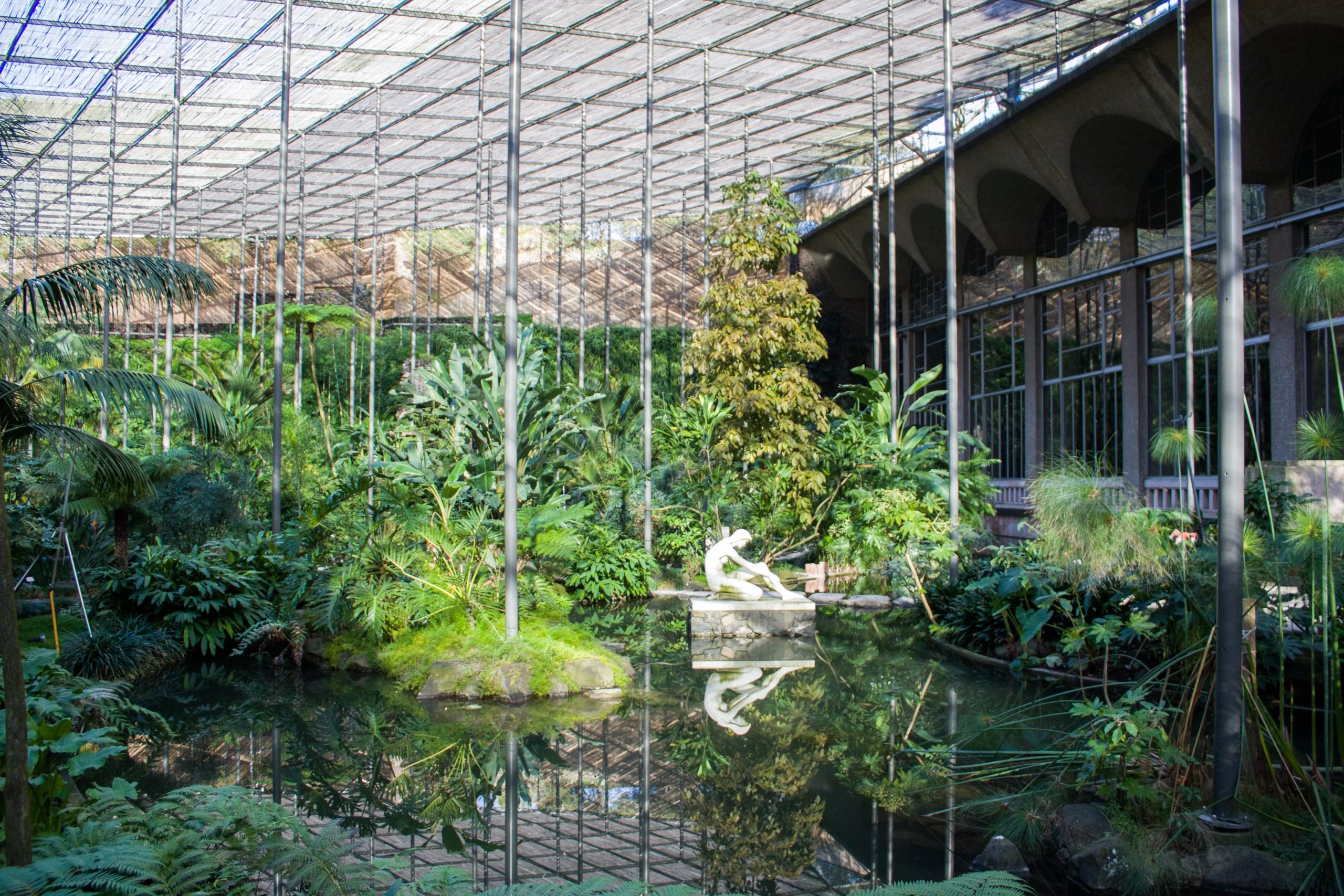
Estufa Fria, as you probably already know, is a fantastic greenhouse located in Parque Eduardo VII. Imagine dancing your way into 2024 in such an awe-striking location, as if in a jungle!
The Welcome New Year event in Estufa Fria starts at 11 p.m. and lasts until 6 a.m. You’ll have to hurry up with the tickets because they’re selling out quickly – check them out here. Only a few at the price of 45 EUR are left – the price includes the entrance fee and three drinks.
However, we must mention that you won’t be able to book your ticket directly on the website. You’ll have to contact the organizers first and ask them for an access code that will allow you to complete the reservation.
The party is private, with a limited capacity, so you don’t have to worry about it getting out of hand.
Estufa Fria, Lisbon. Photo by Shadowgate (Flickr)
Fábrica Braço de Prata New Year’s Eve Party
Location: R. Fábrica de Material de Guerra 1, 1950-128 Lisboa, Portugal
Fábrica Braço de Prata is a Lisbon cultural center founded in 2007 that hosts an incredible New Year’s Eve party! If you’re visiting the capital with your children, don’t even hesitate to book a ticket for it, as kids are welcome!
While other parties do not allow children (for obvious reasons), this one is excellent for them, as the program includes various concerts, dancing events, game spaces, and even mattresses where they can take a nap!
Additionally, kids under 8 years old can enter for free. Please don’t forget that the organizers advise families to contact them beforehand to inform them how many children will attend. This way, they can keep track of the available spots.
The event begins at 9 p.m. and lasts until 6 p.m. The ticket prices vary between 20 and 45 EUR, depending on whether you want them to include food and drinks.
What will happen to theNon-Habitual Resident Special Tax Regimewith the approval of the 2024 State Budget? What are the potential issues? What can be done about it?
Below we will provide you with a list made by Kore Partners that outlines the potential issues with the new special regime, and what can be done about it.
Regarding the registration procedure, access to the New Non-Habitual Resident Special Tax Regime implies registration with certain public investment entities (which have a monitoring role), and registration with tax authorities. It is yet unclear how this registration process will work out in practice with the approval of the state budget. Thus, it is important to guarantee the effectiveness of the registration process by streamlining it.
When it comes to ‘Listed Activities or Professions’ (which professions and professionals can be eligible for the new NHR?), taxpayers may be eligible under several criteria. It is unclear which entities carry out activities considered relevant for the national economy. It is also unclear which are the ‘highly qualified professions of export-related companies or entities with investment incentives’. Hence, there should be secondary legislation or guidance to clarify.
Furthermore, the introduction of the ‘Sectorial and Territorial’ scope (which sectors and territories are to be considered regarding the new legislation), under ‘Sectorial and Territorial Application’, may induce an issue of selectivity and discrimination. That may be perceived as state aid, which is known to distort competition. For this reason, it is important to consider if a notification on state aid should be made.
Concerning the ‘Foreign Income Exemption’, the new NHR widens the scope of foreign income that is admitted. Capital gains on foreign assets are now included. This may create a legal conflict with existing double tax treaties. This happens if the non-habitual resident is considered a resident for double tax treaty purposes, according to the criteria of the latter.
Finally, when it comes to ‘Tainted Income’ (which basically means ‘bad income’), the new NHR entails a 35% tax rate applicable to certain income that derives from jurisdictions that are blacklisted. It is not clear yet, but the intention is that, even if the jurisdiction is blacklisted, only certain income is considered to be tainted and, for that reason, will be taxed. Hence, it is important to clarify which income is tainted, and how it does not affect the application of the regime.
We must admit – if you’re spending New Year’s Eve in Lisbon, you’re quite lucky! You’ll have the opportunity to see for yourself how much fun Portuguese people have!
Be it that you want to welcome 2024 from your hotel room or spend it wandering through the lightened streets of the historical center engulfing you with their magic – we’re sure you’ll have the greatest time!
If you want to see the fireworks somewhere in the city but haven’t decided on the best spot yet, we’re here to help you! Keep reading to discover where to see the fireworks in Lisbon on New Year’s Eve!
4 Places to Watch Fireworks in Lisbon
We must warn you that whatever place you choose, it will probably get pretty crowded. Therefore, we advise you to prepare your New Year’s Eve journey beforehand, taking into consideration this aspect. Maybe you can schedule your arrival early or go for a more unpopular spot.
We also recommend checking the festivity programs beforehand to ensure you don’t miss anything important.
Furthermore, don’t forget to check the program of the metro (and other types of public transport) to make sure you have the means to arrive at the spot you’ve chosen. Finding an Uber or a Bolt will likely be quite challenging on the 31st of December and the 1st of January.
Here’s another tip from us – although Lisbon can get quite warm and even springish during the day, nights are cold and sometimes windy, so don’t forget to wear a warm sweater and pack a scarf, especially if you watch the fireworks from one of the viewpoints, which are located at higher altitudes where it’s windier.
1. Praça do Comércio
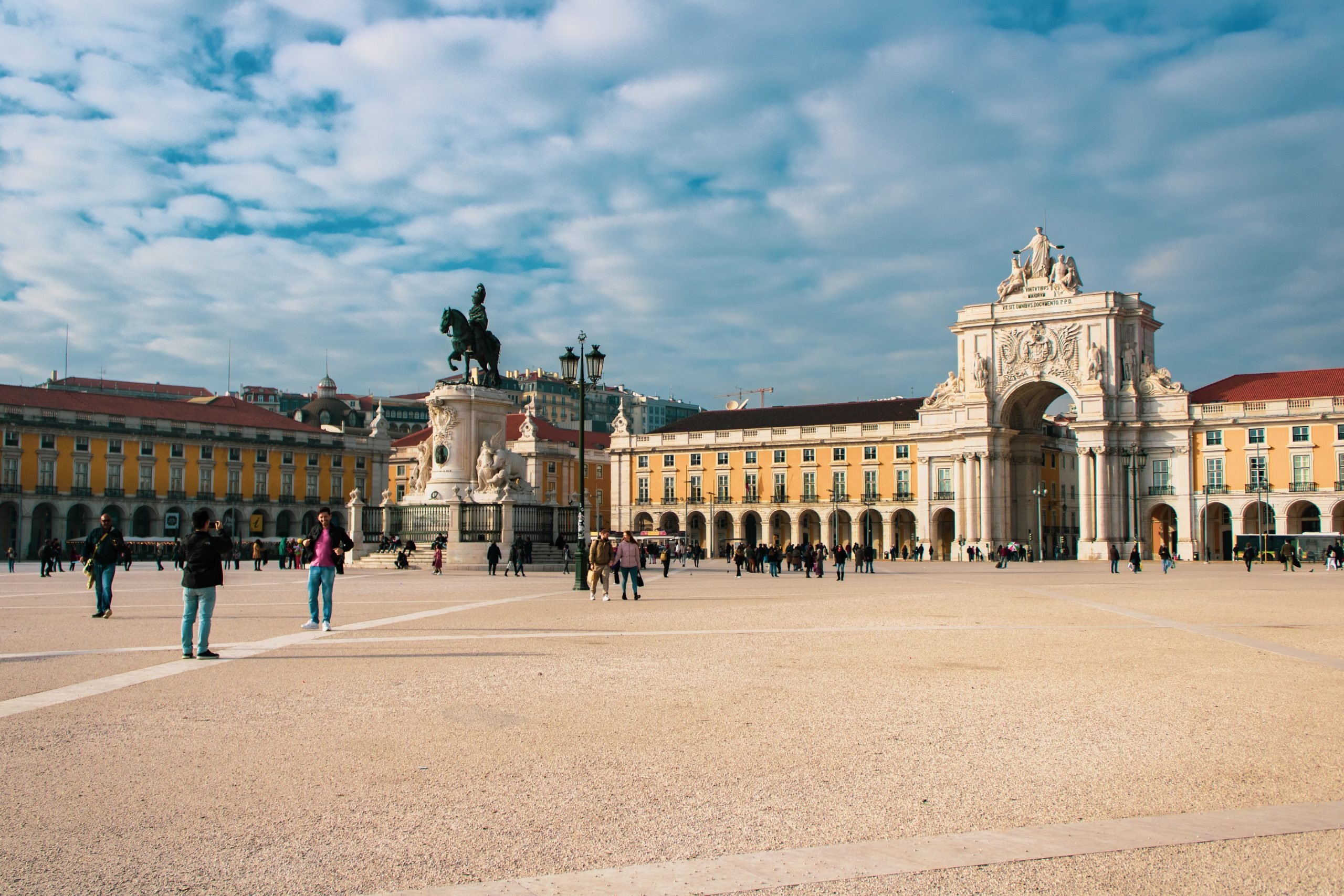
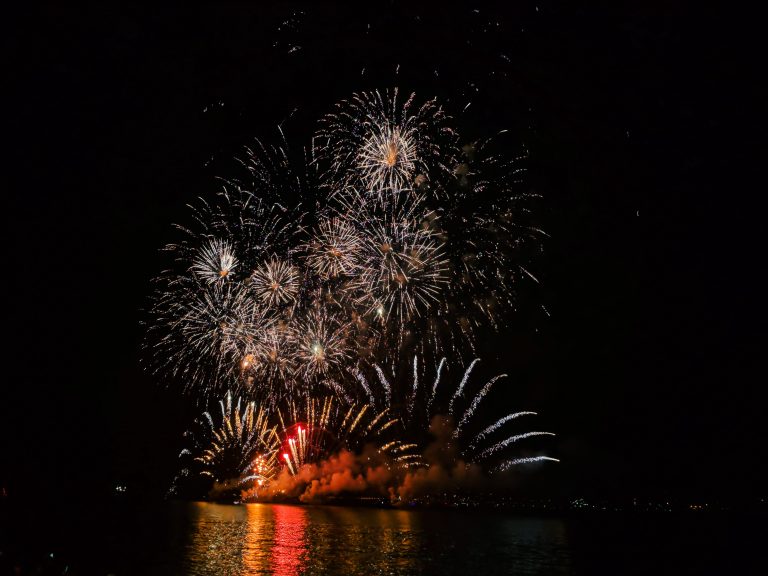
The main New Year’s Eve event in Lisbon takes place in Praça do Comércio, the city’s most iconic place that marks the heart of its historical center. It is also the spot where the city meets the water!
Praça do Comércio, also known as Terreiro do Paço, is located at the end of Rua Augusta, which opens toward Praça do Comércio through the famous Rua Augusta Arch. So why are we sharing all these architectural and technical details?
We want you to envision just what a delightful experience you’ll have if you spend New Year’s Eve in such an iconic location, enjoying not only the fireworks but also the pure joy of locals and tourists, thus experiencing the capital in a truly authentic way!
Not to mention that Lisbon’s Christmas tree is (unsurprisingly!) installed in Praça do Comércio (which, by the way, is also Europe’s tallest Christmas tree!).
On the night of the 31st, the location will be strictly monitored and people will only be able to access it by foot. There will be six entries and seven exits. The entrances and the exits are located on Rua Augusta, Rua do Ouro, Rua do Arsenal, Rua da Alfândega, Avenida da Ribeira das Naus, and Rua da Prata.
Ensure to arrive there on time, check your bags for any prohibited items, and prepare yourself to be pushed around by people because it’s probably going to be quite crowded! Nonetheless, the fun is guaranteed!
Praca do Comercio, Lisbon. Location of assasination of King and his heir. Photo by João Reguengos (Unsplash)
2. Viewpoints
If you want to see the fireworks from a slightly different point, you can head instead to any of the viewpoints that overlook the Tagus River – luckily, there are plenty!
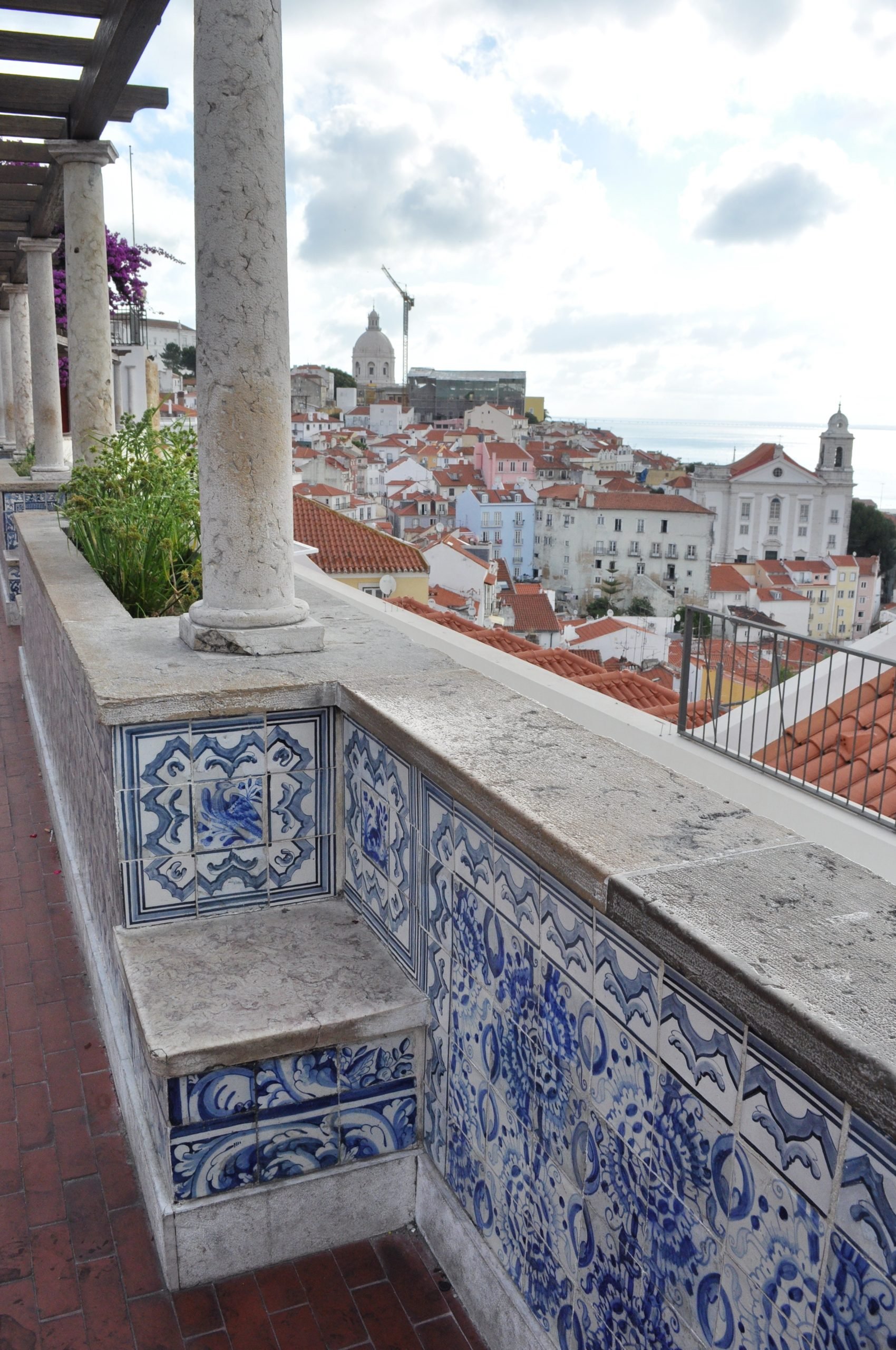
For example, you can choose Miradouro de Santa Luzia, which offers a splendid view of the city, the river, and the famous 25th of April Bridge. It is located in the Alfama neighborhood, on Largo Santa Luzia. In fact, Alfama has several excellent viewpoints, so there are multiple choices in the neighborhood.
Miradouro de Santa Luzia. Photo by Claudia Schillinger (Flickr)
However, don’t expect that you’ll be the only one thinking about this! The viewpoints, particularly those in Alfama, which are quite famous among tourists, will likely be filled with people, so we recommend arriving earlier and booking your seat!
Another viewpoint you can opt for is Miradouro de São Pedro de Alcântara. It is located on Rua de São Pedro de Alcântara and offers quite a spectacular view over the city. However, it is located farther away from Praça do Comércio than Miradouro de Santa Luzia.
The same is valid for Miradouro da Senhora do Monte, which is located in a churchyard. Although farther away from Praça do Comércio, it is the highest point of the neighborhood, ensuring a decent panoramic view over the historical center and the river.
Another popular viewpoint in Lisbon is Miradouro da Graça, located near Igreja Paroquial da Graça.
3. Parque das Nações
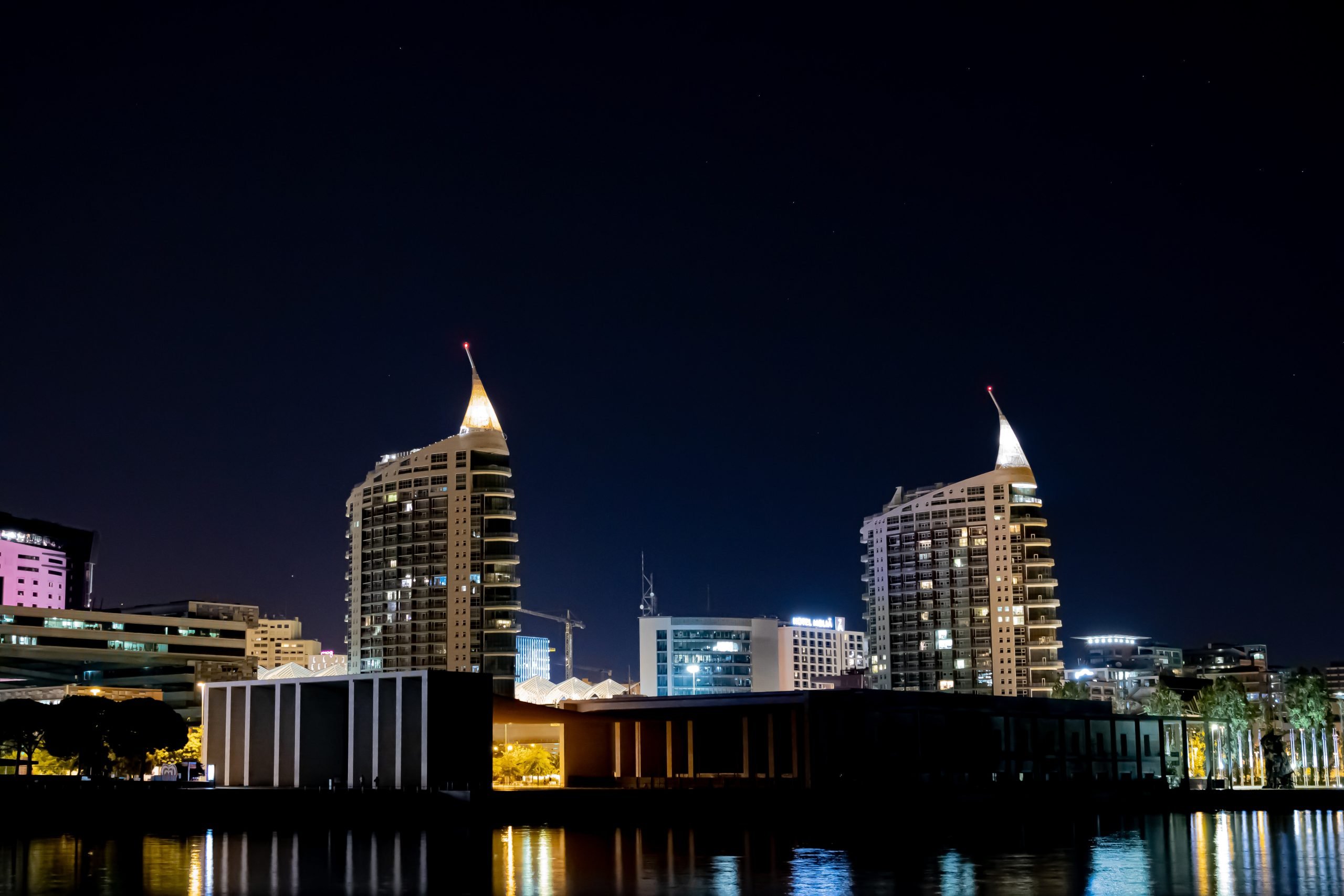
Parque das Nações is Lisbon’s region known as Expo. It overlooks the Tagus River and the iconic, lengthy Vasco da Gama bridge.
The neighborhood has a splendid riverfront walkway equipped with a myriad of restaurants and several green spaces. It starts right from the bridge and ends close to the Oceanarium. In short, it’s not only an excellent location to lose yourself in the magic of the New Year’s Eve fireworks! It also makes for an excellent destination to visit during a regular day.
We particularly love the location for its splendid sunsets! During the winter, the panoramic view of the river crossed by the lengthy bridge and united with the sky at the horizon is of incredible beauty! If the sky is clear, it is filled with the most beautiful shades of pink, violet, and blue.
Therefore, you can go for a walk in the evening, enjoy the sunset, dine out at one of the restaurants nearby, and, at midnight, watch the fireworks!
Like the fireworks in the historical center, those at Parque das Nações will enchant locals and tourists for approximately 10-12 minutes.
Here’s another tip from us! At Casino Lisboa, located right beside the Oceanarium in Parque das Nações, you’ll be able to listen to Xutos & Pontapés on New Year’s Eve. It’s a famous Portuguese rock & roll band with four decades of fans behind them! However, the event hours are still to be announced, so keep an eye on their website!
Parque das Nacoes, Lisboa. Photo by Erik Knoef (Unsplash)
4. Other Places in Lisbon to See the Fireworks
Besides the two spots where fireworks will be set off at midnight and the myriad of viewpoints you can choose from, you can also consider these ideas:
Terraces or rooftops. If you’re planning to attend a New Year’s Eve event at a restaurant, make sure to choose one that overlooks the city.
Hotels. If you’re lucky enough to book a room in a hotel which offers panoramic views over the city, you can watch the fireworks from there. Maybe you can even book a room with your own panoramic view, so you could welcome the new year from the intimacy of your room!
Belém region. While there won’t be fireworks in that region, it’s a less crowded location where you can watch the ones that will be set off from the city center.
Almada. If you open your Google Maps, you’ll see that Almada is located right in front of Praça do Comércio (on the opposite side of the river), except that you’ll have to cross the bridge to get there. If you have a car, you can take advantage of this opportunity because Almada will probably be less crowded than Lisbon’s historical center. Or you can take the ferry boat from Lisbon to Cacilhas, which usually runs until 2 am on that night. You may even like spending New Year’s Eve there more than in Lisbon. Why so? Easy! Because it will probably have a more local touch than the party in Lisbon’s city center!
Where to Watch Fireworks Around Lisbon
If you want to get away from the busyness of the capital, you can always choose a region outside Lisbon. For example, you can go to Setúbal, a city south of Lisbon known for its adjacent beaches that attract hundreds of thousands every year.
On the 31st of December, starting at 10:30 pm, locals will have the best time of their lives at a party close to Doca dos Pescadores. At midnight, the fireworks will set off over the river, after which the party will continue until 3 am. People in Setúbal definitely know how to have fun and will make you feel at home!
Setubal. Photo by Alexandre Contador (Unsplash)
Another excellent location to watch the fireworks and party till morning is Sesimbra. The New Year’s Eve program begins at 10 pm, lasts until 4 am, and will include multiple shows and, naturally, the midnight fireworks, which you’ll be able to watch from one of Portugal’s most beautiful beaches.
If you don’t want to cross the bridge toward the south of Lisbon, you can go to Sintra, the famous castle-filled region. The top destination in Sintra is Praia das Maçãs, where locals organize festivities and set off fireworks at night. People are even said to have made a tradition of taking their first baths of the year on the night of the 1st of January!
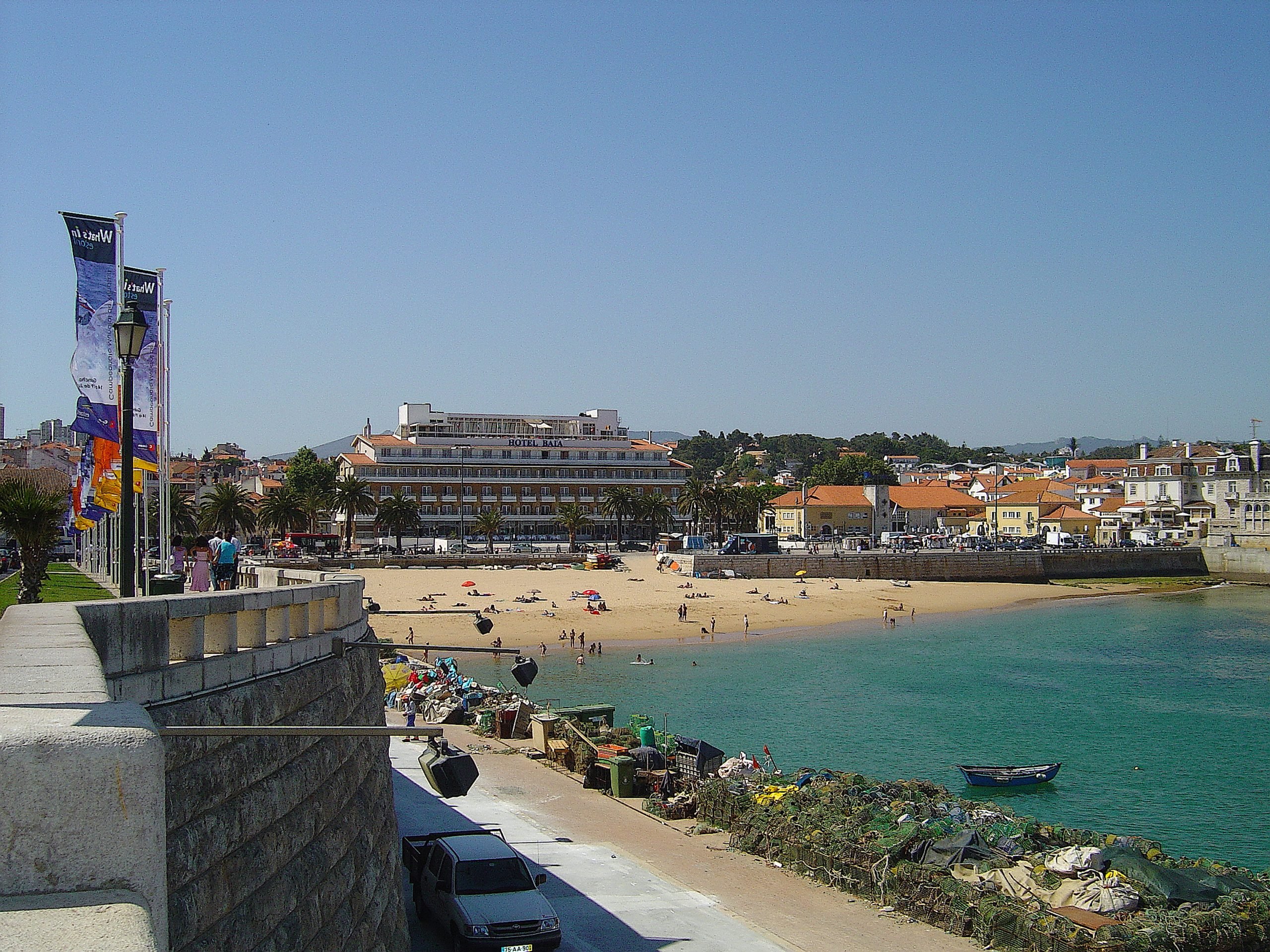
Let’s not forget about Cascais! However, if you do decide to spend New Year’s Eve in Cascais, you must expect slightly more luxurious prices, especially if you plan to attend a party, book a hotel, or dine out for New Year’s Eve.
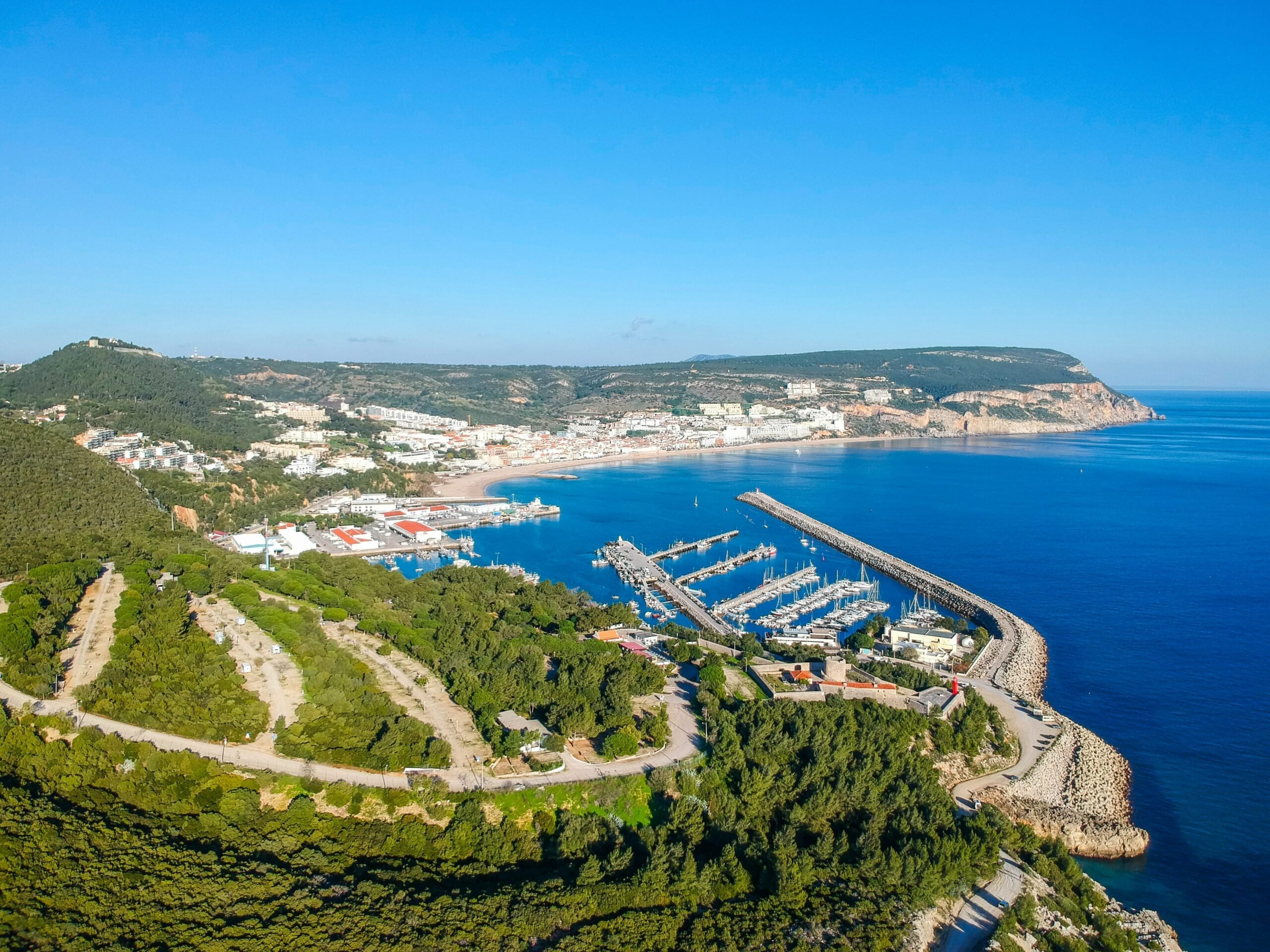
BaIa de Cascais where Festas do Mar takes place. Photo by Vitor Oliveira (Unsplash)
Due to the great weather – although it can rain frequently, it’s still pretty warm – Lisbon is an excellent destination for anyone planning a winter vacation around Christmas and New Year’s Eve.
So if you’re in the city at the time and planning to welcome 2024 outside your hotel, we’ve prepared a list of places where you can eat on New Year’s Eve in Lisbon. Keep reading to learn about each restaurant’s location, prices, and menus!
1. Via Graça
Location: R. Damasceno Monteiro 9 b, 1170-108 Lisboa, Portugal
Via Graça is located close to the famous Miradouro da Senhora do Monte. It opened its doors to locals and tourists 35 years ago and continues to blend traditional Portuguese cuisine with innovative recipes.
Besides the exquisite interior and the tasty, nicely served dishes, the restaurant has an excellent view over the Lisbon city center, the 25th of April Bridge, and the famous Cristo Rei. In short, you won’t miss any fireworks that will enchant thousands at midnight!
Via Graça offers a New Year Menu, which costs 290 EUR per person. They request a down payment of 50% upon booking. It can be done by credit card using a personalized link or bank transfer. The down payment is not refunded if the booking is canceled.
The menu is quite exquisite, and the price also includes sparkling wine, water, and coffee.
2. Zambeze Restaurante & Rooftop Bar
Location: Edifício EMEL, Mercado, Calçada Marquês de Tancos, Largo Chão do Loureiro, 1100-340 Lisboa, Portugal
Yet another elegant dinner place – Zambeze! The restaurant is close to the Lisbon Cathedral, ensuring an excellent location in the city center!
The restaurant decor is inspired by the Mozambican natural landscape, thus providing visitors with a truly culturally immersing experience. The dishes are a combination between Mozambican recipes and those of the Beira region. Zambeze also has a large outdoor terrace that overlooks Lisbon’s historic center and the Tagus River.
The restaurant offers two menus for New Year’s Eve: Menu Coroa and Menu Estrela.
Menu Coroa costs 46 EUR per person, while Menu Estrela costs 52 EUR per person. Both include a starter option, a fish or a meat dish, dessert, and drinks.
3. Boa-Bao
Location: Largo Rafael Bordalo Pinheiro 30, 1200-369 Lisboa, Portugal
Boa-Bao, a restaurant with locations in Lisbon, Porto, and Barcelona, is located in the heart of Lisbon, close to the Baixa-Chiado metro station. They offer original Asian recipes that take visitors on a journey through all Asian countries – China, Indonesia, Vietnam, Korea, and Japan. It is a favorite among both locals and tourists, so you should definitely give it a chance!
Boa-Bao has a special winter holiday menu, served from the 7th of December 2023 until the 7th of January 2024. So, if you do check the restaurant out on New Year’s Eve and like it, you still have time until the 7th of January to take advantage of their tasty dishes!
Around this time, Boa-Bao focuses on Peranakan cuisine, also called Nyonya cuisine, which comes from the descendants of early Chinese migrants who had settled in Southeast Asia.
As such, you’ll be able to enjoy and possibly try for the first time in your life dishes like Malaysian prawn sambal and Nyonya Style Chicken Kapitan Curry. For dessert, they offer Aiskrim Bijan Hitam and Crispy Gua Bao Ice Cream Sandwich.
4. Monte Mar
Location: R. da Cintura do Porto de Lisboa Armazém 65, 1200-109 Lisboa, Portugal
The Monte Mar restaurant in Lisbon is located close to the Cais do Sodre metro station, right in front of the Tagus River. Considering the views the restaurant opens for its visitors, celebrating New Year’s Eve there is a truly breathtaking experience!
The restaurant is planning to throw a party in the ‘20s style, so if you’re ready for some dressing up and enjoying a night of glamor and gourmet dining, this is it! The program will start with a drink and continue with the main course for which you’ll receive a special menu.
Monte Mar offers two programs to welcome 2024 at their location – the Venue program and the Restaurant program. The latter costs 245 EUR, while the former – 185 EUR. The payment has to be done fully seven days before the event, and cancellations are accepted only until the 23rd of December. After this date and until the 29th, the restaurant has a penalty of 50%. If you cancel your reservation on the 30th, you will not be able to receive your money back.
It’s worth mentioning that children under three years old can attend for free, while those between 4 and 11 years old have a 50% discount. Therefore, if you want to spend a magical night with your whole family, don’t miss out on this opportunity!
5. Grenache
Location: Pátio de Dom Fradique 12, 1100-624 Lisboa, Portugal
Grenache is located close to Lisbon’s Castelo São Jorge in the courtyard of Patio Dom Fradique. The restaurant’s goal is to harmoniously mix modern French cuisine with local Portuguese produce, offering any culinary enthusiast a truly authentic experience.
The restaurant has a New Year’s Eve menu, which amounts to 260 EUR. You’ll have the opportunity to taste dishes that include tuna, lobster, Galicia wagyu, and scallops.
They also have quite an elegant dinner menu for the 1st of January, which costs 190 EUR. So, if you’re not a fan of staying out late on New Year’s Eve, you can always dine out on the 1st of January to mark the beginning of 2024!
6. Aprazível
Location: Galerias Páteo Garrett, R. Garrett 19, 1200-093 Lisboa, Portugal
Yet another restaurant located near the Baixa Chiado metro station – Aprazível.
Besides the fact that it’s in the best possible location in Lisbon, the restaurant’s New Year’s Eve menu is slightly cheaper than the others, yet just as rich. It amounts to 125 EUR per person and includes a welcome drink, snacks, starters, a main course, and dessert.
Besides, you’ll also be able to order water, sparkling wine, raisins, and coffee. For the main course, they offer sea bass with clam rice or sirloin steak with foie gras and Madeira wine sauce. Sounds delicious, doesn’t it?!
A Christmas dessert from the 15th century, the traditional “rabanada” recipe has been passed through generations without much change. It remains one of the most popular desserts in Portugal during the Christmas season, one similar to the French toast. Enjoy after Christmas Eve dinner or even at breakfast with an espresso before the festivities begin, this Portuguese holiday staple is set to stand out at your next Christmas dinner.
What is a rabanada?
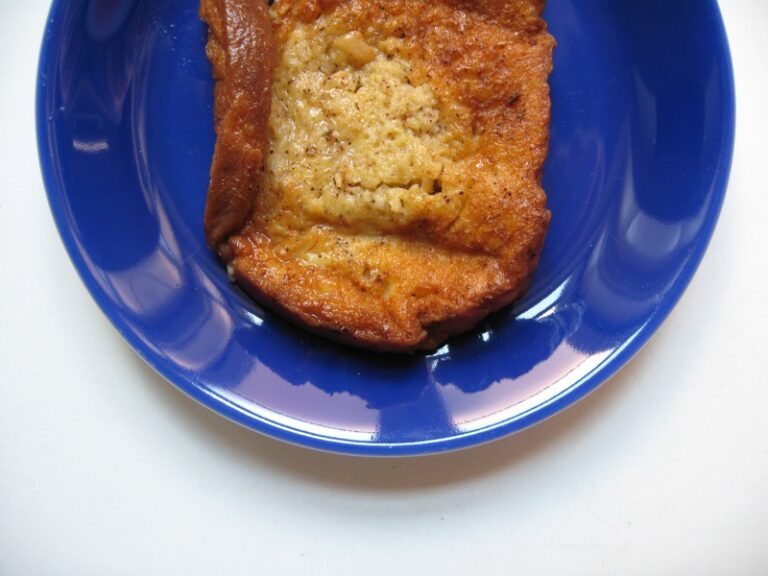
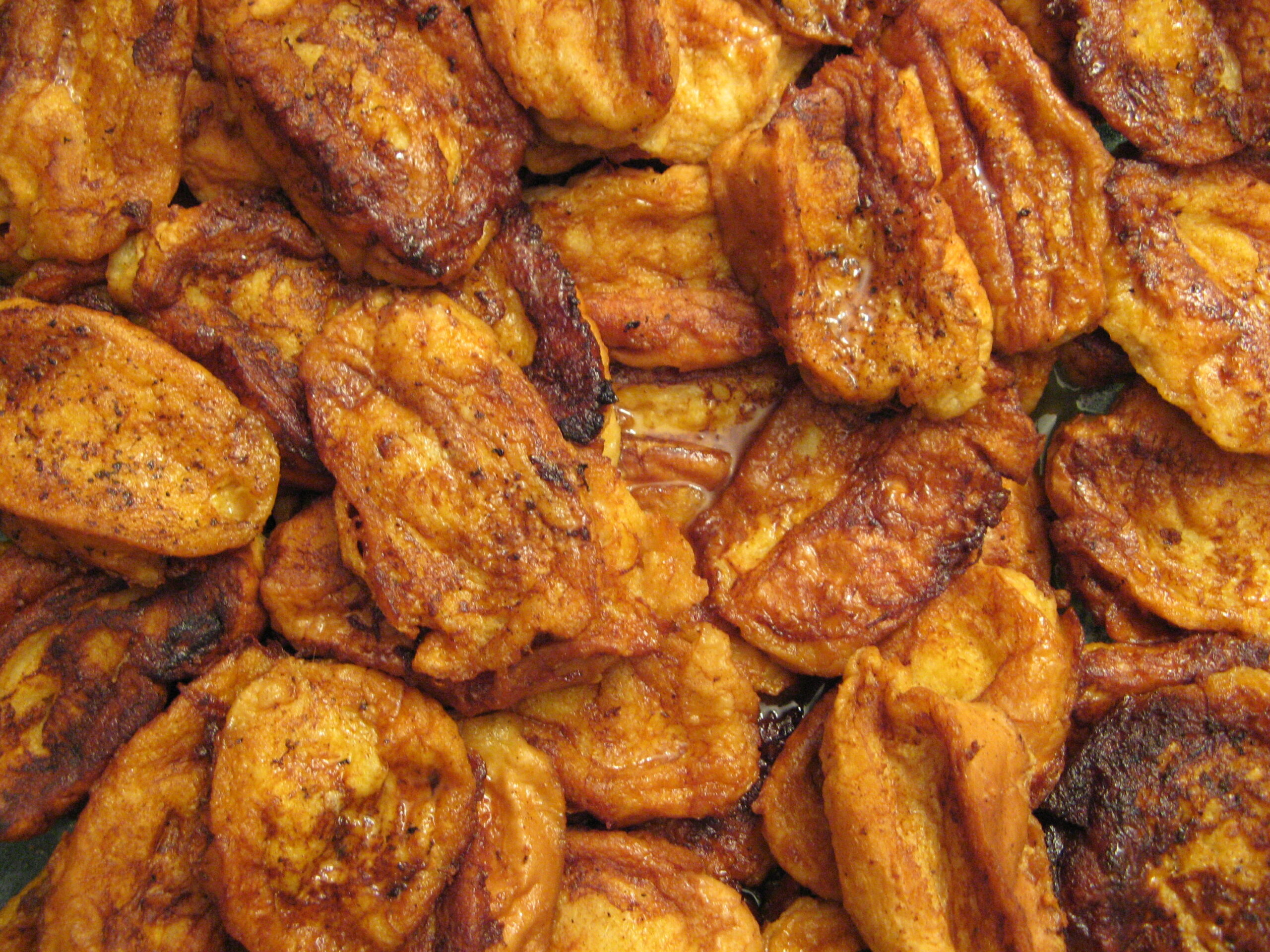
Rabanada, also known as golden slice, is a sweet treat made from slices of wheat bread that once soaked in milk, wine (commonly red or white green wine in the Minho region), or sugar syrup, are dipped in beaten eggs and then fried in olive oil.
They are then typically served dusted with cinnamon sugar or drizzled with various syrups, including sugar, maple syrup, honey, wine, or port wine.
Rabanadas. Photo by florian meyer (Flickr)
Easy Christmas Rabanadas Recipe
10 Portions
Ingredients
500 grams wheat bread loaf
300 grams of white sugar
1 tablespoon of butter
Cinnamon
1 Lemon Zest
2 eggs
Vegetable oil
750 ml of milk
Instructions
Prepare the ingredients. Cut the loaf of bread into slices, put the milk and lemon zest on a plate, and in another bowl, the 2 whisked eggs.
Heat up the vegetable oil in a pan. You will be frying the bread slices one by one.
Before doing so, dip them in the milk and lemon zest plate, allowing them to absorb the milk without falling apart. Then, do the same for the eggs.
When the oil is ready, fry the slices until they are golden on one side and then flip, doing the same for the other side.
Do this for each rabanada, letting them sit on a plate with a paper towel after frying to strain the excess oil.
Top with a mixture of sugar and cinnamon to taste and then serve!
Subscribe to our newsletter below to get the latest news, reviews, info and more!
We use cookies to ensure that we give you the best experience on our website. If you continue to use this site we will assume that you are happy with it.