Cristiano Ronaldo, one of the most famous athletes in the world, is officially engaged for the first time! The 40-year-old Portuguese footballer proposed to his longtime partner, Georgina Rodríguez, after eight years together.
On Monday, August 11, 2025, Rodríguez, 31, announced the exciting news on Instagram by sharing a close-up photo of an absolutely massive oval-shaped diamond engagement ring (more on that later). In the background, part of Ronaldo’s hand could be seen. Her caption, translated from Spanish, read: “Yes I do. In this and in all my lives.”
The post quickly racked up the likes worldwide and has received more than 14 million at the time of this writing from celebrities such as Kim Kardashian and make-up artist Charlotte Tilbury.
Relationship Timeline
Ronaldo and Rodríguez first met in 2016 at a Gucci store in Madrid, where Rodríguez was working as a sales assistant. They began dating shortly afterwards and initially kept their relationship mostly private.
Their first public appearance together was in January 2017 at the Best FIFA Football Awards in Zurich, Switzerland. Later that year, they began sharing photos together on social media.
In her 2022 Netflix documentary I Am Georgina, Rodríguez described the early days of their relationship, which included moments when Ronaldo picked her up from work in luxury cars. Ronaldo, speaking in the same documentary, said he had not expected to meet someone so important to him, but that he quickly realized she was “the woman of my life.”
Family Life
The couple have two children together:
Alana Martina, born in November 2017 (now 7)
Bella Esmeralda, born in April 2022 (now 3)
Ronaldo has three other children:
Cristiano Jr., born in June 2010 (now 15)
Twins Eva Maria and Mateo, born in June 2017 (now 8, via surrogate)
In April 2022, the couple announced the death of their newborn son, Ángel, who was Bella’s twin. In a joint statement at the time, they described it as “the greatest pain that any parents can feel” and thanked the medical staff for their care.
Rodríguez later discussed the loss in the second season of I Am Georgina in 2023. In one episode, she described how Ronaldo encouraged her to continue with her life and focus on their family.
And What About That Incredible Ring?
For the most popular sports figure in the world, you would expect an engagement ring of truly epic proportions – and Cristiano Ronaldo delivered! We’re seriously not sure how Georgina can hold her hand up with this beast of a rock on her finger!
The ring has not surprisingly garnered significant attention from jewelry experts for both its size and quality. Appraisers estimate the central diamond to be between 25 and 60 carats, with some suggesting it could be as large as 55 to 60 carats. This makes it larger than the famous sparklers given to Mariah Carey, Kim Kardashian, and Lauren Sánchez.
The oval brilliant-cut stone holds a D color grade, the highest possible, and a clarity rating of VVS1 or better, meaning it has only the tiniest of imperfections that are difficult to see even under magnification. It is set in platinum in a three-stone design, with the center diamond held in a double-claw mount and flanked by two matching oval side stones. Experts estimate its value to be between $2.5 million and $5 million, and some are placing it closer to $3 million, describing it as among the rarest and most exquisite diamonds in the world. The jeweler responsible for creating the ring has not yet been identified.
We also wonder if Ronaldo himself might be wearing an engagement ring. While no images have surfaced yet, it would certainly bring even more attention to the couple, though it is unlikely he would wear one during a match on the soccer field.
Career and Current Life
Cristiano Ronaldo currently plays for Al-Nassr in the Saudi Pro League. In June 2025, he confirmed that he will remain with the club until 2027, which put an end to speculation that he might retire.
Since his move to Saudi Arabia in January 2023, Ronaldo and Rodríguez have been living in Riyadh with their children. Rodríguez continues to work as a model and influencer and has taken part in television programs including her Netflix series.
What About the Wedding?
The couple has not shared any information about wedding plans or a date, and, given their high profile, there is speculation about whether they will opt for a large public celebration or a private ceremony.
Now that the couple are engaged, the speculation will begin as where the wedding will take place. Will it be an epic ceremony on the scale of Jeff Bezos’s recent nuptials? Will it be in Portugal? Will it take place in Spain or the UK? Argentina? Will it take place in Saudi Arabia where the couple currently live? Or in one of the countries where they currently own property? At this point, it’s anyone’s guess! Of course, we here at Portugal.com are incredibly biased and would love for the wedding to be anywhere in Portugal!
For now, the engagement marks a personal milestone for Ronaldo and Rodríguez and adds a new chapter to their relationship that has grown alongside Ronaldo’s multiple career achievements.
Summer in Portugal is not what it used to be. Since tourism exploded post-pandemic, the crowds in Lisbon, Porto, and the Algarve have gotten much bigger, summers seem to be getting hotter each year, and the fire risk continues to grow. As someone who has lived here for the past five summers, I’ve noticed some consistent patterns over the last few years and becoming aware of these trends can help people better plan for a summer trip to Portugal.
The good news? With a few smart adjustments to your travel plans, you can avoid the biggest frustrations and enjoy a much more comfortable trip. Here are my top tips for navigating a summer visit to Portugal.
1. Make Sure Your Accommodation Has Air Conditioning (Or at Least a Fan)
At this point, it’s simply too hot to gamble on surviving a Portuguese summer without air conditioning. While some accommodations in Lisbon, Porto, and along the coast offer A/C or a cool breeze coming off the ocean, many traditional apartments do not. Trust me, due to the lack of insulation, when it is over 23° C (73° F) in your accommodation at night, it becomes very difficult to sleep – fan or no fan. You can open a window, but what if one of Portugal’s annoying sounds keep you awake? If your booking doesn’t mention air conditioning, confirm it with the host or hotel before you lock in your reservation.
If there’s no A/C, insist on having a fan ready for your arrival. Don’t assume one will magically appear. Portugal is not a country where every home keeps extra fans in the closet. If you arrive without one, you’ll find them in larger retail chains such as Worten, Leroy Merlin, or Continente in Colombo Shopping Centre. Check out our guide to finding everyday items in Lisbon for more help.
Pro tip: Request a room or apartment on the lowest possible floor. Heat rises, and in Portugal’s many older buildings, elevators can be slow, unreliable, or entirely absent.
Weekend flights in the summer are a gamble this year, with repeated airport strikes from Friday to Sunday affecting multiple weekends. Cancellations and delays have been common and has left travelers scrambling for alternatives.
The safest days to fly are Tuesday through Thursday. Monday is your next-best option. A practical plan: fly in on a Thursday, enjoy a long weekend, and fly out Monday or Tuesday to avoid the chaos.
Local holidays can make or break your travel plans, especially when they come with higher prices, closed attractions, or transit strikes.
For 2026, here’s what to watch out for:
June 4 – Portugal Day (national)
June 10 – Camões Day (national)
June 13 – St. Anthony’s Day (Lisbon only)
June 24 – St. John’s Day (Porto only)
August 15 – Assumption Day (national)
If you’re in Lisbon during the second week of June, expect higher prices, lack of housing availability, and the possibility of a metro strike on the night of June 12. If you want to join the Santo António festivities that night, stay in or near Alfama so you can walk back, as getting transport home will be nearly impossible.
In August, particularly around August 15, expect many museums (including the palaces in Sintra) to close. The second week of August is also one of the most common times for businesses to shut for staff holidays.
Photo by Hannah Dalke
4. Be Aware of the Fire Risk in Rural Areas
Portugal’s wildfire season peaks in July and August, particularly in the central and northern regions. Fires can quickly lead to road closures, power cuts, and evacuations. The same risks apply in parts of Madeira and the Azores.
To minimize any disruptions, base yourself further south (Lisbon, the Algarve, or the Silver Coast) or in cities not fa the water like Porto. Avoid booking isolated rural stays during the high-risk period unless you have a reliable evacuation plan.
5. Stay Hydrated (and Ask for Tap Water in Restaurants)
The summer sun is relentless, and it’s easy to underestimate how much water you need. In restaurants, you can politely request tap water with: um copo com água, por favor.
By law, restaurants should provide tap water for free, though some may default to selling bottled water unless you ask. Carry a refillable water bottle and top it up at public fountains or your accommodation before heading out. Note that you will not receive ice with your water. The word for ice is gelo (je-loo). You can ask, but it’s not guaranteed that you will get it for free.
6. Start Your Day Early
Beat both the heat and the tour groups by starting your day early. In Lisbon, you can enjoy the Monument of Discoveries, Torre de Belém, or the city’s panoramic miradouros (viewpoints) in blissful quiet before the sun starts to beat down.
If you’re planning a trip to Cascais, note that the first direct trains from Cais do Sodré start at 8:15 am. If you want to be there before the crowds, grab a taxi or rideshare. Another early-morning option is to take the ferry from Cais do Sodré to Cacilhas, then connect to Costa da Caparica beaches before the midday rush.
7. Be Strategic about Your Trip to Sintra
Sintra is magical, but in summer, it’s also one of the most congested destinations in Portugal. We previously released a DIY Guide to Sintra, which you can review for more details. To make the most of your day:
Visit Pena first (it gets the most crowded), then work your way downhill (either on foot or by hiring a tuk-tuk) to Quinta da Regaleira.
With the right timing, you can enjoy Sintra’s charms without feeling like you’re trapped in a line at a theme park.
The Initiation Well of Quinta da Regaleira in Sintra, Portugal
Final Thoughts
Portugal in summer is consistently sunny and beautiful and full of lively festivals. But it’s also hotter, busier, and more unpredictable than it was just a few years ago. With a bit of planning, choosing the right travel days, making sure that you have air conditioning, waking up early, and being aware of Portuguese holidays, you can experience the charms of the Portuguese summer and discover why so many people fall in love with this country.
Allowing yourself the chance to sip vinho verde in a shaded praça or wander along a quiet morning beach is always the best kind of Portuguese souvenir.
Intrigue. Duplicity. Bribery. Portugal had it all during WWII. Not only was it a neutral dictatorship threading the needle between Hitler and Churchill and the last stop for many looking to leave Europe, but it was also crawling with double agents and played a double agent itself between the Allied and Axis powers. Here are 15 surprising facts about Portugal during World War II that you likely didn’t know.
1. Lisbon became Europe’s “last open port” and the numbers are bigger than many realize.
As the Nazis sealed off borders, Lisbon became the exit point of choice for desperate refugees. Historians estimate that hundreds of thousands of people (both Jews and non-Jews) transited through Portugal during the war with approximately 60,000–80,000 Jewish refugees among them. Relief agencies operated from Lisbon, and the city’s docks, ticket offices, and hotels were crowded with people waiting for ships or rare transatlantic flights.
The human drama behind these statistics is staggering: famous artists and writers passed through, as did ordinary families with nothing but a transit visa and a lot of hope. Archival projects and exhibits continue to document Lisbon’s role as a lifeline during one of the most difficult periods in modern history.
The Alcântara Maritime Terminal (Gare Marítima de Alcântara), located in Alcântara in the Portuguese capital of Lisbon, is a former ocean liner terminal building near the mouth of the Tagus River. It opened on July 17, 1943, João Carvalho, Wikimedia Commons
2. Portugal exported wolfram during the WWII and demand for it was so intense that it reshaped Portugal’s economy and then was shut off almost overnight.
Wolfram, now commonly known as tungsten, is a dense, heavy metal with an extremely high melting point. It’s one of the hardest elements in nature, which makes it invaluable for hardening steel, especially for armor-piercing shells and tank parts. During WWII, it was as strategically important as oil because whoever controlled tungsten production could give their weapons a decisive edge.
Portugal was one of the world’s top sources of wolfram, especially in the northern regions of Trás-os-Montes, Beira Alta, and Minho, as well as in parts of central Portugal. Mines like those in Panasqueira became legendary and produced ore of such high quality that both the Allies and the Axis were desperate to buy it.
The wolfram trade turned into what locals still remember as the “fevre do volfrâmio” (“wolfram fever”), a chaotic gold-rush-style boom. Farmers abandoned fields, people dug in their backyards, and rural villages saw sudden wealth pour in. By 1943, tens of thousands were involved in mining or black-market trading, and the price of wolfram skyrocketed.
Neutral Portugal sold to both sides, but Germany relied on Portuguese tungsten far more than Britain or the U.S. That made it a pressure point in Allied economic strategy. Under heavy diplomatic (and economic) pressure, Prime Minister Salazar finally banned wolfram exports to the Axis powers in June 1944. The ban was a quiet but decisive blow to Germany’s war industry, and just as suddenly, the fever broke, leaving many mining towns in economic free-fall.
3. Portugal took Nazi gold as payment (mostly for wolfram) yet later argued it hadn’t known its origins!
Portugal’s most controversial wartime role revolves around gold. Throughout the conflict, the Salazar regime sold wolfram (tungsten), cork, and other goods to Germany. Payments often came in gold. Some of this was laundered via Switzerland and some directly from the Reichsbank. Scholarly estimates put Portugal’s net receipts at no less than 123.8 tons of gold from Germany during the war (about $139.9 million at the time).
Post-war scrutiny led to the Tripartite Gold Commission and U.S. investigations into “Nazi gold.” A U.S. State Department report decades later summarized Portugal’s position: Lisbon maintained it did not knowingly handle gold looted from Holocaust victims and thus did not owe reparations, an assessment echoed by a Portuguese inquiry in the late 1990s. The controversy remains a moral gray zone: the gold almost certainly included looted bars, but proving it is another matter entirely.
Nazi gold stored in Merkers Salt Mine, Germany, Public Domain
4. One Portuguese diplomat defied orders and issued a documented 1,575 visas in a single week to people trapped by the advance of German forces.
Aristides de Sousa Mendes, the Portuguese diplomat in Bordeaux, disobeyed Lisbon’s restrictive “Circular 14” and, in June 1940, issued visas at a breakneck pace to people trapped by the German advance. Yad Vashem’s archival study documented 1,575 visas between June 15–22, 1940. The total number he facilitated is widely described as “thousands,” although exact counts vary because multiple cities were involved and records are incomplete. Sousa Mendes paid dearly when he was punished by Salazar upon returning to Portugal, but he saved lives and is now honored as one of Portugal’s most notable people.
This photo shows refugee representative and advocate Rabbi Chaim Kruger with Holocaust rescuer and hero Dr. Aristides de Sousa Mendes, following the rescue operation of June 1940 in which they both took part, Public Domain
5. Portuguese diplomats in Budapest helped save around 1,000 Hungarian Jews in 1944.
Less known than Sousa Mendes are Ambassador Carlos Sampaio Garrido and Chargé d’Affaires Carlos de Liz-Teixeira Branquinho. With Lisbon’s knowledge, they issued protective documents and sheltered families during the Holocaust in Hungary. Multiple sources credit their actions with saving on the order of 1,000 lives, a courageous operation that relied on Portuguese passports and safe houses at the height of deportations from Budapest.
6. The Anglo-Portuguese Alliance dating to the 14th century suddenly became incredibly important again.
Portugal’s alliance with England (later Britain) is often called the oldest still-active alliance in the world. In August 1943, Salazar agreed to lease bases in the Azores to Britain, which marked a quiet but pivotal turn that closed the mid-Atlantic gap in convoy coverage and helped slash U-boat successes. In a dramatic October 12, 1943 speech, Churchill told Parliament he had invoked the old alliance, which surprised MPs who barely remembered it. The United States received its own Azores agreement the following year.
7. The Japanese invaded Portuguese Timor after Allied troops occupied Portugal’s neutral territory first.
While Portugal was officially neutral, the war still reached its empire. After the Pacific War began, Australian and Dutch forces landed in Portuguese Timor in December 1941 and preemptively occupied a neutral colony. Portugal protested. On February 19–20, 1942, Japan invaded and occupied the island. Fighting and reprisals devastated the local population. Estimates suggest tens of thousands of Timorese civilians died under occupation.
Destroyed Chinese school in Aileu, Portuguese Timor, Norberto Benigno, Wikimedia Commons
8. Lisbon was such a spy capital that it ultimately provided the inspiration for James Bond.
Neutral Portugal, cosmopolitan Lisbon, and the resort town of Estoril swarmed with agents from every side. MI6’s station chief worked the city; German Abwehr officers lounged at hotel bars, and double agents whispered secrets over cocktails. In 1941, British naval intelligence officer Ian Fleming spied Serbian double agent Duško Popov in Estoril’s casino. Writers and Bond historians have long linked that scene to the opening of Casino Royale. You can still have a drink at Bar Estoril in the Palácio Estoril Hotel today.
Front view of the Hotel Palacio in Estoril, Portugal, Carcharoth, Wikimedia Commons
9. During part of WWII, the only regular air route from the U.S. to continental Europe that remained open ran through Lisbon.
Once war closed most European air routes, Pan Am’s Boeing 314 Clippers kept flying to Lisbon. This made it the only point of regular air connection between the United States and Europe for much of the conflict. The flights carried diplomats, refugees, and mail. The “Yankee Clipper” tragically crashed on approach to the Tagus River on February 22, 1943 and killed 24 of 39 aboard.
A Boeing 314 “Clipper” in flight, Public Domain, Wikimedia Commons
10. Portugal sheltered evacuees from Gibraltar on the island of Madeira.
When Britain fortified Gibraltar in 1940, most civilians were evacuated. While many endured the Blitz in London, about 2,000 Gibraltarians were sent to Madeira, where they lived for years. Some did not return until 1943 or later. The episode forged lasting ties between Gibraltar and Portugal’s Atlantic archipelago; documentaries and commemorations keep the memory alive.
Memorial commemorating Gibraltarian evacuees in Madeira, Coeli, Wikimedia Commons
11. Flags were flown at half-mast in Portugal when Hitler died.
António de Oliveira Salazar insisted on legal neutrality, which included trade with both sides (until 1944), strict internal control, and cautious diplomacy. That stance yielded moments that look bizarre in hindsight including ordering flags to fly at half-mast upon Hitler’s death as a protocol gesture. The same regime, however, let Britain and then the United States use the Azores and tolerated (and sometimes enabled) rescue work by Portuguese diplomats. History is messy, and so is Portugal’s wartime record.
12. Portugal’s Jewish community and Lisbon’s charities helped assist refugees and organize logistics.
Lisbon’s Jewish community, led for decades by Moisés Bensabat Amzalak, worked with Portuguese authorities and international relief groups to assist refugees, secure permissions, and organize logistics including the relocation of major Jewish aid offices to Lisbon in June 1940. Although we’ve just learned that Portugal flew flags at half-mast upon Hitler’s death, we can also see the great efforts that neutral Portugal went to quietly, and sometimes decisively, to help the victims of Hitler’s policies.
13. Portugal’s wartime economy skyrocketed and then crashed due to famine and embargoes.
Between 1940 and 1944, Portugal’s real GDP surged by 19% to 30%. This was largely thanks to the booming wolfram exports to both Axis and Allied powers. That trade generated a historic trade surplus in 1942. However, this fragile prosperity collapsed in 1944–45, triggered by a devastating drought (the longest on record), international pressure leading to the embargo of wolfram exports, and the rationing of goods including key staples like cod, sugar, soap, and fuel. The combination ushered in one of Portugal’s worst post‑war recessions.
14. Portugal lent a substantial credit to Britain which left a massive debt after the war.
During WWII, while officially neutral, Portugal maintained its centuries-old ties with Britain. In addition to trade, it extended generous credit to the UK, so much so that, by 1945, Britain owed Portugal around £322 million. This massive debt underscores how neutrality didn’t necessarily mean disinterest. It also meant strategic support, even if indirectly.
15. Portugal’s neutral status made it a hub for wartime smuggling for everything from diamonds to penicillin.
Portugal’s open ports and relatively porous borders turned it into a prime location for moving contraband during the war. Smugglers and black-market operators dealt not just in wolfram, but in diamonds from Africa, luxury goods from neutral Spain, life-saving medicines like penicillin (unavailable in most of occupied Europe), and even art confiscated from Jewish families. Lisbon and Porto became undercover marketplaces where Allied and Axis agents sometimes shopped side-by-side and used neutral territory to buy, sell, or move goods under the radar. The trade was technically illegal under wartime controls, but the profits were massive, and the mix of diplomatic immunity, corruption, and political balancing made enforcement patchy at best. In some cases, these unofficial channels meant that scarce medical supplies and critical materials found their way to resistance groups across Europe.
Why This All Still Matters
As we can now see, Portugal’s wartime record doesn’t fit neatly into one box. The country protected its sovereignty, profited from trade with the Axis powers, and crucially helped Allied victory by opening the Azores. Lisbon saved lives as a port of last resort, yet Lisbon’s central bank accepted gold that, in part, had horrific origins. Individual Portuguese diplomats broke rules to rescue strangers while others enforced those rules. Neutrality, in practice, was a tightrope over a churning ocean in a small Atlantic nation whose geography and politics made it unavoidable.
Whether you’re staying in Lisbon for a few days, a few weeks, or considering a longer stay, one thing quickly becomes clear: the city doesn’t work quite like the places many English-speaking visitors come from in terms of shopping. The shops that many visitors are used to seeing on almost every corner back in their home countries, such as DM, Boots, Walgreens, CVS, or 7/11, do not exist in Portugal. Convenience stores or big box shops are almost non-existent in the center of Lisbon. This leaves many tourists struggling to find even basic everyday toiletries, household items, or health food that they can easily find in their familiar homelands.
This guide is here to help. Shopping in Lisbon might feel a bit like a scavenger hunt at first. Pharmacies don’t double as mini-marts. Supermarkets aren’t guaranteed to stock basic kitchenware or medical items such as adhesive bandages or hydrogen peroxide. It’s easy for Lisbon newbies to walk right past shops that sell exactly what they need and never realize it.
Let’s break down where to find common (but elusive) everyday items in Lisbon and we will also give a few tips to make the process easier and more affordable. This is the advice that we wish we had when we first moved to Lisbon, and we hope it helps you feel more comfortable in our beautiful capital city.
Everyday Toiletries
If you’re in central Lisbon and suddenly realize you forgot your deodorant, razors, shampoo, or toothpaste, your first instinct might be to pop into a pharmacy. However, in Lisbon, most pharmacies are small and sell high-end skincare, expensive sunscreen, and very limited quantities of toothpaste or shampoo. If they have it, trust us, it’s expensive.
In 2023, Normal, a Boots/DM/Walgreens hybrid from Denmark minus the pharmacy section, opened their first store in central Lisbon and filled a much-needed gap in both affordability and convenience. By the time you finish the circuitous walk through a Normal store, you will likely find what you need and have fun while doing it – at a reasonable price. What makes Normal different is that it’s a standalone store that adds hundreds of new products a week. The simple toiletries that they sell are usually hiding in large supermarket chains in Lisbon – and the largest of these supermarkets are not in the city center, which means that their kitchenware and toiletry sections are often reduced to a single aisle! Normal is a fantastic solution if you’ve been looking for something.
Normal in Lisbon, Photo by Becky Gillespie
The Well’s chain is another alternative. The basement of the Well’s location on Rua Garrett 53-57 in Baixa-Chiado is our favorite Well’s location to find the biggest selection of toiletry/cosmetics/hand wipes/creams, etc. (though Normal is still our favorite).
There is also a huge section for shampoos, conditioners, and everyday toiletries at El Corte Inglés, which brings us to the next section. Continente on the ground floor at Colombo Shopping Centre (Av. Lusíada) or Auchan at Amoreiras Shopping Plaza (R. Carlos Alberto da Moto Pinta 9) also have sizeable toiletry sections.
El Corte Inglés – Where to Find Almost Everything You Generally Need in One Place (For a Price)
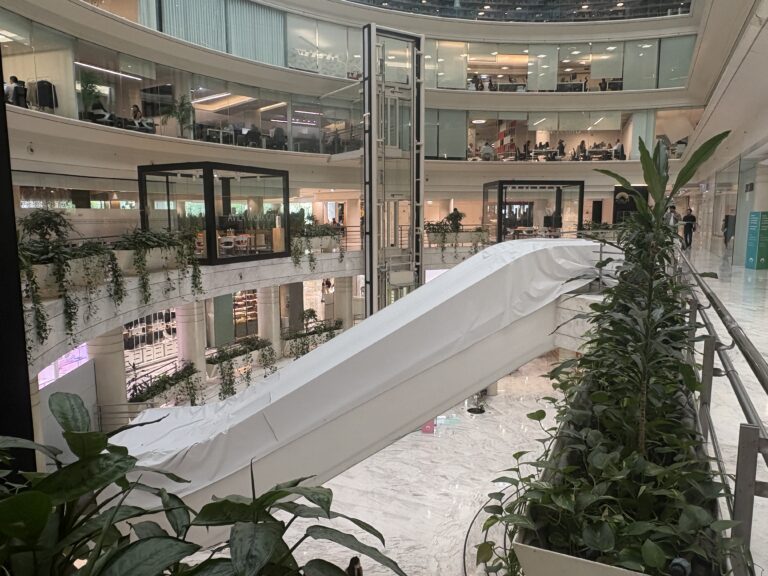
The Spanish chain of El Corte Inglés (Av. António Augusto de Aguiar 31) has exactly one store in Lisbon and it can almost singlehandedly provide almost everything you need across its 13 floors! That’s right – 13 floors! Without El Corté Inglés, Lisbon would be a much less convenient place. It even has a nice movie theater.
El Corte Inglés in Lisbon, Photo by Becky Gillespie
If you’re looking for toiletries, simple medical equipment, exotic fruit, and foreign brands of food items, head straight to the supermarket in the basement of El Corte Inglés. There is a separate gourmet deli section, a varied food court, and a pharmacy on the same floor. Just after the pharmacy, you can find an escalator going down, which leads you to four more subterranean floors that many people miss!
One of many aisles in the supermarket at El Corte Inglés, Photo by Becky Gillespie
Don’t miss these subterranean floors because you will find everything from pet goods, housewares, tools, a post office, stationery, children’s toys, and even a place to get your gifts wrapped during the Christmas season.
The very top floor of El Corte Inglés hosts an array of gourmet restaurants, an oyster bar, and fancy food products including teas, pastas, and spices. The upper floors of El Corte Inglés are a great place to find luxury home goods, kitchen appliances, and a big range of cookware.
El Corte Inglés Gourmet Dining Experience, Photo by Becky Gillespie
The thing to remember about El Corte Inglés is that prices are higher but not unreasonable. Prices are still cheaper for toiletries than you will find at the centrally located small pharmacies.
“Chinese Stores” – Where to Find Almost Everything You Generally Need for a Questionable Quality but a Low Price
When you want to find a miscellaneous tool, gadget, decorative item, or cooking implement in Lisbon, a Chinese shop (loja chinesa) is your best option! What you will buy will undoubtedly be lower quality than El Corte Inglés, but you will also pay much less. Looking for an item in a Chinese shop is kind of like a scavenger hunt and it is never guaranteed that it will have what you need, but the Chinese shop inventory is quite surprising and helpful when you need an item in an emergency. Chinese shops are usually open every day (even on national holidays in Portugal), although they don’t always take cash. Type “Loja Chinesa” into Google and you can find a slew of them scattered around Lisbon!
Inside a typical Chinese shop in Lisbon, Photo by Becky Gillespie
Supplements and Specialty Health Foods
If you’re looking for vitamins, magnesium, protein powder, or that beloved turmeric-ginger blend you swear keeps your joints from falling apart, head to Celeiro (pronounced suh-LAY-roo). It’s Portugal’s go-to health food chain, with over 40 locations across the country, including several in Lisbon. Google Maps can also help you find your closest Celeiro.
Celeiro in Colombo, Photo by Becky Gillespie
Think of it as Lisbon’s answer to Whole Foods and GNC combined. Celeiro sells supplements, organic dry goods, herbal teas, natural cosmetics, and gluten-free snacks. Some of them, like the one at Colombo Shopping Centre, even have their own cafés built in. Their staff tends to be well-informed, and the store carries many international brands.
Some larger Continente Bom Dia, Auchan, and Pingo Doce supermarkets have “natural” sections, but these are a hit-or-miss. For specialty items like plant-based protein powders or vegan supplements, stick with Celeiro.
The aforementioned Well’s store on Rua Garrett 53-57 also has quite a few supplements on the basement level.
Electric Fans to Survive in the Summer
If you arrive in Lisbon in the summer and your apartment doesn’t have air conditioning, you’ll start looking for a fan faster than you can learn the Portuguese word for hot (it’s calor, by the way). The good news is: fans are common. The bad news? They’re not always cheap or easy to find.
Chinese shops (lojas chinesas) scattered throughout the city often sell fans during the warmer months. These stores stock all kinds of random household goods, but their prices and quality can be unpredictable. Some visitors report paying €40–€80 for a simple pedestal fan.
You can also check the Continente at Colombo Shopping Centre, Worten (Portugal’s go-to electronics and appliances store), or Auchan at Amoreiras Shopping Center (which has its own attached electronics section). IKEA and Leroy Merlin also sell fans during the summer season, and both offer click-and-collect options if you’re using Uber or Bolt to transport things home. Head to both of these locations in Alfragide to get the biggest selection in house (IKEA – R. Oscar Niemeyer, Leroy Merlin Av. dos Cavaleiros 70). Leroy Merlin is the closest thing that Lisbon has to Home Depot from the US.
Entrance to Continente Colombo, Photo by Becky Gillespie
Miscellaneous Housewares: Drying Racks, Hair Catchers, Lightbulbs, and More
Portugal generally using clotheslines, but if your Airbnb doesn’t come with a drying rack, you’ll want to pick one up. These racks are found in Chinese shops, larger Continente and Auchan locations, and at IKEA or Leroy Merlin.
If you’re after random household odds and ends, like shower hair catchers, curtain hooks, clothes pegs, or light bulbs, Chinese shops are your best bet.
One of many Chinese shops in Lisbon, Photo by Becky Gillespie
Miscellaneous Kitchenware
You’d think all supermarkets would carry basic kitchen items, but that’s not always the case. Some (but not all) Pingo Doce or Lidl stores have a small housewares aisle with plastic cups and plates, but others don’t even stock a colander.
For anything beyond the bare minimum (like a good cutting board, a pitcher for sangria, or durable plastic containers), you’ll have better luck at Continente Modelo, Auchan, IKEA, or El Corte Inglés. Don’t overlook Flying Tiger (a Danish variety store chain) for quirky and surprisingly useful kitchen tools.
For higher-quality or more stylish pieces, Lisbon has a few design-forward shops like A Vida Portuguesa, though these tend to focus more on aesthetics rather than function and are better for finding a nice souvenir to take home.
Office and Stationery Supplies
Here’s where things get oddly tricky: where do you buy a single envelope? ur a roll of tape?
While American convenience stores often carry these items, Portugal spreads them out across multiple store types. You can find envelopes and basic stationery at:
FNAC (a bookstore/electronics chain with a surprising stationery section)
Staples (yes, they exist here!)
El Corte Inglés (department store)
Flying Tiger (limited but fun selection)
Continente (in larger locations only; the one at Colombo Shopping Centre definitely has it)
Don’t expect to find stationery at pharmacies or your neighborhood Pingo Doce. If you have a papeleria in your neighborhood, you may also be in luck. Search this in Google Maps.
Furniture (like Office Chairs)
Maybe you’re working remotely in Lisbon and your apartment has an office chair that isn’t up to your standard. You might be wondering: where do I get a desk chair?
Your best bets are:
IKEA (Alfragide or Loures) – Budget-friendly and great selection
Continente at Colombo Centre
Leroy Merlin – Surprisingly good for home office needs
If you don’t have a car, consider using UberXL or Bolt Van to get your furniture back to the apartment from IKEA, or take advantage of IKEA’s delivery and assembly service.
Hardware and DIY – Tools, Paint, Repairs
For anyone staying longer, renovating, or just needing to fix a loose door hinge, head to Leroy Merlin, the Home Depot of Portugal. With locations in Alfragide, Loures, and beyond, it’s your one-stop shop for paint, tools, lighting, and plumbing supplies.
IKEA also carries some hardware basics, while Worten or FNAC can help with small appliances and electronics. The subterranean levels of El Corte Inglés also have tools!
Electronics and Tech – Chargers, Cables, Headphones
If you’ve forgotten your charger or need a power adapter, head to:
Worten – Large electronics chain, found in most malls
FNAC – Combines books, gadgets, and accessories
Radio Popular – Similar to Worten, often slightly cheaper
MediaMarkt – If you’re near Colombo Shopping Center
Chinese shops also sometimes carry basic cables and chargers, but quality can be hit-or-miss.
Clothing Basics – Socks, Underwear, and Raincoats
If your suitcase didn’t survive Ryanair baggage handling and you need a few wardrobe basics, Lisbon has several affordable and centrally located options:
Primark – Inside Colombo or Almada Forum
Lefties – Owned by Zara’s parent company, but much cheaper
C&A – Good for basics and family shopping
H&M, Zara, Pull & Bear – For slightly trendier options. If you get invited to a party and are looking for something affordable to wear, our favorite stop is the massive Zara in Rossio (Praça Dom Pedro IV 96 122). They might win the prize for most changing rooms in Lisbon!
For socks, tights, and lingerie basics, even Continente has small selections in larger stores.
Cheap Outdoor and Sporting Equipment – Quality Water Bottles, Tents, and Sleeping Bags
Repeat after us. Decathlon. Decathlon. Decathlon. This French sporting goods retailer is actually the largest in the world and has stores in 79 countries as of 2024. Lisbon is lucky to have quite a few locations with the most convenient being the one connected to El Corte Inglés on the ground floor (although this is not very big compared to the Oriente or Alfragide locations). If you want the widest selection, however, you should head to the Lisbon Oriente location or the one in Alfragide next to Ikea and Leroy Merlin. Decathlon is also next to Almada Forum. Decathlon has surfing gear, running clothes, roller skates, and even equestrian products in its biggest locations.
A smaller chain called Sport Zone can be found in Amoreiras Shopping Plaza or Colombo Shopping Centre and is great for picking up a very cheap one-piece swimsuit or water bottle for the local gym at a very affordable price.
Bookstores and English-Language Books
Need a journal, novel, or Portuguese phrasebook? Try:
FNAC – Carries a selection of English books
Bertrand – Visit the world’s oldest bookstore in the world in Chiado (R. Garrett 73 75)
Ler Devagar – A must-visit in LX Factory, featuring English titles and quirky finds
Bivar Books – An English-language used bookstore near Saldanha (Rua de Ponta Delgada 34A)
Ler Devagar. Photo by francesbean (Flickr)
Bonus Tip: Ask Locals and Use Google Maps Strategically
When in doubt, ask a local (young people are the most likely to speak English) or use Google Maps with keywords in Portuguese. Try searching:
“loja de ferragens” (hardware store)
“papelaria” (stationery store)
“eletrodomésticos” (appliance store)
“loja chinesa” or “bazar” (Chinese shop)
Final Thoughts
Lisbon’s shopping culture has fewer big-box stores, more specialty shops, and a bit of mystery. It may not be as instantly convenient as what you’re used to, but it does come with its charms, which include unexpected finds in neighborhood shops, friendly interactions with staff, and the joy of finally spotting exactly what you need in a place you never expected.
So the next time you need a lightbulb, an envelope, or an electric fan, now you know where to look! The right shop is out there, and with this guide, you might even find it on the first try.
Pharmacy in the basement of El Corte Inglés, Photo by Becky Gillespie
Special thanks to Briana and John for inspiring this article.
Baba de camelo literally translates to “camel drool,” but don’t let the name scare you off. This uniquely Portuguese dessert is anything but disgusting (or something you’d only be challenged to try in the Sahara desert). With its rich, velvety texture and sweet, caramelized flavor, baba de camelo is a dreamy mousse made from just two humble ingredients: sweetened condensed milk and eggs. Could this be any easier to prepare for a dinner party?
It’s believed to have originated in the early 20th century, possibly invented by a creative hostess named Valentina trying to whip up a dessert for some guests with whatever she had in the pantry. Worried that she may not have enough for everyone, Valentina called her improvised recipe “camel drool,” but those who tried it were won over despite the dessert’s questionable appearance.
Today, baba de camelo is a beloved staple in Portuguese homes and traditional restaurants. You’ll often find it topped with crushed almonds or cookies and occasionally served in adorable little jars. While the classic version is flawless in its simplicity, we’ve added our own twist by folding in a swirl of melted milk chocolate and a hint of sea salt to balance the sweetness. The result? A next-level mousse that still honors the original.
If you’re looking for an indulgent dessert that’s surprisingly easy to make and sure to get people talking (even if they ask why you’re serving camel drool), baba de camelo might just become your new favorite.
Ingredients (Serves 6)
1 can (397 g / 14 oz) sweetened condensed milk
4 large eggs, separated
50 g (1.75 oz) milk chocolate (or semi-sweet), chopped
a pinch of flaky sea salt (optional, but recommended)
crushed toasted almonds or Maria cookies for your topping (optional)
Instructions
1. Prepare the condensed milk base.
Start by removing the label from the can of sweetened condensed milk. Place the sealed can in a deep saucepan and cover completely with water. Bring the water to a boil, then reduce to a simmer and let it cook for 2 hours to caramelize the milk. Make sure the can remains fully submerged. Add more water as needed.
After 2 hours, carefully remove the can and let it cool to room temperature before opening.
Short on time? You can use about 1 cup of pre-cooked condensed milk or dulce de leche instead.
2. Separate your eggs.
Crack the eggs and separate the yolks from the whites. Place the yolks in one bowl and the whites in another. Beat the whites with a hand mixer until stiff peaks form. Set aside.
3. Combine the caramel with the yolks.
Open the cooled can of caramelized condensed milk and pour it into a mixing bowl. Stir in the egg yolks, one at a time, until fully incorporated and smooth.
4. Add the chocolate swirl.
Melt the chopped milk chocolate in a bain-marie (double boiler) or microwave in short 15-second bursts, stirring between each. Once melted, stir the chocolate into the caramel-egg yolk mixture. Add a pinch of flaky sea salt, if using. The chocolate will deepen the flavor and add a subtle complexity.
5. Fold in the egg whites.
Gently fold in the whipped egg whites in batches, being careful not to deflate them. Use a spatula and fold just until the mixture is light and airy with no visible streaks of egg white.
6. Chill.
Spoon the mousse into small serving glasses, ramekins, or one large dish. Cover and refrigerate for at least 4 hours, or ideally overnight, to let the texture set.
7. Serve.
Right before serving, sprinkle the tops with crushed toasted almonds or Maria cookies for a bit of crunch. Serve chilled with small spoons.
Want to Make Baba de Camelo Even More Irresistible?
Our version adds just a touch of chocolate and salt, but feel free to get creative. A splash of espresso, a hint of orange zest, or even a crumble of Biscoff cookies can all bring something new to the party. Just keep the mousse itself airy and caramel-rich, and you’ll have a winner every time.
Ready to Try Baba de Camelo?
If you can get people to try it, we’re sure that camel drool (baba de camelo) is going to win people over, especially if you dress it up with some cookie topping. Best of all? No oven required, no fancy equipment, and just a handful of ingredients. Who knew camel drool could taste this good?
If you’ve walked by a construction barrier in Lisbon or dodged scaffolding in Porto recently, you’re not alone. As a Lisbon resident passing by a metro construction site for the umpteenth time, I have often wondered: What exactly is going on with the Lisbon metro extension project or when will Avenida Liberdade look normal again? From subway tunnels snaking beneath city streets to massive rainwater drainage systems designed to withstand once-in-a-century storms, some sections of Portugal’s two largest cities resemble the epicenter of a construction site – and it seems like it is never going to end.
So what’s going on? Here’s a comprehensive update on the major infrastructure projects currently underway in Lisbon and Porto in 2025.
Lisbon Metro: Circular, Red, and Purple Line Extensions
The Circular Line (Rato to Cais do Sodré)
Originally projected to open in October 2024, the much-anticipated Circular Line has run into delays but is still mostly on track. The €331.4 million project will eventually connect Rato and Cais do Sodré, completing a full circle in the Lisbon Metro and introducing two new stations: Estrela and Santos. This connection is expected to radically simplify transfers for riders moving between the Green, Yellow, and Red lines.
However, due to construction delays and logistical setbacks, the opening is currently scheduled for Q2 of 2026, with commercial service expected shortly afterward. These will be the first new subway stations in Lisbon since April 2016 when the Blue Line was extended from Amadora Este to Reboleira.
Red Line Extension (São Sebastião to Alcântara)
While Lisbon Metro authorities awarded a €321.9 million contract for the Red Line extension in late 2023, the project has not yet broken any ground! Delayed first by legal disputes and now stuck in an administrative holding pattern, this project remains mired in paperwork. After receiving prior approval from the Court of Auditors in March last year, it still had to await the decision of a lawsuit filed by a competitor.
As of March 2025, the extension of this line with the construction of four new stations in Campolide/Amoreiras, Campo de Ourique, Infante Santo, and Alcântara is still awaiting the Decision on the Environmental Compliance of the Implementation Project (DCAPE) and a favorable opinion from the National Association for Emergency and Civil Protection (ANEPC) on the safety plan.
Once launched, this extension of the Red Line will bring the western half of Lisbon much-needed east-west connectivity. The project has strong financial backing, including €357.5 million from the Recovery and Resilience Plan (PRR) and the remainder from the state budget. However, even with funds secured, it’s become a textbook case of how bureaucracy can slow down critical urban infrastructure. It will be interesting to see if the Red Line extension will be completed before the construction of the new Lisbon airport.
The Purple Line (Loures to Odivelas Light Rail)
Nicknamed the Purple Line, this light rail system between Loures and Odivelas was originally a PRR-financed project, but it hit a wall when no contractors submitted affordable bids during the 2024 tender.
A new procurement process is now nearly finalized, with an estimated build time of 38 months (based on the Circular and Red line delays, add at least 36 more months to this). Financing is being restructured, possibly pulling from the State Budget, Environmental Fund, or EU Cohesion Funds designated for the 2030 cycle. If successful, this project could ease commuting congestion in some of the most densely populated suburbs of northern Lisbon, areas that have long been underserved by rail.
Lisbon’s Flood Defense General Drainage Plan
While the Lisbon Metro slowly inches its way forward, Lisbon’s General Drainage Plan (PGDL) is making substantial underground progress. On July 22, the massive tunneling machine known affectionately as “Oli” completed excavation of the city’s largest-ever drainage tunnel: 4.4 kilometers long, 5.5 meters wide, and buried up to 40 meters deep beneath the capital.
The tunnel stretches from Campolide to Santa Apolónia and passes below some of the most historic and flood-prone areas in Lisbon. Designed to handle even once-in-a-century rainfall events, it will prevent water from reaching vulnerable low-lying areas like Baixa, Avenida da Liberdade, and Alcântara.
Three vortexes (swirling vertical chutes that manage the descent of stormwater) are being built along the route. Two (at Avenida da Liberdade and Almirante Reis) are complete, and the third (Santa Marta) is in progress.
This winter 2025, the tunnel should begin operation. Meanwhile, Oli will be dismantled, moved overnight through Lisbon’s streets, and reassembled in Beato to begin work on a second tunnel toward Chelas in early 2026. This second tunnel will be smaller but no less important in managing Lisbon’s water control in the future.
There is, however, a cost: between September 2025 and April 2026, a crucial section of the Metro Blue Line between Terreiro do Paço and Santa Apolónia will close temporarily to allow safe reinforcement work where the new drainage tunnel crosses the existing subway line.
Porto Metro
Yellow Line Extension (To Vila d’Este)
Porto residents celebrated a long-awaited moment in June 2024 when the extended Yellow Line to Vila d’Este began full operations. Originally slated for a 2023 opening, the project faced delays due to the pandemic, supply chain disruptions, and inflation. Now complete, it offers southern suburban commuters easier access to central Porto and improves connections to major hospitals in Vila Nova de Gaia.
It’s also given new life to older stations along the line, which have been modernized to accommodate the increased number of riders.
Pink Line (Casa da Música to São Bento)
The Pink Line is moving forward albeit slowly. Stretching from Casa da Música to São Bento, it is now expected to be completed by July 2026. This line will help alleviate pressure on Porto’s most central metro hubs and allow for quicker east-west travel without requiring transfers. The final tunnel of the Pink Line project between Casa da Música and Galiza opened in August 2025 with this portion of the project currently expected to open in March-April 2026.
Costs for the Pink and Yellow lines have risen to €511 million, which reflects both their technical complexity and the rising cost of construction materials. Even so, city planners say the investment is crucial to meeting Porto’s 2030 mobility targets.
Rubi Line (Casa da Música to Santo Ovídeo)
The Rubi Line, awarded in late 2023 and funded by the PRR, is shaping up to be Porto’s next big step forward. The line will stretch from Casa da Música to Santo Ovídeo and feature a brand-new metro bridge over the Douro River. Construction is now underway, and the project is on track for a Q1 2027 completion.
When finished, it will serve daily commuters and ease traffic along the congested Luís I and Arrábida bridges.
Trindade Station, Porto Metro, Cornelius Kibelka, Wikimedia Commons
Infrastructure in Context
It’s easy to reduce infrastructure projects to numbers and dates: euros invested, kilometers dug, and months delayed. However, behind every tunnel boring machine and legal document are real people waiting for better lives: a grandmother in Loures who struggles with overcrowded buses, a nurse in Gaia who walks 30 minutes from the closest metro stop, or a café owner in Alcântara who fears the next big flood could destroy her shop.
These projects, as frustratingly slow as they may be, represent Portugal’s attempt to catch up with the needs of a modern, growing population. Lisbon and Porto are increasingly global cities with tech hubs, digital nomads, booming tourism booms, new immigrant communities putting pressure on aging systems.
Until recently, both cities relied on infrastructure designed for a very different era. The Lisbon Metro’s core lines were built in the 1950s and 60s, when the population was smaller, denser, and less mobile. Porto’s initial metro system didn’t even launch until the early 2000s. In addition, climate resilience, which was once a niche concept, is now central to every urban project moving forward, especially as southern Europe faces longer droughts and more intense rainfall.
The tunnels, trains, and drainage systems underway represent a deeper urban shift towards building cities that must work for everyone, not just those who can afford a car or live on higher ground. Cities must focus on resilience and also dignity: the dignity of a reliable commute, the dignity of dry feet during a winter storm, and the knowledge that your city is investing in your quality of life, even if you can’t see it being built.
What You Can Expect Next
In Lisbon, the end of 2025 and beginning of 2026 will bring more disruptions. Expect announcements from the Lisbon Metro regarding the Blue Line closure, which will require careful planning for commuters along the Santa Apolónia–Terreiro do Paço corridor. Simultaneously, Beato will become the unlikely epicenter of Lisbon’s flood prevention strategy, as Oli the tunneler prepares to begin her second act underground.
In Porto, you’ll see the Rubi Line finally take shape, particularly along the Douro River where bridge construction will soon begin. This may involve visible changes to the waterfront including temporary closures, rerouted traffic, and a great deal of curiosity from locals and tourists. By mid-2026, the Pink Line should be nearing completion, and São Bento will become an even more crucial interchange station.
Final Thoughts
Progress takes time, and in Portugal, we know that it often takes longer than anyone expects. The good news is: it is happening.
So the next time you’re stuck waiting for a delayed metro or rerouted down a side street filled with orange cones, remember: that’s the sound of the future arriving. It’s just not here yet.
But the future is always on its way. Soon enough, Lisbon and Porto won’t just be two beautiful cities. They’ll be better ones.
If you’ve been learning Portuguese for a while, you’ve probably mastered the basics: how to order a coffee, ask for directions, or introduce yourself at a dinner party. But there comes a point in every language learner’s journey when they want to say more than “Where is the bathroom?” Maybe you want to share a memory, talk about your trip to Porto, or even recount a dream you had last night. In other words, you want to tell a story.
Storytelling is where language really comes alive. It helps you connect with people on a deeper level, express your personality, and truly experience the richness of a culture. But how do you move beyond basic sentences into fluid, expressive storytelling in Portuguese?
The secret? Conjunctions.
These humble little words are the glue that holds a story together. They give your tale rhythm, structure, and depth. In this article, we’ll introduce you to 16 essential conjunctions and transition words used in European Portuguese storytelling. You’ll find their English equivalents, examples of how to use them, and tips to help you sound like a natural. Are you ready? Let’s go!
1. Era uma vez – Once upon a time
Let’s start at the very beginning – literally. This is the classic opening line for fairy tales and stories, just like in English.
Example Era uma vez uma senhora que vivia numa pequena casa à beira do rio.
“Once upon a time, there was a lady who lived in a small house by the river.”
Tip – Use “era uma vez” whenever you feel the need to “once upon a time” your friends, even when joking around with friends.
2. Depois – Then / Afterward
“Depois” is a time-based connector that helps you move the story forward.
Example Fomos à praia e, depois, almoçámos num restaurante à beira-mar.
“We went to the beach and then had lunch at a seaside restaurant.”
Tip – Use this to create sequence. It’s simple, natural, and essential.
3. Entretanto – Meanwhile / In the meantime
This is perfect for describing parallel actions or switching points of view.
Example Eu estava a cozinhar. Entretanto, o meu irmão arrumava a sala.
“I was cooking. Meanwhile, my brother was tidying up the living room.”
Tip – Great for storytelling with multiple characters or when setting up contrast.
4. A seguir – Next
Here is another handy phrase for moving things along in chronological order.
Example A seguir, decidimos visitar o castelo antigo.
“Next, we decided to visit the old castle.”
Tip – Can be used interchangeably with “depois” in many contexts.
5. Então – So / Then
“Então” is wonderfully flexible—it can indicate time, consequence, or even introduce a new part of the story.
Example Ela não apareceu. Então, decidimos começar sem ela.
“She didn’t show up. So, we decided to start without her.”
Tip – Listen for this in Portuguese conversations. It’s everywhere.
6. Por isso – Therefore / That’s why / So
This causal connector is key when you’re explaining consequences.
Example Estava a chover muito, por isso ficámos em casa.
“It was raining a lot, so we stayed home.”
Tip – Think of “por isso” as the bridge between a cause and its effect.
7. Portanto – Therefore / So / Thus
This is a clear and logical way to connect ideas or explain consequences in your story.
Example Estava cansada, portanto fui para casa mais cedo. “I was tired, so I went home early.”
Tip – Use this when you want to explain the result of something that just happened. It’s slightly more formal than “por isso” and adds clarity and flow, especially in written or reflective storytelling.
8. No entanto – However / Nevertheless
Perfect for adding a twist or contradiction to your story.
Example Tínhamos pouco dinheiro. No entanto, conseguimos fazer uma viagem incrível.
“We had little money. Nevertheless, we managed to take an amazing trip.”
Tip – Use this to show resilience or unexpected outcomes in your story.
9. Contudo – However / Nonetheless
Very similar to “no entanto,” but slightly more formal or literary.
Example O caminho era difícil. Contudo, não desistimos.
“The path was difficult. Nonetheless, we didn’t give up.”
Tip – If you’re writing or telling a more serious story, “contudo” adds elegance.
10. Atualmente – Nowadays / Currently
Great for showing contrast between the past and present.
Example Antigamente, era uma vila tranquila. Atualmente, é um destino turístico popular.
“In the past, it was a quiet village. Nowadays, it’s a popular tourist destination.”
Tip – Useful when shifting from a story to a reflection or moral.
11. Logo – As soon as / Right away / So
Context is key with “logo.” It can mean “soon” or “therefore” depending on usage.
Example Logo que chegámos, começou a chover.
“As soon as we arrived, it started to rain.”
Tip – “Logo que” = “as soon as.” Without “que,” it may imply consequence as you can see in the following example:
Example Ela não estudou para o exame. Logo, teve uma nota baixa. “She didn’t study for the exam. Therefore, she got a low grade.”
12. Quando – When
An essential building block of nearly every narrative.
Example Quando eu era criança, adorava brincar no jardim da minha avó.
“When I was a child, I loved playing in my grandmother’s garden.”
Tip – You can’t tell a story without “quando.” It’s indispensable.
13. Enquanto – While
Great for showing simultaneous events or long actions.
Example Enquanto ele dormia, eu lia um livro.
“While he was sleeping, I was reading a book.”
Tip – Pairs beautifully with the imperfect tense in Portuguese.
14. Assim que – As soon as
Like “logo que,” this phrase helps move the story forward quickly.
Example Assim que ouvi a notícia, liguei-te.
“As soon as I heard the news, I called you.”
Tip – Be ready to follow it with the past tense to express urgency or immediacy.
15. De repente – Suddenly
This one adds drama and surprise.
Example Estávamos a conversar calmamente quando, de repente, o cão começou a ladrar sem parar.
“We were chatting calmly when, suddenly, the dog started barking nonstop.”
Tip – Drop this into your story for tension or comic effect.
16. Em resumo – In short / Overall
Perfect for wrapping up your story or summarizing key points.
Example Em resumo, foi uma viagem cheia de surpresas e emoções.
“In short, it was a trip full of surprises and emotions.”
Tip – Use this to finish your story with a final reflection or conclusion.
Bonus Expressions for a Little More Storytelling Flair
While conjunctions are the framework, a few bonus phrases can spice things up:
“Sabes o que aconteceu depois?” – “Do you know what happened next?”
“Nem vais acreditar!” – “You won’t believe it!”
“Foi aí que tudo mudou…” – “That’s when everything changed…”
These help add a sense of intrigue and keep your listener hooked.
Telling Your Own Stories
Now that you’ve got a toolbox of 16 essential storytelling conjunctions in European Portuguese, try using them in your own life. Retell something that happened to you yesterday. Describe your first day in Lisbon. Recreate a childhood memory.
Here’s a short sample story using several of the conjunctions you just learned:
Mini-Story Example
Era uma vez uma jovem chamada Inês que vivia numa aldeia pequena. Quando terminou a escola, decidiu viajar pelo mundo. Depois, foi para Itália, a seguir visitou a Grécia, e entretanto, conheceu pessoas maravilhosas.
Um dia, de repente, perdeu o passaporte. Estava desesperada. No entanto, um senhor simpático ajudou-a no consulado. Assim que recebeu os documentos novos, continuou a sua aventura.
Atualmente, Inês vive em Lisboa e trabalha como guia turística. Em resumo, descobriu o mundo…e também descobriu a si mesma.
English Translation
Once upon a time, there was a young woman named Inês who lived in a small village. When she finished school, she decided to travel the world. Then, she went to Italy, next she visited Greece, and meanwhile, she met wonderful people.
One day, suddenly, she lost her passport. She was desperate. However, a kind gentleman helped her at the consulate. As soon as she received her new documents, she continued her adventure.
Nowadays, Inês lives in Lisbon and works as a tour guide. In short, she discovered the world…and also discovered herself.
Final Thoughts
Learning to tell a story in Portuguese doesn’t require perfect grammar or a huge vocabulary. It requires confidence, curiosity, and just enough structure to get your point across. Conjunctions are the unsung heroes of storytelling, and once you get comfortable with them, you’ll find your Portuguese becoming more natural, expressive, and fun.
So, the next time someone asks you “Fala português?,” don’t just say yes.
Tell them a story.
I recently discovered Realejo wandering around the second floor of Ler Devagar, one of Lisbon’s most famous bookstores in the LX Factory. Standing alone next to a sign that said “Experience Lisbon in 2 Minutes Puppet Show” was William Barreto, who encouraged me to sit down on a stool directly across from him, put on a pair of headphones, and get ready for the show. I quickly found myself peering through a hole at the end of a tiny wooden version of the iconic Tram 28 preparing for a private performance that only I could see, like a secret waiting to be uncovered. Inside that box, I was treated to a puppet show where a rotating cast of puppets took the tram through the ups and downs of the city. There was love. There was drama. Even Fernando Pessoa showed up. Less than three minutes later, my ride on Tram 28 was over. This is Realejo: Tiny Box Theater, and while it may be small in scale, it leaves a lasting impression.
Founded in 2017 by Brazilian artist William Barreto and educator Adriana Daltoé, Realejo began as a creative project based around miniature storytelling. William, who previously worked on a grand scale as a sculptor for Rio de Janeiro’s carnival floats, took an unexpected turn toward the much smaller scale after discovering Lambe-Lambe theater, which is a solo-viewer form of puppet theater that originated in Bahia, Brazil.
Adriana Daltoé is an educator and dramaturg with a postgraduate degree in Educational Management and Brazilian History. Her experience in childhood education and public cultural programming helps shape Realejo’s performances and outreach into something accessible, heartfelt, and meaningful.
Encouraged by fellow artist Sérgio Biff, William and Adriana built their first performance box, inspired by the poetry of Fernando Pessoa.
When the couple relocated to Lisbon in 2018, they brought that same box with them and debuted it as Janelas, a poetic and contemplative piece set in a lonely mansion, rich in metaphor and movement.
Together, William and Adriana live by the mission of bringing “pinches of poetry in seconds.” Their work invites viewers to pause, peer inside, and rediscover wonder one performance at a time.
Realejo founders Adriana Daltoé and William Barreto, Courtesy of Realejo
Since then, Realejo has developed into a traveling theater of six unique boxes, each containing a short, hand-crafted puppet performance that lasts for less than three minutes. These shows are intricate and intimate performances that are designed for only one or two spectators at a time. They draw on the long tradition of peep shows, magic lanterns, and early cinematic devices while embracing the expressive potential of puppetry and poetic narratives. Every element of the performance including the scenery and the soundtrack is created by William and Adriana themselves.
At its core, Realejo is about slowing down, even for a moment, and entering a world where a puppet’s tiny gesture can connect you to the history and beauty of an entire culture.
Background and Production: A Conversation with the Artists
1. What is Realejo Artes, and how did it start? Realejo Artes began in Brazil in 2017 as the joint effort of visual artist William Barreto and his wife, childhood educator Adriana Daltoé. William, who comes from a background in large-scale sculpture and set design, wanted to pursue art independently when the couple moved to Portugal. After discovering Lambe-Lambe theater, he and Adriana created their first box theater together, starting with a piece inspired by Fernando Pessoa. They moved to Lisbon in 2018 and began performing regularly at Ler Devagar, where William remains an artist-in-residence.
Realejo founders Adriana Daltoé and William Barreto, Courtesy of Realejo
2. What inspires the shows you create? Each performance is inspired by a blend of visuals, literature, and emotion. The first piece, Janelas, was drawn from a Pessoa poem. Others pay tribute to iconic artists and places, such as Luzes (inspired by Van Gogh) and Eléctrico 28 (a love letter to Lisbon’s famous tram). The duo is especially drawn to themes of introspection, everyday magic, and the poetry found in small moments.
A production of Janela based on a poem by Fernando Pessoa, Courtesy of Realejo
3. Do you build everything yourselves? Yes. William is responsible for the artistic conception, design, sculpting, and set-building, while Adriana handles the research, writing, public relations, and manipulation of the puppets. Their process is deeply collaborative, and they focus on blending art and pedagogy into each creation.
William Barreto performing Elétrico 28, Courtesy of Realejo
4. Where and when do you perform? Realejo performs weekly at Ler Devagar in Lisbon’s LX Factory. In addition to their residency, they travel across Portugal and internationally, participating in festivals such as Festival Marionetas na Cidade (Alcobaça), Festival Imaginário (Sintra), and Theatroscope in Bulgaria. The format is adaptable to fairs, public squares, schools, libraries, and private events.
5. What are your most recent or upcoming productions? Realejo currently performs six shows: Janelas, Luzes, Voo Poético, Eléctrico 28, A Viagem, and O Castelo. Their latest piece, O Castelo, is a whimsical medieval tale of a knight and a dragon that takes an unexpected twist. They are also preparing to expand their educational programming and continue to bring Teatro de Caixa to new audiences across Portugal.
One of many incredible mini theater sets from Realejo, Courtesy of Realejo
Performances and Educational Outreach
Realejo’s performances are intimate and transportive. Each show lasts just two to three minutes but creates a self-contained universe of emotion and storytelling. The boxes are entirely analog. There are no screens or projections. Realejo only relies on the puppets, sets, lighting, and sound to convey their narratives.
In addition to public and private performances, Realejo is deeply invested in education. They offer workshops designed for both children and adults. In their Box Theater Workshops, participants create their own working Teatro de Caixa from start to finish and explore the mechanics of puppetry, storytelling, and scenic design. There are also technical workshops on airbrush painting, sculpture, and miniature set construction. Realejo frequently works with schools and cultural institutions and use theater as a tool for creative exploration and collaborative learning.
Adriana Daltoé, Courtesy of Realejo
Contact Information
For performances, workshops, or collaborations, you can reach out to Realejo at:
You can catch Realejo performances at Ler Devagar weekly on the second floor next to Jazz Messengers record shop. Remember: sometimes the smallest stage holds the biggest stories.
A peek inside the box theater, LX Factory, Photo by Becky Gillespie
1. A Fresh, Fully Digital System Is Coming in January 2026
AIMA has awarded a contract for a brand-new application portal. From early next year, new applicants will be able to submit everything online—forms, payments, and even biometric scheduling—streamlining what’s now a multi-step, partly paper-based process.
2. Legacy Cases Stay on the Current Platform
To avoid data-migration headaches, ongoing and renewal applications will remain on the existing system. Importantly, AIMA plans to clear all renewal backlogs by October 15, 2025, and resolve pending concessions by December 31, 2025.
3. Behind-the-Scenes Efficiency Gains
Although you might not see it immediately, significant back-office optimizations are underway. These improvements will translate into faster processing in the coming weeks.
4. Queue Management & Court Rulings
Standard Processing: Files are still handled chronologically by DUC payment date. Note that the DUC (Documento Único de Cobrança) is a Portuguese document used for single payments to various government entities, including courts and the Finanças tax authority) payment date.
Exceptions: Cases with favorable court judgments or a small number of “pilot” files under new internal rules move ahead of the queue.
Court Filings: Positive decisions now require proof of actual residence in Portugal. AIMA is still working through 2024 court cases due to the volume.
5. Re-Submission Rollout
Once AIMA publishes the list of re-submitted dossiers, they will send out appointment notifications in order of re-submission. Expect September 2025 to mark a turning point. New criminal-record certificates won’t be requested unless an internal review flags an issue.
6. Staffing & Internal Guidance
AIMA has bolstered its legal team and issued fresh internal guidelines to ensure uniform treatment of renewal versus concession applications.
7. What’s New in the Renewal Process
For now, only primary applicants can apply with the new form; family-member renewals will follow later.
Your appointment notice will specify whether you must appear in person or can be represented by counsel.
Full documentation and proof of the minimum-stay requirement remain mandatory.
Renewals of now-extinct investment routes incur the standard fee (not the Golden Visa rate) but still enjoy the 14-day minimum-stay benefit.
8. Family Reunification & Permanent Residency
Family-member permits only proceed once the primary applicant’s application is formally approved.
Permanent residence post-Golden Visa no longer requires holding the original investment required to apply for the Golden Visa. AIMA will soon issue a formal clarification on the 0- versus 14-day stay rule.
9. Technical Glitches & How to Report Them
If your DUC payment isn’t reflecting or your file won’t reopen, you can have your lawyer compile all issues into a single email. Follow-up requests should be limited to once a month to avoid overloading the system.
10. No Penalties for Waiting
Holding proof of submission or a scheduled appointment protects you from fines or “blacklisting” during the waiting period.
11. Legislative Changes on the Horizon
Immigration Law Amendments: Final text pending presidential sign-off and possible Constitutional Court review; applies only to new cases.
Citizenship Law Updates: Delayed until late September for stakeholder feedback.
Golden Visa Framework Review: Slated to begin after summer, aiming to improve program efficiency.
To find out more on Golden Visa and AIMA updates, Jason Swan will be hosting a public webinar with live Q&A on the 13th August – click here to register.
Big changes are on the horizon for non-EU travelers heading to Portugal and the rest of the Schengen Zone. The European Commission has confirmed that the long-anticipated Entry/Exit System (EES) will officially begin its phased rollout on 12 October 2025. This marks a major shift in how borders are managed across Europe. Though some Portuguese airports have already received the new biometric scanners, Portugal has not yet confirmed exactly when it will begin using the system.
The EES will be introduced gradually across the 29 European countries participating in the Schengen Agreement (including Portugal) over a six-month period, with full implementation expected by 10 April 2026. Once in effect, the system will replace the traditional passport-stamping method used for decades with a more advanced digital alternative.
What Is the Entry/Exit System (EES)?
Designed to enhance both border security and efficiency, the EES is a digital platform that records key data about non-EU citizens traveling to and from the Schengen Area for short stays. This includes biometric data (such as fingerprints and facial scans) as well as travel information like date and location of entry or exit.
The goal is to better monitor how long non-EU travelers stay within the Schengen Zone and help authorities detect overstays or irregular migration. By centralizing this data, the EU also aims to streamline checks, identify identity fraud more easily, and make the overall travel experience faster and more secure, especially at busy border points like airports.
What Will Happen When You Travel?
If you’re entering the Schengen Area for the first time after 12 October 2025, you’ll likely be asked to provide a fingerprint or facial image, in addition to your usual passport information. These details will be stored digitally and used for subsequent border crossings. Travelers may register this biometric data in advance using a self-service kiosk or through a soon-to-be-released mobile application if offered by the country of entry.
For repeat travelers, the process will be quicker. Your biometric data will already be stored in the system. This means that you will simply be scanned and verified during future visits. In some cases, however, you may be asked to provide your data again.
Despite the new technology, traditional entry conditions still apply. Border officials can request additional documentation, and entry may still be denied if requirements aren’t met.
What Does This Mean for Portugal?
While Portugal is fully participating in the EES rollout, it has not yet confirmed the exact date when the new system will go live at its borders. However, the presence of biometric kiosks in airports like Lisbon, Porto, and Faro signals that preparations are well underway. Once implemented, the new procedures are expected to reduce queues and improve processing times particularly for travelers who take advantage of pre-registration options.
Until Portugal formally activates EES operations, travelers should be prepared for a mix of old and new systems. During the six-month rollout period, traditional passport stamps may still be used in some locations.
Non-EU citizens currently residing in Portugal should also expect to be subject to facial scans and providing biometric data. It will be important to keep your Portugal resident card with you at all times while traveling through the Schengen to support your right to be able to stay more than 90 days in the Schengen Zone.
What About ETIAS?
Running in parallel to the EES rollout is another major change: the upcoming European Travel Information and Authorisation System (ETIAS). Though it has been delayed multiple times, ETIAS is now expected to launch in late 2026.
ETIAS will require visa-exempt travelers such as those from the United States, the United Kingdom, Canada, and Australia to obtain pre-travel authorization before entering any of the 30 European countries that use the system.
How ETIAS Works
ETIAS is not a visa but an online travel authorization linked electronically to your passport. Once approved, it is valid for three years or until your passport expires, whichever comes first. It allows multiple short-term visits of up to 90 days within any 180-day period, but it does not guarantee entry. Border officials still have the final say.
Applying for ETIAS will cost €20, and most applications will be processed within minutes. However, in cases where additional documentation or interviews are required, the decision could take up to 30 days, so travelers are advised to apply well in advance.
Once approved, your ETIAS will be digitally linked to your passport. If your passport details change (for example, if you get a new one), you’ll need to apply for a new ETIAS authorization as well.
What Happens at the Border with ETIAS?
When you arrive in Portugal or another participating country, border agents will scan your passport and verify that you meet all the conditions for entry. If your ETIAS is valid and your biometric data is already in the EES system, the process should be quick especially if you’re using automated eGates. However, failure to present the correct documents or meet the conditions could still result in denied entry.
Why This Matters for Travelers to Portugal
Portugal, already a popular destination for digital nomads, retirees, and short-term tourists, will be deeply impacted by these new systems. The changes will likely reduce wait times at major border crossings in the long term, but during the transitional phase, travelers should be patient and informed.
If you’re planning a trip to Portugal in late 2025 or 2026, be sure to:
Bring a bottle of water and snacks with you to the immigration line
Make sure you use the restroom before entering the immigration line
Stay updated on Portugal’s timeline for EES implementation.
Consider registering biometric data early, if available.
Apply for ETIAS once it becomes mandatory in late 2026.
As these systems come online, they mark a shift toward smarter, tech-driven travel across Europe offering more efficiency and tighter security, while still protecting individual privacy through strict data safeguards.
For now, travelers to Portugal should watch this space, plan ahead, and prepare for a new era of digital borders.
Subscribe to our newsletter below to get the latest news, reviews, info and more!
We use cookies to ensure that we give you the best experience on our website. If you continue to use this site we will assume that you are happy with it.