Home Blog Page 137

Coimbra

0

The historical importance of Coimbra is massive, it’s one of Portugal’s oldest cities, since Roman times, this city was already an important location.

Coimbra was once the proud capital of the Portuguese nation. It is located in the center of Portugal, Coimbra is often called the City of Knowledge since its home to the oldest University in Portugal, the symbol of excellence, and classified as a UNESCO World Heritage.

The best way to do your journey to Coimbra is on foot because the city has two zones, the upper section (Alta), where you can find the University, Joanina Library, and Sé Velha, and the lower section area (Baixa), the old part of the town which is more commercial with restaurants, and tiny tascas (budget eateries).

What to do in Coimbra

Visiting Coimbra and not visiting the University is like going to Rome and not seeing the Pope. To get to the university, start from the Almedina Tower, the entrance gate forming part of the wall that surrounded the old city situated in the lower section of the city. Here, you can explore the alleys that date back to the 8th century.

Keep on walking and from here you will have to “climb the mountain” through a staircase from Rua de Quebra Costas (built to get from downtown to uptown) to the Sé Velha square.

Here, you can visit The Sé Velha (Old Cathedral), a church that resembles a fortress financed by the first king of Portugal, Afonso Henriques.

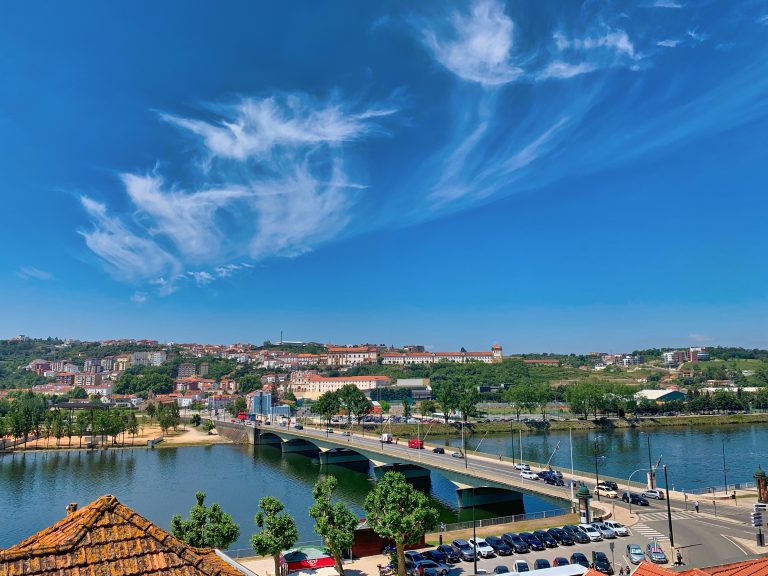
If you keep going you will reach the University grounds and access the Patio admire the view over the Mondego River and get a panoramic view over all of town! One of the most popular attractions of this Area is the Joanine Library, a Baroque library situated in the center of the University of Coimbra, by the university tower.

The library was built in the 18th century and it is considered a national monument with priceless historical value. There are thousands of works that lay upon a lavish space full of beauty and exoticism, where the richness of the painted ceilings is in harmony with the balustrades and shelves made of golden leaves and wood from the tropics.
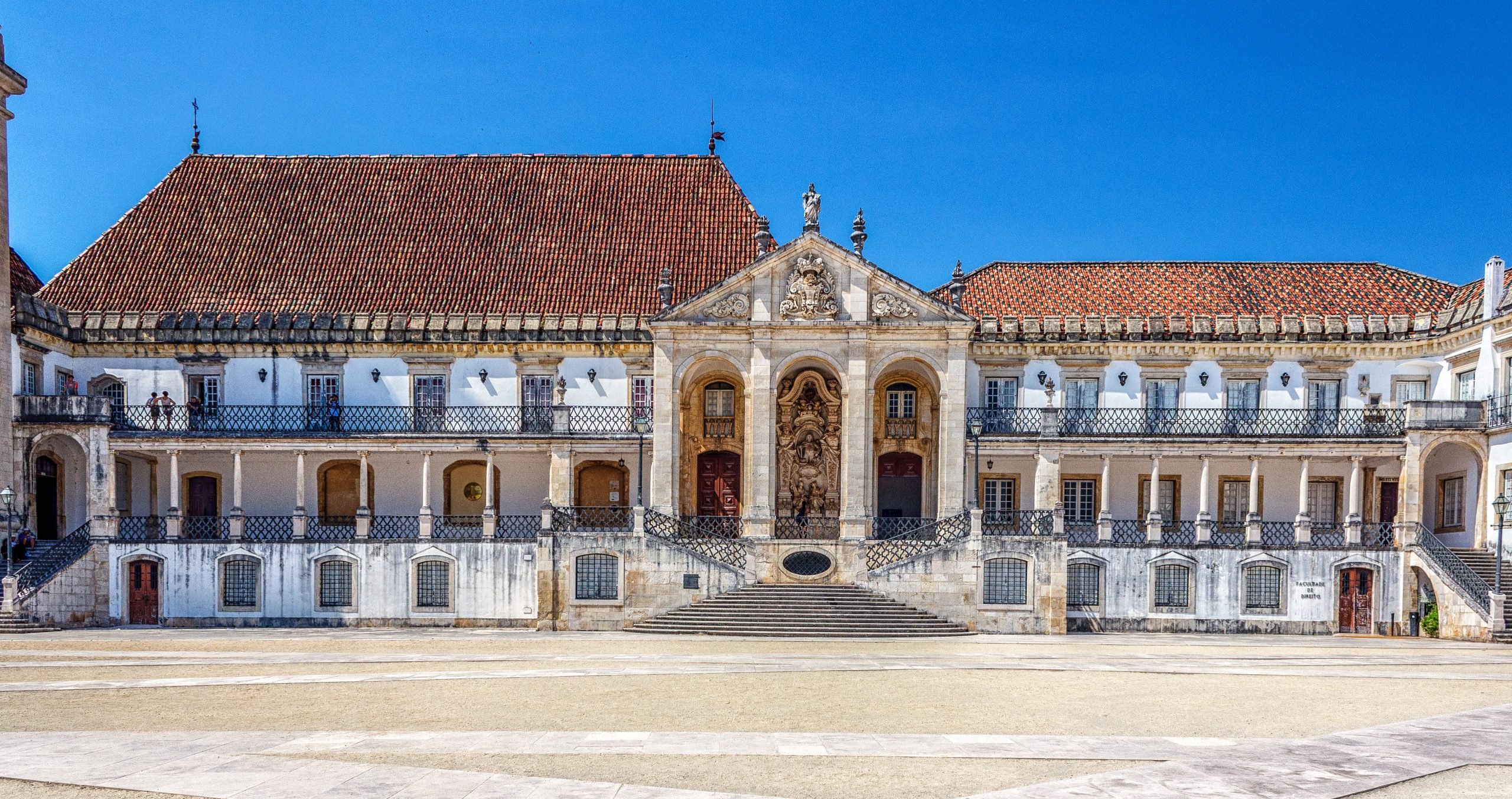
Coimbra University. Photo by Ray in Manila (Flickr)

Book University of Coimbra Tour

Continue your walk through the University buildings, passing by the Faculty of Medicine and others. You can also visit the New Cathedral (Sé Nova), originally a Jesuit church built slowly over a hundred years which stands out against another point of interest, the Machado de Castro National Museum, famous for its collections of paintings, sculptures, goldwork, and tapestries, as well as for the elegance of its panoramic Loggia which rests on an amazing Roman crypt, the precious remains of Civita Aeminium Forum. 

Before returning to the lower part of the city (always on foot, obviously!), you can’t miss the botanical garden, one of the oldest gardens in Portugal!

With 13 hectares of beauty, the garden was established in 1772 by the Marquis de Pombal with the purpose to supplement the study of medicine and natural history at the University of Coimbra as medicinal plants were grown and exotic species, brought back from Portugal’s overseas colonies, were planted.

The garden is situated adjacent to the Aqueduto de São Sebastião (San Sebastian Aqueduct), built over what was once a Roman aqueduct in the 16th century. It is thought the prolific Italian architect Filippo Terzi had a hand in its construction. The graceful arches of the aqueduct carrying water into the city helped to fuel the city’s growth at the time.

Book Botanical Garden & Cathedral Coimbra Tour

Now you can start your descent from the Alta to the Sofia region, or Coimbra’s Baixa. While there, be sure to visit the Santa Cruz Monastery. This monument gained the status of National Pantheon, as it is where the first two kings of Portugal are buried.

From here you can walk towards the river, through a small square with a lot of small stores and traditional commerce. This small square opens to the river and Santa Clara Bridge (used by pedestrians to get to the southern bank from the old town center).

It was once the gateway to the city and is where you can see some of its most beautiful buildings, like the iconic Astoria Hotel and the local headquarters of the Bank of Portugal. From here you can see Santa Clara’s Bridge that spans the Rio Mondego, one of the oldest of the three bridges crossing the river in the city.

After crossing, you can’t miss the Convent of Santa Clara. This monastery was built in 1314 by Queen Saint Isabel of Aragon and it is a fine example of the architecture of that period, being notable for the size of the church and cloister and the stone vault that covers the three naves of the church.

Because of its location on the banks of the River Mondego, the convent was subjected to frequent floods that led to the building of an upper floor and the abandonment of the almost permanently submerged ground floor.

It is also important to mention that this monument area gives access to City Park, an extensive green area by the Mondego River ideal to take a break, while here enjoying the peace and quiet, don’t miss out on the Pedro e Inês bridge footbridge, a bridge with a cool and clever design that offers an amazing view over the university and the whole town.

Also, if you have children, or even if you don’t! You have to visit Portugal dos Pequenitos, a miniature park with reproductions of national and other countries’ main landmarks.  

Finally for our last attraction, Quinta das Lágrimas. This estate has been the setting for the forbidden romance between King D. Pedro I and Inês de Castro. The gardens have a canal, “Fonte dos Amores”, that according to legend transported love letters between the Estate and the Royal Palace. According to history, the same waters were turned red by the blood of D. Inês who was assassinated here and according to legend, the marks of her blood can still be seen on the rocks. 

Book Coimbra Tours & Experiences

Booking.com

⬇️Please share your favorite activities and things to do in Coimbra in the comments⬇️
Cascais

0

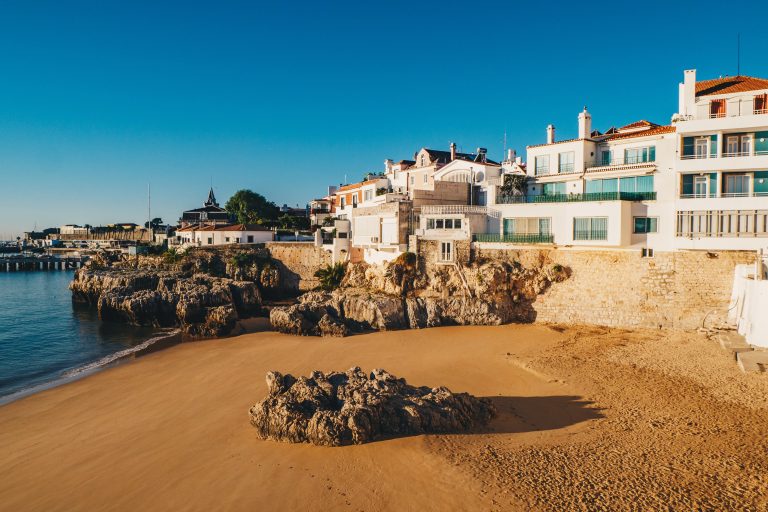
Portugal’s most chic resort, Cascais is known for its three stunning bays and boasts delicious upscale restaurants, luxurious hotels, and non-pareil beaches. But it is the tranquil atmosphere of luxury and ease, along with its stunning seaside esplanade that makes it one of Europe’s most prized seaside destinations.

Things to do in Cascais

There are tons of tours and activities to try and do in Cascais.

Book an activity in Cascais

Go to Boca do Inferno

A one-of-its-kind cliff formation with a stunning natural arch, Boca do Inferno, is one of Cascais’ prime touristic landmarks. The site is known for the scenic vistas opening from its observation deck and is a great spot to both take selfies and marvel at the locale’s scenic sunsets.

Keep in mind that it takes just 20 minutes to get to Boca do Inferno from Cascais’ city center.  

Farol Museu de Santa Marta

Make it to Cascais’ magical beacon, housing one of the town’s newest museums. Towering above the estuary of the Tagus River, the red-capped lighthouse serves as the guiding light for the deluxe yachts sailing to Cascais’ scenic marina.

Bear in mind that the quadrangular white-tiled blue-striped tower is one of Cascais’ most prized locales, shining not only to ships returning from a long voyage but also to love-stricken couples who go on their first date.  

Casa das Historias Paula Rego

Have you thought that Cascais is just posh clubs, chic restaurants, and luxurious yachts? It is also a wealth of cultural locales, for you to combine great natural marvels with some of Portugal’s best art venues.

One of such locales is Casa das Historias Paula Rego Museum. Built to the design of Eduardo Souto de Moura, the awe-inspiring edifice houses one of Portugal’s best art collections. Among its exhibits are works by Paula Rego and other renowned artists. Here you can find not only paintings but also, drawings, pastels, and etchings.

Museu Condes de Castro Guimarães

Another Cascais artistic landmark is Museu Condes de Castro Guimarães. Set in a magnificent Revivalist palace, Museu Condes de Castro Guimarães is one of Portugal’s topmost art treasure houses. On display are not just paintings but also ancient artifacts and old books, making it one of the best places to go to in Portugal for a bookworm.  

Bask in the sun on Cascais’ idyllic beaches

Once a fisherman’s village, Cascais owes its meteoric rise to the status of one of the world’s most chic sea resorts to its picture-perfect beaches. For you to uncover its sunlit stretches of sand go to the beaches of Costa da Estoril and their serene pellucid waters, lying between Cascais and Lisbon.

If you wish for something completely different head to Serra de Sintra, the Atlantic-whipped section of Portugal’s coastline with its strong surf, powerful gusts of wind, and rugged nature. Most of the Serra de Sintra is a protected nature reserve so it is just pristine beaches, such as Praia do Guincho, so perfect for kitesurfing, and wild trekking trails.

Keep in mind that Serra de Sintra is believed to have been the refuge of legendary Diana the Huntress so look out for arrows… 


What makes Cascais special

Cascais rose to fame after the king of Portugal, King Luis I went for a swim here in 1870.  Afterward, the Portuguese royal family made it their residence and traveled here every September. Other kings followed suit, with the likes of Umberto II of Italy, Juan Carlos of Spain, and Edward VIII of the UK making it their seaside resort of choice.

This royalty’s fondness for the town made Cascais one of the jet-set Meccas, with its hotels, restaurants, and casinos inspiring works of art. For example, Ian Fleming shot his Casino Royal after a visit to Cascais’ Casino Estoril and its hotel, where he was staying during WW2.

When to visit Cascais?

Cascais is perfect to visit in summer. It is not just a pleasant climate that pulls throngs of sun-worshippers to estivate here, it is also its one-of-its-kind siesta charm and the unique events taking place here. Go here for a sailing regatta or the Cascais Global Meeting, an annual jamboree where politicians, officials, and intellectuals meet up to discuss new ideas.  

Where to stay in Cascais?

Cascais is one of Portugal’s most upscale resorts so prices here can be biting, especially in the high season. Nevertheless, it is not just ritzy hotels but also many private options, hostels, and even campsites. Choose a spot close to picturesque Praia de Rainha, or more spacious Praia de Ribeira da Cascais, for you to be a short walk away from its top sun-bathing spots. Here are our 5 favorite hotels in Cascais.

Book a hotel in Cascais

What to eat in Cascais?

Cascais is a foodie’s paradise with its restaurants having something to offer to the most jaded of gourmands. But it is for sure the traditional Portuguese cuisine that comes first to mind. Try fresh sea produce at its seaside eateries: fresh Dorada, scallop, sea bass, lobster, and oysters. To help you out, we have selected the 4 best restaurants in Cascais.

1. Mar do Inferno

By far the best seafood restaurant in Cascais is Mar do Inferno. Located in Boca do Inferno, this high-end restaurant offers one of the best views of the Atlantic ocean. Family-run for the last 30 years, this place serves fresh fish and specializes in grilled seabass and seabream, and has an extensive wine list. At Mar do Inferno, you pay for the quality. While you can get great fish and seafood for cheaper, this restaurant’s quality cannot be beaten. A meal here will cost anywhere between €50 and €100+ for two people, depending on the dishes selected.

2. Porto Santa Maria

Porto Santa Maria is a seafood restaurant near the iconic Praia do Guincho that serves fresh fish dishes and regional produce. A Michelin selection, the fish served at Porto Santa Maria is wild-caught and this place provides an excellent dining experience where you will get to try out some Portuguese classics. We recommend the mariscada Porto Santa Maria, a dish with a variety of fish and shellfish, as well as the crab and seabass. A meal here will cost around €120 for two people.

3. Hifen

Providing a stunning view of the Cascais bay, Hifen is a trendy tapas-style restaurant. From Portuguese dishes such as lascas and pica pau, as well as international cuisine such as shrimp tempura and salmon tataki, Hifen offers a diverse gastronomic experience. We recommend their veal pica pau, the burrata cheese, the prawns, and the bitoque, a Portuguese steak. A meal here will cost around €30 to €40 for two people.

4. O Biscoito

If you’re looking for a traditional tasca where you can try out authentic Portuguese dishes at an affordable price, O Biscoito is the best restaurant to go in Cascais. Featuring a relaxed environment, this restaurant is known for its friendly service and welcoming atmosphere. You can also enjoy a meal out on the terrace. We recommend the baked codfish and steak fillets with mushrooms. You can get a meal here for two people for under €25.

Conclusion

Whether you are a backpacker traveling on the shoestring or a jet-setter flying on your private jet, Cascais is what you’ve been searching for. It boasts not only great beaches, food & drink scenery and a lot of great events, it is also located a short drive from Portugal’s capital, Lisbon, making it a great destination to make a day trip from there.

So fetch your sun-cream and Panama-hat, and travel to Portugal’s most chic seaside resort.

Join our FB group Portugal Travel & Living for all things Portugal and news updates

Braga

0

Braga is not usually a city that enters the itinerary of those who travel to Portugal. In fact, the north of Portugal as a whole attracts a relatively small number of visitors, most of them not going beyond Porto. But the Minho region has a lot to offer to visitors, Braga being its largest city and the main destination for tourism.

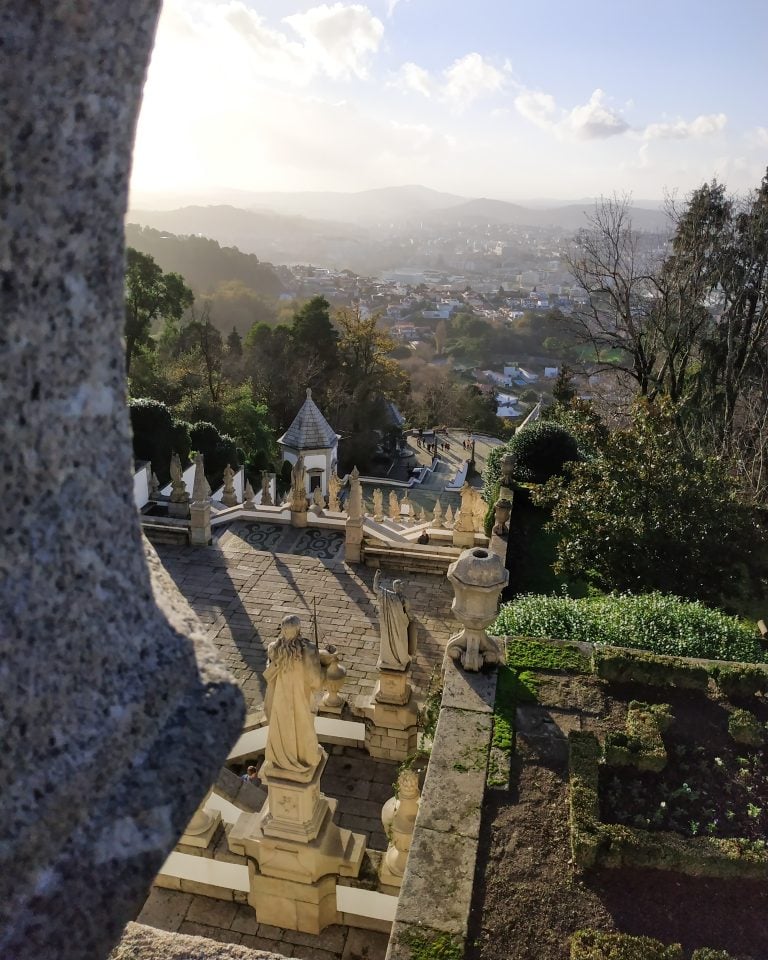
To begin with, a bit of history couldn’t be missing, as Braga is the oldest city in Portugal. Its original name was Bracara Augusta, having been founded by Romans in the year 16 BC! Even though Braga is not very big, it is known as the “Rome of Portugal” because of its more than 30 churches. The main attraction of this city is without a doubt the Sanctuary of Bom Jesus do Monte, it’s located on top of a hill and to reach it, you’ll have to climb its staircase of over 600 steps. Although it may seem like a penance to climb the steps that give access to a church of neoclassical style, know that it is no great sacrifice, because the staircase, all in baroque style – is very beautiful and is one of the great reasons why many visitors go there.

The staircase is all worked, separated in levels, and in each one there are different fountains of water, such as those related to the five senses or to the three virtues (faith, hope and charity). Once you reach the top, behind the church you can explore a park with several chapels, flower beds, secluded benches and caves surrounded by vegetation, as well as a lake with rowing boats and a monocle from where you can “see Braga through a straw”, a popular saying in this area.

Although Braga has had a lot of religious importance throughout history, it ended up losing its prestige and importance in the 20th century, along with the Catholic Church, and today it is a welcoming university town with a very charming historic centre. That’s where you should start your journey to explore the interior of this city. The first place to visit is the Republic Square, where a beautiful fountain and a sign with the name of the city welcome visitors. It is the perfect place for a photo! In this same square, begins Rua do Souto, the main street of the historic centre and closed for pedestrians only, you’ll find that Braga’s main points of interest are all within walking distance. Since the northern part of the country tends to be colder, enjoy a coffee in the traditional Café A Brasileira, elegantly decorated in the 19th century style.

At the next corner, on the right, you will find Rua do Castelo, here you can see the Torre de Menagem, the only remaining construction from the medieval fortifications of the city, having been erected in the 14th century. Continuing along Rua do Souto, you will pass through Largo do Paço where you will see, on your right, the Chafariz do Castelo and the Rectory building of the University of Minho.

At this point, you’re near of close to another landmark attraction, the Sé de Braga or Cathedral of Braga. It is the first cathedral in Portugal, so old that it gave rise to the expression: “Older than the Cathedral of Braga”. This cathedral unites several architectural styles. They have been incorporated over the centuries and through the reforms the cathedral has undergone, making it even more incredible. It’s here that the tombs of D. Henrique and Dona Teresa, the parents of the first Portuguese king, can be found.

To complete the Rua do Souto journey, you’ll have to walk to the corner to find Rua Dom Diego de Souza, you will reach the end of the pedestrian walkway, which ends at the Arco da Porta Nova. Another architectural landmark of the city, this stone arch in Baroque and Neoclassical style was built in the 18th century and marked one of the entrances to the city when it was still surrounded by walls. From where, another attraction you can’t miss is the Biscainhos palace, nowadays, a museum operates inside and preserves the history of the place with original pieces and rooms. You can check out the beautiful halls and the baroque decoration that predominated in the past and you can also check the historical garden from the 18th century, one of the most significant examples of the Baroque period in northern Portugal. It is one of the city’s well-kept secrets.

Then you can visit the Town Hall Square to see the beautiful buildings of the Town Hall and the Public Library. Looking at all its beauty, it is hard to believe that bullfights were held there before it existed. From here, if you liked the previous Biscainhos garden, you’ll be amazed by Santa Barbara’s Garden this garden is present in almost all photos of Braga. In the background is the medieval part of the Paço Episcopal Bracarense. In fact, it is beautiful and makes for great photos! It is the best place to sit and recover your energy between one tour and another.

After this beautiful walk, it might be time to take a break for a meal. If you want to try something typical of the region, from here and the northern region in general, you must try the Francesinha, it is delicious, just sit in the restaurant in the city that suits you best, because they all serve the delicacy. Francesinha is a type of sandwich stuffed with sausage, sausage, ham, steak and other meats that is covered with cheese au gratin and served with a tomato-based sauce, beer and chilli pepper.

Believe, you’ll need to walk after your meal, the best option is to do a walk to another near attraction, you are now near the city’s main thoroughfare, Avenida da Liberdade. Here you’ll be able to appreciate the flowerbeds in the part which is closed to pedestrians and admire the shop windows, as this is where Braga’s main commercial shops are concentrated.

Book Tours & Experiences in Braga

Find Hotels in Braga

Booking.com
⬇️Please share your favorite activities and things to do in Braga in the comments⬇️

Aveiro

0

Aveiro is a Portuguese city located on the northern coast in the Central Region of Portugal. This city is often called the “Portuguese Venice” since it is dominated by the Ria de Aveiro and the arms of water that penetrate the urban space and have permanently marked the history, heritage, culture, and local identity.

What to do in Aveiro

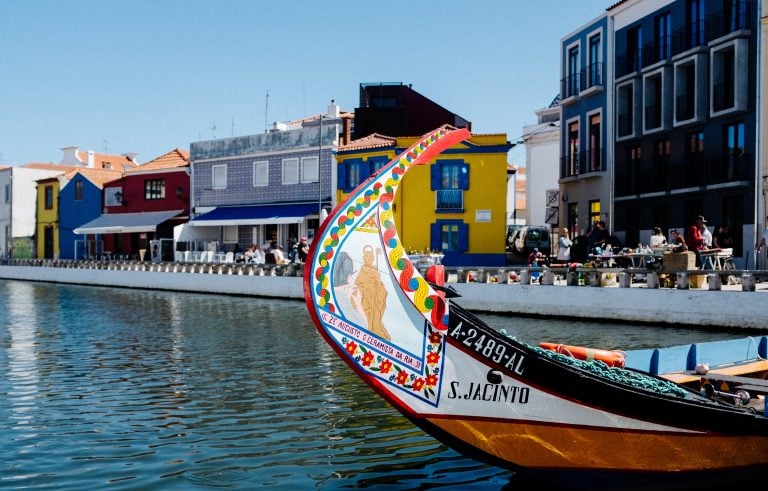
That said, and to have an overview of the central part of this city, one of the must-do activities is to take a tour in one of the typical boats called “moliceiros:. These slender, colorful boats were used to collect seaweed and sargassum, now they are used for tourist trips.

Book Aveiro Moliceiro Boat Tour

After this, we suggest you explore on foot or by bike, it does not involve too much effort as the city is flat. You can start by the central part of the city, where you’ll find The Lover’s bridge of Aveiro, a bridge that stands over the urban canal where tourists pose for photos, wave to passing boats, and swear oaths of love and friendship by placing colorful ribbons and bows on the bridge railings.

Right by its side, if you’re in the mood for shopping or just passing by, you will find the city’s shopping center, worth checking due beautiful modern architecture, with several open-air shops.

Aveiro is also known as the museum city of Art Nouveau in Portugal. If you’re a fan of architectonic marvels you can’t miss The Art Nouveau Museum, on one of the banks of the Central Canal, which is a fine example of this artistic movement.

Inside, you can learn a little more about the history of this style, as well as appreciate the colorful tiles with floral motifs and walk the route designed to help you explore the buildings and monuments from this seductive period in 20th-century art.

You can also check the Aveiro City Museum, which has content that illustrates the moments, the facts, and the protagonists that have given soul to the history of Aveiro.

After this, you can continue your adventure and explore the historic center of Aveiro. This part of the town has numerous squares, shops, churches and restaurants. Since you’re in this city, during your exploring journey you must take the opportunity to take a break and taste the traditional Aveiro sweet known as “Ovos moles”, a delicious custard of egg yolk, sugar, and water, wrapped in wafer.

To end your trip in beauty, if you like the beach and find it easy to get around by car or even by taxi, we recommend a visit to the beaches near the city.

One of the obligatory stops for those visiting the district of Aveiro is the sub-region of Ílhavo, where you can visit Barra Beach, home to Portugal’s highest lighthouse, and Costa Nova, a picturesque town mostly known for its wooden huts is painted in brightly colored stripes alternating with white built by fishermen, an ideal place for pictures. Prepare to be amazed by the Costa Nova fishing spirit which is still very much present.

Book Aveiro Tours & Experiences

⬇️Please share your favorite activities and things to do in Aveiro in the comments⬇️

Albufeira

0

If you’re looking for a summer holiday in Portugal, Albufeira is an awesome option for you! Albufeira is the largest and most energetic of all the resort town of Algarve coastline and it has been the most popular holiday destination in the south of Portugal since the 1970s, as it offers so much more than gorgeous beaches and great weather.

Albufeira is most frequented in the summer for its beaches, but the city also has a beautiful historic center and other attractions. It is the busiest city in the Algarve region, which also has a busy nightlife full of bars and restaurants. The historic center of Albufeira (Old Town) comprises a traditional village. There are no great attractions and the beauty resides in the simplicity of the whitewashed houses and narrow streets on the hills leading down to the sea.

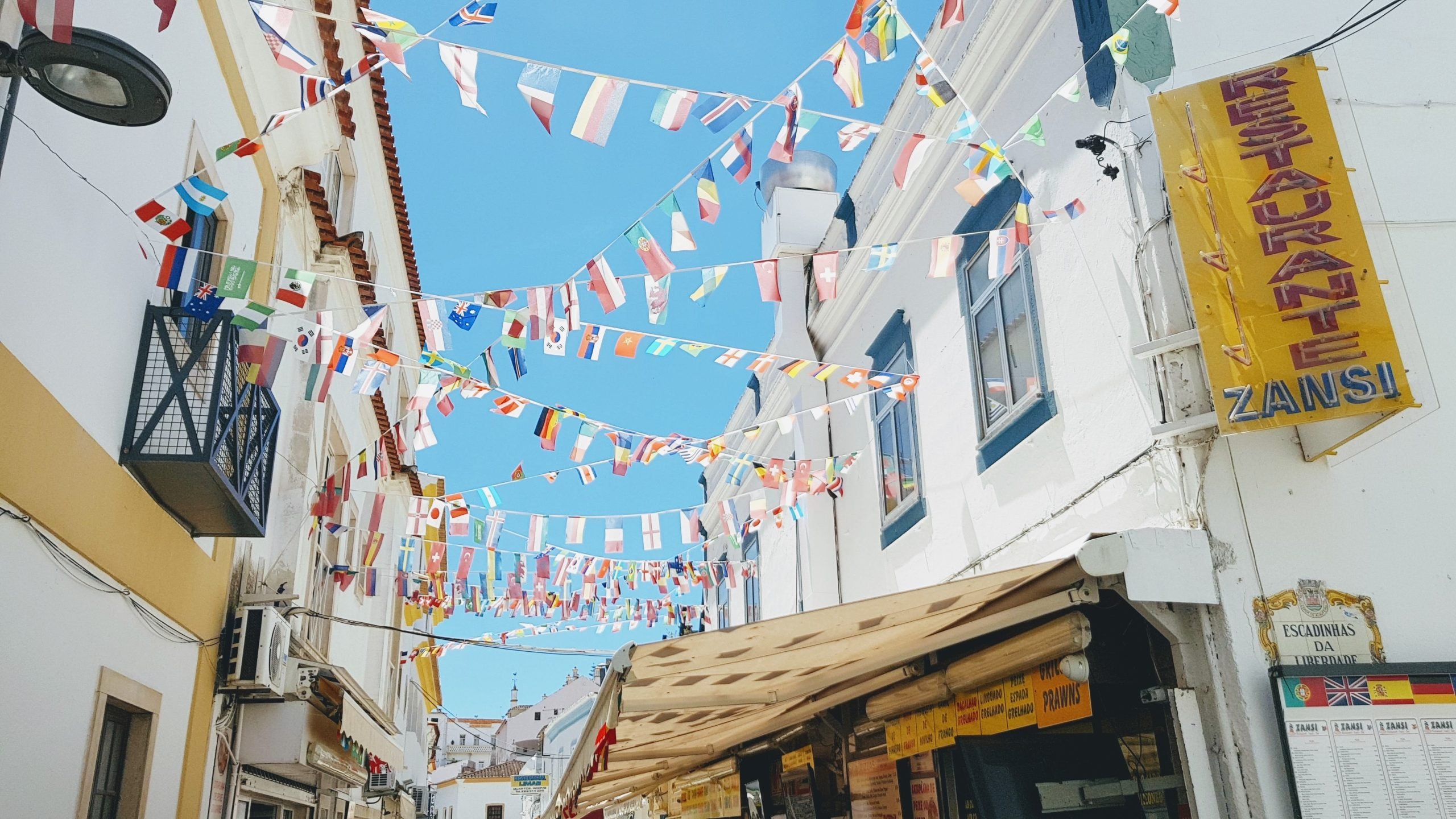
The best way to wander is on foot, you’ll find pedestrian-only lined with cafés, restaurants and shops leading to a picturesque central square, surrounded by gastronomic options.

Book a Hotel in Albufeira

Booking.com

With a jagged coastline full of beautiful paradisiacal scenarios, Albufeira is stunning from all perspectives but if you want some panoramic views, the two main viewpoints are worth visiting. The Pau da Bandeira viewpoint is one of the classic viewpoints due its privileged location between Praia dos Pescadores and Praia de Albufeira makes it one of the most sought after.

You can also visit the Peneco Viewpoint which has a spectacular view as it is on one of the highest points of the Old Town.

With a perfect combination of golden cliffs, blue-green sea and white sand, the beaches of Albufeira are truly beautiful, so much so that some are on the list of the best in Europe. The municipality has approximately 30 km of coastline, divided into 25 beaches.

To help you discover the unforgettable and clean beaches of Albufeira, we list below the best beaches in Albufeira:

  • São Rafael Beach: This is one of the best ones! It is mostly frequented by younger people and it is surrounded by beautiful rock formations and bushes. To get down to the beach there is a ramp with a restaurant on the sand.
  • Castelo Beach (Castle Beach): This beach is set among imposing 30-meter-high rocky walls that form a beautiful natural backdrop.
  • Coelha Beach: It is one of the most beautiful beaches in Albufeira, also surrounded by beautiful cliffs. It has 180m and shares a same bay with Maré das Porcas beach and Fraternidade beach.

Book Albufeira Tours & Experiences

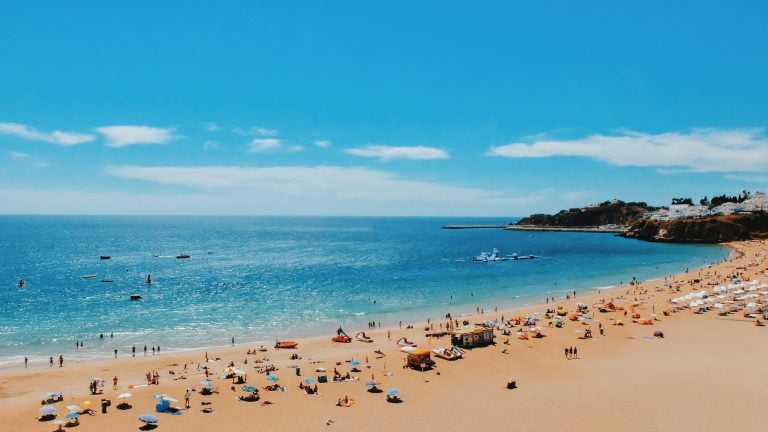
Albufeira, Algarve. Photo by Kevin Walker (Unsplash)

As we mentioned before, we could list beaches all day! While here and if you enjoy a little
exploring there are also several companies that offer tour packs and fun activities around
Albufeira. While here, you can’t miss the opportunity to take the boat trip to Benagil Caves
you where you can explore beautiful beaches and unique rock formations and marine caves.

To go on this adventure, you will have to depart from the Albufeira marina, another attraction worth visiting during your stay in Albufeira, Algarve.

Rent a Car in Albufeira

⬇️Please share your favorite activities and things to do in Albufeira in the comments⬇️

Porto & Northern Portugal

0

Travel to the North of Portugal to uncover its tranquil ambiance of a midday siesta and its scenic landscape and townscape. Centered around the picture-perfect Porto, the North of Portugal offers a trunk full of hidden-gems such as Vila Nova de Gaia, a little known pearl of Northern Portugal; Braga, the spiritual centre of the Iberian Peninsula, and the medieval gem of a city, Guimaraes. Head to the Northern Region to delight in some of the best locales in Europe.

What to do in Northern Portugal

Travel to Villa Nova de Gaia

Whereas most people have heard of Porto, the unbelievably photogenic capital of Norte Region, the region boasts a number of cities that are relatively unknown. One of them is Vila Nova de Gaia, a small town sitting on the banks of the majestic Douro River. Situated a short car ride from Porto, it offers better accommodation prices, great food & drink scenery, and one-of-its-kind architecture with landmarks like magnificent Mosteiro da Serra do Pilar, a hilltop park with cable car, slender whispering palms and great views, Jardim do Morro and great sandy beaches like Praia da Madalena.

Pay a visit to Porto

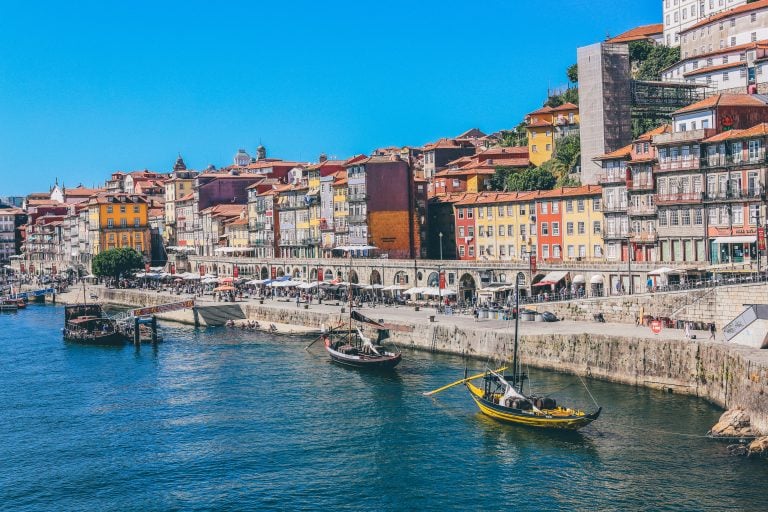
The world-famous city of Porto is arguably the best place to start your Norte Region journey in. Elected the best European destination in 2014 and 2017, it boasts not only a beautiful old town, lush parks, dynamic bar & nightclub scenery, but also its famed ambrosial cuisine, and splendid beaches some of which can even be reached by metro. The main landmarks comprise Luis I Bridge, with its gob-smacking panoramas, a centuries-hallowed Palácio da Bolsa and Cais da Ribeira, dotted with historic sites, stores and eateries offering highly delectable fare, one of the best spots to soak up Porto’s authentic charm.

Don’t miss out on Port wine, a punchy tipple that the region of Porto gave its name to.

Go to Braga

Another destination to visit in Norte Region is Braga, Portugal’s third largest city with pedestrian-only narrow alleys, splendid baroque churches, and picture-perfect city squares. The perpetual clinging of its bells creates a unique Braga ambiance reminding one of Braga’s ancient roots. For you to uncover more of its unique spirit head to its downtown with a one-of-its-kind Braga Cathedral, the seat of Primate Archbishop of Portugal and Spain, known for its eerie gargoyles and elaborate ribbed vaulting.

Note that the scenic city center pullulates with a wide variety of good value eateries and great wine bars. Sit at one of them and enjoy the melodious chiming of Braga’s churches’ bells.

Make your way to Guimaraes

Guimaraes is a medieval jewel of a town. Its old town ranks among the world’ best preserved medieval quarters: which is why Guimaraes is listed as a UNESCO heritage site. Head to its downtown, a veritable open air museum, and plomp down at one of its cozy bars and restaurants. Note that its prime landmarks include Guimaraes Castle, an 11th-century fortress looming large over the town; Paalaca Duques de Braganca, a grand former ducal residence housing a history museum (featuring tapestries, furniture, and arms) and its magic Largo da Oliveria, a cobbled plaza with a mind-blowing Gothic church.

Go hiking in Passadicos do Sistelo.

One of the best things to do in Portugal’s Norte Region is to go hiking. Trekking locales include scenic riverine hikes, lakeside paths, and wonderful forested options. But arguably the best of them is Passadicos do Sistelo. It includes not only great views, but also a chance to walk along the quiet flowing Vez River on a great wooden walkway and gives you a feeling that you are in fact strolling through a palace built from lush greenery.

Note that apart from Passadicos do Sistelo, the Norte Region offers other prime hiking routes such as Vinho Verde trail, a splendid hike offering a chance to try out the ethereal local wine in a truly idyllic setting; and stunning Trilho do Rio Febros, and Ecopista-Liha do Tamega being also among top Norte Region treks.

Go surfing in the Northern Coast

Long considered an ugly duckling, and largely eclipsed by Nazare’s world famous Praia do Norte and Lisbon’s Costa de Caparica, Northern Portugal has one the continent’s best waves. The rugged terrain hides some of the most surfable waves on offer. If Lisbon and Central Coast offer great left-handers and peeling right, the Northern seaboard features randomly breaking waves with “rollers breaking like in artificial wave pools, making it possible to surf closeouts on a daily basis”.

One of the best locales to surf on the Northern Coast is Porto-Matosinhos. Head to Porto-Matosinhos, Portugal’s only beach that you can visit by subway. It lies close to Porto, the capital of the Norte Region, making it possible to hop back to town to enjoy an after-surfing glass or two of the heady Porto.

What is special about Northern Portugal

One of the things that make Norte Region truly special is Port wine, a heady brew that made Porto so famous. Named after the area around Porto, the fortified wine is sourced in the adjacent Douro River Valley. It is characterized by a sweet taste that blends heavenly with a good Portuguese dessert such as Pastéis de Nata, or Portuguese Egg Tart. Head to the Douro Valley to sample the fresh vintage of Port wine and then go on a tour of the old town, one of the best things to do in Porto.

Also, you can check out the unique crafts of Region Norte such as ceramics and its artisan leather.

Where to stay & eat in Northern Portugal

Where to stay in Northern Portugal?

Northern Portugal is strewn with great spots with choice accommodation options. Go for a stay in the historical downtowns of Porto, Braga, Guimaraes or Villa Nova de Gaia. Like this you will not just profit from a vast choice of low-cost options, and great food & drink establishments but also enjoy the scenic townscape, which will make your journey a veritable homage to beauty. Also, keep in mind that the North of Portugal is rife with great camping sites, motels and even surfing hostels like Oporto Surf World.

What to eat?

Your trip to Portugal really can’t be completed without tasting the local North Portugal fare, a treat to your taste buds. Munch on traditional Queijo da Serra da Estrela, Porto-unique runny mountain cheese, or indulge in the mouth-watering Easter meat loaf known as Folar de Chaves originating from Chaves, one of the best locales to try it. Also keep in mind that Portugal is known for its ambrosial meat and don’t forget about the heavenly egg-tart.

When to visit Northern Portugal

For sure visiting Portugal in summer is your best bet if you plan on cycling, hiking or surfing, but travelling in other seasons can be just as good. Winter months are known for their great Christmas markets, religious processions in cities such as Braga, whereas February-early March is when the great “Fat Friday” carnival takes place.

Note that the grapes from which Port wine is made are harvested in September, proving the wisdom of one of Portugal’s most beloved proverbs “August matures. September harvests”, making it the perfect month to visit the North of Portugal for a wine lover.

Wrapping Up

Portugal is one of the best countries to visit in Europe. Its much prized cities such as Porto, Lisbon or Faro are veritable tourist magnets . But if travelling in the high season it can feel thronged at times. North of Portugal offers a lot of quieter towns and cities to just kick it back and start exploring its architectural, cultural, gastronomical and more hedonistic marvels such as its fragrant fortified wine.

Quick Guide to Madeira

0

If you are a beach person, a nature one, an adventurous individual or a party being, this is the place to be! Let us start with a toast to life! Luckily, Madeira has their own traditional alcoholic drink called Poncha, made to be very sweet and fruit flavored. 

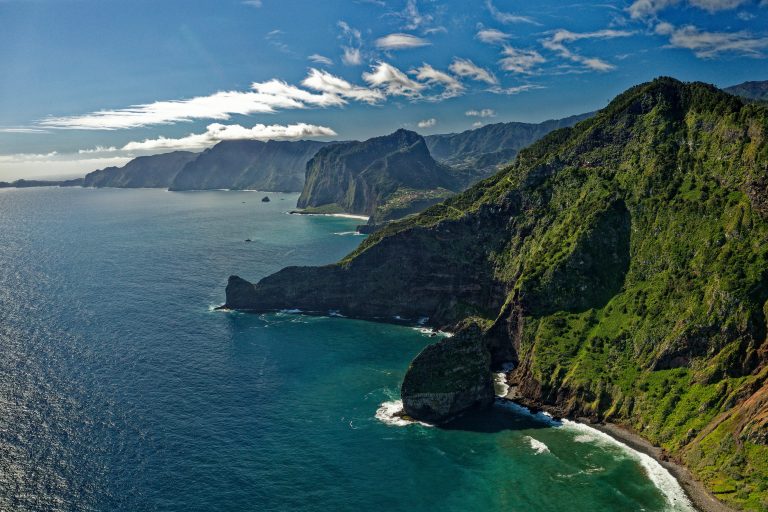
Now let us organize a bit, the Madeira archipelago has desert islands (you can only see by boat), an island called Porto Santo (where you can visit the beach, the cliffs by the great blue ocean and also, snorkeling – which is very recommended in this part of the archipelago) and lastly, the Madeira Island.

In the main island, Madeira, is where the magic happens! The best way to get to know the charms of it is to rent a car and set off to discover this floating garden! However, do not get discouraged for such a simple ride, there are other two transports that you cannot miss.

You need to try a cable car trip; there are at least seven cable car spots in high points around the island that offer you a privileged view to enjoy all the nature around you while facing the ocean. 

The other transportation method is called “basket cars”, with more than one hundred years of history; these cars are made of wood and wicker and can carry two to three people. The most fun part is that these basket cars are literally a big basket going down a two kilometers hill with no mechanical breaks, only controlled by two specialized men who make this experience unforgettable. Check out the prices and locations for this amazing ride here https://www.carreirosdomonte.com/v2/en/prices.php

The best part about this volcanic island is its nature. You can visit by foot or jeep tours and you will be amazed. Here are a few places that you should see other than through photographs:

  • The Botanic Garden with an amazing view and a beautiful flower rug;
  • Vereda do Larano – Boca do Risco, a walking cliff tour;
  • Levada do Alecrim, Levada Rabaçal and Levada do Caldeirão Verde, are walking tours through the forest, natural water formations and waterfalls;
  • Pico do Arieiro to Pico Ruivo, is a walking tour through the mountains that requires some physical preparation once it covers the three highest peaks of Madeira;
  • Porto Moniz, a tour among the west coast of the island where you can try a volcanic natural pools;
  • Ponta do Pargo, São Jorge, Porto Moniz and Santana, a few areas where the jeep tours are the preferable way to get to know these amazing viewpoints.

You can choose and book your tours here.

This amazing island is also made for non adventurous ones; you can also relax while discovering the wonderful vineyards. Whether it is by the water, in a cave, a picnic, a street restaurant, do yourself a favor, and enjoy the gastronomy, and wine tours. Take a look here

We cannot say goodbye without mentioning the way the Madeira visitors enter every New Year. They present you with a massive and very famous firework show (part of the Guinness World Record for the “Largest Fireworks Display in the World” between 2006 and 2010). 

For the soccer fans! Yes, Funchal is the hometown of the worldwide known soccer player, Cristiano Ronaldo. You can visit his museum and spend a night in his famous hotel.


Lisbon and Tagus Valley

0

Portugal has become a not-so-well hidden gem in the traveling landscape in the past few years. From the sights, the food, the people, and all the amazing cultural offering the country presents, this coastal sunny paradise has turned into a mainstream destination for every type of tourist.

This rise in popularity can be greatly attributed to the capital: Lisbon.

If you want to find out what makes this European capital so different and so likable, keep reading and discover what all the fuss is about.

What to see

One thing every local will tell you about their city is the light. The light in Lisbon feels different. The way it hits the river and the white marble historical buildings will uplift your mood in a blink. When you take into account that it’s one of the European capitals with the most sunny days, you have all the necessary ingredients for a great stay.

Taking walks to take advantage of the great weather the city has to offer is one of the best ways to spend your time in Lisbon. The hills, the old city center, and the river make for spectacular views at every corner, and for that reason, your best bet is to chase views, instead of sights.

By all means, the monuments are a sight to see and are worth a visit, but to truly immerse yourself in this old capital you should roam the hills and discover every inch it has to offer. The ‘miradouros’, or viewpoints, are aplenty, so choose one to enjoy a sunset looking over the city.

What to eat

One of the things that makes Lisbon such an attractive location is the food. Portuguese cuisine should be one of the highlights of any trip to this small but diverse country.

There are so many things to taste you might feel like you won’t be able to try them all. From pastries, including the famous Portuguese custard tart, to the typical seafood and fresh fish (make sure you try sardines in the summer!), but also the traditional meat dishes if you’re looking for a more filling dish. To complement a great meal, don’t miss out on a Portuguese wine, which is, by itself, an highlight.

To tie that all up: the price. That is one of the things tourists love about Lisbon, and Portugal for that matter. In Lisbon, you can be served a full meal and feel like you’re not paying nearly enough for what you were fed and for the friendly service.

What to do

Aside from the sights and the food, Lisbon has a bit of everything. With just a 20-minute train ride from the city center, step onto a white sandy beach that rivals some of the best in Europe.

Don’t like the beach? Rent a car and drive up to Sintra. Just 30 minutes away from the city you’ll find the historical Pena Palace. Take a day trip there and find yourself in a small picturesque town surrounded by gloomy woods that will leave you feeling like you’re in a movie.

Want to try the nightlife? Lisbon has one of the best night scenes in Europe. Nightclubs that will stay open until sunrise, rooftop bars that provide amazing views of the city, and of course Bairro Alto, the small neighborhood that comes alive after dark with endless bars and clubs.

Beyond Lisbon

Without leaving the greater Lisbon area, you can find the biggest waves in the world, farms that produce some of the best fruit in the country, and smaller charming towns with great people and food.

Lisbon is just one of the many gems the Tagus Valley has to offer. If you want to explore the territory any further, get a guide and you’ll be amazed at what the region has to offer.


Central Portugal

0

Portugal has arguably the highest share of wonders per capita. The rather small maritime state features scenic surfing beaches, rugged mountains, its unique architectural jewels, and great food and culture.  One of the best places to enjoy Portugal in all its diversity is Central Portugal, sitting right at the heart of the country. Take in its beautiful landscape, with the rugged Serra da Estrela among the most appealing snapshot spots, and its splendid towns and villages like Aveiro and Monsanto.

What to do in Central Portugal in Central Portugal

Make a trip to Leiria

Located close to the Atlantic ocean board, Leiria is one of the most scenic towns in Portugal. Known for its picture-perfect downtown, and the somewhat stocky squarish belfries of its prayer houses, it also features an austere cathedral, built in 1550-1557, and a grand galleried medieval castle saddled on top of a hill with some truly gob-smacking vistas opening up in front of you.

Travel to Aveiro

Dubbed the Venice of Portugal, the idyllic Aveiro is one of the best places to visit in Portugal. It is criss-crossed with canals, and offers a strikingly beautiful townscape with its pastel facades, eye-pleasant bridges and its painted sharp-beaked Aveiro-special watercraft. Also, don’t miss out on the delectable Aveiro specialities such as its oysters and Aveira signature tipple, its punchy Liquor de Aveiro coming in three flavors.

Go to Coimbra

The capital of Central Portugal’s region, Coimbra is one of the most picture-perfect cities in Portugal. It features not only Roman-built architecture marvels such as its aqueducts and cryptoporticus but also landmarks dating back to 1131-1255, when it served as the capital of Portugal and the Middle Ages, the time of the city’s cultural flourishing.  Head to the downtown of Coimbra to take pleasure in its rather spacious sun-lit town squares and delight in the great Coimbra food & drink at its many eateries and bars. Keep in mind that its historical structures are UNESCO listed and its imposing Coimbra University is the Portuguese world’s oldest educational institution.  Also note that the pleasant youthful charm of the university town is greatly enhanced by the abundance of cozy spots to hang out at. You can have a glass outside (dry period for drinking outside is from 2am to 8am), and take a pleasant stroll through its eye-appealing downtown.

Hit the road to Monsanto

Even though Central Portugal’s cities offer a wealth of entertainment and gastronomical opportunities along with great architecture and shady parks engulfed in lush greenery, one of the best things to do in Central Portugal is going to its scenic hinterland. Travel to Monsanto, for your rural Portuguese escapade. Recognized “the most Portuguese village of Portugal ”, the scenically set village is known for its graceful clock tower, medieval castle and sturdy houses made of granite.  Don’t miss out on the ambrosial local fare and great wine from Beira Interior wine making regions such as Cova da Beira, or the world renowned, somewhat acidic tipple from neighboring Dao.

Go surfing in Nazare

One of the best things to do in Central Portugal is to go surfing. The fact that Nazare is home to the world’s largest surf only makes it even more imperative.  Head to Nazare in summer to surf at its Praia do Nazare, the municipal beach, or venture onto Praia do Norte, whose humongous rollers strike fear into the bravest of hearts. Climb the rock with a beacon perched atop, and contemplate the dauntless surf riders speeding below.

Go climbing in Serra da Estrela

One of the main reasons to visit Central Portugal is not just its marvelous beaches with the gigantic waves hiding some choice barrels, but also its scenic mountains. Pack up your warmest clothing, and travel to Serra da Estrela featuring Portugal’s highest point. It is here that you can unveil Portugal’s completely different second visage. The mountain range is not just its mesmeric peeks, it is also a highly tasty diet with sardines being one of its main staples. Try out breaded sweet sardines, and Juniper beef stew.  Even if just a fraction of the region’s population are Jews, it became Portugal’s top Kosher destination with local manufacturers producing kosher olive oil, wine, and even cheese. Bear in mind a legend about Serra da Estrela, described in an American classic, Moby Dick, telling of “… the prodigies related in old times of the inland Strello mountain in Portugal (near whose top there was said to be a lake in which the wrecks of ships floated up to the surface)…”

What is special about Central Portugal

Central Portugal combines not only unique surfing spots like Nazare, featuring the world’s largest waves but also Portugal’s highest mountain Range Serra da Estrela, and some of the land’s most scenic cities such as Leiria and Coimbra and idyllic mountainous villages such as Monsanto. Note that during a trip to Central Portugal you will be able to indulge not only your aesthetical proclivities but also pamper your sense of the divine arising from gastronomical penchants. Try out unique local fare and wine.

What to eat in Central Portugal?

If travelling to Central Portugal don’t miss out on the heavenly oysters from the Ria de Aveiro, the roasted skewered piglet, known as Leitao, or the renowned Portuguese specialties such as Serra da Estrela Cheese, Aveiro’s Salt Cod, or Dobrada, a tripe-like dish traditionally cooked during the annual Pig Killing festival. Also don’t fail to take a sip of the Fragrant Dao wine, from the region further to the North with a subtle bouquet which will satisfy the palate of most jaded wine-lovers.

Where to stay in Central Portugal?

Portugal has plenty of great spots where to put up. Apart from a host of great hotels, it also offers some of the world’s best surfing hostels and great campsites.

Booking.com

Final Thoughts

Central Portugal is a nonpareil region offering unmatched opportunities for surfing, hiking in the mountains, veritable architectural, unique gastronomical treasures and a chestful of highly delectable wines such as that from the region of Dao. Head to Central Portugal, to uncover its unique spirit at its many stunning locales.

5 Reasons You Should Plan a Trip to the Azores

0

The Azores, a volcanic archipelago located in the Atlantic Ocean, where number one on the World Travel Awards list of “Europe’s Leading Adventure Tourism Destination 2021”.

The region, that belongs to Portugal, is made up of nine islands which are divided into three groups. Flores and Corvo, sit in the Western group; Graciosa, Terceira, São Jorge, Pico, and Faial are in the Central group; and São Miguel and Santa Maria lie in the Eastern group. All of which offer unique features, activities, and cultures.

But what make these islands, in the middle of the Atlantic, so special? There are plenty of reasons why everyone should visit the Azores at least once in a lifetime – but here are our top five reasons.

1. Close to both the US and Europe

The archipelago is located about 3/4 of the way to Europe from the Eastern coast of the US. Just under 1,000 miles from mainland Portugal, the islands are easily accessible from both the US and Europe, meaning you can combine a trip to Portugal or other European country with a stop in the Azores.

With flights times from mainland Portugal being just two hours, and four and a half hours from North America, getting to the Azores it’s easier than you might think.

2. Perfect for Nature Lovers

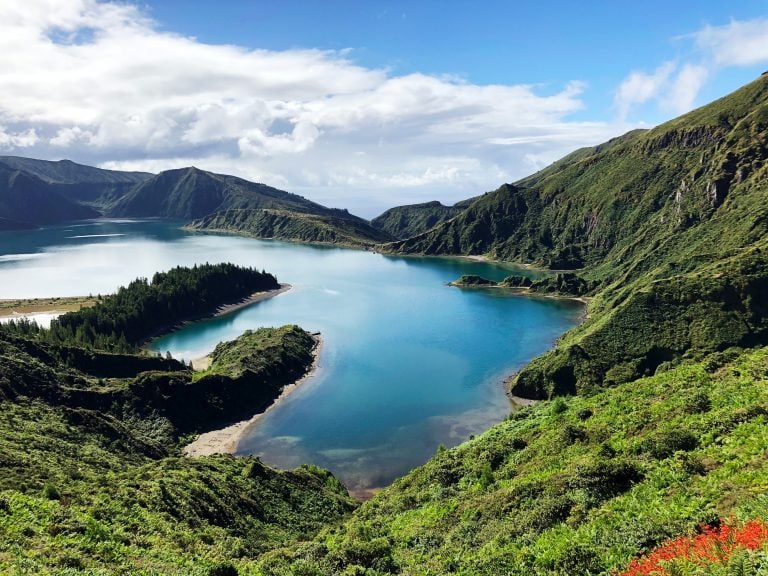
From the moment you step onto the island, you’ll be awestruck by the landscapes surrounding you. Regardless of which islands you choose to visit, what will not be lacking is nature around you and outdoor activities to experiment like whale watching, snorkeling and diving, biking or hiking tours around of the villages, exploring hills, cliffs and beaches too.

3. Plenty of Food and Drinks

Foodies will delight in different cuisine found on all the islands. A large portion of the food consumed on the Azores are produced locally, making for three fresh meals a day. It is specially known for it’s cheese, seafood, and exotic fruits and it’s included in most of the islands most famous dishes.

4. Year-round appeal

It doesn’t matter what time of the year you would like to travel, the Azores deliver it in every season. The climate is subtropical and the temperature ranges between 15°C and 30°C — that’s 60°F and 86°F — and rarely goes higher or lower at any time of year.

This means that if you prefer to take a trip in low season, away from the usual high season crowds – although the Azores are not known for their overcrowded tourism, the islands will continue to be a perfect destination to visit.

5. Great Hospitality

Hospitality is a Portuguese trademark and the Azores are no exception. The locals are very welcoming, kind and ready to help at any time. They love to welcome people into their homeland and make them feel they are at home. Knowing Portuguese is not mandatory, but if you can say a simple ‘Olá!’ (Hello!) and ‘Obrigado’ (thank-you), the Azorean’s will appreciate the effort.