If you know anything about Carnival, you know that the most important day in the celebration is Tuesday. Many visitors to Portugal focus on the main parades that take place on Sunday and Tuesday, but what happens on Carnival Monday?
If you are visiting Portugal during Carnival season, understanding what happens on Monday will help you experience the full rhythm of the festival rather than just its headline events. Let’s dive in!
Is Carnival Monday a Holiday in Portugal or Just Another Workday?
Carnival Tuesday, known locally as Terça-feira de Carnaval, is traditionally treated as a holiday across much of the country. Carnival Monday, however, is not officially recognized as a nationwide public holiday.
In practice, the situation varies. Many municipalities declare a local holiday. Schools frequently close. Some businesses reduce hours. Government offices may operate with minimal staffing. In towns with strong Carnival traditions, Monday feels very much like part of a long holiday weekend.
In larger cities such as Lisbon and Porto, commercial areas often remain open, but traffic patterns, school closures, and event schedules make it clear that Carnival week is underway.
What Is the Atmosphere Like on Carnival Monday?
On Carnival Monday, you’ll definitely be feeling a sense of anticipation, but it has a general feeling of one of the days between Christmas and New Year’s. The big party is the next day, and Monday feels like a bit like a dress rehearsal. However, in cities like Torres Vedras, Funchal, and Ovar, Monday can feel like its own celebration as groups in costume appear in cafés and plazas, and music drifts through the streets.
How Do Towns Prepare for the Main Carnival Parades?
Behind every major Carnival parade are weeks or months of preparation. Carnival Monday is often when final adjustments take place.
Floats are inspected and completed, and costumes are repaired or refined. Sound systems are tested. Dance troupes rehearse their choreography, and samba groups do last-minute timing checks.
Why Are Children’s Parades So Important on Carnival Monday?
In many Portuguese towns, Carnival Monday belongs to children.
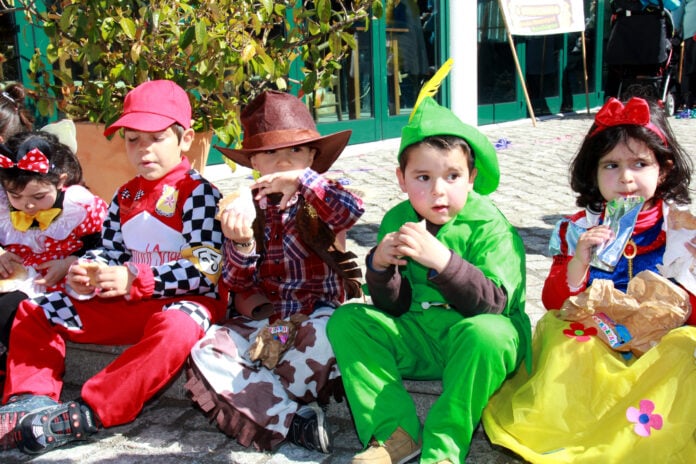
Schools organize costume parades that fill local streets with pirates, astronauts, animals, historical figures, and storybook characters. Entire classes often adopt a single theme. Parents gather to watch and take photos of the procession.
These parades are not minor events. They represent the transmission of tradition from one generation to the next. Carnival is about transformation and creativity, and children embody both.
In smaller municipalities, the children’s parade may be the main public event on Monday, drawing large local crowds and creating a joyful, family-centered atmosphere.
How Does Political Satire Show Up Before the Big Parade Day?
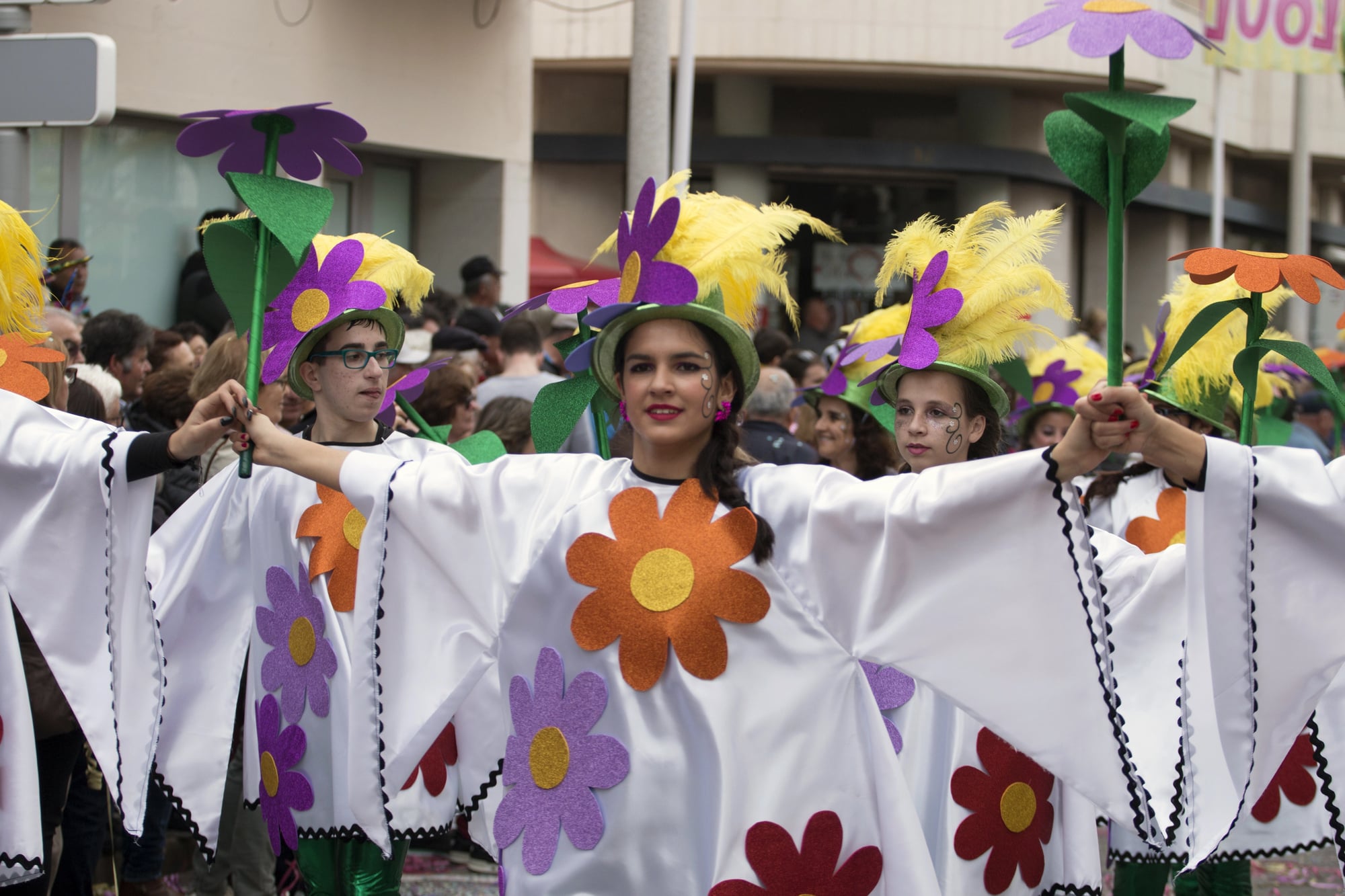
Satire is one of the defining features of Portuguese Carnival. While the most elaborate satirical floats often appear on Sunday and Tuesday, Carnival Monday still reflects this tradition.
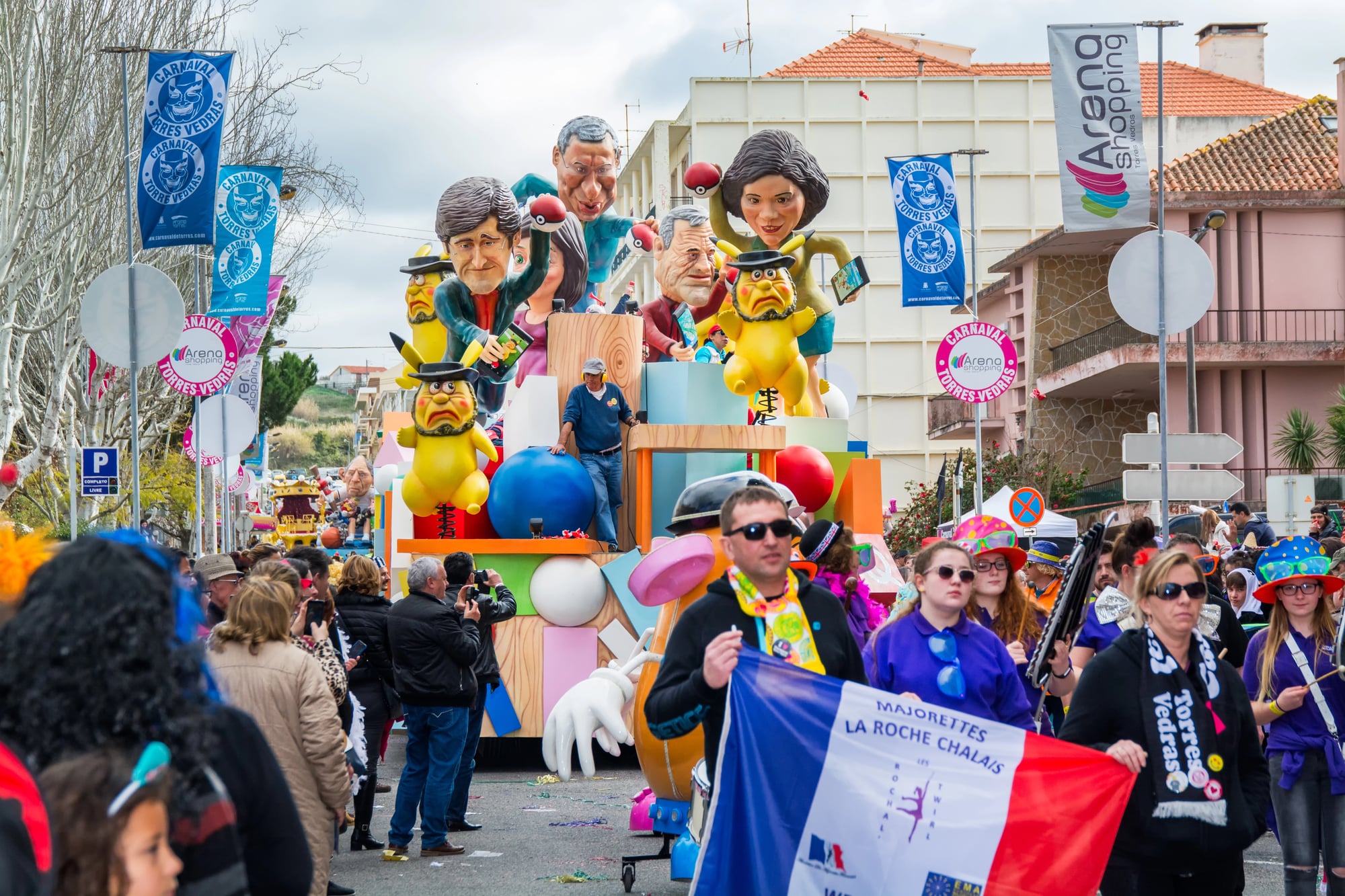
Large caricatures of politicians and public figures are displayed, and costumes mock social trends and current events. In Torres Vedras, often described as the most traditional Carnival in the country, satire takes center stage. The town’s famous papier-mâché figures exaggerate political personalities in humorous ways. Carnival provides a socially accepted space for commentary, irony, and parody.
Monday night events often continue this satirical tone through themed parties and performances.
What Happens in Portuguese Cities After Dark on Carnival Monday?
As evening arrives, Carnival Monday shifts toward nightlife.
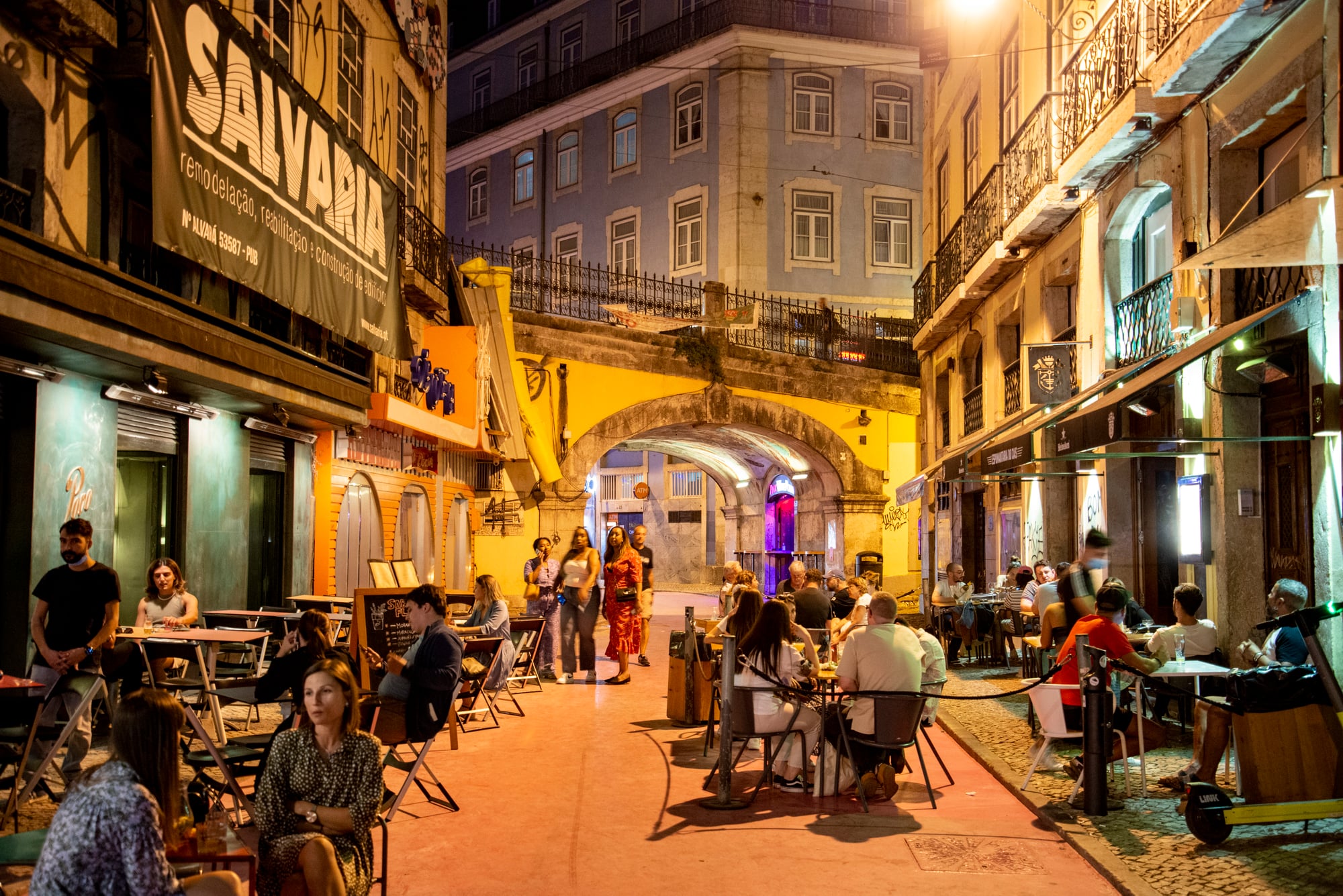
In cities like Lisbon and Porto, bars and clubs host costume parties. Districts such as Bairro Alto in Lisbon fill with people wearing masks, wigs, and elaborate outfits. Restaurants buzz with groups celebrating together before heading to parties.
In southern Portugal, particularly in Loulé, Carnival Monday evenings may include open-air concerts, samba performances, and dancing that continues late into the night.
Even in towns without major parades on Monday, the evening is rarely quiet. Carnival week invites participation, and many people take the opportunity to dress up and join the fun.
How Does Carnival Monday Differ From Region to Region?
Each region in Portugal interprets celebrates Carnival differently. Some towns put on samba-style parades inspired by Brazil while others preserve older, more rural traditions. Urban areas tend toward nightlife and themed events while smaller villages may focus on ritual and folklore.
What Makes Torres Vedras So Distinctive During Carnival?
Torres Vedras is widely regarded as the heart of traditional Portuguese Carnival. Its celebrations date back centuries. The town is known for its “matrafonas,” men dressed as exaggerated female characters, and for its satirical floats.
On Carnival Monday, smaller events and spontaneous street performances keep the festive atmosphere between major parades. The entire town becomes a stage with costumed residents roaming freely.
How Does Ovar Blend Samba with Portuguese Tradition?
Ovar presents a Carnival strongly influenced by samba schools. The choreography, costumes, and musical style reflect Brazilian inspiration, yet the event remains distinctly Portuguese.
Carnival Monday often includes rehearsals, youth performances, and samba group gatherings. The organization is highly structured, and many participants dedicate months of preparation to their routines.
What Is Special about Carnival in Loulé?
Loulé hosts one of the Algarve’s oldest Carnival celebrations. Floats are elaborate and frequently address political or social themes. Because the Algarve attracts winter visitors, Carnival Monday in Loulé can feel both local and international. Families attend events during the day, while concerts and dances fill the evening schedule.
Why Are the Caretos of Podence So Unique?
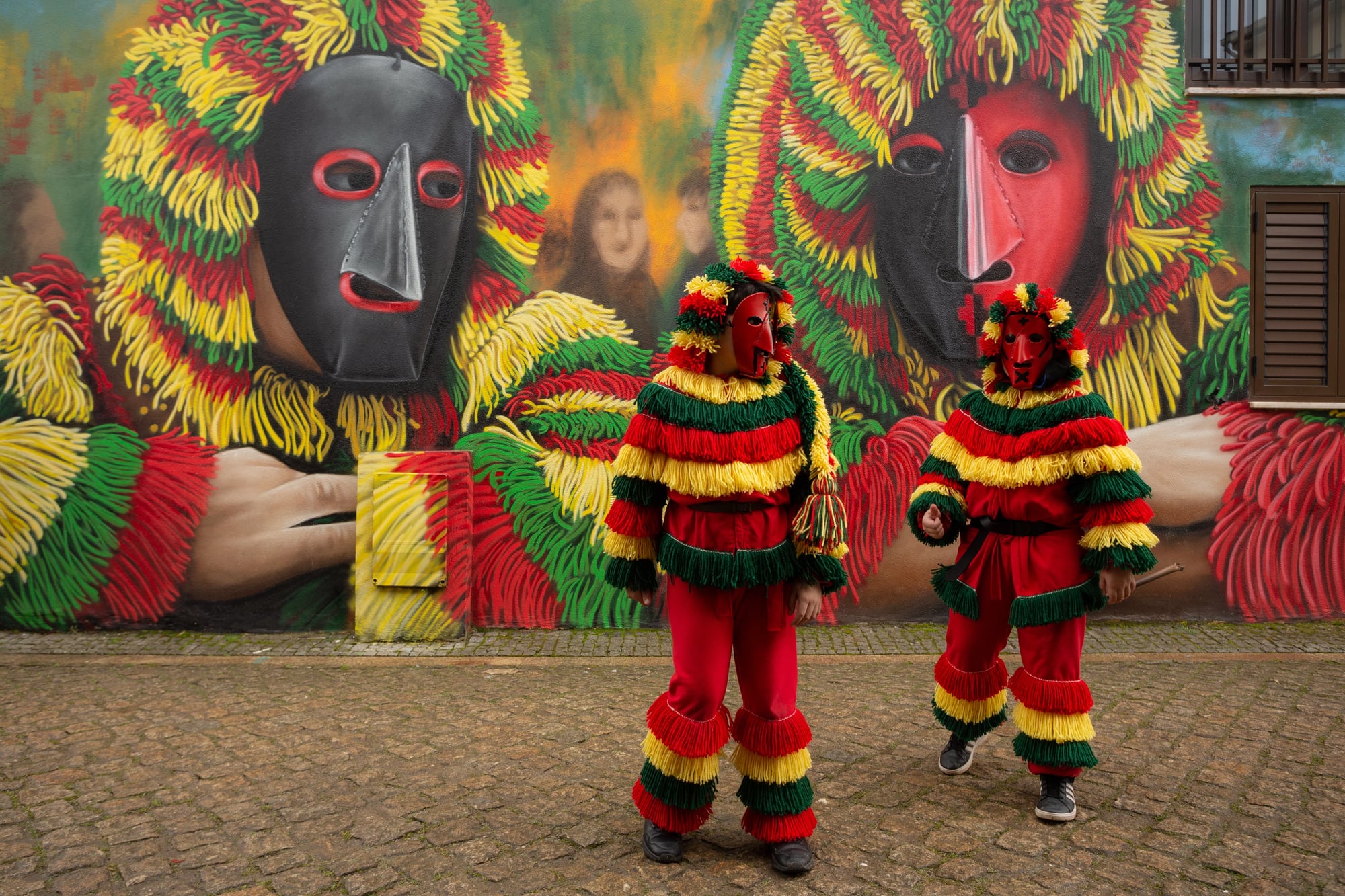
In the village of Podence, Carnival connects to ancient pagan traditions rather than modern parade culture.
The Caretos are masked figures wearing colorful fringed costumes and belts of bells. They run through the streets and cause chaos. Their behavior is energetic and symbolic rooted in seasonal rituals that predate contemporary Carnival celebrations.
The tradition of the Caretos of Podence has been recognized by UNESCO as Intangible Cultural Heritage of Humanity. On Carnival Monday, these masked figures can still be seen in the streets getting ready for the biggest day of the festival – Carnival Tuesday.
What Do People Eat and Drink on Carnival Monday?
Food plays an important role during Carnival season. Many families prepare “filhós,” pieces of fried dough sprinkled with sugar and cinnamon. These treats are especially common in rural regions.

Restaurants in Carnival hotspots are often full on Monday evening. Groups gather for long meals before heading to parades or parties.
How Is Carnival Monday Connected to Lent and Religious Tradition?
Historically, Carnival takes place before Ash Wednesday, which marks the beginning of Lent in the Christian calendar. Lent is traditionally associated with reflection and moderation. Carnival is a time to celebrate before Lent begins.
Carnival Monday is one of the last days to party and go wild before you must restrain yourself and give up something during Lent.
What Should Visitors Expect If They Are in Portugal on Carnival Monday?
If you are in Portugal on Carnival Monday, expect many shops to be closed but big parties in the evening.
Roads in town centers may be blocked for parades, and public transportation schedules may shift slightly in Carnival-heavy regions. Be sure to check local event listings in advance. In popular Carnival cities, you should make sure to book your accommodations and restaurant reservations early.
Wear comfortable shoes and find a costume to weather if you can. Participation is welcomed, and even a small accessory helps you feel like you’re part of the celebration. Many Chinese shops sell masks and affordable Carnival-themed accessories.
Is Carnival Monday Worth Experiencing as a Traveler?
As you now know, Carnival Monday is not the biggest day on the Carnival calendar, but it is still a lot of fun. Many businesses will be closed, but expect to see a lot of parties at night in areas that celebrate. Pick up a Carnival accessory at a shop or bring it with you to Portugal, and get ready to join in the fun. If you are in Lisbon and want to see a huge party, Torres Vedras is only a 45-minute bus ride or drive away. We encourage you to check it out if you can find your way there.