
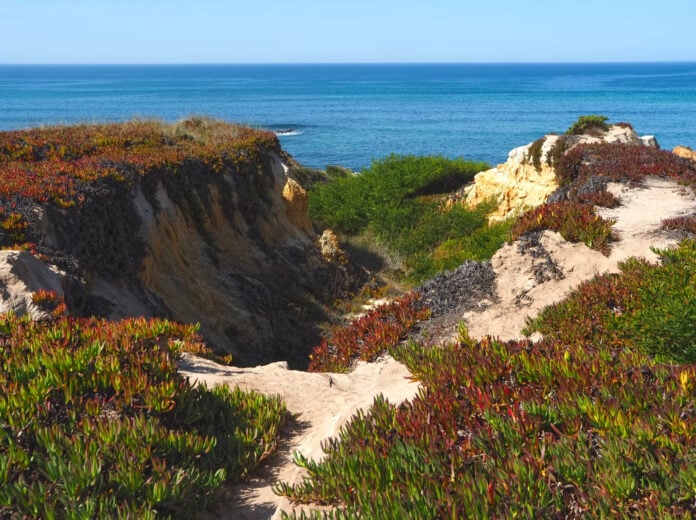
Portugal’s Fisherman’s Trail is the coastal jewel of the Rota Vicentina network. Get ready for narrow footpaths once used by local fishers to reach remote beaches and rocky fishing grounds. The trail hugs the Atlantic Ocean for much of the route and delivers a constant interplay of cliffs, sand, wind, and big horizons – truly some of the most beautiful scenery in all of Portugal.
What makes the Fisherman’s Trail so compelling is its balance. It feels wild and rugged, yet it consistently leads you back into villages where you can eat well, sleep comfortably, and reset for the next day. You earn the views here, but you are never far from warmth, food, and community. Have you already packed your backpack? We hope so!
How Long Is the Fisherman’s Trail, and How Many Days Do You Need?
The official Fisherman’s Trail route is divided into 13 stages and covers approximately 226.5 km. Most hikers complete the full trail in 12 to 13 days, which can vary depending on fitness level, walking speed, and how often they stop to explore beaches or villages along the way.
Keep in mind that the trail is extremely flexible. Many people choose to hike only a portion of it and return later to complete another section. A particularly popular option is the stretch between Porto Covo and Odeceixe, which typically takes about four days and delivers some of the most iconic scenery on the entire route. Shorter three to five day itineraries are also easy to plan, especially along the Alentejo coast where villages are further apart but still easily accessible.
What Is the Best Time of Year to Hike It?
Spring and autumn are widely considered the best seasons to hike the Fisherman’s Trail. During these months, temperatures are generally moderate, the light is beautiful, and services in villages along the trail are fully operational. These seasons strike the best balance between comfort and atmosphere.
Summer hiking is possible but demanding. Long sections of soft sand combined with strong sun and limited shade can make even short distances exhausting. Winter offers dramatic skies and a quieter trail, but wind, rain, and reduced services in smaller villages can complicate the logistics. Regardless of the season, starting your hike early in the day and hiking a reasonable, achievable distance make a significant difference.
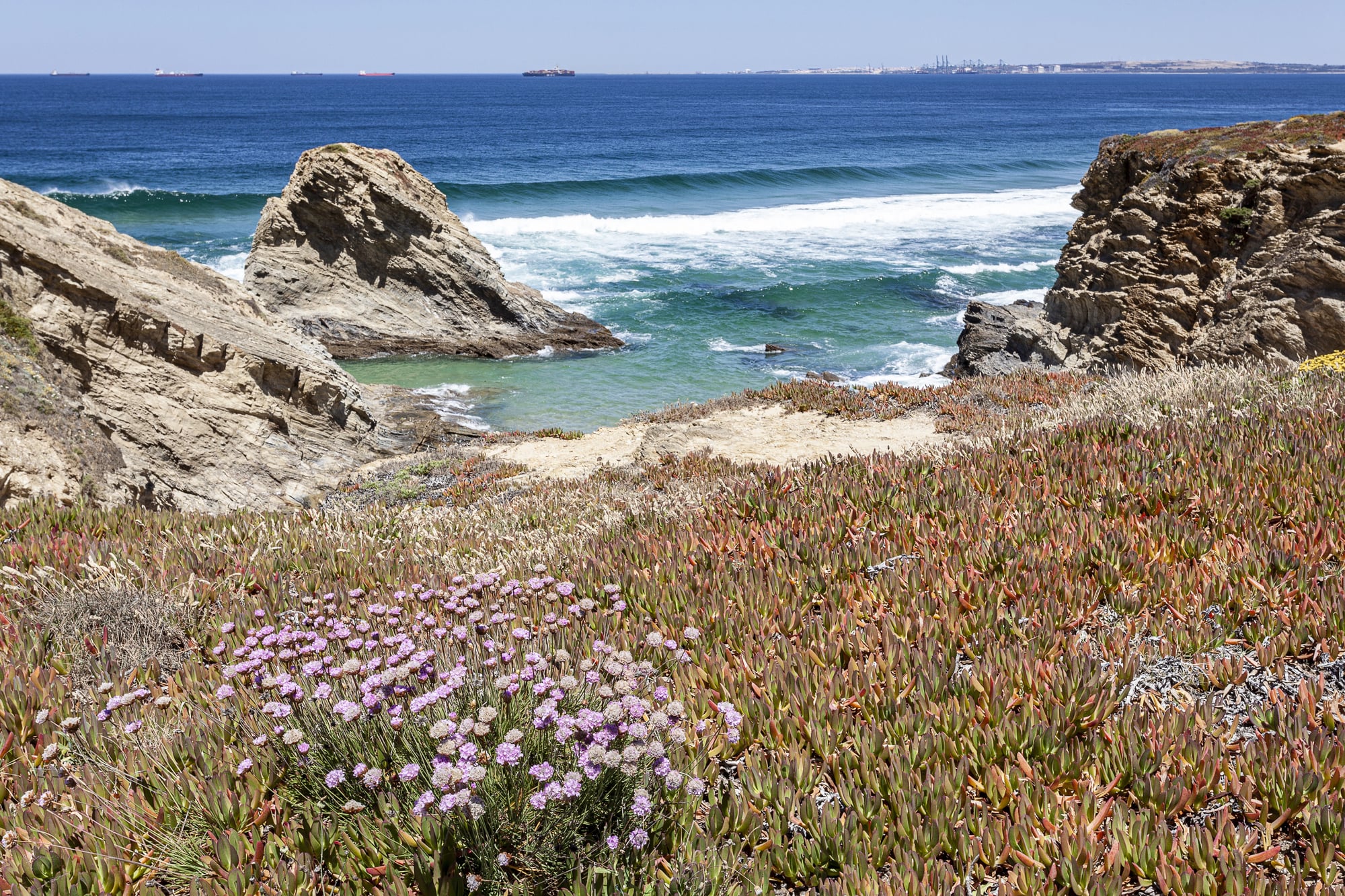
What Are the Best Sights along the Fisherman’s Trail?
What Are Best Beaches That Are Worth a Detour?
The Fisherman’s Trail passes by countless beaches, but a few stand out because of their gorgeous setting or that rare feeling that you have stumbled onto something far less crowded than it deserves to be.
Praia de Malhão, near Vila Nova de Milfontes, feels expansive and untamed. High dunes rise behind the beach, and the Atlantic hits this stretch with full force, which creates a sense of space and power that defines the Alentejo coast. It is the kind of beach that makes you stop walking for a moment, not because it is polished or dramatic in a showy way, but because it feels raw and endless.
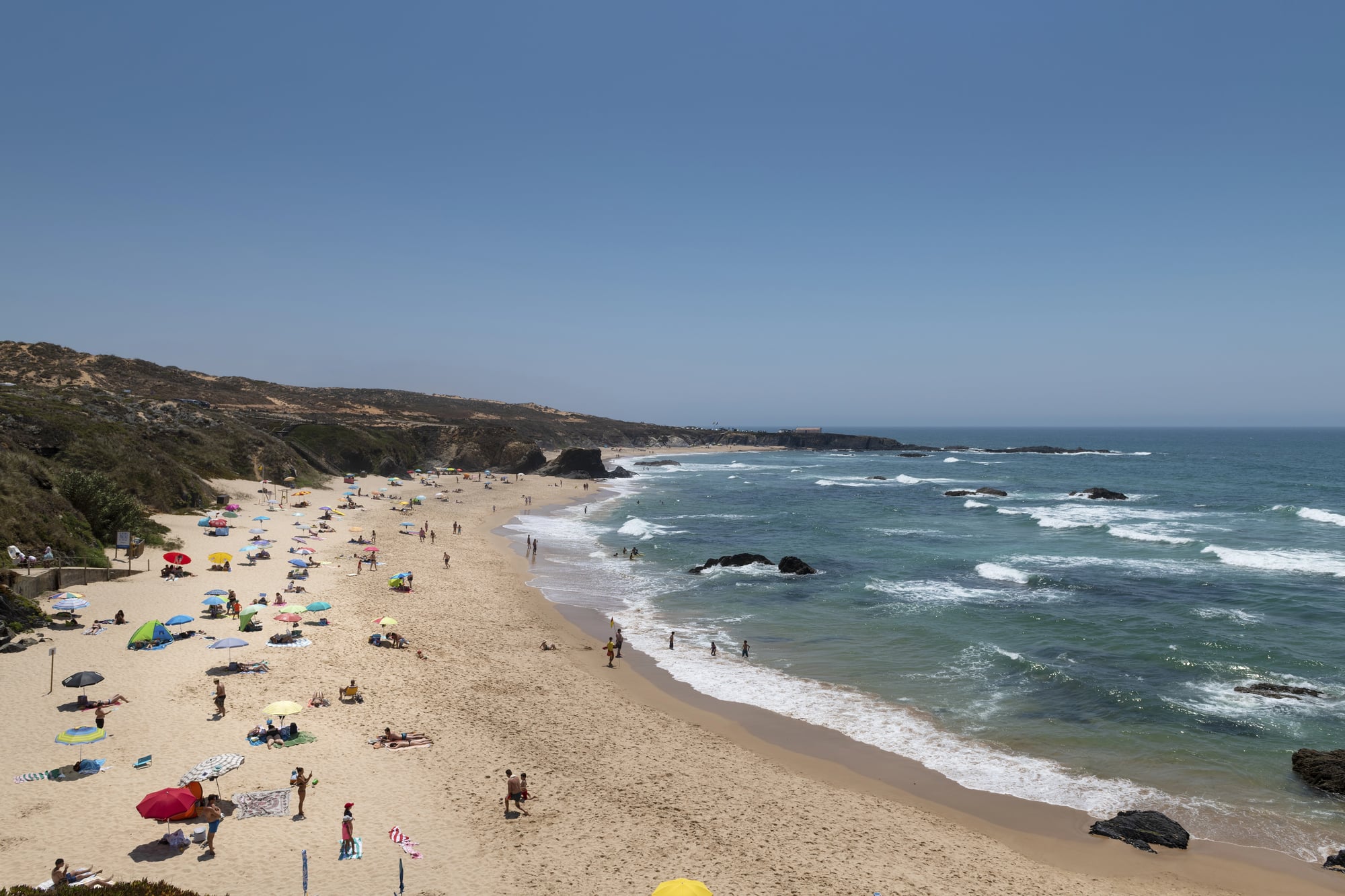
Praia de Almograve offers a more approachable coastal scene, with a wide sandy bay that is easy to reach directly from the village. This is a beach that feels lived in without feeling crowded, and it often becomes a natural resting spot for hikers who want to take their shoes off, rinse their feet in the water, and recharge before continuing along the trail.
The beaches around Zambujeira do Mar deliver some of the most varied coastal scenery on the trail. Here, the path repeatedly moves between high cliffs and sheltered sandy coves, which creates a steady stream of elevation changes. The ocean feels particularly dramatic here – up close and personal.
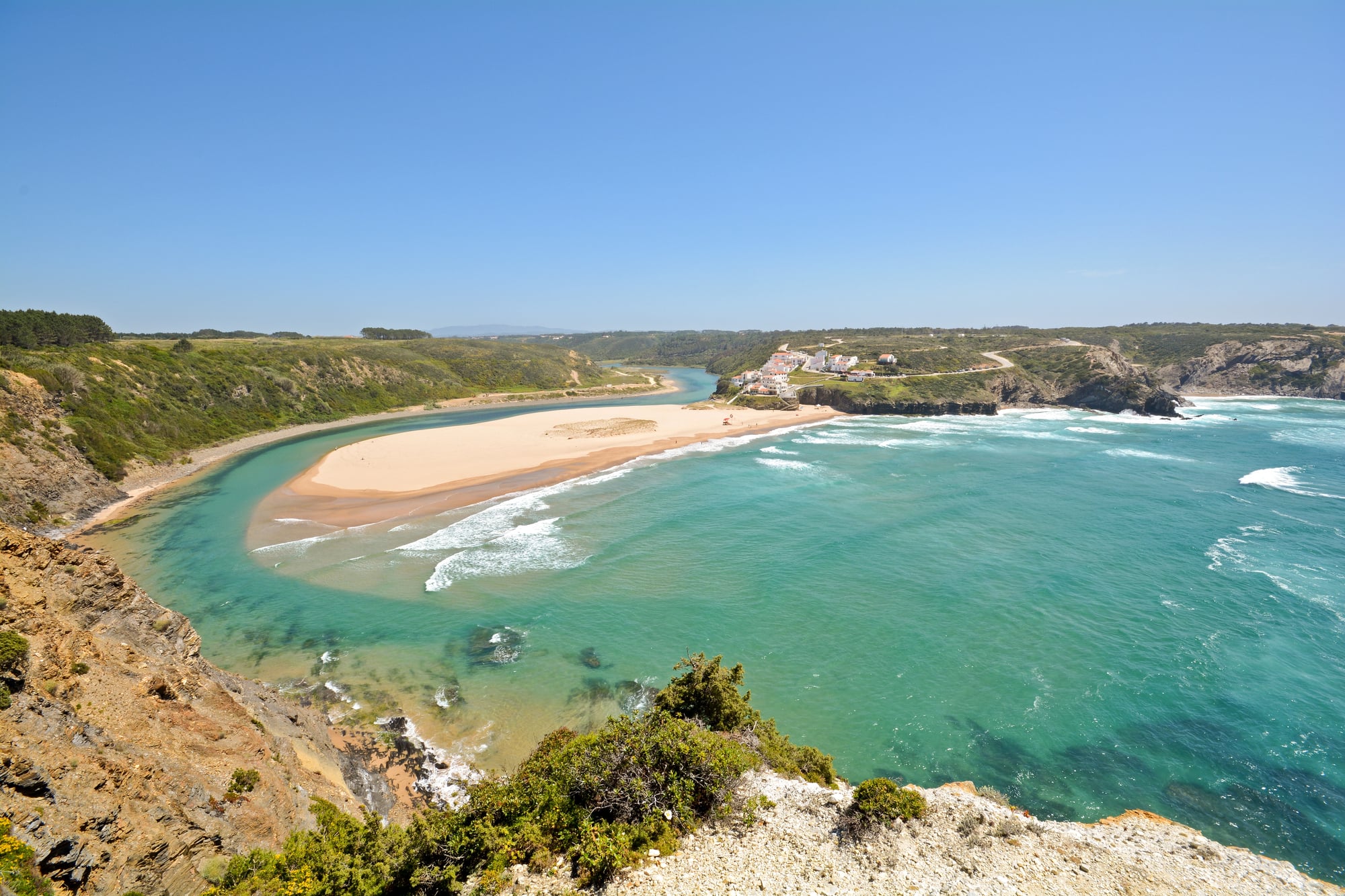
Odeceixe Beach is definitely one of the most visually striking moments of the entire Fisherman’s Trail. Located at the mouth of a river, it presents two completely different landscapes side by side. On one side, Atlantic waves crash in with force. On the other, calm river waters wind inland. This contrast makes Odeceixe feel like a natural highlight and a rewarding endpoint for many hikers.
Are There Any Iconic Viewpoints or Landmarks?
Near the trail lies Cabo Sardão, an exposed area known for its sweeping ocean views, rugged terrain, and iconic lighthouse. This section often feels windswept and stark with a sense of openness that reinforces how remote the coastline still is. On clear days, the views extend far along the coast and make it one of the most memorable stretches of the trail.
How Difficult Is the Fisherman’s Trail?
Technically, the trail is straightforward, but it can be physically demanding. The main challenge comes from extended stretches of walking on sand combined with wind exposure and sun. Elevation gains are generally manageable, but the constant shifting surface can tire hikers out quickly.
Good pacing is essential. Trekking poles can help on sandy stretches, and hydrating consistently is a non-negotiable. This is a trail where discipline and self-awareness matter more than speed.
Four-Day Porto Covo to Odeceixe Itinerary
Porto Covo makes an excellent starting point and a great place to stock up on snacks and food before the big hike begins. The following days typically progress toward Vila Nova de Milfontes, then Almograve, followed by Zambujeira do Mar, and finally Odeceixe. This part of the trail delivers a strong mix of cliff scenery, beaches, and villages without feeling rushed.
Each day can be adjusted in length, which allows you to shorten or extend hiking stages depending on your energy levels and weather conditions.
What If You Want to Complete the Entire Trail to Lagos?
Completing the full trail usually takes close to two weeks. Many hikers prefer to save the Algarve sections for last, as the scenery gradually shifts toward the distinctive southern coastline while still preserving quiet, less developed stretches away from city centers.
Where Are the Best Places to Eat Along the Fisherman’s Trail?
One of the great pleasures of this hike is how consistently good the food is at the end of each day. Coastal Portuguese cooking emphasizes freshness, simplicity, and generous portions, perfect after a long day’s hike.
Porto Covo
Porto Covo offers several reliable options including Restaurante Lamelas for traditional dishes and Restaurante A Ilha for solid regional cooking. Simple cafés also provide soups and light meals that are ideal after arrival or before departure.
Vila Nova de Milfontes
Vila Nova de Milfontes is one of the most popular food stops on the northern half of the trail. Tasca do Celso is frequently cited for its quality and atmosphere, while Paragem Vicentina offers dependable meals that cater to hungry walkers.

Almograve
Food options in Almograve are limited but well located. Cova Funda stands out as a natural stop along the way where can eat your mail with a great view of the sea.
Zambujeira do Mar
Zambujeira do Mar has several excellent choices. A Barca Tranquitanas is known for its seafood, while Costa Alentejana serves hearty regional dishes sure to satisfy hungry hikers.

Aljezur
As you move south, the Vicentina coast offers more varied dining. Roots Aljezur is a popular choice for hikers looking for healthy meals.
What Should You Pack for the Fisherman’s Trail?
Any hiker would tell you: for the most comfortable experience, preparation is key. Lightweight hiking shoes or trail runners with good grip work well in addition to trekking poles for sand. Sun protection, layers to handle the wind, blister care supplies, and a good water bottle or CamelBak are essential.
Snacks that tolerate heat and movement are important, as is accepting that sand will become part of your daily life.
How Do You Handle Logistics Like Luggage and Transport?
The trail is signposted quite clearly, and you should be able to get a clear data signal during your hike to check Maps.Me or Google Maps for navigation. Luggage transfer services are widely used and make the experience more accessible for those who prefer lighter packs. Public transport connects many trail towns, but schedules should be checked carefully, especially outside peak season.
Why Is the Fisherman’s Trail Worth Doing?
The Fisherman’s Trail is absolutely worth your time. It is like having a long, ongoing conversation with the Atlantic coast, shaped by wind, sand, and the steady rhythm of your hiking shoes. You will feel the wild but also be able to retreat inland to savor delicious food along the way. Come and enjoy one of Portugal’s most rewarding long-distance hikes.